
Do You Have to Change Name on Driving Licence After Marriage in the UK? A Guide to the Process
Getting married is a big step, and along with it often comes the question of changing your name. In the UK, you do not have to change your name on your driving licence after getting married if you take your spouse’s name or use a double-barrelled surname. Many people want to keep their names for personal or professional reasons, and that’s perfectly fine.
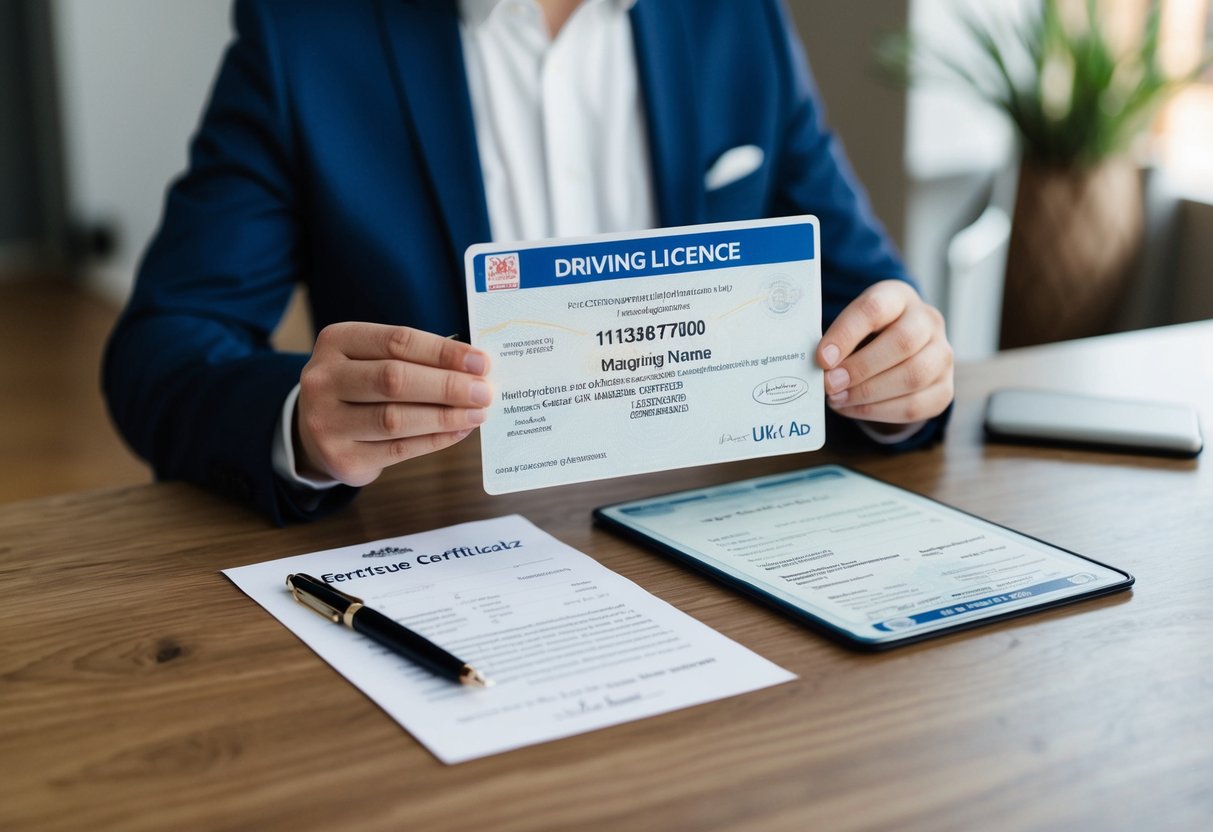
If you do decide to change your name, the process is straightforward. You will typically need to provide your marriage certificate as proof when updating your driving licence or other important documents.
It’s a simple step that ensures your identification matches your new name.
Understanding the requirements can help you to avoid unnecessary hassle. Whether you choose to update your driving licence or keep your original name, it’s essential to know your options and what is needed for each choice.
Understanding the Name Change Process
Changing your name on your driving licence after marriage is an important step. This section explains the legal requirements and how the DVLA plays a role in this process.
Legal Requirements for Name Change on a Driving Licence
To change your name on your driving licence, you need to provide certain documents. If you recently got married, a marriage certificate is required as proof of your name change. If you underwent a civil partnership, a civil partnership registration will work.
For a more formal name change through deed poll, you must have a deed poll document that shows your new name. These documents are essential for the DVLA to process your request.
Make sure that all your documents are current and official.
The Role of the Driver and Vehicle Licensing Agency (DVLA)
The DVLA is responsible for maintaining accurate records of drivers in the UK. When you apply to change your name, you will complete form D1 and send it along with your supporting documents.
The DVLA makes this process simple. You can apply online or by mail. Just remember to have a recent passport-sized photo ready if you have an old paper licence. Also, be prepared to pay a fee, usually around £17. This ensures that your driving licence matches your new legal name.
Preparing Your Application

Changing your name on your driving licence after marriage involves gathering certain documents and deciding on the type of licence you have. This section will guide you through what you need to prepare for your application.
Documents Required for Changing Your Name
To change your name on your driving licence, you need to complete an application form. If you have a photocard driving licence, you’ll need the D1 form if it’s a car or motorbike. For a lorry or bus, use the D2 form.
Along with the completed form, you must provide your current driving licence. Also, gather original documents that confirm your new name. This can be a marriage certificate or any identity documents showing the name change. Make sure these documents are clear and valid.
If you have a paper driving licence, include a recent passport-style photo. Don’t forget to check for any fees; this is usually £17 when changing details.
Choosing Between a Paper or Photocard Licence
You have two types of licences: a photocard driving licence or an old-style paper licence. If you have the photocard version, changing your name is straightforward. You won’t need to submit a new photo unless you want to update your image as well.
If you hold a paper driving licence, the process requires you to send a recent passport-style photo along with your application. This also applies if you’re updating your photo because it no longer represents you accurately.
Be sure to send the application and documents to the DVLA for processing. Remember to keep copies of everything you send, just in case you need to reference them later.
Completing and Submitting Your Application
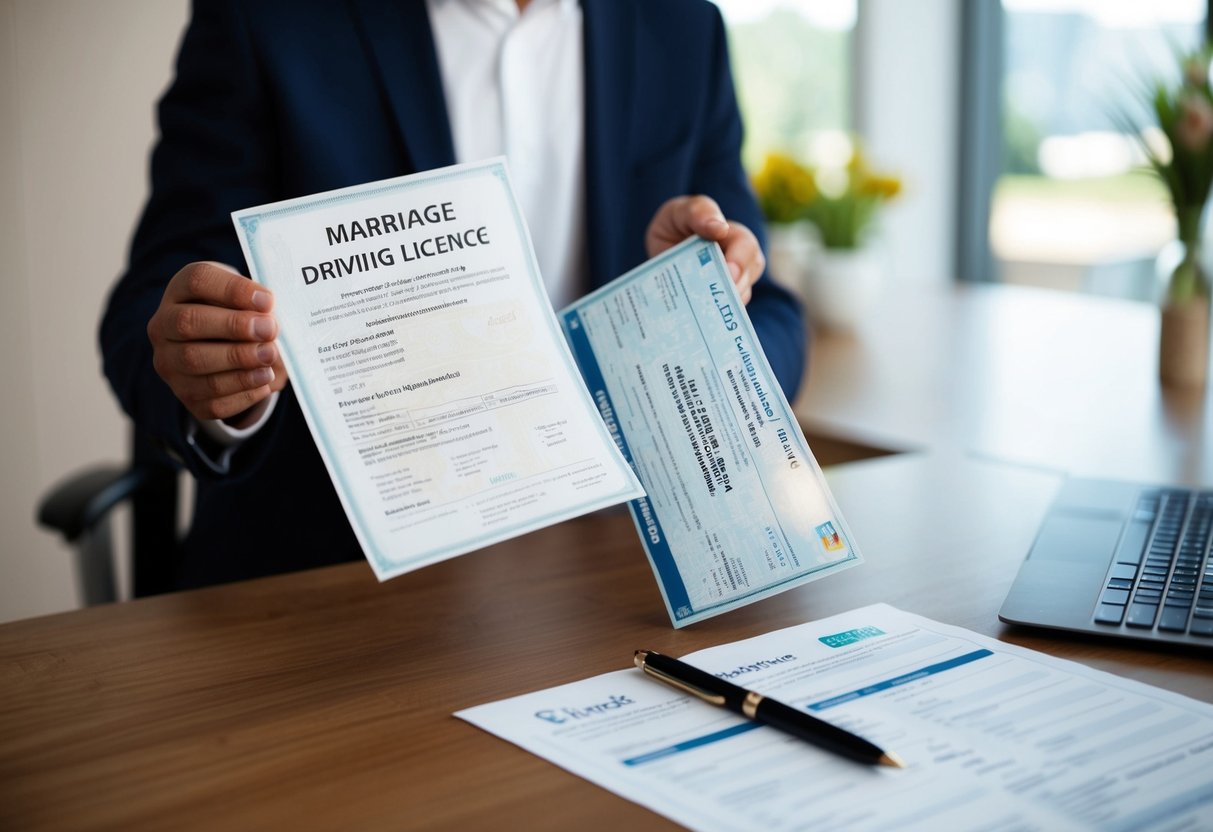
When you’ve decided to change your name on your driving licence after marriage, it’s important to follow the correct steps. This includes filling out the right forms and submitting necessary documents. Here’s what you need to know to ensure your application goes smoothly.
Filling Out the D1 Application Form for Photocard Licences
To change your name on a photocard driving licence, you’ll need to fill out the D1 application form. You can easily get this form by visiting the DVLA website or from Post Office branches.
Make sure to provide your current details accurately, including your name as it appears on your current licence. You’ll also need to enter your new name. It’s essential to double-check for any mistakes.
Once completed, sign the form to confirm everything is correct. A passport-style photo is also required to match your new name. This helps to keep your licence updated with your current identity.
Using the D2 Form for Paper Licences
If you have a paper driving licence, your process is slightly different. You’ll need to use the D2 form instead of the D1.
Start by obtaining the D2 form, available online or at your local Post Office. Similar to the D1, fill it out accurately, ensuring all information matches what’s on your current records. This form also requires you to include your new name.
After filling out the D2 form, sign it to finalize your details. This step is crucial as it prevents delays in processing your name change.
Submitting Proof of Name Change and Other Documents
Along with your filled-out form, you need to submit proof of your name change. This can be your marriage certificate or any official document that verifies your new name.
Make sure to include your current driving licence along with your application. If you’re changing your name due to marriage, your marriage certificate serves as essential documentation.
After gathering all your documents, send them to the DVLA. It’s smart to use a tracked mailing service to ensure they arrive safely. Following these steps carefully will help you get your new driving licence in no time!
Post-Application Process
After you apply to change your name on your driving licence, there are important steps to follow. You’ll need to update related documents and take note of any costs associated with this process.
Updating Related Documents and Records
Once your name change is processed, you should update your vehicle registration documents as well. This means ensuring your V5C vehicle registration certificate reflects your new name.
You can do this by contacting the DVLA and providing proof of your name change.
If you’re in Northern Ireland, the process is slightly different. You’ll need to apply through the DVA. Make sure to keep your documents like a marriage certificate or divorce decree handy, as these will serve as proof of your name change.
Don’t forget to have your log book updated too. This will help avoid any issues when you need to show your documents in the future.
Costs and Payment Methods for Changing Your Name on the License
Changing your name on your driving licence isn’t free. You’ll typically face a fee of £17 for the application. You can pay this using a cheque or a postal order made out to the DVLA.
When you mail your application, remember to include your recent passport-style photo if you’re changing from an old-style paper licence. This helps ensure your licence looks like you.
Keep in mind that processing times can vary, so check the DVLA’s website for updates. If you have any additional fees due for other documents, you might want to prepare for those as well.