
Do You Invite Your Photographer to Your Wedding?
You hire your wedding photographer to work at your wedding, so a formal invitation usually does not belong on the guest list. You do not need to invite your photographer as a guest, though sending a spare invitation as a thoughtful keepsake is perfectly fine.
Your photographer already has the wedding date, venue, start time, and coverage details through your contract and wedding planning. What they need most is a clear timeline, access information, and notice about the moments you want captured.
Set aside a clean copy of your invitation suite for detail photos, and confirm meal arrangements with your photographer and caterer. If your photographer is also a close friend or family member, treat the personal relationship separately from the paid role.
For help deciding who belongs on your guest list, review these tips for creating the perfect guest list for a small wedding.
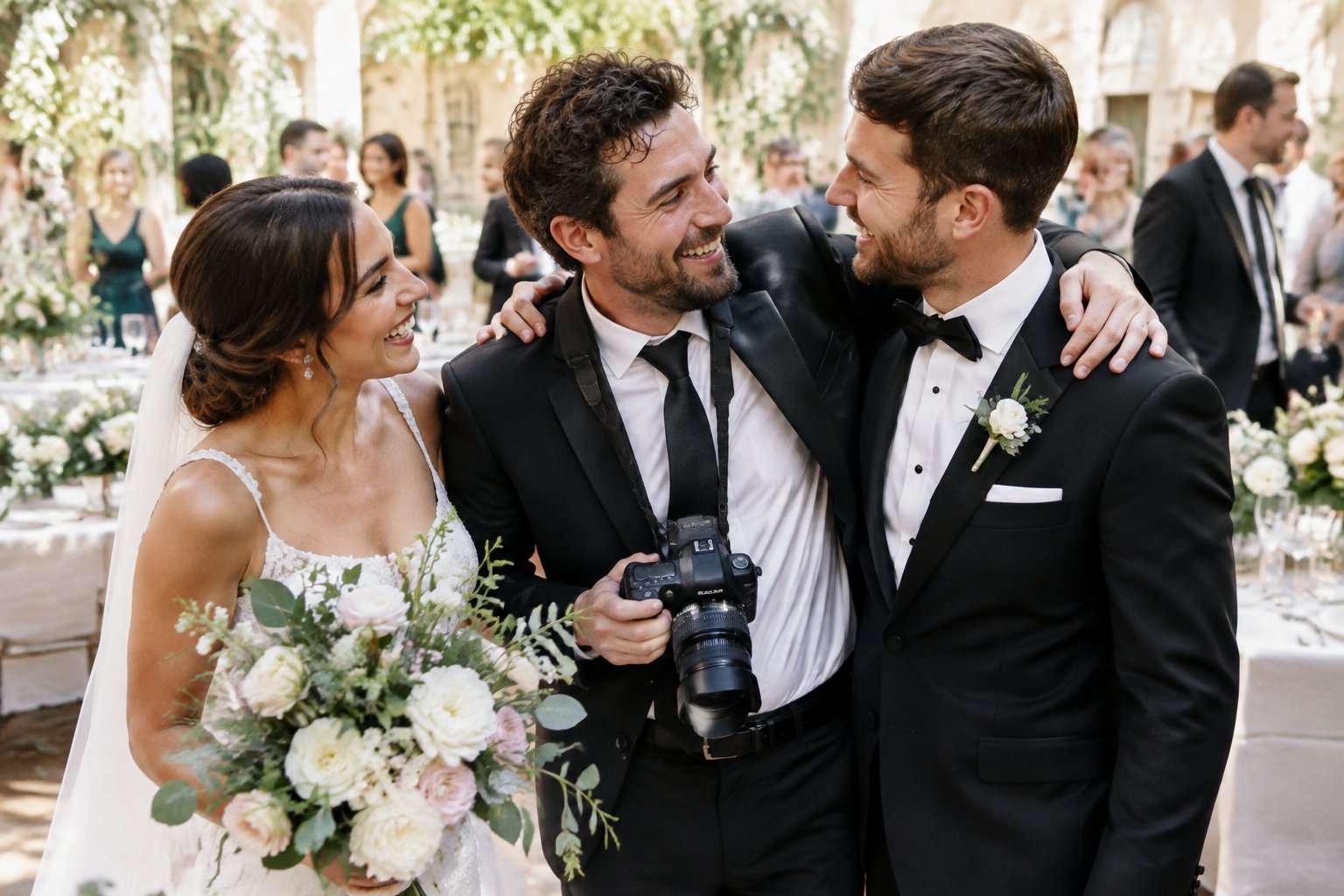
The Short Answer: Treat a Hired Photographer as a Vendor
A hired wedding photographer is a professional vendor, so you can leave them off the guest list while still giving them the information and care they need to do excellent work. Their contract establishes their role, coverage hours, arrival time, and responsibilities for the wedding day.
A clear vendor arrangement protects the guest experience and helps your photographer stay focused. Share the final timeline, provide a vendor meal, and make sure the venue knows where the photography team can take breaks.
Why a Formal Invitation Usually Is Not Necessary
A formal invitation is designed for guests who need to RSVP, select meal preferences, and receive a place at the reception. Your photographer already has the wedding date and location through the contract and your planning updates.
You can skip the postage and RSVP request. Send the invitation only if you want to offer a personal gesture, preserve the stationery as a keepsake, or include your photographer because of an existing relationship.
How Professional Boundaries Prevent Confusion
Professional boundaries clarify that your photographer is working during the wedding. They need to move around the room, manage equipment, coordinate with other vendors, and leave their meal when an important moment begins.
Calling them a guest can create confusion about seating, alcohol, access, and coverage. Use vendor language with your planner and venue, then share personal warmth through a note, thank-you gift, or spare invitation.
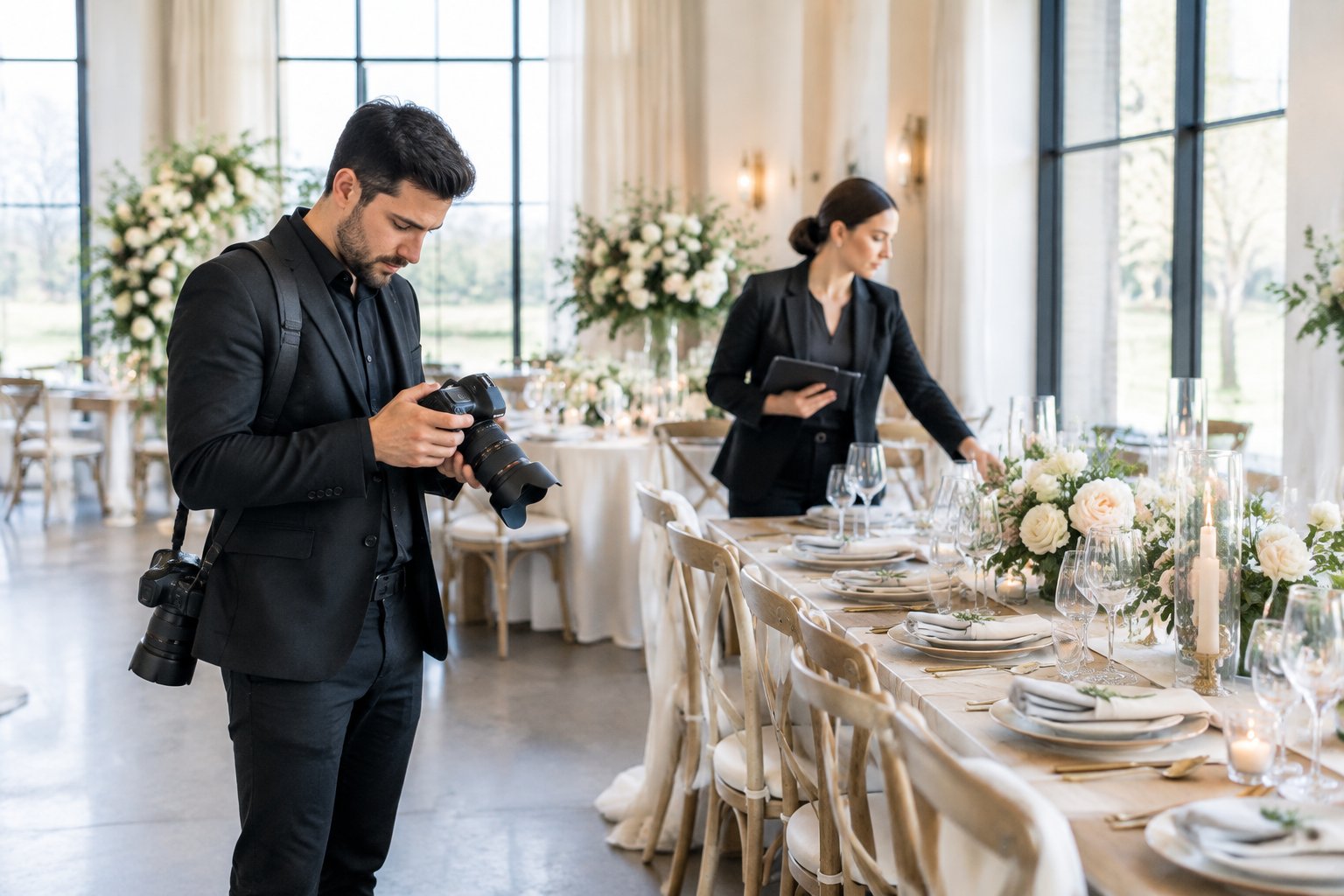
When an Invitation Makes Sense
An invitation makes sense when your photographer has a close personal connection to you or when you want to share a sentimental keepsake. The invitation should communicate affection, while your contract and timeline continue to define the work arrangement.
A destination wedding also benefits from early communication about travel, lodging, arrival plans, and the wedding date. Those details belong in your vendor correspondence even when you do not mail a formal invitation.
When Your Photographer Is a Close Friend or Family Member
Invite your photographer as a guest when you would invite that person to celebrate with you if they were not working. This choice recognizes the personal relationship and gives them a clear place in your social plans.
Talk about the work arrangement before sending the invitation. Ask whether they will photograph the full event, bring an assistant, or stop coverage at a set time. Their guest invitation does not replace the signed agreement.
How to Separate Their Guest Role From Their Work Role
Use two clear conversations. First, confirm the professional details: coverage hours, locations, requested photographs, breaks, and meal plans.
Then discuss the personal invitation, including whether they are welcome to stay for dancing or other events after coverage ends. Tell your planner and venue how you want the roles handled.
A photographer who is also a guest still needs space for equipment and a practical meal break.
What to Consider for a Destination Wedding
A destination wedding calls for extra notice because travel plans affect your photographer’s schedule and cost. Confirm the wedding date, venue address, arrival time, lodging expectations, transportation, and any travel fees in writing.
A mailed invitation can serve as a warm keepsake, while the contract and timeline carry the details your photographer needs for the job. Share updates promptly if the ceremony time or location changes.
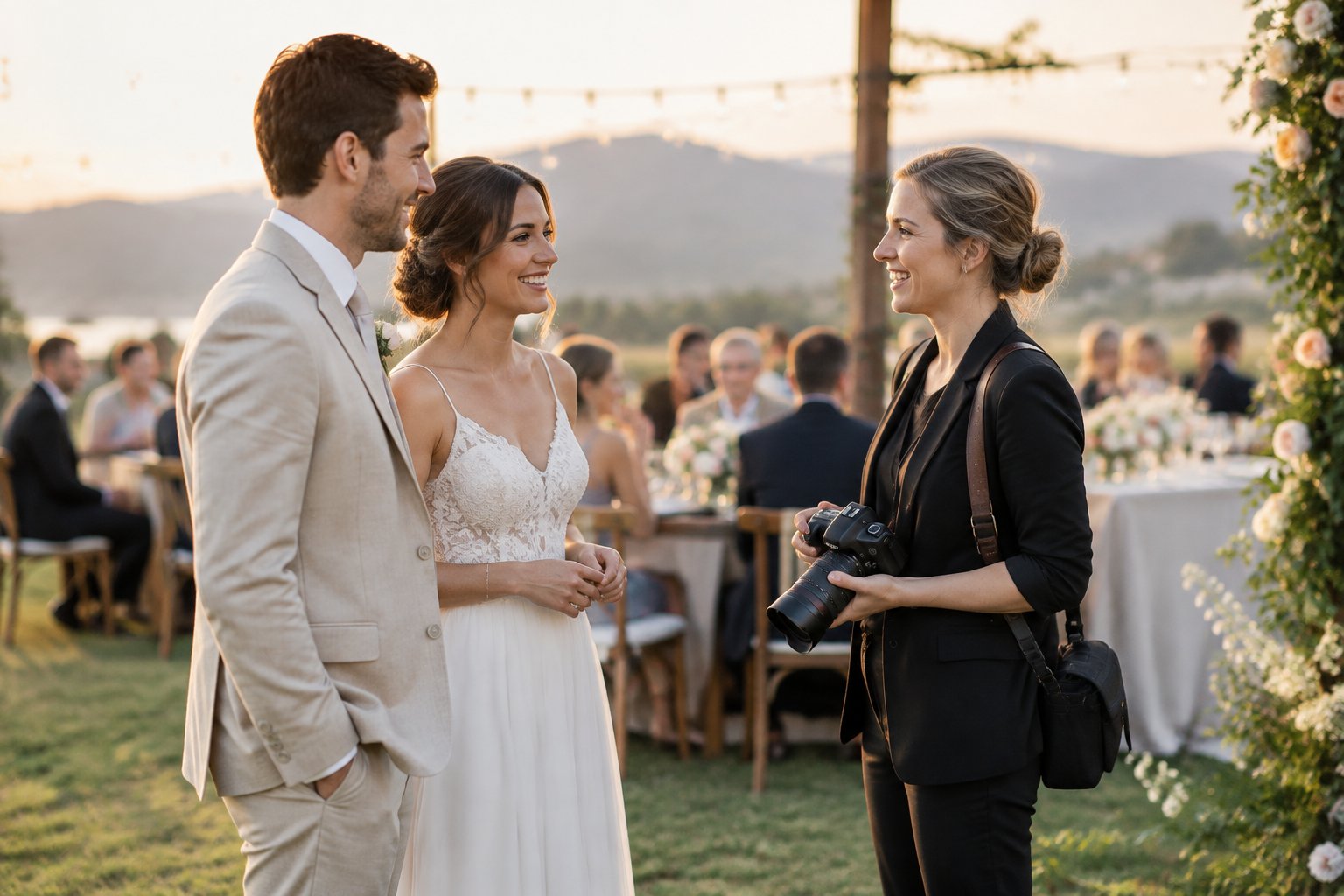
Give Your Photographer an Extra Invitation for Detail Photos
Give your photographer a clean, unmarked invitation suite if you want stationery included in your wedding photography. This copy lets them photograph the paper, envelope, RSVP card, details card, stamps, and other pieces without risking the invitation you plan to mail.
Place the suite with your other detail items before the wedding day. Tell your photographer which pieces have special meaning or two-sided designs.
Why Wedding Invitations Matter in Flat-Lay Photography
Wedding invitations record the visual style of your celebration. Their colors, paper, typography, envelope, and small inserts help connect detail photographs with the rest of your album.
Include every piece you want documented. If a card has artwork or text on both sides, provide a second copy or tell your photographer so both designs receive attention.
How to Protect the Invitation Suite From Damage
Keep the invitation suite flat in a folder, envelope, or detail box. Avoid folding, taping, or placing it under heavy objects.
Store it away from drinks, makeup, loose flowers, and other items that could stain the paper. A fresh copy gives your photographer room to arrange the pieces with rings, ribbon, shoes, or other details.
Ask them to return the suite to a trusted person after the photographs are complete.
When to Hand It Over Before the Ceremony
Give the suite to your photographer when they arrive for getting-ready coverage, or place it in the agreed-upon detail box. Your planner, maid of honor, best person, or another trusted helper can hand it over if you will be busy.
Label the box with your name and the location where your photographer should find it. Mention any fragile inserts or pieces you want returned before the ceremony begins.
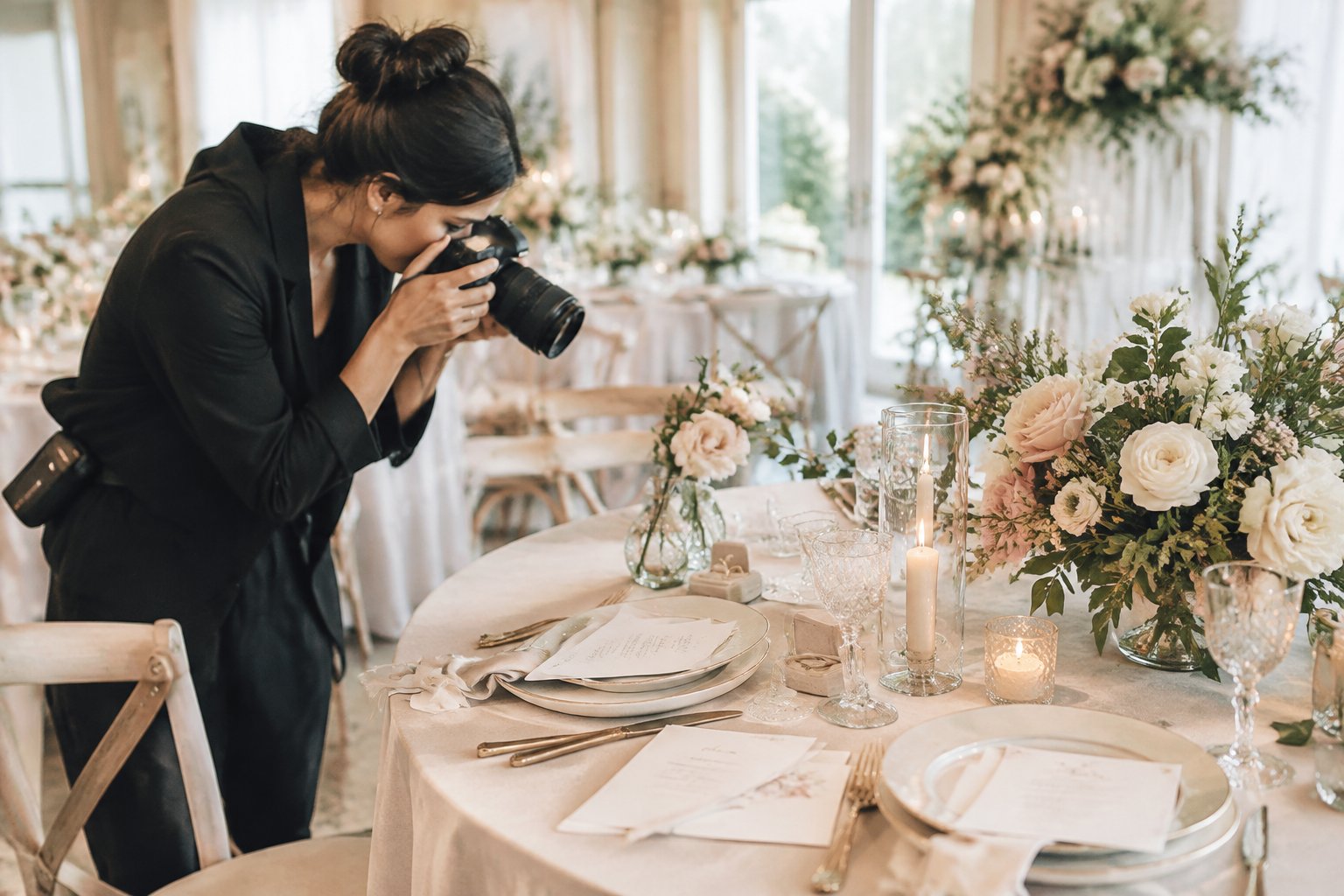
Share the Information They Need Without Adding Them to the Guest List
Your photographer needs accurate wedding planning information, even when they are not a guest. Send the final wedding date, timeline, locations, contact details, traditions, and access instructions through one organized document or email.
Your planner or coordinator should receive the same information. Consistent details reduce delays and help your photographer reach each location with the right equipment.
Confirm the Timeline, Locations, and Contact Details
Give your photographer the ceremony start time, getting-ready address, portrait locations, reception venue, parking instructions, and coverage end time. Include phone numbers for the planner, coordinator, venue contact, and one trusted person who can answer questions during the wedding day.
Send the final timeline when it is approved. Mark travel time between locations and note where your photographer should meet you.
Flag Traditions and Must-Capture Moments
Tell your photographer about cultural traditions, religious customs, family surprises, private vows, planned dances, and other meaningful events. Add the names of important people and any family dynamics that require care.
A short priority list helps your photographer plan. Include group portraits, heirlooms, memorial details, special performances, or moments that must happen before a person leaves.
Coordinate Access With the Planner and Venue
Ask your planner and venue to confirm where photography is allowed, when the photographer can enter, and which areas have restrictions. Share rules about flash, tripods, drones, ceremony movement, and private spaces when they apply.
Your planner can coordinate with the DJ, officiant, caterer, and venue team so announcements and transitions do not catch your photographer by surprise. Give the photographer a copy of the final floor plan if room layout affects coverage.
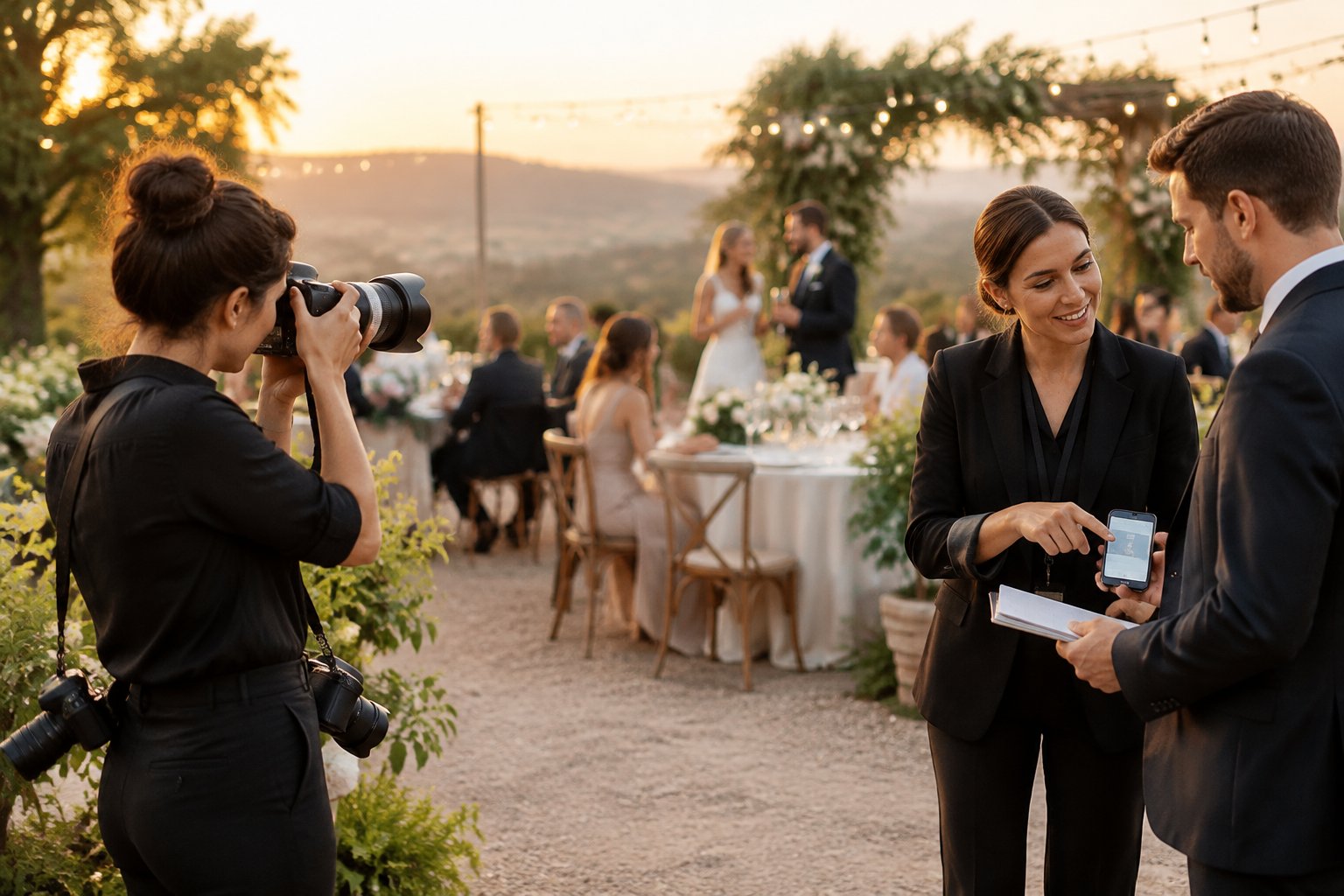
Vendor Meals, Seating, and End-of-Night Expectations
Plan a vendor meal, a practical break location, and a clear end-of-night plan for your photographer. These arrangements support steady coverage during a long wedding day and belong in your catering and timeline discussions.
A vendor meal does not require a guest invitation or a place in the guest seating chart. Check your contract for meal terms and share dietary needs before the final catering count.
Arrange a Vendor Meal and Dietary Needs
Ask your caterer to include your photographer and any assistant in the vendor meal count. Provide the meal at a time that lets the photography team eat and return to work before key reception events.
Confirm dietary restrictions with your photographer ahead of time. A hot, filling meal is a practical choice for coverage that lasts through dinner and dancing.
Choose a Practical Break Location
Use a vendor table, staff room, or quiet area near the reception when the venue offers one. Your photographer needs a place to sit briefly, charge equipment, change batteries, and keep personal items secure.
Keep the break location close enough for the photographer to hear announcements or reach the reception quickly. Your planner can confirm the location with the venue and catering team.
Clarify Whether They Are Welcome After Coverage Ends
Ask your photographer when coverage ends and whether they plan to leave at that time. If you want them to stay as personal guests, add that invitation to your conversation and confirm any extra hours through the contract.
A clear end time helps your photographer plan transportation and helps you avoid confusion about who is still working. If you want more guidance on coverage length, see do photographers stay the whole wedding.