
Do You Meet the Registrar Before a Wedding? Preparing for Your Big Day
Meeting with the registrar before your wedding is a crucial step in your planning process. Usually, you meet the registrar before the wedding to ensure all details are correct and to finalize the ceremony arrangements. This meeting helps everything go smoothly on your big day and gives you a chance to ask any questions you might have.

You’ll typically meet with the registrar to verify information like your names, addresses, and the details of your ceremony. This meeting can happen separately or together with your partner. It usually takes place just before the ceremony. Knowing what to expect can ease your nerves and help you feel more prepared.
As you get closer to your wedding day, understanding the role of the registrar and the importance of this meeting can make all the difference. It’s an essential part of ensuring that your wedding is official and enjoyable.
Understanding the Role of the Registrar in Weddings
When planning a wedding, it’s important to know what a registrar does. They oversee the legal aspects of your marriage and help ensure everything follows the law. Here are some key details about the registrar and how they differ from celebrants.
Differences Between a Registrar and a Celebrant
A registrar is a government official responsible for conducting legal ceremonies, such as civil weddings. Unlike a celebrant, who can customize your ceremony, a registrar typically follows a set format. This means you will usually experience a more traditional flow, which includes vows and rings.
Meeting your registrar before the big day is rare. In most cases, you only meet them on the wedding day. This can limit personal connection. Celebrants, on the other hand, will get to know you and help create a unique ceremony tailored just for you. If you want a personal touch, a celebrant might better suit your needs.
Legal Aspects Handled by the Registrar
The registrar handles important legal matters to ensure you are lawfully married. This includes verifying personal information and issuing marriage licenses. They must follow strict guidelines set by the local authority.
Before the ceremony, you’ll provide necessary documents, such as identification. Your registrar will also keep official records of your marriage. After the ceremony, they will provide your marriage certificate.
These legal details are crucial for your future. Completing these requirements makes your marriage valid in the eyes of the law. This is essential if you plan to have a civil ceremony in a registry office or a religious building. Understanding these roles helps you feel confident about the wedding process.
Planning Your Ceremony with the Registrar
When planning your wedding, meeting with a registrar is an important step. You’ll need to consider the booking, the venue, and how to personalize your special day. Each of these steps will help ensure that your ceremony goes smoothly and reflects your unique style.
Booking a Registrar for Your Wedding Date
The first step is to book a registrar. This should be done as early as possible. Registrars can have busy schedules, especially during peak wedding seasons. Contact your local registry office to check availability for your wedding date.
Make sure to provide them with details about your ceremony. This includes the date, time, and location. Be ready to choose between a civil ceremony or a religious one, as this can affect whether a registrar is available.
Choosing Your Wedding Venue
Your wedding venue plays a crucial role in your ceremony. If you’re looking to have a registrar-led ceremony, ensure your venue is an approved premises for such events.
This could be a registry office, hotel, or another venue that has the necessary permissions. Visit your venue beforehand to discuss setup and layout with the staff. It’s important to know how many guests can attend and where the actual ceremony will take place.
Personalizing Your Ceremony
A personalized ceremony makes your wedding unique. While registrars have guidelines for content, you can still add personal touches. Discuss with your registrar what elements you can customize.
This might include readings, music, or vows that reflect your relationship. Think about what you want to share with your guests. A special reading or song can make the ceremony feel more meaningful and memorable.
Remember, this is your day, and finding ways to add your personal flair will make it even more special.
The Marriage Registration Process

When preparing for your wedding, understanding the marriage registration process is essential. This includes giving legal notice of your intent to marry and obtaining your marriage certificate.
Giving Legal Notice of Your Intent to Marry
Before tying the knot, you need to give legal notice of your intention to marry. You usually do this by filling out a form at your local register office. Make sure you do this at least 28 days before your wedding date.
During this appointment, you will provide details like your names, addresses, and any previous names. If one of you is from another country, additional documents may be required. The registrar will also check your identification.
Once everything is in order, your notice will be displayed for public viewing. This is a temporary step that ensures no one is legally prevented from marrying.
Obtaining the Marriage Certificate
After the ceremony, you will need to obtain your marriage certificate. This certificate is an important legal document that proves you are married. It’s typically available shortly after your wedding ceremony.
To get this, visit your local register office. Bring identification and any paperwork required. You may be charged a small fee for the certificate.
If you decide to change your name after marriage, the marriage certificate will often be necessary. It serves as proof for updating your identification and other legal paperwork.
Different Types of Ceremonies and Celebrations
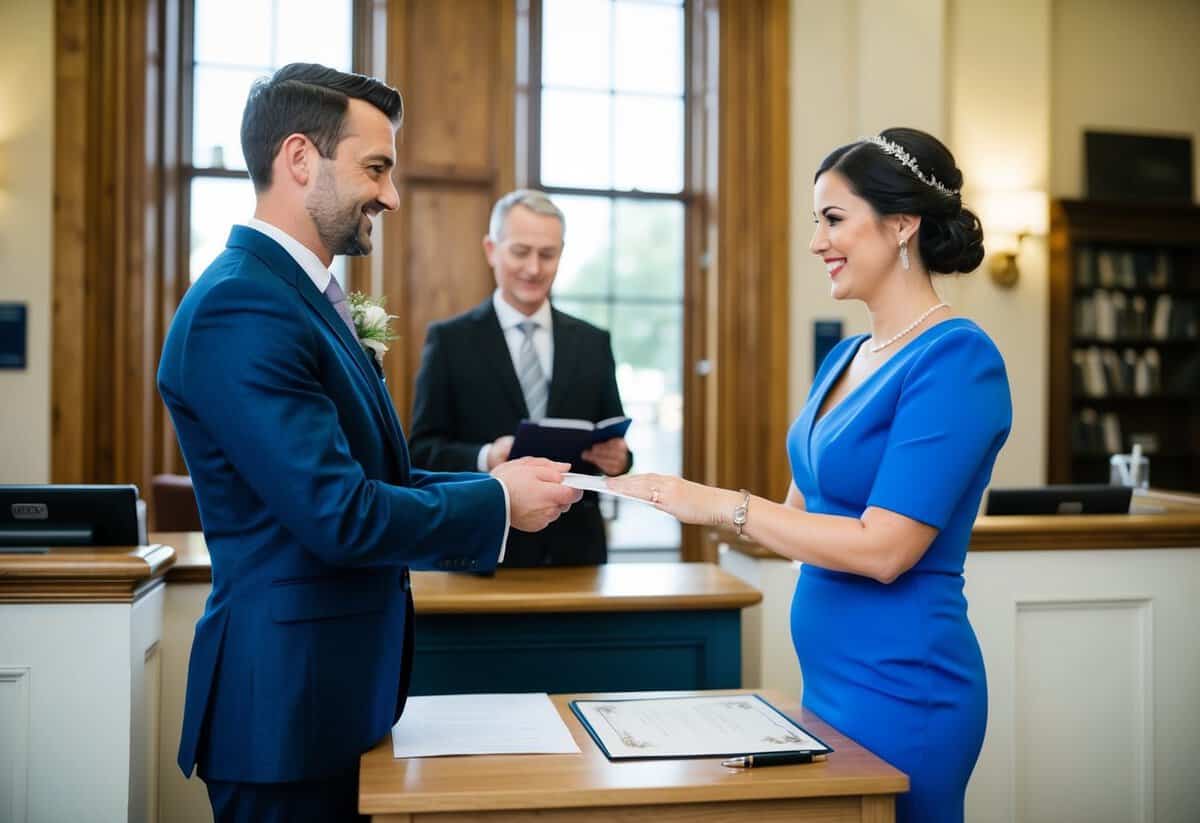
When planning your wedding, it’s helpful to know about the various types of ceremonies and celebrations available to you. Each option offers its own unique benefits and considerations, helping you choose what aligns best with your vision for the big day.
Comparing Civil Partnerships and Civil Weddings
Civil partnerships and civil weddings are both legal unions, but they have different implications. A civil wedding is usually a marriage ceremony performed in a registry office. It follows legal requirements, and you will need to use specific legal wording to ensure the ceremony is recognized.
On the other hand, a civil partnership often involves a more formal declaration but offers similar legal rights. You should consider which option best fits your values. If you prefer a straightforward process with legal recognition, a civil wedding may be your choice.
Choosing a Celebrant-Led or Registrar-Led Ceremony
Deciding between a celebrant-led ceremony and a registrar-led ceremony can shape your wedding day. A registrar usually conducts civil wedding ceremonies. You might not meet them until the day itself, which can feel impersonal.
In contrast, an independent celebrant offers flexibility. They can help you design a personalized ceremony that reflects your story. You’ll usually meet the celebrant beforehand to discuss your ideas, making the ceremony feel more special and connected to who you are as a couple.
Incorporating Spiritual or Religious Content
You have options if you want to add spiritual or religious elements to your ceremony. Celebrants can incorporate customs or practices meaningful to you. This can include readings, blessings, or rituals that reflect your beliefs.
If you are choosing a registrar, check if they allow for any personalization. Registry office weddings typically stick to a standard format. Be clear about how spiritual or religious content can be included in the ceremony, and ensure it aligns with your vision for the day.