
Do You Need a Band at a Wedding? Exploring the Benefits of Live Music
When planning your wedding, you might wonder if you really need a wedding band. Having a wedding band is not a requirement and depends on personal preference. Some couples choose to have matching bands, while others are perfectly happy with just an engagement ring.
Think about what feels right for you. A wedding band can symbolize your commitment, but it’s not the only way to celebrate your union. Many people find that a unique piece of jewelry or even just wearing the engagement ring is enough to represent their love and connection.
The choice is yours. Consider your style, budget, and what feels meaningful to you both. Whether you decide to go with a traditional band or skip it altogether, make sure it reflects your relationship and what makes you happy.
Evaluating the Role of a Wedding Band

A wedding band serves important roles in a marriage, both as a symbol of commitment and as a personal style piece. Understanding these aspects can help you decide if a wedding band is right for you.
Symbolism of Wedding Bands
A wedding band is more than just a piece of jewelry. It’s a visual sign of commitment between you and your partner. Traditionally, both partners exchange rings during the ceremony, marking their unity and promises.
The circular shape represents eternity, without a beginning or end. Many believe wearing this band reminds you daily of your vows and the love you share. It can also hold personal meaning—like a family heirloom or a custom design that reflects your unique bond.
Variety of Metals and Designs
Wedding bands come in many metals and styles, offering you countless options to express your personality. Popular choices include gold, platinum, and titanium. Each material has its features, from durability to luster.
You might prefer a classic smooth band, or something more detailed like an eternity band with stones. Consider what reflects your lifestyle. For example, if you’re active, a simpler design might suit you best. Customize your ring with engravings or unique shapes to make it special, ensuring it feels right on your finger.
Selecting the Perfect Wedding Band
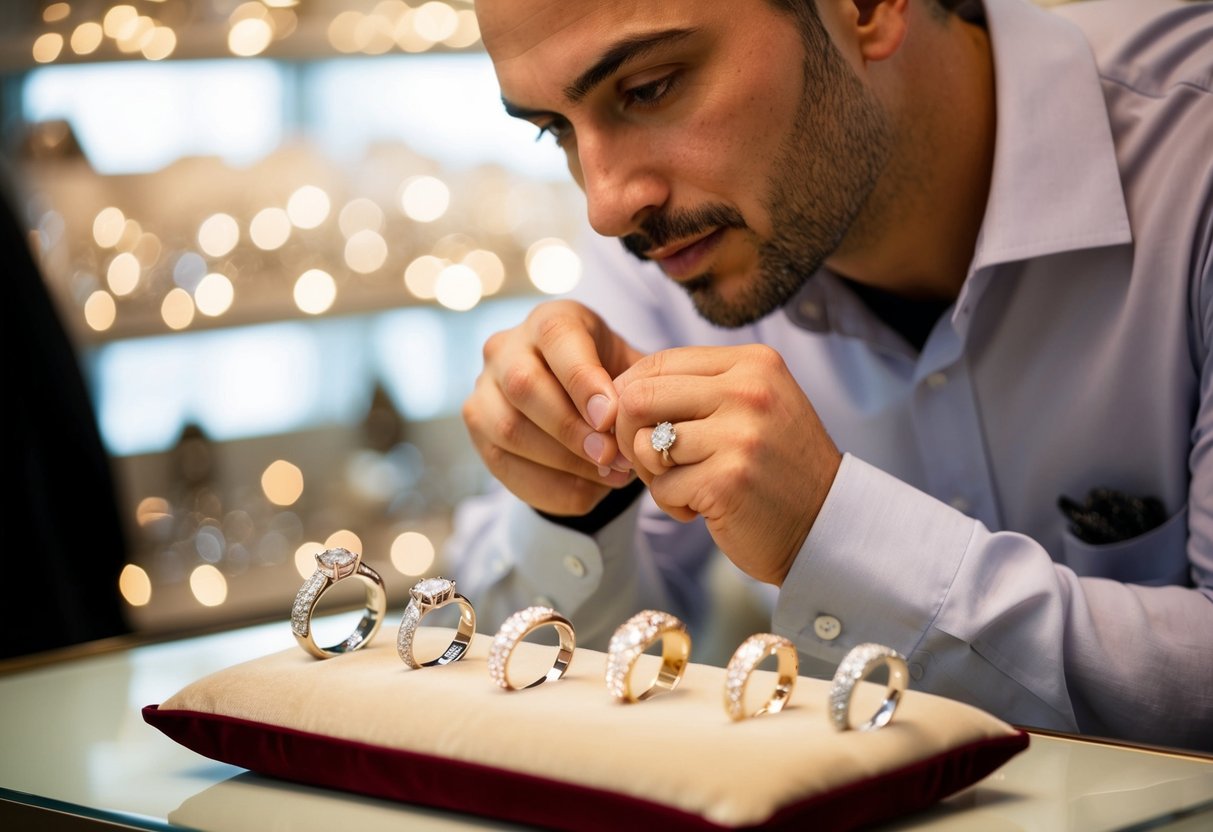
Choosing the right wedding band is essential to complement your engagement ring and match your personal style. Consider factors like compatibility, metal choice, and the option for customization to find a band that feels just right.
Compatibility with Engagement Rings
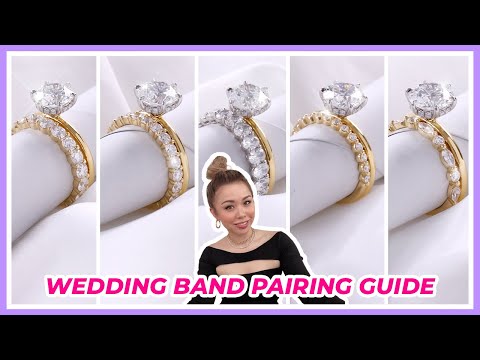
When selecting your wedding band, compatibility with your engagement ring is crucial. Think about the style, shape, and height of both rings. If your engagement ring has intricate details, a simpler band might work best to avoid clashing.
Styles to consider:
- Straight Bands: These fit well with most engagement rings.
- Curved Bands: Great for rings with specific shapes.
- Stacked Options: These allow for mixing different styles.
You want your wedding band to enhance the beauty of your engagement ring, not overshadow it.
Understanding Ring Metals
The metal you choose for your wedding band affects its look, feel, and durability. Here are some popular options:
- Platinum: Very durable and hypoallergenic, often used for classic designs.
- Palladium: A lighter alternative to platinum, also hypoallergenic.
- White Gold: Offers a similar appearance to platinum but is usually more affordable.
- Yellow Gold: A timeless choice that comes in various karats.
- Rose Gold: Romantic and trendy, this option has gained popularity.
Each metal has its unique finish and maintenance needs, so choose one that fits your lifestyle and personal taste.
Customization and Engraving Options
Personalizing your wedding band adds special meaning. Engraving is a popular choice, allowing you to include dates, initials, or a meaningful phrase.
Engraving Ideas:
- Names or Initials: Personal touch to your band.
- Significant Dates: Remember your wedding date or other milestones.
- Short Quotes: Something that resonates with you both.
Don’t forget to consider the finish of your band, like brushed or polished, as it can enhance the engraved details. Customization ensures that your wedding band is unique to your love story.
Styling the Wedding Jewelry
Choosing the right wedding jewelry can elevate your entire look for the big day. You want to create a harmonious blend of styles that reflect both of your personalities. Let’s explore how to achieve a cohesive aesthetic and the charm of vintage versus modern rings.
Cohesive Aesthetics for Couples
When styling wedding jewelry, consider how each piece complements the others. Aim for a cohesive look that ties together your outfit, personality, and wedding theme.
Matching Metals: Opt for a consistent metal finish—like gold, silver, or rose gold. Mixing metals can work, but it requires careful coordination.
Gemstone Harmony: If your engagement ring features colored stones, consider a wedding band that complements or matches these hues. This can include gemstones like sapphires or diamonds set in a delicate pavé setting.
Overall Balance: Balance the size of your jewelry. If your engagement ring has a bold design, choose a simpler band to avoid overwhelming your look.
Vintage Versus Modern Rings
Choosing between vintage and modern rings can be an exciting part of styling your wedding jewelry. Each style tells its own story and carries unique charm.
Vintage Rings: These rings often feature intricate designs and details. Look for antique styles with elaborate settings. Vintage rings in a classic design can evoke a sense of nostalgia. They often include beautiful details like filigree or unique stone cuts.
Modern Rings: Modern rings tend to be sleek and minimalist. They emphasize clean lines and often incorporate innovative materials. A contemporary design may favor a pavé setting, which adds a sparkle without being too flashy.
Whichever style you choose, let it reflect your love story and personal style.
The Tradition and Evolution of Wedding Rings

Wedding rings hold a rich history and have evolved significantly over time. Understanding their past and present can help you appreciate the meaning behind this cherished tradition.
Historical Significance
The use of wedding rings dates back to ancient times. In ancient Egypt, couples exchanged rings made of woven reeds or leather to symbolize their commitment. These rings represented a never-ending love, as they had no beginning or end.
As the practice spread to ancient Rome and Greece, the rings took on a more formal look. Romans often used metals like gold and silver, and rings became more elaborate, featuring engravings or gemstones.
Traditionally, both partners would wear a single ring. In many cultures, the fourth finger is chosen for the wedding band, believing it contains the “vena amoris,” or vein of love, connecting directly to the heart. This finger holds a special place in the symbolism of love and unity.
Contemporary Interpretations
Today, wedding rings can be as unique as the couples wearing them. The traditional look persists, with many choosing simple gold bands. However, modern designs often include intricate details and diverse materials, such as platinum or stainless steel.
Many now opt for both an engagement ring and a wedding band. This trend allows for more personal expression and creativity in ring design. You can find rings adorned with various gemstones or custom engravings that reflect your journey together.
Whether you choose a traditional style or a contemporary design, the wedding ring remains a powerful symbol of love and commitment. It connects you to the rich history of this beautiful tradition, making it even more significant.