
Do You Need a Wedding Planner If Your Venue Has a Coordinator?
A venue coordinator can make your wedding day run smoothly, yet that role may cover only the property and its staff. You need a wedding planner when you want one person working for you across the full wedding, including vendors, personal details, timing, and day-of decisions. If your wedding is small, your plans are straightforward, and your venue offers broad coordination, the venue team may provide enough help.

The key is to compare the services in writing. A wedding venue may include an in-house coordinator who handles room setup, catering, venue policies, and facility logistics. A wedding planner focuses on your wedding vision, vendor team, wedding party, and personal priorities from planning through execution.
Review your venue package, ask specific questions, and choose the level of wedding planning support that lets you enjoy the day. If you want help sorting through your options, explore how useful a wedding planner can be before making your decision.
The Short Answer: They Serve Different Clients and Roles
A venue coordinator works for the venue, while a wedding planner works for you. Their duties can overlap on the wedding day, yet their priorities and authority remain different.

Who Does a Venue Coordinator Work For?
Your venue coordinator represents the property. Their work centers on venue operations, guest safety, facility rules, catering service, room access, and the staff employed by the venue.
An on-site coordinator may confirm vendor arrival times, review the floor plan, direct venue staff, and manage the reception space. Their attention stays on tasks connected to the building and the venue contract. They may answer questions about your event, yet they do not automatically manage every vendor or personal detail.
Who Does a Wedding Planner Work For?
Your wedding planner represents your interests. They help shape your wedding vision, guide planning decisions, track details, communicate with vendors, and manage wedding-day execution.
A planner may review vendor agreements, coordinate schedules across multiple locations, organize the wedding party, oversee decor, and handle problems that fall outside venue operations. Their work can begin during the first planning decisions or start closer to the wedding through a month-of or day-of package.
Why an In-House Coordinator Is Not Automatically Wedding Management
An in-house coordinator provides valuable venue support. Wedding management covers the full event, including vendors who have no connection to the property, personal items, ceremony details, transportation, and guest transitions.
| Role | Primary client | Main focus | Planning scope |
|---|---|---|---|
| Venue coordinator | Venue | Property and staff | Venue-related details |
| Wedding planner | Couple | Full wedding | Planning through event day |
| Day-of coordinator | Couple | Execution | Final weeks and wedding day |
Ask whether your venue coordinator handles outside vendor communication, ceremony setup, rehearsal direction, personal decor, timeline changes, and end-of-night tasks. The answer will show whether you need additional wedding management.
What a Venue Team Typically Handles
Your venue team handles the parts of the celebration tied to the property, including access, policies, catering, venue-owned items, and facility logistics. Those duties create the foundation for a smooth event, while your personal vendors and wedding details may sit outside the venue’s scope.

Venue Access, Policies, and Facility Operations
The venue coordinator controls venue access and explains when you, your wedding party, and vendors may enter. They enforce policies involving candles, hanging decor, alcohol, noise, insurance, parking, cleanup, and event end times.
They also manage facility operations such as heating, lighting, restrooms, security, loading areas, and weather backup spaces. Ask which answers appear in your contract and which details require a separate rental or service fee.
In-House Catering, Staff, and Venue-Owned Rentals
When the venue provides catering, its team manages the kitchen, food service, bar staff, meal timing, and venue-approved caterer requirements. The coordinator may confirm menu choices, dietary needs, final guest counts, and service windows.
Venue-owned rentals may include tables, chairs, linens, glassware, flatware, staging, and basic lighting. Confirm whether the staff will place these items and whether outside rentals require separate labor, delivery, or removal charges.
Floor Plans, Load-In, and Venue Logistics
Your venue team prepares or approves a floor plan that fits the room, guest count, dance floor, food stations, bar, and required walkways. They also set rules for vendor load-in, elevator use, storage, parking, and breakdown.
Ask for exact arrival and departure windows. Your florist, caterer, DJ, photographer, and rental company need those times to build their own schedules. A venue coordinator can protect the building’s operations while a planner connects those details to the full wedding timeline.
What a Planner or Coordinator Handles Beyond the Venue
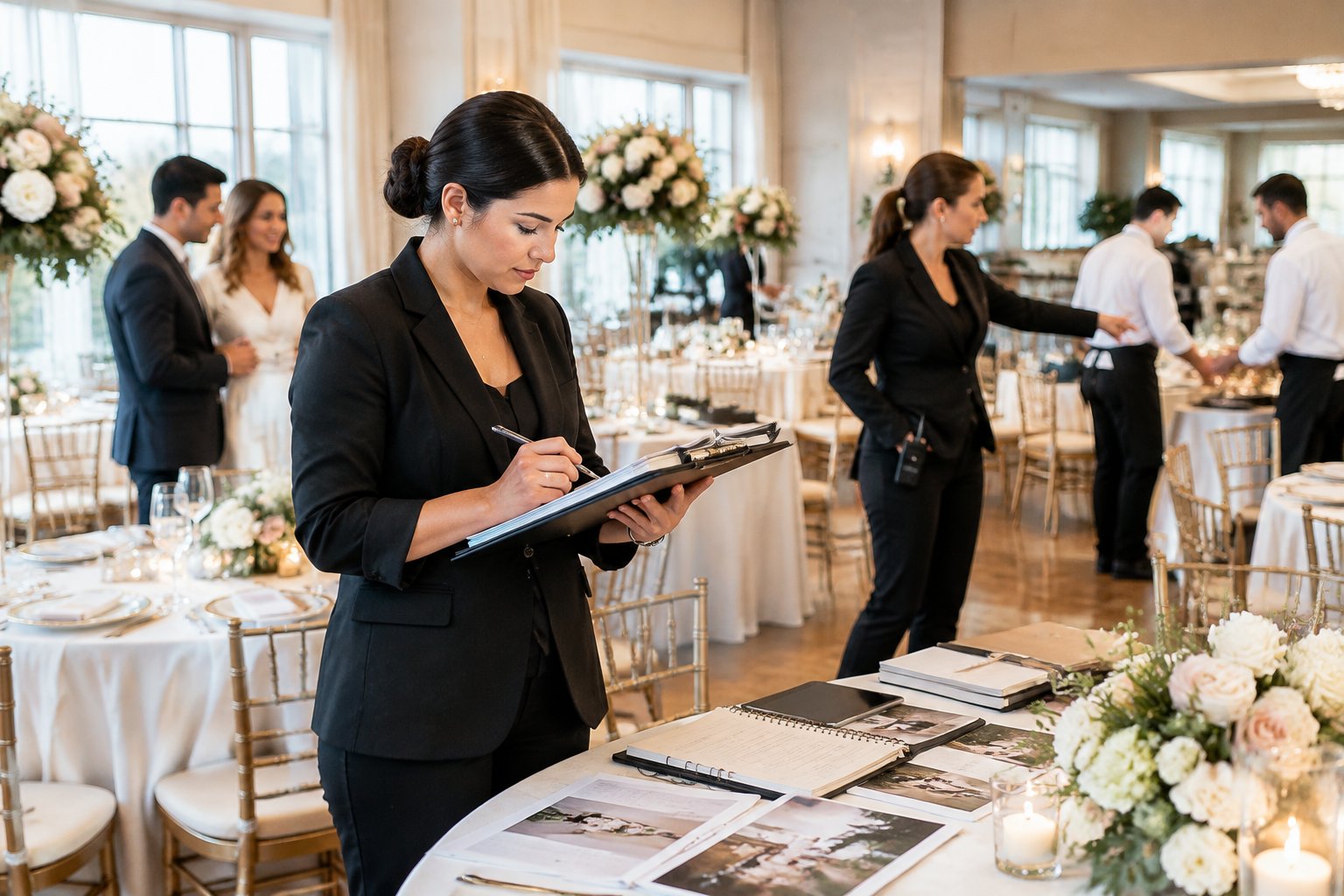
A planner or independent wedding coordinator manages the parts of your celebration that extend beyond the property. That includes the master timeline, vendor communication, ceremony flow, wedding party direction, personal details, and wedding-day problem solving.
Building the Master Wedding-Day Timeline
Your planner combines every moving part into one wedding timeline. The schedule may include hair and makeup, transportation, photography, the first look, ceremony seating, cocktail hour, dinner, speeches, dancing, and the exit.
A strong wedding-day timeline gives each vendor a clear arrival time, setup deadline, service period, and contact person. It also leaves room for travel, photographs, guest movement, and small delays.
Managing Vendor Communication and Arrivals
Your planner communicates with the photographer, DJ, florist, officiant, caterer, rental company, transportation team, and other vendors. They confirm contract details, arrival instructions, setup needs, payment questions, and schedule changes.
This coordination reaches beyond the venue’s staff. A venue coordinator may help an outside vendor enter the property, while your planner ensures that vendor’s work fits the full event plan.
Directing the Ceremony, Wedding Party, and Key Transitions
Your wedding planner guides the wedding party through processional order, portraits, transportation, cocktail hour, dinner entrances, speeches, and reception transitions. They may cue the officiant, photographer, DJ, and family members as each moment approaches.
They also help keep guests moving between spaces. That support protects your time for photos, private moments, and conversations with loved ones.
Protecting Personal Details and Solving Day-Of Problems
Place cards, favors, welcome signs, personal vows, family heirlooms, emergency items, and special instructions need an owner. Your planner tracks those details and checks that they appear in the right place at the right time.
During wedding-day coordination, the planner handles questions and unexpected changes before they reach you. If a vendor is late, weather changes the ceremony plan, or a seating detail needs correction, the planner chooses the next step with your priorities in mind.
Which Level of Planning Support Fits Your Wedding?
Your best choice depends on your wedding budget, planning workload, family dynamics, and need for creative direction. Venue coordination may cover a simple event, while day-of, month-of, or full-service planning adds support at increasing levels.

When Venue Coordination May Be Enough
Venue coordination may suit you when the venue provides catering, rentals, setup, staff, and a clear on-site contact. This option also fits a smaller wedding with one location, few outside vendors, a short guest list, and a simple schedule.
You may feel comfortable handling vendor contracts, budget tracking, design choices, timeline updates, rehearsal details, and personal setup. Confirm who will manage ceremony cues, outside vendors, personal decor, gifts, cards, and cleanup before you rely on the venue team alone.
When a Day-Of or Month-Of Coordinator Makes Sense
A day-of coordinator helps carry out plans you have already made. You remain involved in planning while this professional takes over final confirmations, vendor communication, timeline work, rehearsal support, setup, and wedding-day management.
A month-of coordinator starts earlier and has more time to learn your contracts, venue, vendors, family dynamics, and priorities. Choose this level when you enjoy planning yet want a trained person to take control before small gaps become wedding-day problems.
When Full-Service Planning Is Worth the Investment
Full service planning fits a complex wedding, a short planning period, multiple locations, a large vendor team, or a celebration with several events. It also helps when you want support with creative direction, vendor selection, budget decisions, design, guest logistics, and ongoing communication.
The investment may feel worthwhile when planning competes with work, school, travel, or family responsibilities. Ask each planner what their package includes, how many team members attend the wedding, and which design or coordination services carry an added fee.
Questions to Ask Before Relying on Your Venue Coordinator
Ask for a detailed scope before you assume venue coordination covers wedding-day execution. The answers should identify who handles venue duties, outside vendors, personal details, setup, rehearsal, and the end of the night.
What Is Included in the Venue Coordinator’s Scope?
Ask whether the coordinator will:
- Manage venue access and staff
- Set tables, chairs, linens, and venue-owned rentals
- Coordinate in-house catering and bar service
- Approve and manage the floor plan
- Direct outside vendor load-in
- Place personal decor, signage, favors, or place cards
- Cue the ceremony and reception program
- Attend or run the rehearsal
- Handle gifts, cards, personal items, and cleanup
- Stay through the final guest departure
Request the answers in writing. A package that says “day-of coordination” may have a narrower scope than you expect.
Who Owns Vendor Contracts and Timeline Updates?
Ask who reviews vendor contracts, confirms arrival times, distributes timeline updates, and answers vendor questions. Venue coordinators may communicate with vendors about access and facility rules, while your planner manages the full vendor team.
Ask whether the venue coordinator contacts your photographer, DJ, florist, officiant, and transportation provider. Confirm who updates everyone when the ceremony time, floor plan, or weather plan changes.
Who Is Responsible for Setup, Rehearsal, and End-of-Night Details?
Ask who sets out personal items, manages the rehearsal, gathers gifts, checks the dressing rooms, oversees rental pickup, and confirms that all belongings leave with the right person.
Also ask when the coordinator’s shift ends. A venue team may manage the room and staff through the contracted event time, while personal cleanup, transportation, and gift removal require another point of contact.
How Your Planner and Venue Coordinator Work Best Together
Your planner and venue coordinator work best as a shared team with separate responsibilities. The venue coordinator leads property operations, while your wedding coordinator manages your wedding vision, vendor communication, and personal priorities.
Creating One Shared Plan Without Blurring Responsibilities
Give both professionals the same master timeline, floor plan, vendor list, contact sheet, and production notes. Schedule a joint meeting or final walkthrough so everyone agrees on ceremony timing, reception setup, vendor access, meal service, and weather procedures.
Keep responsibilities visible in writing. A shared plan should identify who approves room changes, who cues the DJ, who contacts the caterer, who handles personal decor, and who speaks with you during the wedding.
Handing Off Venue-Specific Decisions to the Right Person
Let the venue coordinator lead decisions about building access, fire safety, catering operations, facility rules, room capacity, and venue-owned equipment. Let your planner lead decisions about vendor timing, ceremony flow, wedding party direction, personal items, and your guest experience.
This handoff keeps instructions clear. If you want to hang decor, move a bar, change a floor plan, or adjust the ceremony location, your planner can bring the request to the venue coordinator for approval.
Giving Your Family and Vendors One Clear Point of Contact
Tell your family, wedding party, and vendors who should receive questions on the wedding day. Your planner should handle personal and schedule questions, while the venue coordinator handles facility and service issues.
Share both contacts with the vendor team, along with clear boundaries. That structure keeps relatives from managing logistics, prevents duplicate instructions, and lets you stay focused on your celebration.