
Do You Put Full Names on Wedding Invitations? Essential Tips for Invitation Etiquette
When planning your wedding, one of the first details to consider is the wording on your invitations. You should use full names on wedding invitations to ensure proper etiquette and clarity. This helps convey the formality of the occasion and shows respect for your guests.
Including full names, without nicknames, sets the right tone for your big day. It’s not just about following rules; it’s also about making sure that everyone understands who is invited. This small detail can help avoid any confusion and make your invitations look elegant.
As you craft your wedding invitation wording, remember that these cards are a reflection of your celebration. By using full names, you enhance the formality and importance of the event. Your guests will appreciate the effort you put into ensuring everything is done right.
Understanding Wedding Invitation Etiquette
Wedding invitation etiquette is important for setting the right tone for your big day. Knowing how to properly address invitations ensures clarity and respect for your guests. Here are the key elements to keep in mind.
Host Line and Request
The host line of your wedding invitation is where you state who is inviting the guests. This is usually the names of the couple’s parents or the couple themselves. For example, “Mr. and Mrs. John Smith request the honor of your presence…”
Including the host’s names adds formality to your invitation. You can choose to personalize this line based on your family’s situation, whether they are traditional or modern. Remember to use proper titles, such as “Mr.”, “Mrs.”, and “Dr.” These titles show respect and should match the preferences of those being named.
Names of the Couple
Including the full names of the couple is very important in wedding invitations. It reflects respect and clarity. It’s best to use your formal names as they appear on legal documents. This helps eliminate any confusion about who is getting married.
For instance, if your name is Elizabeth Anne Jones but you prefer to go by Liz, still use “Elizabeth Anne” on the invitation. The inner envelope may allow for a more casual nickname. This approach combines formality with intimacy and helps your guests feel welcomed.
Date and Time
The date and time are key details on your invitation. Ensure these are clearly stated so guests can plan accordingly. Write out the full date, like “Saturday, the Fifth of June, Two Thousand Twenty-Five,” to add a touch of elegance.
When mentioning the time, be specific. Avoid using phrases like “around” or “approximately.” Instead, state the exact time, like “at four o’clock in the afternoon.” This clarifies when your guests should arrive and reflects attention to detail in your wedding planning.
Location Details
Location details must be accurate and complete in your invitation. Begin with the venue’s name, followed by the address. Include street name, city, state, and zip code to help guests easily find the location.
If your wedding is at an unusual venue, like a private residence or park, be clear about the directions. You might also want to mention if parking is available. This information can ease the planning process for your guests and adds to the overall professionalism of your invitation.
Addressing the Envelopes
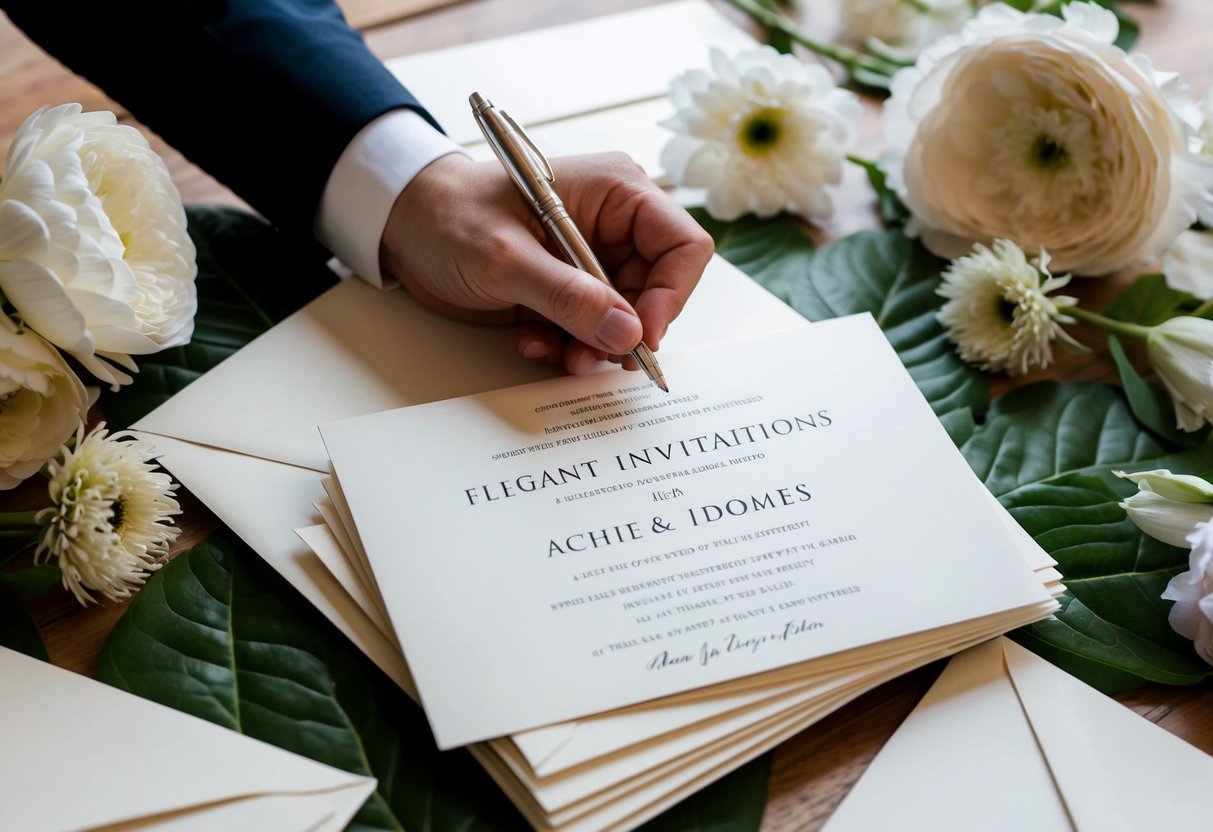
When it comes to addressing the envelopes for your wedding invitations, details matter. You want to ensure that the names and titles reflect your guests’ preferences and relationships. This not only shows respect but also sets the tone for your special event.
Formal Invitation Titles
For formal invitations, using proper titles is essential. If you are addressing a married couple, you can write “Mr. and Mrs. John Smith.” If the couple has different last names, use “Mr. John Smith and Ms. Emily Davis.”
In cases where you have unmarried couples or special titles, list them as you see fit. For example, “Ms. Sarah Brown and Mr. Tom Jones” works well. If you choose to omit titles for a more modern approach, simply use first names: “John and Emily.”
Keep in mind that clarity is key. Avoiding confusion in titles can help guests feel comfortable before they arrive.
Guest Information
Each envelope should clearly display the full names of your guests. This includes both the outer and inner envelopes. The outer envelope should have the complete address, while the inner one can be more personal with just the names.
If you’re inviting a family, include the children’s names if they will attend. You might write “The Johnson Family” or “Sarah and Timmy Johnson.” This ensures everyone feels included.
Whenever you address envelopes, double-check the spelling of names. Missteps can lead to misunderstandings or hurt feelings.
Plus One Protocol
When inviting guests with a plus one, clarity is again essential. If a guest has the option to bring someone, mention it in either the invitation or clearly on the envelope.
For instance, during addressing you might write “Ms. Sarah Brown and Guest.” If you are aware of who their guest will be, you can also write their name: “Ms. Sarah Brown and Mr. David Lee.”
Make sure each guest knows whether they can bring someone, as this helps with planning and ensures that no one feels awkward about attending alone.
Final Touches and Additional Information

When planning your wedding invitations, consider including essential details to help your guests prepare. This includes information about the reception, RSVP instructions, and directions to your venue. Let’s dive into what to add.
Reception and Ceremony Card
Don’t forget to include a separate reception card if your reception is at a different location than the ceremony. This helps guests know where to go.
Make sure to provide the ceremony start time clearly. You can phrase it like this: “Join us for the ceremony at [Venue Name], beginning at [Time].”
For the reception, include details such as starting time and location. You might write: “Reception to follow at [Reception Venue], starting at [Time].” This clarity keeps everyone informed.
RSVP and Plus Ones
An RSVP card is essential for managing your guest list effectively. Clearly state the deadline for responses, such as “Please respond by [Date].” This helps you finalize numbers for catering and seating.
Don’t forget to specify if guests are allowed plus ones. You can phrase it like this: “We have reserved seats for you and a guest.” This ensures that your invitees know if they can bring someone along.
Consider including an option on the RSVP card for meal preferences to make it easier for you to cater to everyone.
Directions and Accommodations
You must provide directions to your ceremony and reception venues. You should also consider including a small map or links to map services. This is helpful for guests who may be unfamiliar with the area.
If you have guests traveling from out of town, include accommodation options. List a few nearby hotels, along with any group rates you may have secured. You could say, “For your convenience, we recommend staying at [Hotel Name].”
This information ensures your guests feel welcome and helps them plan their trip effectively.