
Do You Put RSVP on Wedding Invitations? Essential Tips for Your Special Day
One common question arises when it comes to wedding invitations: do you put the RSVP date on the main wedding invitation or include it on the response card? This simple detail can make a big difference in your wedding planning. Knowing where to place the RSVP information helps ensure your guests respond in a timely manner, making it easier for you to finalize your guest list.

Including RSVP details on a separate card also allows your wedding invite to maintain a clean and elegant look. You want your wedding invitation to reflect the joy of your celebration, and having a dedicated spot for RSVP information keeps everything organized. With the right design and wording, your invitations can clearly communicate how excited you are for your special day while gathering the necessary information from your guests.
Don’t underestimate the value of a well-structured response card. It simplifies the process for both you and your guests. By providing clear RSVP instructions, you can focus on other aspects of your wedding planning while ensuring everyone knows how to confirm their attendance.
Understanding RSVP and Its Role in Wedding Invitations
RSVP cards are essential for any wedding invitation. They help you manage guest lists and ensure that your celebration runs smoothly. Knowing the etiquette around RSVPs and deadlines can make a big difference in your planning.
The Purpose of RSVP Cards
RSVP cards serve a simple but vital purpose. They allow your guests to confirm whether they will attend your wedding. By including an RSVP card with your invitation, you make it easier for them to respond. Traditionally, this card includes space for guests to write their names and indicate if they will be attending.
Using an RSVP card can help you estimate how many people will be at your event. This information is crucial for planning food, seating, and more. Having a clear count also lets you reach out to those who have not yet responded, ensuring everyone has a chance to share their plans.
Wedding Response Card Etiquette
When it comes to wedding response cards, etiquette matters. It’s best to include a few key details. Besides asking for a “yes” or “no,” add the RSVP date clearly. A common deadline is about three to four weeks before the wedding. This gives you enough time to finalize arrangements.
Make sure the RSVP card is easy to read and fill out. You could also consider providing a website link for online responses. This caters to tech-savvy guests and can streamline the process. Remember to include a stamp if your RSVP card is mailed, showing thoughtfulness towards your guests.
RSVP Deadline Importance
Setting an RSVP deadline is crucial for effective wedding planning. This date helps you gauge how many guests will attend, making logistical arrangements manageable. If you allow guests a generous amount of time, they are more likely to respond.
Aim for an RSVP date around three to four weeks before your wedding day. This timeline gives you enough opportunity to follow up with those who haven’t replied. Missing this date can complicate food orders and seating charts, so it’s essential to stick to it whenever possible. Keeping guests informed about this deadline shows you’re organized and considerate.
Designing Your Invitation Suite
Creating your wedding invitation suite is a fun and important task. You’ll want to pay attention to the details, like choosing the right stationery and incorporating your RSVP cards properly. Clear RSVP instructions are also key to making sure your loved ones respond in a timely manner.
Choosing the Right Wedding Stationery
When selecting your wedding stationery, think about the overall theme and colors of your wedding. Your invitations should reflect your style and set the tone for the event.
Here are some elements to consider:
- Type of Paper: Choose a quality paper that fits your budget. Options range from simple to textured finishes.
- Design Elements: You might want to include floral designs, elegant fonts, or even a custom monogram.
- Color Scheme: Coordinate colors to match your wedding palette.
Don’t forget about the extra pieces in your suite, such as enclosure cards for details about accommodations or directions. Including these shows guests you have thought of everything.
Incorporating RSVP Cards
RSVP cards are essential to gathering an accurate headcount for your wedding. When designing these cards, consider making them a part of your overall invitation suite to keep the look cohesive.
Make sure to include:
- Clear Wording: Use a straightforward phrase like “Please RSVP by [date].”
- Response Options: You can offer simple choices like “Attending” or “Not Attending,” along with a space for extra notes.
- Return Envelope: Including a stamped envelope can encourage quicker responses.
This makes it easier for your guests to respond and helps you with your planning.
Detailing the RSVP Instructions
To ensure you get timely responses, clear RSVP instructions are crucial. Make sure guests know exactly what to do and by when.
Include the following details:
- Deadline: Specify the date you need replies by. This helps you finalize your headcount on time.
- Method of Response: Decide if you want guests to return the card via mail or respond online. If online, include the URL.
- Special Requests: If you’re offering meal choices or other options, provide a space for guests to indicate their preferences.
By giving clear and concise RSVP instructions, you will make it easy for your guests to respond, making your planning process smoother.
Logistics and Details to Include
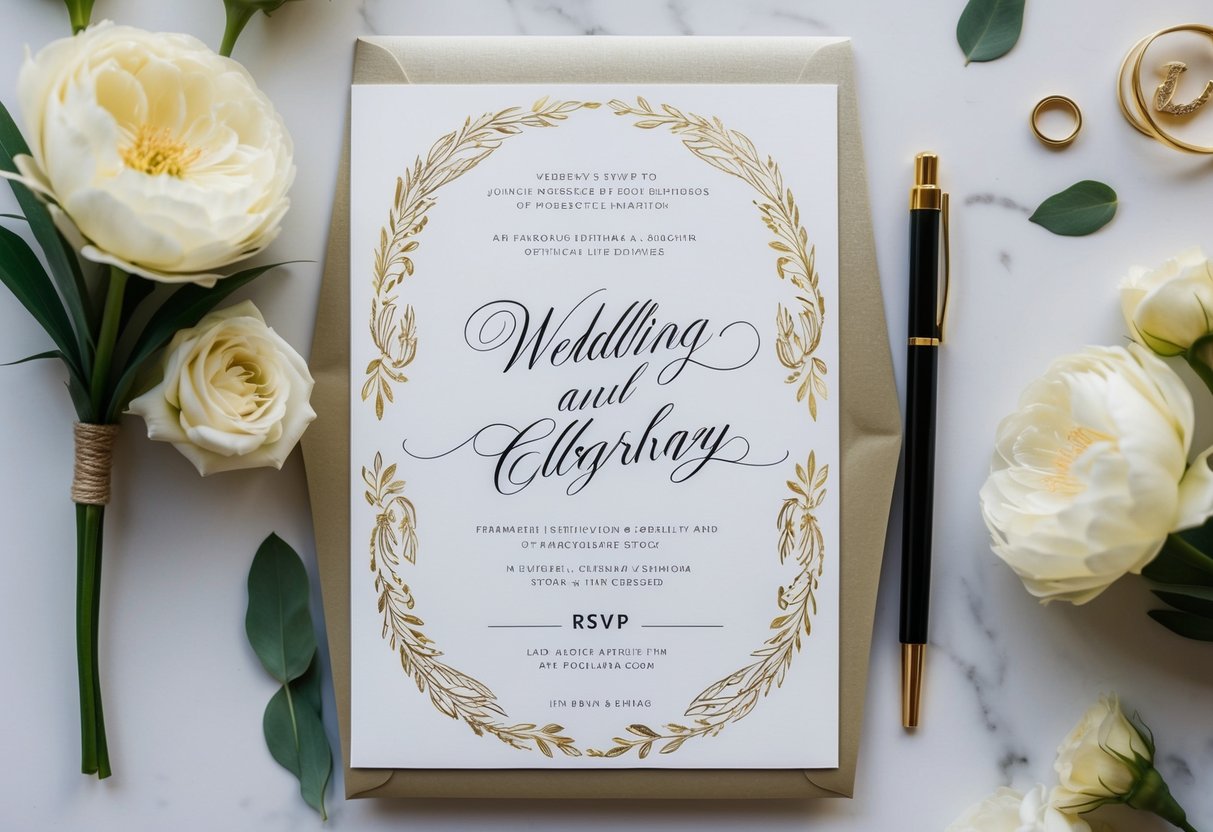
When planning your wedding invitations, it’s essential to include specific logistics and details that make it easier for your guests to respond and prepare for the celebration. You’ll want to ensure all information is clear and helpful.
Guest Information and Accommodations
Start by providing your guests with necessary details about the venue. Include the ceremony and reception addresses clearly. This helps guests know exactly where to go.
If your wedding is in a different city or state, mention nearby accommodations. Include an accommodation card with suggested hotels, their rates, and reservation information. This way, guests can easily find places to stay.
Also, think about your guest list. If you allow plus-ones, clarify that in the invitation. A line like “We welcome you to bring a guest” can be helpful. This ensures everyone feels comfortable attending.
Food Preferences and Dietary Requirements
Food is an important part of your wedding day. It’s smart to include meal preference options on your RSVP card. Consider listing a few entrée selections for guests to choose from.
You should also ask for dietary requirements. A simple line like, “Please let us know if you have any dietary restrictions” can make a big difference. This shows your guests that you care about their needs and want to make them feel included.
Using checkboxes for meal options and a space for dietary notes will help keep responses organized. This will assist your catering team in planning the menu efficiently.
Additional Information for Destination Weddings
If you’re hosting a destination wedding, extra details are needed. Make sure to provide travel information, such as the nearest airport and transportation options to the venue.
You might also want to share activities available in the area, like local attractions or excursions guests can enjoy before or after the wedding. This adds excitement for those who travel a distance.
Consider including a wedding website link where guests can find more information. This can cover everything from travel tips to local dining options. Keeping your guests well-informed will enhance their experience.
Alternatives and Modern Solutions

There are several contemporary methods to manage RSVPs for your wedding. By leveraging technology, you can simplify the process for both you and your guests. Here are two popular approaches to consider.
Embracing Online RSVPs
A wedding website is an excellent option for collecting RSVPs. You can create a dedicated page where guests can easily respond. This method allows for quick updates and a stylish presentation.
Benefits of Online RSVPs:
- Convenience: Guests can RSVP anytime and from anywhere.
- Organization: You can track responses automatically.
- Customization: Personalize your site to match your wedding theme.
Also, consider adding a QR code to your invitations. Guests can scan it to access your website directly. This tech-savvy touch makes responding easy and fun.
Integrating Technology with Traditional Invites
If you prefer traditional invitations, you can still incorporate modern solutions. Add response cards to your invitations, but include instructions to visit your website for more information.
Having both options ensures everyone can respond comfortably.
Use a simple design for response cards, and clearly state the RSVP deadline.
Tips for Integration:
- Mention your website on the invitation and response card.
- Provide a phone number for guests who may want to call instead.
- Keep your information concise but clear.
This thoughtful approach caters to different preferences, ensuring all your guests feel included.