
Do You Put Surnames on Save the Date? Clarifying Wedding Invitation Etiquette
When sending out save the dates, one common question arises: do you put surnames on them? Yes, you should, especially if you are inviting couples with different last names. Including both names makes your invitation more personal and helps avoid any confusion among your guests.
Save the dates serve as an early notification of your wedding date, allowing your loved ones to mark their calendars well in advance. This is particularly important for destination weddings or events during busy seasons. By following proper save-the-date etiquette, you can ensure that more of your friends and family can celebrate this special day with you.
Whether you choose to feature both surnames prominently or simply include them in the address line, adding this detail can enhance your guests’ experience. After all, clear communication sets the foundation for a joyful celebration ahead!
Understanding Save-the-Date Basics
Save-the-date cards are a fun way to share important information about your upcoming wedding. They help ensure your guests mark their calendars for your special day. Here’s what you need to know about their purpose and when to send them.
Purpose of Save-the-Dates
The main purpose of save-the-date cards is to inform your guests about your wedding date well in advance. This is especially helpful if you are planning a destination wedding or have a long guest list.
By sending these cards, you give people a heads-up. This allows them to make travel arrangements and adjust their schedules.
It’s important to include key details like the wedding date and location. You can also add a note saying “invitation to follow” for the formal invitation later on. This creates excitement and helps with early planning.
Timing for Sending Out
Timing is crucial for save-the-date cards. You should send them out 6 to 12 months before your wedding. This gives your guests enough time to plan ahead and set aside the date.
For destination weddings, aim for the 12-month mark. Guests will need to arrange travel and accommodations.
Make sure to consider your guest list. Sending cards early is especially important if your wedding falls during busy seasons or holidays.
Etiquette and Wording Tips

When creating save-the-dates, it’s important to pay attention to the details. This includes what information to include, how to address different types of couples, and personal touches you can add to make it special.
Essential Information to Include
A save-the-date should provide essential details to your guests. This often includes the couple’s names, the wedding date, and the location.
- Names: For married couples, use both surnames, like “John and Jane Smith.”
- Unmarried couples can choose to use either both names or just the first name of each partner.
- Same-sex couples typically use both names, listing them in the order they prefer.
Don’t forget to include the city or venue if known. It helps guests save the date more easily. For the wording, a casual phrase like “Save the Date!” works well.
Addressing to Different Types of Couples
Using the proper format is vital when addressing your save-the-dates. Different types of couples have different preferences.
- For married couples, list both names: “Mr. and Mrs. John Smith.”
- With unmarried couples, you can simply write their names without titles, like “John and Jane.”
- Same-sex couples may choose to list names as they prefer, ensuring both names are included equally.
Using monograms can also add a personal touch. For example, a simple design like “JS & JA” can make the save-the-date feel unique.
Personalizing Your Save-the-Dates
Adding a personal touch to your save-the-dates can make them memorable. Think about your relationship and what reflects your style.
Including a photograph of you as a couple can make a wonderful impression. It adds warmth and personality.
You might also want to include a special design that resonates with your theme. Using colors that match your wedding palette ensures consistency. Even a fun quote or a special date can add flair.
Make sure your wording feels authentic to you. Whether formal or casual, the tone should match your personalities, making your save-the-dates feel uniquely yours.
Digital vs. Physical Save-the-Dates
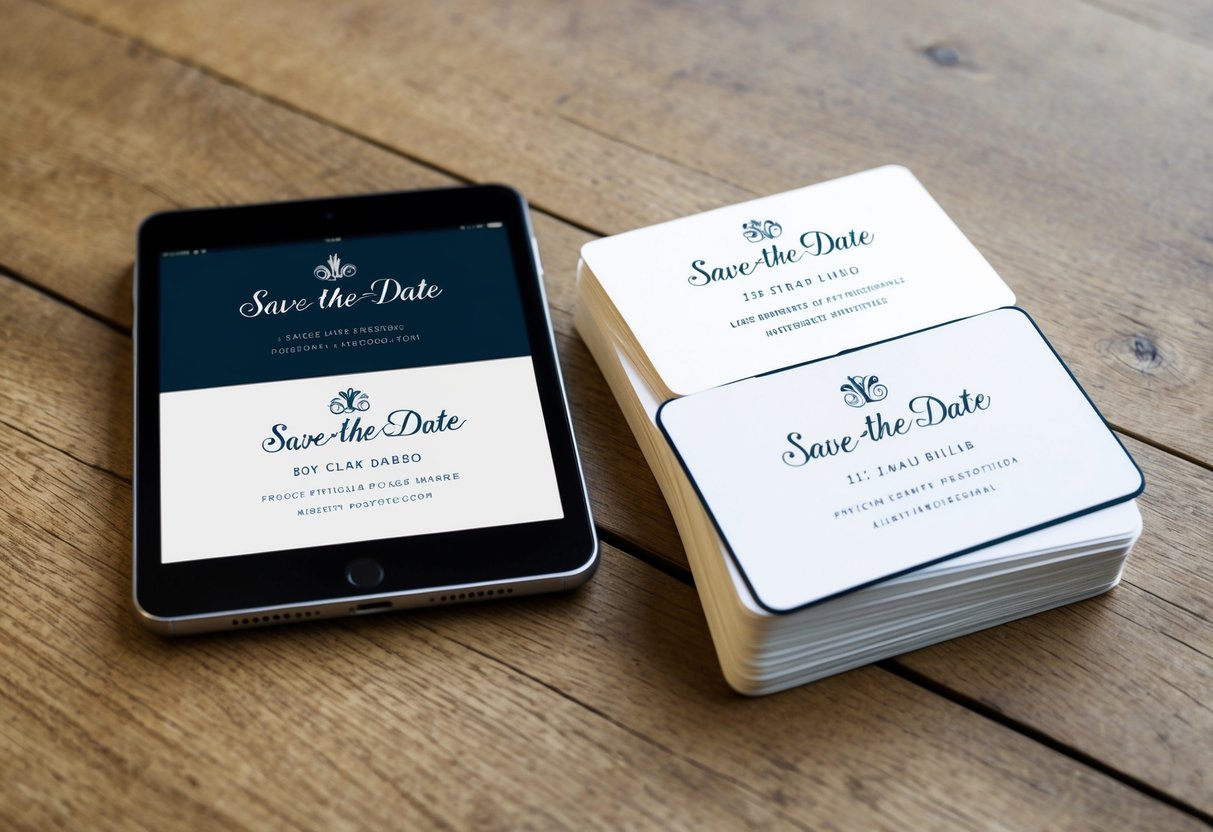
Choosing between digital and physical save-the-dates depends on your style and needs. Each option has unique features that cater to different preferences and circumstances, so consider what matters most to you for your wedding.
Benefits of Digital Save-the-Dates
Digital save-the-dates offer convenience and flexibility. You can quickly send them via email or social media, reaching your guests instantly. This method saves on printing costs and postage, which is ideal if you’re working with a tight budget.
With electronic save-the-dates, you can include links for RSVPs or wedding websites. Many online platforms provide stylish templates, allowing you to create an appealing design without any effort.
Another perk is the ability to easily track who has opened your invite, ensuring you can follow up with those who haven’t responded yet. This option is great for last-minute announcements, as you can update guests quickly if plans change.
Advantages of Physical Cards
Physical save-the-date cards offer a tangible touch that digital options can’t match. Receiving a beautifully designed card in the mail feels special and personal. You can choose from various designs, such as formal save-the-dates or themed options that match your wedding.
Sending save-the-date envelopes allows for elegant touches, such as calligraphy on the address labels. This personal detail can impress your guests and show them you put thought into inviting them.
Moreover, physical cards make great keepsakes. Many couples enjoy displaying them on fridges or bulletin boards. If you prefer a traditional feel and want to create a lasting impression, physical save-the-dates might be the way to go.
Additional Considerations for Destination Weddings
When planning a destination wedding, there are some important factors to keep in mind. You want to ensure your guests have all the necessary information to prepare for your special day.
Timing for Destination Weddings
Set the date early to give your guests ample notice. For destination weddings, sending save-the-dates at least six months in advance is ideal. This helps guests plan travel arrangements without stress.
Consider the wedding season at your location. Different seasons can affect costs and availability. You might find lower rates during off-peak times, but be mindful of weather conditions.
Include key information, like the date and location of the wedding, in your save-the-dates. This guides guests who may need to coordinate their schedules or take time off work.
Travel and Accommodation Details
Provide travel tips to your guests. Share how to reach your wedding location, including airport options and local transportation.
It’s also helpful to include accommodation options. List several hotels or resorts near the wedding venue. You might secure a group rate to make it easier for your guests.
Consider creating a wedding website. Include all relevant information such as travel guides, registry information, and RSVP options. This centralizes everything for your guests and helps them stay organized.
By planning for these additional considerations, you set your guests up for a smooth and enjoyable experience at your destination wedding.