
Do You Put Surnames on Wedding Place Cards? Tips for Perfect Seating Arrangements
When planning your wedding, every detail matters, including your wedding place cards. You might wonder if you should include surnames on these cards. Including surnames can enhance your guests’ experience by providing clear identification and adding a personal touch.
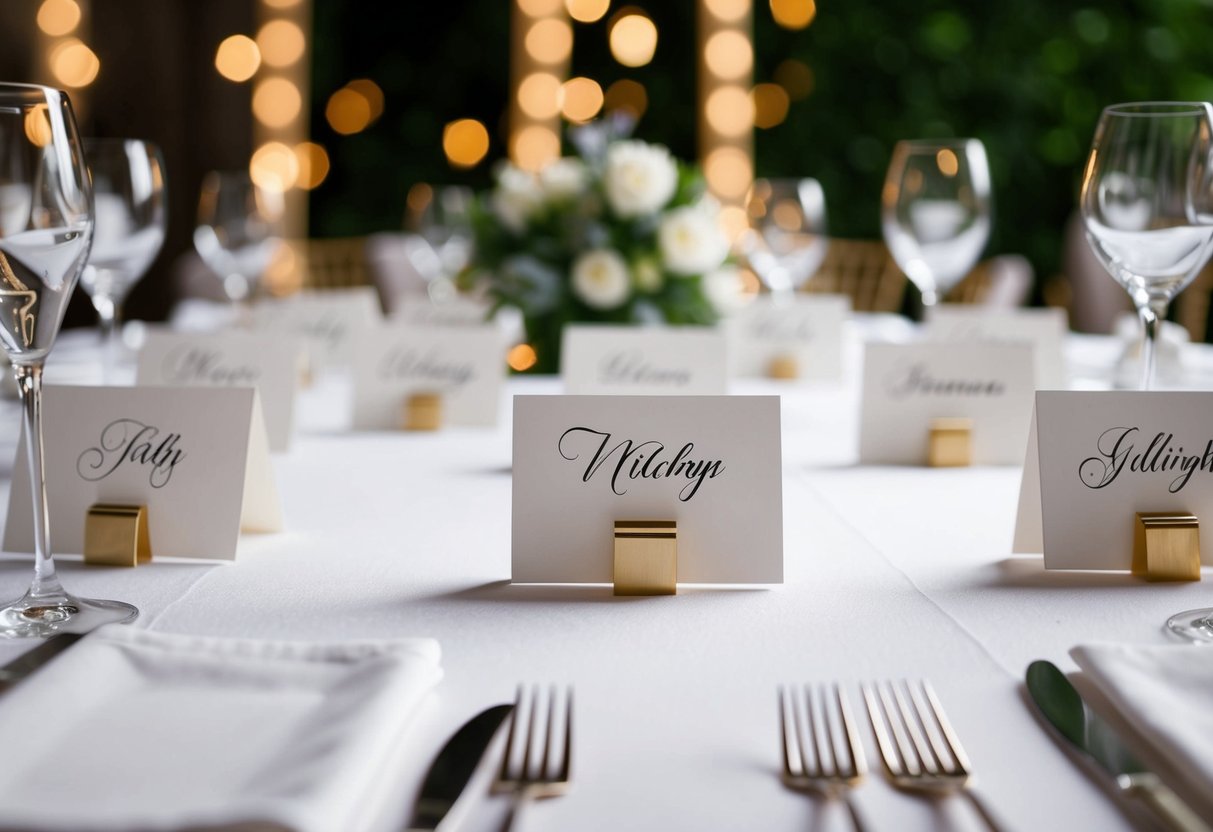
Including surnames helps avoid any confusion, especially in larger gatherings. When guests see their full names, they feel acknowledged and valued, making them more connected to your special day. This small detail may seem minor, but it can create a more inviting atmosphere for everyone.
Ultimately, the choice is yours. If you feel that including surnames reflects your style and helps your guests feel at home, it might just be the right move for your wedding.
The Role of Place Cards in Wedding Etiquette
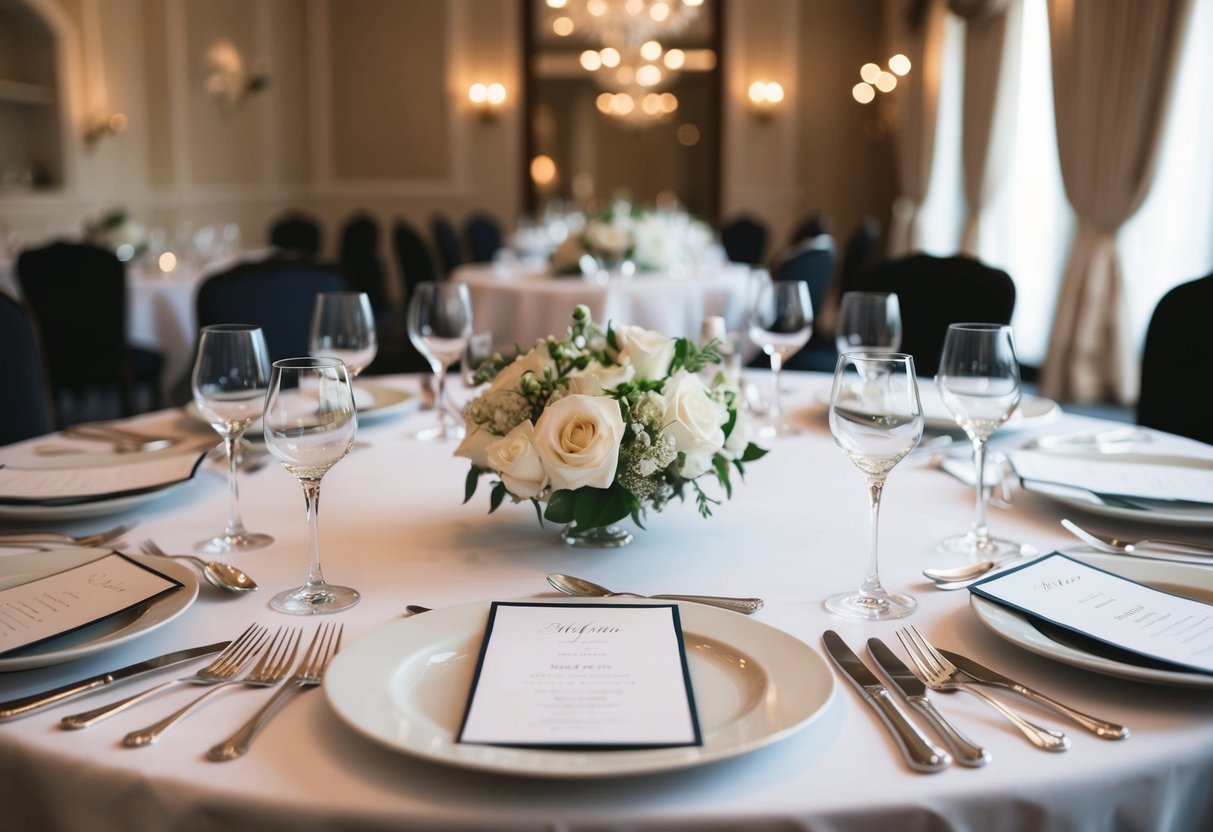
Place cards are an essential part of wedding etiquette. They help guests find their seats and add a touch of formality to your event. Here, you’ll explore the differences between place cards and escort cards, the importance of seating arrangements, and the role of surnames in making your wedding more sophisticated.
Understanding Wedding Place Cards vs. Escort Cards
Place cards and escort cards serve different purposes. Place cards are labeled cards placed directly on the table at each guest’s seat. They indicate where someone should sit. Escort cards, on the other hand, guide guests to their assigned table, but do not assign specific seats.
Key Points:
- Place Cards: At each seat, showing the guest’s name.
- Escort Cards: Guide to tables, offering flexibility.
Using the right card helps set a clear and organized atmosphere for your wedding reception. It enhances the guest experience by reducing confusion about where everyone should sit.
Significance of Seating Arrangements at Weddings
Seating arrangements play a vital role in wedding receptions. Thoughtful seating can enhance conversations and strengthen relationships among guests. A well-planned arrangement keeps families together and separates those who might not get along.
Consider these tips:
- Group Similar Guests: Place friends and family members who know each other together.
- Avoid Awkwardness: Don’t seat guests next to someone with whom they may have conflict.
Using a seating chart for your wedding helps ensure a smooth flow to the event. It also signals the formality of your celebration, showing that you care about everyone’s experience.
Incorporating Surnames for Sophistication
Including surnames on wedding place cards can add a touch of sophistication. This is especially helpful at formal weddings where guests may not know each other well. Listing full names (first and last) makes it clear who is sitting where.
Benefits of Using Surnames:
- Clarity: Helps everyone feel comfortable with seating arrangements.
- Formality: Complements your wedding stationery and overall theme.
When designing your seating plan, consider how surnames enhance the appearance and professionalism of your event. It shows attention to detail that guests will appreciate.
Designing Your Wedding Place Cards
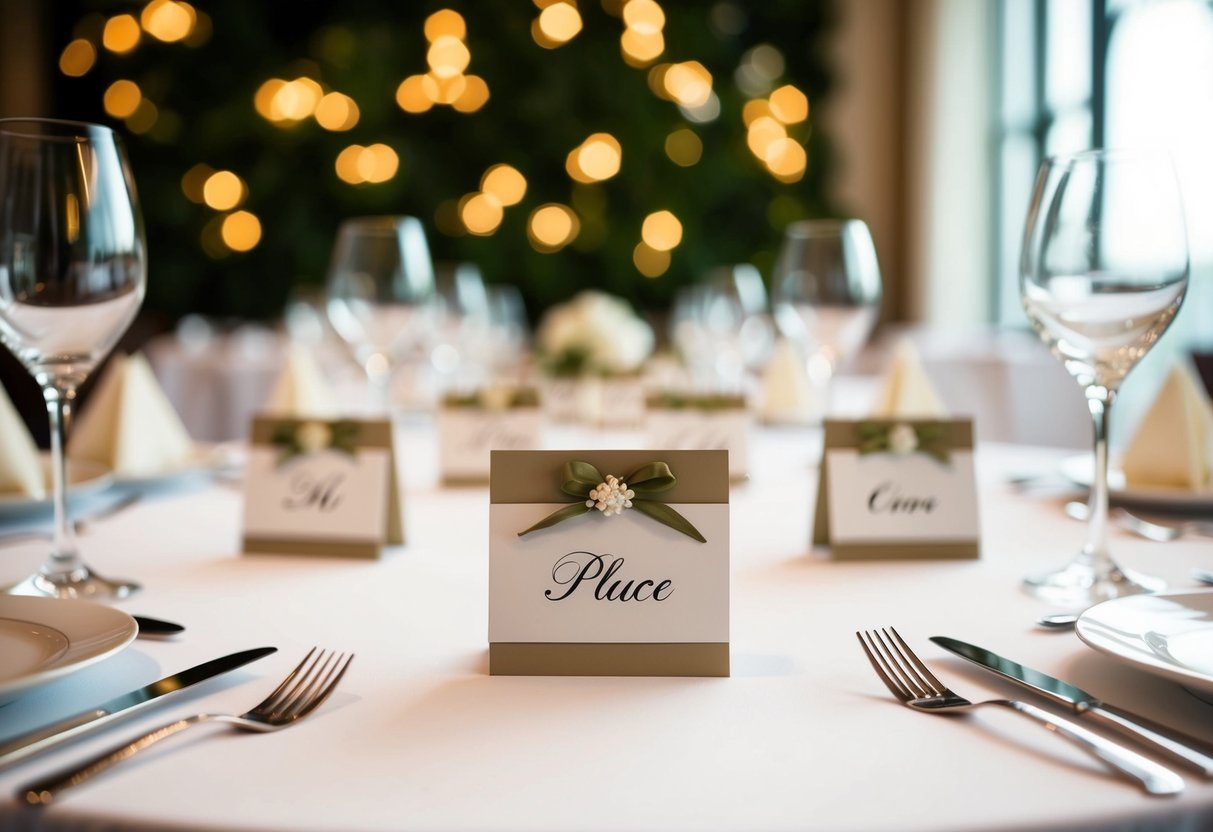
When designing your wedding place cards, consider the details that will make them stand out. You’ll think about whether to use full names or first names, the materials that best suit your wedding style, and how personal touches can create a memorable experience for your guests.
Choosing Between Full Names or Just First Names
Deciding whether to use full names or just first names on your place cards is a matter of personal preference. If you’re hosting a formal event, including surnames is often recommended. It adds a touch of elegance and helps guests feel recognized.
On the other hand, using first names can create a more intimate atmosphere. This option is perfect for casual or smaller gatherings. It fosters a warm and friendly vibe.
Think about your wedding’s theme and your guests’ preferences when making this choice. If your wedding includes a mix of family and friends, using both first and last names on your seating chart is a practical way to ensure everyone finds their place smoothly.
Selecting the Right Material and Calligraphy
Selecting the material for your place cards is just as important as the design itself. High-quality acrylic offers a modern and stylish look. Custom-made acrylic place cards can be designed in unique shapes, adding a personal flair.
If you prefer a classic approach, elegant name cards on textured card stock can create a sophisticated vibe. Calligraphy in a graceful script makes your place cards stand out. It showcases superior craftsmanship, giving a luxury feel to the overall presentation.
Consider using laser-cut names on gold place cards for a touch of glamour. The contrast will catch the eye and add to your table decor. Keep in mind the easy readability of your text to ensure guests can quickly locate their names.
Adding Personal Details for a Customized Touch
Personalizing your place cards can make a big impact. Adding small details like a decorative symbol or your wedding date can provide a unique touch. Think about including a small note or personalized message for each guest.
Consider color schemes that match your wedding theme. Incorporating elements from your invitations or table settings can create harmony throughout your decor.
Using custom-made escort cards can enhance the style while guiding guests to their seats. With each card reflecting your personality, your guests will feel a special connection to your celebration.
Etiquette and Practical Considerations
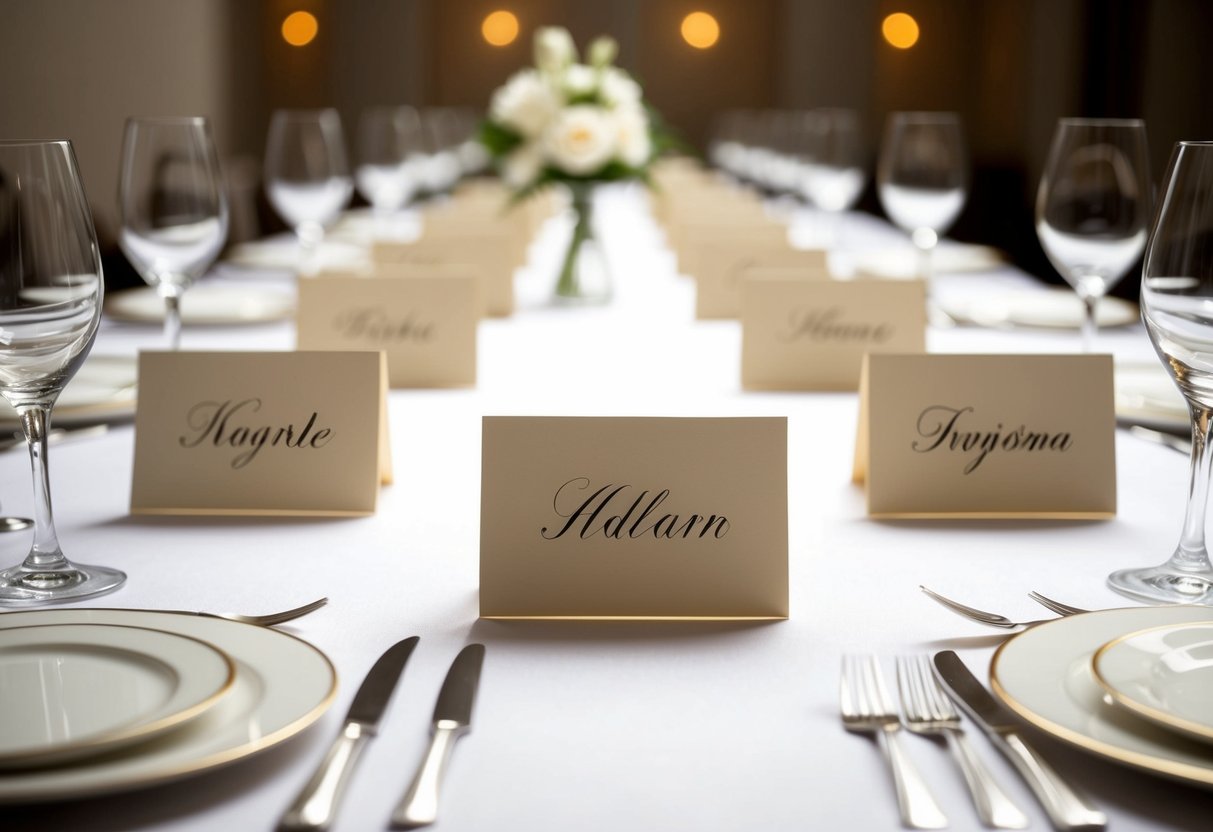
When planning your wedding seating, paying attention to details can enhance the experience for your guests. Properly addressing guests, considering meal preferences, and ensuring everything is easy to read are key aspects to think about.
Addressing Guests with Proper Titles
Using the right titles on place cards shows respect and consideration. A formal approach typically includes the title, first name, and last name, such as Mr. John Smith.
In more casual settings, you might choose just the first name, especially if you feel comfortable doing so. This can work well for a laid-back wedding.
Remember, if you have multiple guests with the same last name, it’s best to use full names to avoid confusion. This is particularly useful in ensuring that everyone finds their seat easily.
Navigating Meal Preferences and Allergies
Meal preferences are important and should be noted on place cards or the seating chart. Consider adding symbols or colored tags to indicate dietary restrictions, such as vegetarian or gluten-free options.
This helps servers know what each guest prefers, making service smooth and enjoyable.
You can also use tent cards on tables, displaying meal choices. This allows guests to see their options without needing to ask servers. Making meals clear helps everyone appreciate the catering.
Ensuring Readability and Accessibility
Readability is crucial for a pleasant experience. Use a clear font and size on your place cards so guests can easily read their names. Avoid overly fancy fonts that might be hard to decipher.
For best practices, ensure the cards are displayed standing up. This makes it easy for guests to locate their seats.
If you’re using a wedding seating chart, ensure it’s placed in a visible area where guests can easily check their seating assignments. This small detail can significantly reduce confusion and enhance the flow of your event.
Final Touches for Your Wedding Reception
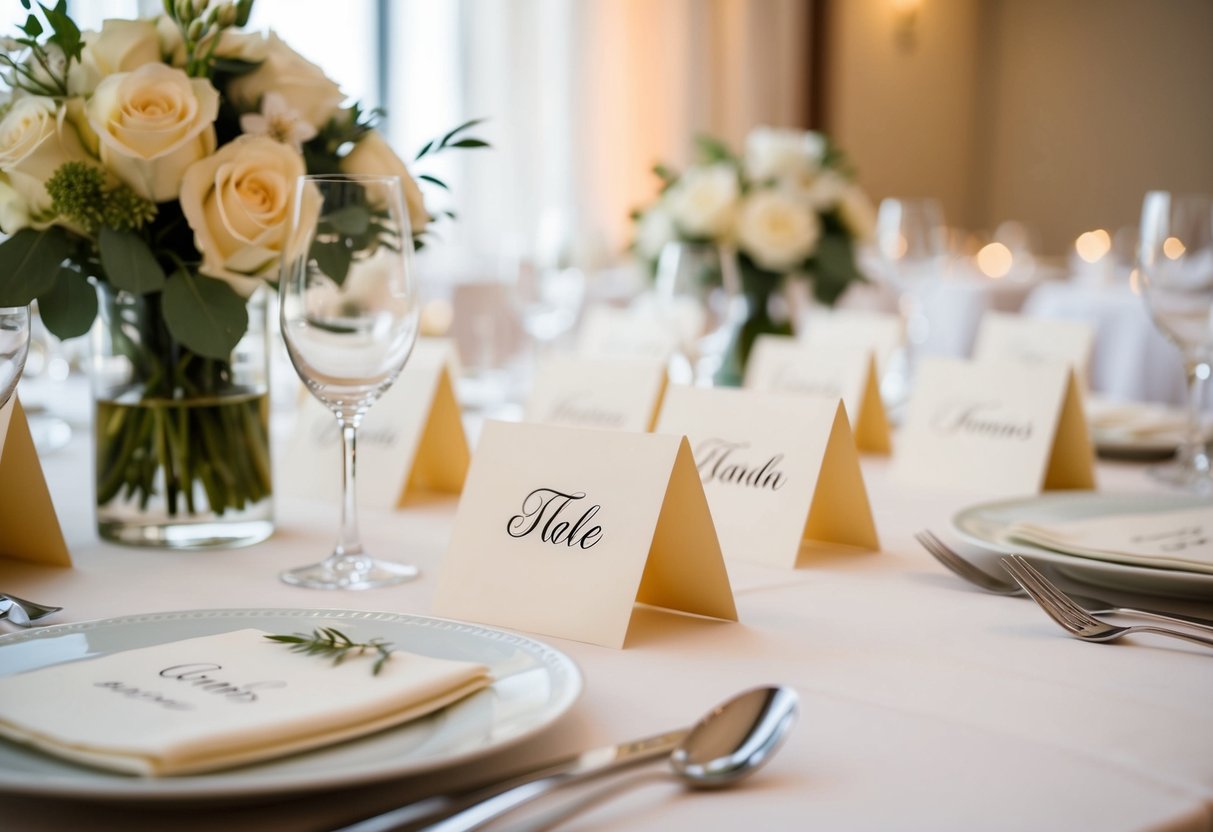
Getting the details right for your wedding reception can enhance the atmosphere and set the tone for a memorable event. Focusing on the theme, presentation, and decorative elements will create a cohesive experience for you and your guests.
Coordinating With Your Overall Wedding Theme
Your wedding reception should reflect your style. Start by considering your overall wedding theme. Whether it’s classic elegance or a rustic vibe, your place cards should match.
Choose colors and materials that complement your decor. For example, if you’re using luxury wedding cards, opt for matching place cards that incorporate similar colors and designs. You can use faux calligraphy for a touch of sophistication.
This coordination makes guests feel special and adds a thoughtful touch. It shows that you’ve considered every detail in your wedding planning.
Placement and Presentation at the Reception Tables
How you place and present your place cards can make a big difference. Arrange them clearly at each reception table, ensuring they are easy for guests to find.
Consider using holders that match your decor, like elegant stands or decorative accents. This adds an extra layer of style. When positioning your place cards, ensure they are at eye level to be easily seen.
Remember to include honorific titles for guests, such as Mr. or Mrs., to add a personal touch. Each place card should have the full name, ensuring your guests feel recognized.
Creating a Harmonious Look With Decorative Accents
Incorporating decorative accents can tie everything together beautifully.
Think about small elements that can enhance your reception tables.
Consider adding floral arrangements, candles, or themed decorations that match your wedding theme. For a classic look, use simple centerpieces that don’t overshadow the place card design.
Using consistent fonts and styles for your wedding reception stationery, including place cards, is essential. This creates a harmonious look throughout the space.
You can mix textures like lace or metallics to add an extra layer of interest while staying within your theme.