
Do You Tip a Celebrant at a Funeral in the UK? Understanding the Etiquette
When it comes to funerals in the UK, many people face the question of tipping, especially when it involves a celebrant. Generally, you do not tip a celebrant for their services as their fee is included in the funeral arrangements. That said, if you feel particularly grateful for their support and guidance during a difficult time, there are thoughtful ways to show your appreciation.
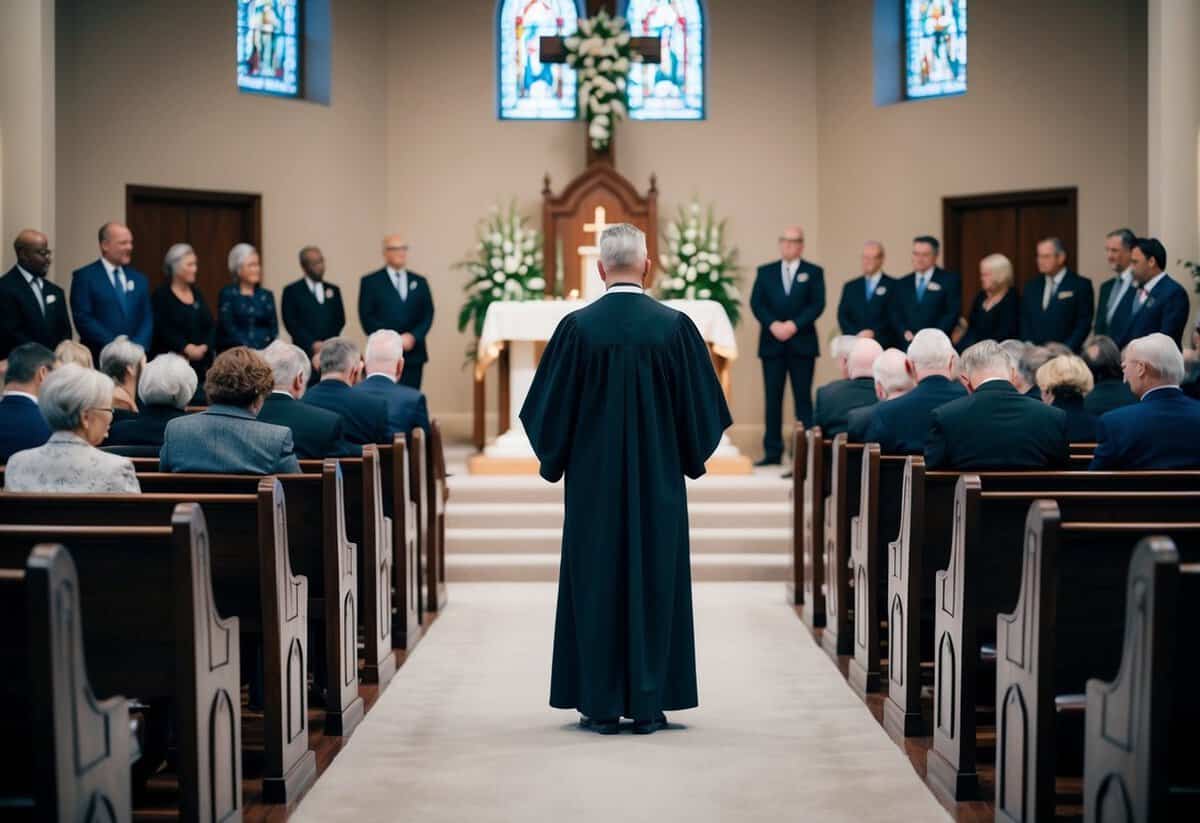
You might consider sending a thank-you card or a small gift after the service. Personal gestures can often mean more than money.
As you navigate these decisions, keep in mind the intentions behind your actions and the relationship you had with the deceased.
Understanding Funeral Etiquette in the UK
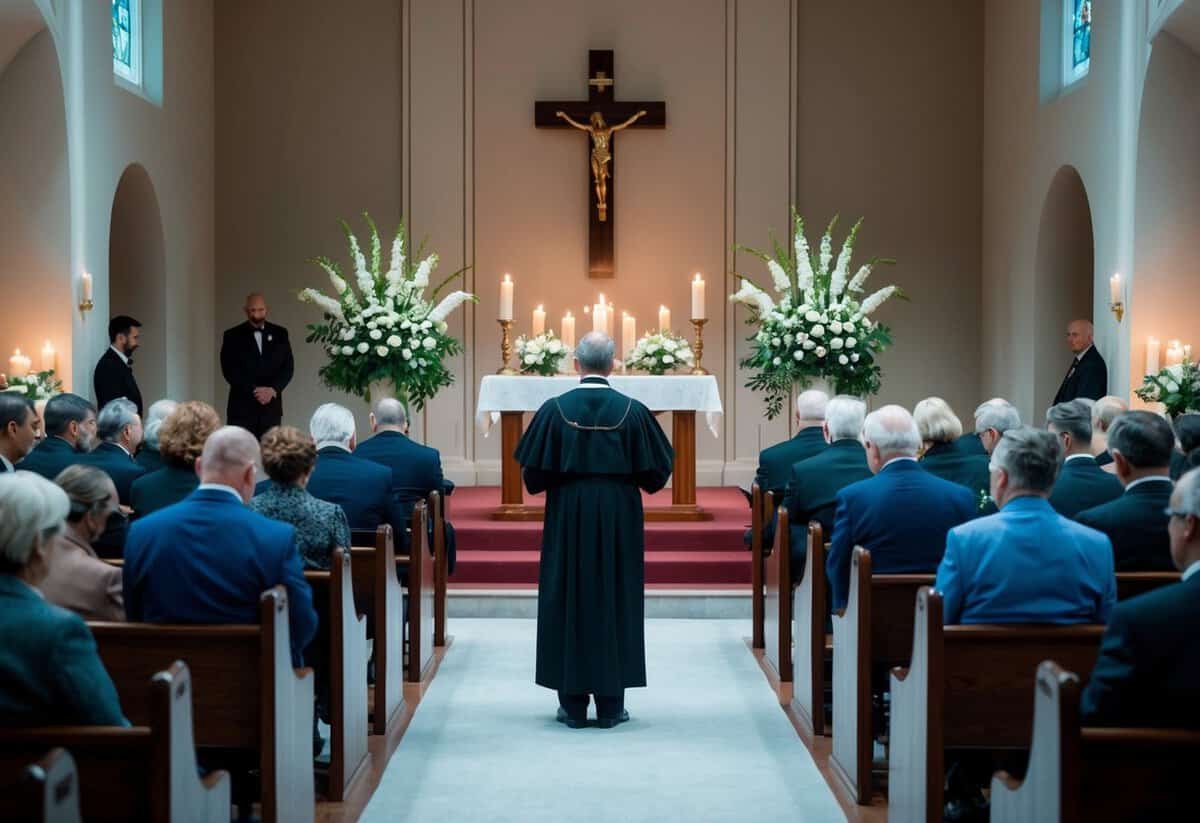
When attending a funeral in the UK, it’s essential to be aware of the customs and etiquette that show respect for the deceased and their family.
Dress Code
You should wear dark, modest clothing. This usually means black or other dark colors.
Avoid bright or flashy outfits, as they may seem disrespectful.
Arrival Time
Try to arrive early. This allows you to find a seat and gather your thoughts before the service starts.
Being late can disrupt the ceremony and add stress to the family.
Behaviour
Remain quiet and respectful during the service. It’s best to turn off your phone to avoid distractions.
If you need to speak, do so softly.
Expressing Condolences
You can express your condolences to the family. A simple “I’m sorry for your loss” is heartfelt.
Some people may choose to send flowers or cards to show sympathy.
Tipping
As for tipping, it is generally uncommon to tip a celebrant or funeral director in the UK. However, you might consider giving a small thank-you to staff, especially if they provided excellent service.
Remember, every family may have their own customs. It’s always best to follow their lead and show kindness during this difficult time.
The Role of the Celebrant
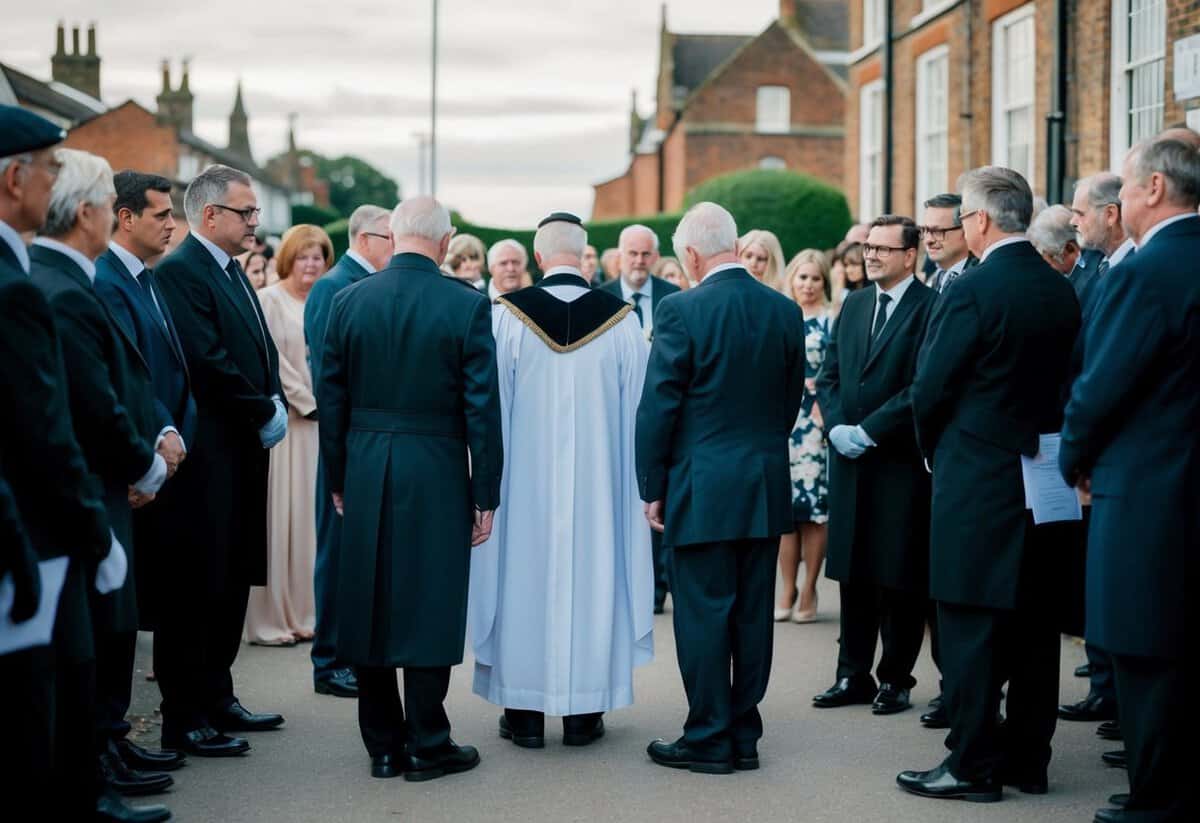
A celebrant plays an important part in a funeral. They help create a personal ceremony that honors the deceased. Understanding their duties and how they differ from funeral directors can help you during this difficult time.
Duties and Responsibilities
Celebrants are responsible for leading the funeral service. They work closely with the family to understand the deceased’s personality, values, and beliefs. This ensures the ceremony reflects who they were.
They often write and deliver eulogies, conduct readings, and guide the service flow.
Celebrants can incorporate unique elements like music, poetry, or personal stories.
They also explain any rituals or customs you may want included. It’s their job to create a comforting environment for those in attendance. This connection can help families feel more at ease while grieving.
Comparing Celebrants and Funeral Directors
While celebrants focus on the service, funeral directors handle the logistics of the funeral. This includes arranging transportation, preparing the body, and managing paperwork.
Funeral directors ensure everything runs smoothly behind the scenes. They coordinate timings and venues, so families can focus on the emotional aspects.
Celebrants, on the other hand, emphasize the personal touch of the ceremony. They allow families to express their grief meaningfully.
Both roles are vital, but their functions are distinct. Knowing this can help you choose who to work with during the planning process.
Financial Considerations of a Funeral
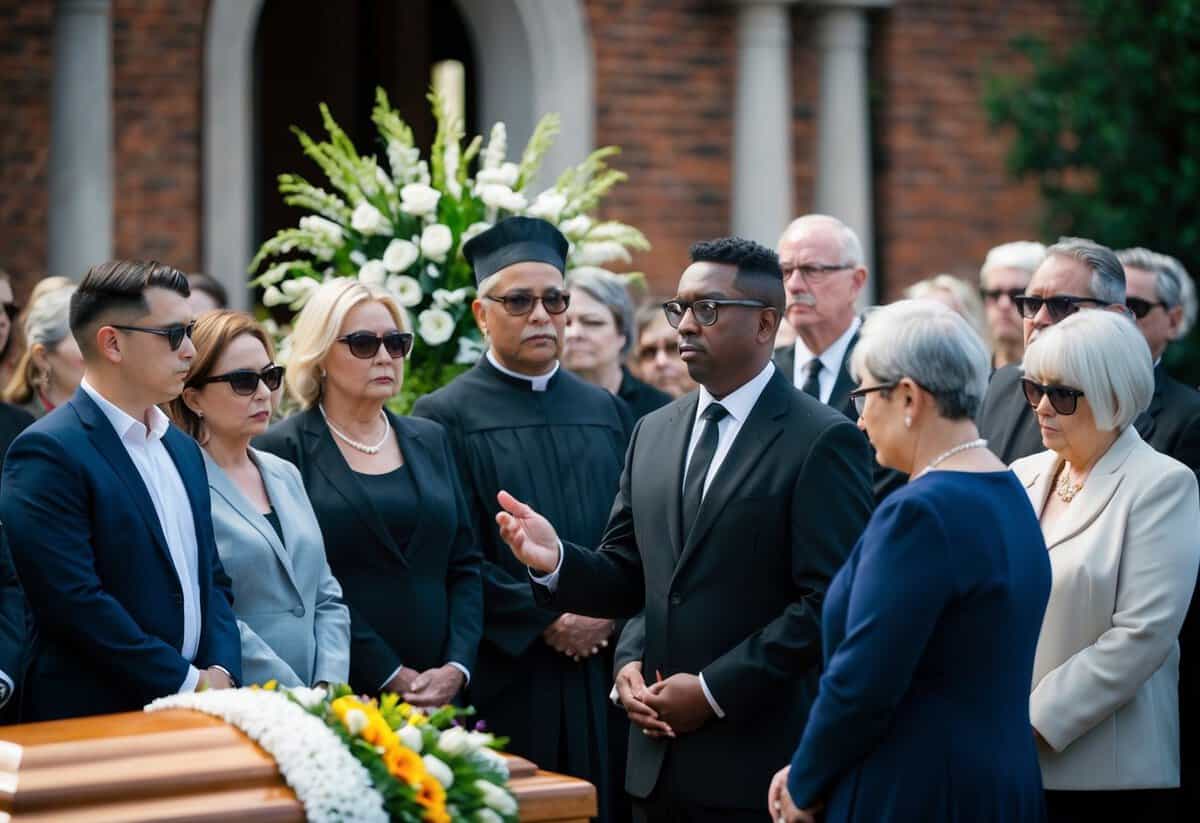
Planning a funeral involves significant financial considerations. Understanding typical costs and the option to make charitable donations can help you navigate this challenging time.
Typical Funeral Costs
Funeral costs can vary widely based on preferences and location. You may face fees for various services, including:
- Funeral director’s fee: This covers the basic services of the funeral home.
- Casket or urn: Prices can range from a few hundred to several thousand pounds.
- Burial or cremation: Associated costs depend on the chosen service, such as plots or cremation fees.
- Transportation: This includes the hearse and any vehicles for family members.
You might also need to budget for additional services, such as flowers or obituaries.
It’s wise to ask for a detailed breakdown to understand what you’re paying for and to compare prices among providers.
Making Charitable Donations
Many families choose to make charitable donations in lieu of flowers. This option can honor the deceased’s memory while supporting a cause close to their heart.
Here are a few points to consider:
- Specify a charity: Consider picking a charity that reflects the values or interests of your loved one.
- Include donation information: You can add this information to the funeral announcement or service program.
- Online giving: Many charities now allow for easy online donations, making it convenient for guests.
This thoughtful gesture can bring comfort during a difficult time and leave a lasting impact on the community.
Expressing Gratitude
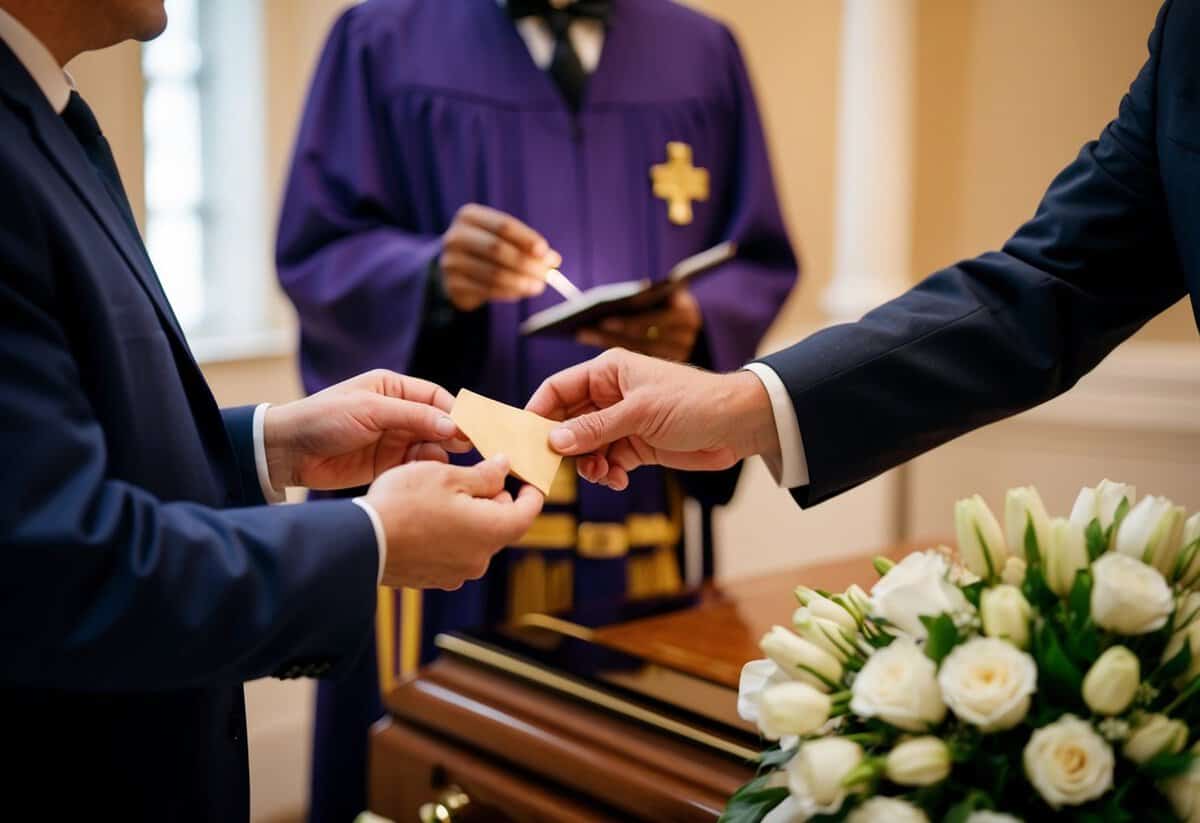
It’s important to show gratitude to those who help during a difficult time. Whether it’s through a heartfelt thank you note or considering a tip, these gestures can mean a lot. Here’s how you can express your appreciation effectively.
Writing a Thank You Note
A thank you note can be a meaningful way to express your gratitude. Writing a short card or letter shows that you appreciate the efforts of the celebrant and others involved in the funeral.
For instance, if a celebrant delivered a touching service, mentioning specific details can make your note feel personal.
Key points to include:
- Mention specific actions: Talk about how the celebrant made the service special for you and your family.
- Be sincere: A genuine tone will resonate with the reader.
- Timeliness: Sending your note within a few weeks after the funeral is considerate.
This small act can bring comfort to those who supported you during such a difficult time.
Tipping Practices for Funeral Service Providers
In the UK, most people choose not to tip funeral service providers, including celebrants and pallbearers. Instead, they prefer expressing gratitude through a thank you note.
If you feel compelled to tip due to exceptional service, a small gift or donation may be appropriate. Some people prepare an envelope with a tip and give it to the funeral director to distribute.
Things to consider:
- Cultural norms: Understand what’s customary in your community.
- Exceptional service: If a celebrant went above and beyond, this might influence your decision.
Your expression of gratitude matters more than the amount. A heartfelt note or small gesture can leave a lasting impression.