
Do You Tip a Wedding Band? Amounts and Etiquette
If you mean the live musicians performing at your wedding reception, tipping is optional but appreciated. A practical amount is $25–$50 per musician, provided the contract does not already include gratuity.
If the band delivers exceptional entertainment, handles special requests, or stays late to support your timeline, you can give more.
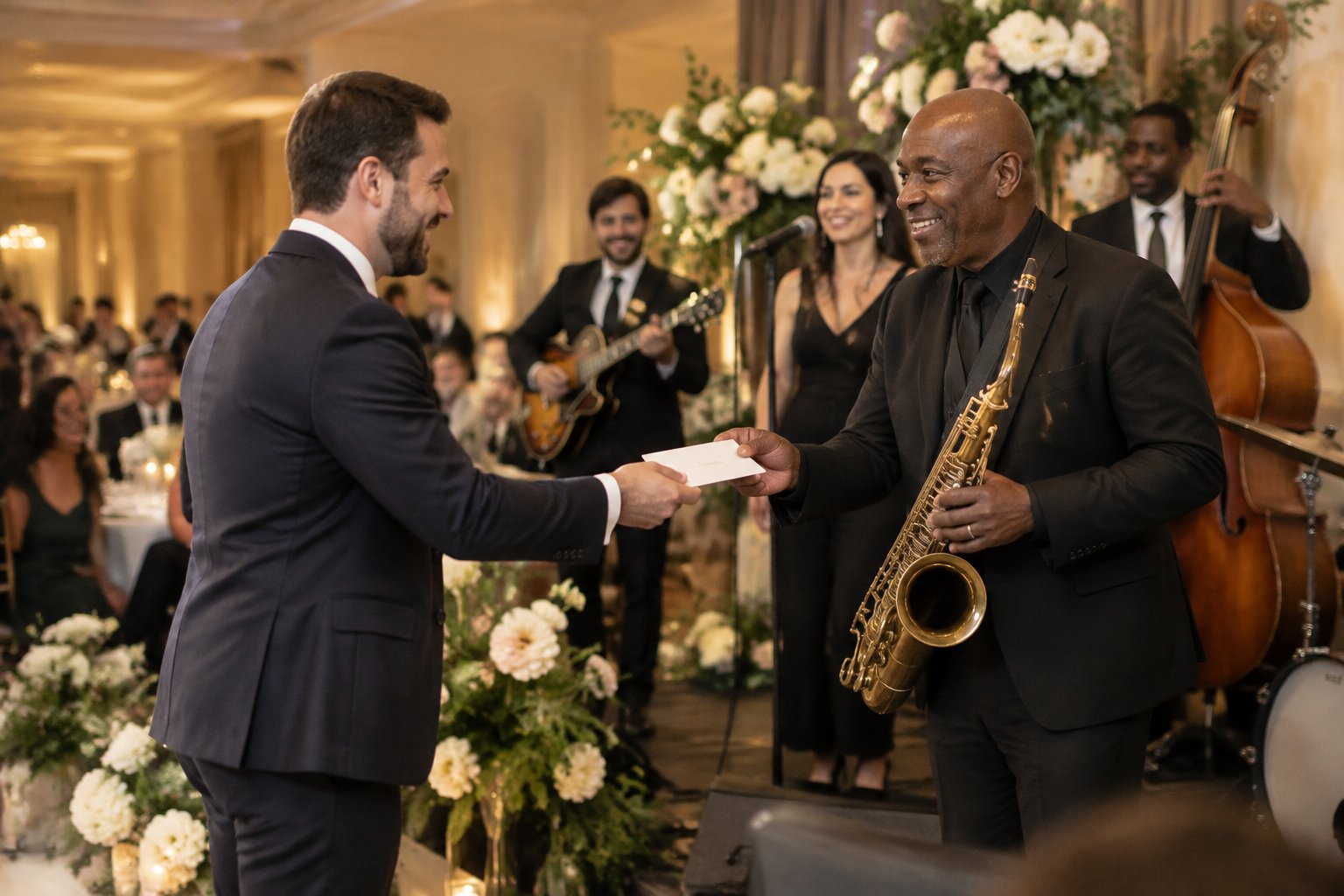
Check your agreement before adding a wedding gratuity to your wedding budget. Look for terms such as “gratuity included,” “service charge,” or “administrative fee,” then ask your planner or bandleader where that money goes.
Preparing labeled envelopes before the big day lets you thank the musicians without interrupting the celebration.
If you are asking about the jeweler who made or sold your wedding ring, the custom is different. Jewelers do not usually expect a tip, although a personal note, thoughtful gift, or positive review is a kind way to recognize outstanding work.
Plan your reception gratuity separately from your ring purchase, and use what is the etiquette for buying wedding rings if you also need help with the purchase itself.
When a Tip Is Expected, Optional, or Already Included
A wedding band tip is optional when the musicians set their own price, and it becomes a stronger gesture when they provide extra service beyond the agreed performance. Your contract determines whether any gratuity has already been paid.
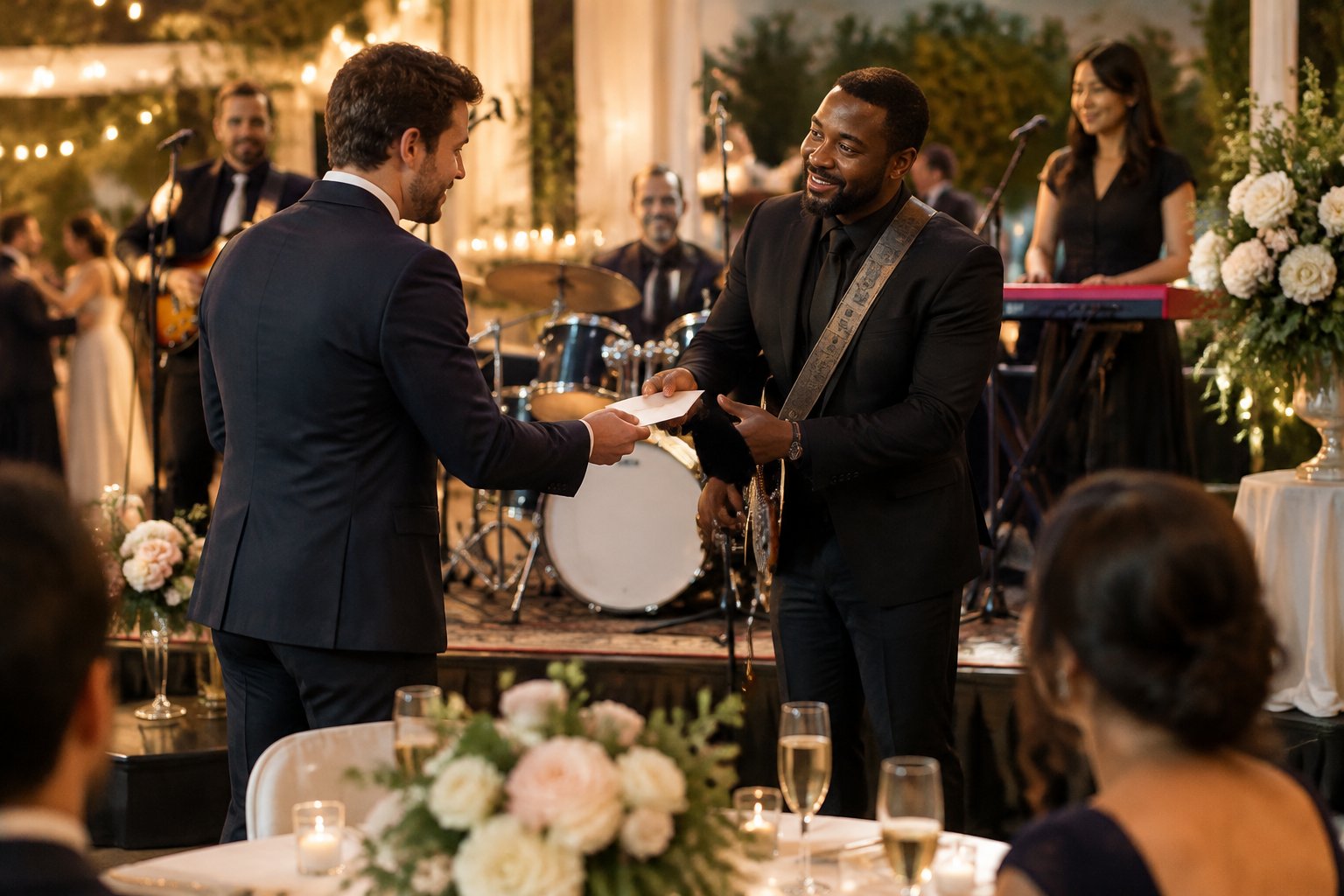
What Does “Gratuity Included” Mean?
“Gratuity included” means the contract states that a tip or gratuity has been added to your payment. Read the wording carefully and confirm who receives it.
For a band, the included amount might be divided among musicians and sound staff. Ask whether the bandleader distributes it or whether the company handles payment.
You can still give an extra amount for standout service, though you are not required to add a second tip.
Why a Service Charge Is Not Always a Tip
A service charge is a fee added by a vendor or venue. It may pay for staffing, operations, equipment, or other business costs.
Ask a direct question: “Does this service charge go to the musicians as gratuity?” A clear answer helps you avoid paying twice or assuming that staff received money when the charge covered something else.
How an Administrative Fee Affects the Decision
An administrative fee usually covers office work, planning support, payment processing, or business overhead. The label alone does not show that the musicians receive any portion.
If your band contract lists an administrative fee, ask what it covers and whether a separate wedding gratuity is expected. Your planner or coordinator can help interpret unclear language before the wedding day.
Does It Matter If the Bandleader Owns the Company?
Yes. A bandleader who owns the company sets the rates and may already include personal compensation in the fee, so a tip is a generous bonus.
Employees and hired musicians may receive a smaller share of the contract price, making an optional tip a useful way to recognize their work.
You can ask how the tip will be divided among the full team, including sound technicians. A single envelope for the bandleader works when the leader confirms that everyone will be included.
How Much Should You Give Live Musicians?
Use $25–$50 per musician as a practical starting point when gratuity is not included, then adjust for performance length, extra work, and your wedding budget.
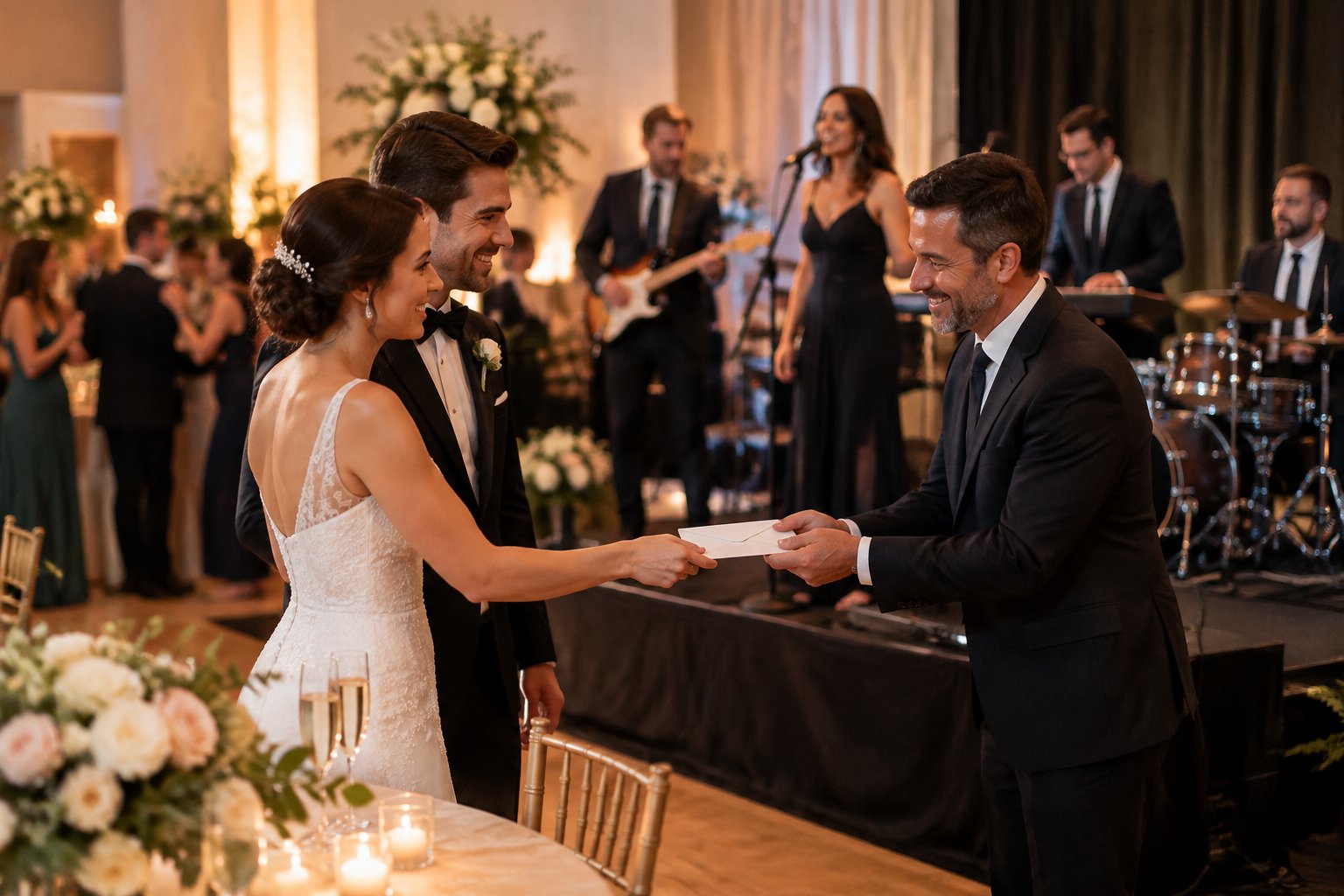
The Standard $25–$50 Per Musician Range
Count every musician who performs at the reception. Include the vocalist, instrumentalists, and any sound technician who works with the band.
A three-hour performance with standard setup fits near the middle of the range. A long reception, difficult load-in, special song requests, or last-minute schedule changes support an amount near the higher end.
When to Add a Bandleader Tip
Add a separate bandleader tip when that person coordinates the group, manages the timeline, handles announcements, or solves problems beyond performing. An extra $50–$100 recognizes those added duties when your budget allows.
You can place the full amount in one envelope and write “band and bandleader” on the front. Confirm how the leader will divide it before the reception ends.
Examples for Three-, Five-, and Eight-Piece Bands
Use these examples to set a clear amount:
- Three-piece band: $75–$150 total
- Five-piece band: $125–$250 total
- Eight-piece band: $200–$400 total
Add the bandleader amount separately if the leader handled coordination or production duties. Include a sound technician when that person is part of the performance team.
How DJ and Band Hybrids Should Be Handled
Treat a band and DJ hybrid as one entertainment team. Start with the per-musician amount, then add $50–$150 for the DJ when the DJ manages music, announcements, transitions, or the dance floor for a substantial part of the night.
Review the contract for the exact team size. A hybrid package may include a DJ, live musicians, an emcee, and sound staff, so ask the company for a recommended distribution before preparing envelopes.
How to Deliver the Gratuity Without Interrupting the Party
Give the gratuity in a sealed, labeled envelope through a trusted person, with the handoff planned around setup, dinner, or the end of the band’s final set.
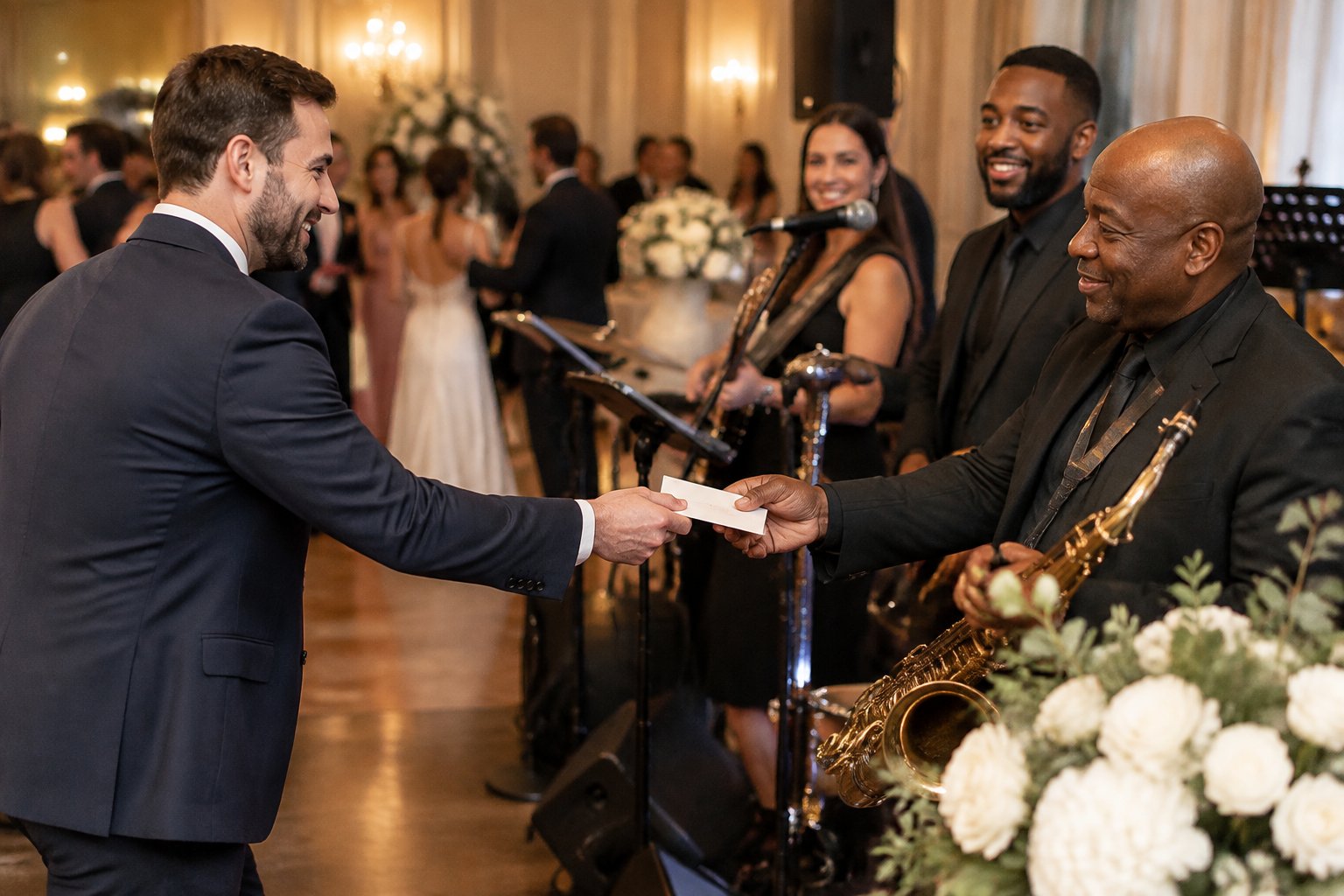
Who Should Hand Over the Envelope?
Assign the task to your wedding planner, day-of coordinator, best man, maid of honor, parent, or another trusted member of the wedding party. You can enjoy the reception while someone else tracks the band’s schedule and confirms delivery.
Give that person a written list with each vendor, amount, and timing. Keep the cash secure until the handoff.
When to Tip at the Reception
For the band, the best time is after the final set, during a planned break, or just before the musicians leave. A coordinator can approach the bandleader while the musicians pack up.
Avoid interrupting a song, announcement, first dance, or other important reception moment. Add the handoff to the reception timeline so it does not get forgotten during a busy night.
Should You Give One Lump Sum or Individual Tips?
One lump sum works well when you trust the bandleader to divide the money among musicians and sound staff. Write the total purpose clearly on the envelope and ask how the split will happen.
Individual envelopes give each person direct recognition. They require more preparation, especially when the lineup includes substitute musicians or technical staff.
Can You Use Venmo or Zelle Instead of Cash?
Cash in a sealed envelope remains the easiest option for a wedding reception. Venmo or Zelle can work when the band requests digital payment and provides the correct account details.
Confirm the payment method before the wedding. Record each digital transfer and include a note that identifies the recipients and amount.
What to Do When the Band Exceeds Expectations
Increase the tip when the band creates an exceptional experience, manages extra demands with care, or contributes far beyond the contracted performance.

Signs a Higher Tip Makes Sense
Consider a larger gratuity when the musicians:
- Keep the dance floor active throughout the night
- Learn or perform special songs
- Adjust smoothly to timeline changes
- Play longer than planned
- Help with announcements or reception flow
- Handle sound issues calmly
You can raise the per-person amount, add a separate bandleader bonus, or include the sound technician in the gratuity.
Thoughtful Alternatives When Cash Is Tight
A smaller tip paired with a sincere thank-you still recognizes the work. You can also provide a meal, offer a comfortable vendor break, or send a gift after the wedding.
Ask the band whether they value referrals, professional photos, or a public review. These gestures help independent wedding vendors attract future clients.
How Thank-You Notes and Positive Reviews Help
A specific thank-you note gives the musicians feedback they can remember and share with future clients. Mention a song, a timeline challenge, or a moment when guests responded especially well.
Post positive reviews on the platforms where you found the band. Include the band’s name, the event date, and details about communication, performance, and professionalism.
A thank-you note and positive reviews complement a cash tip or provide meaningful recognition when your budget is limited.
How Entertainment Gratuity Compares With Other Vendor Tips
Entertainment tips sit in the optional category for many couples, while hourly service workers such as beauty professionals and delivery crews have clearer tipping customs.
Your should you tip wedding staff checklist can help you organize the rest of your wedding budget.
DJ, Ceremony Musician, Photographer, and Videographer
A DJ often receives $50–$150 when gratuity is not included. Give ceremony musicians about $15–$50 per person, based on their performance and preparation.
Photographers and videographers receive optional tips of about $50–$200 per team member when their work is exceptional or they are employees of a larger company. A business owner has already set the service price, so a tip is a personal gesture.
Planner, Makeup Artist, and Hairstylist
A planner or coordinator may receive $50–$300, depending on involvement and workload. A full-service planner can receive 10–20% of the fee when the service was outstanding and the contract does not include gratuity.
Makeup artists and hairstylists commonly receive 15–25% of the service fee. Tip each professional who provided services, including assistants.
Officiant, Florist, and Delivery and Setup Staff
A religious officiant may receive a donation to the house of worship, while an independent officiant may receive $50–$200. Ask about local or religious guidelines before giving money directly.
Florists who own their businesses do not require a tip, though a gift or review is thoughtful. Delivery and setup staff deserve priority when they handle heavy items, early arrivals, or extensive teardown.
A practical amount is $10–$50 per person, based on the work involved.
How Much to Reserve for Tips in the Wedding Budget
Set aside a separate gratuity line while building your wedding budget. Many couples reserve $500–$2,000 across all vendors, with the final figure shaped by guest count, vendor staffing, location, and contract terms.
Prioritize staff who work hourly and rely on service income. Review every contract for “gratuity,” “service charge,” and “administrative fee” before withdrawing cash.
Wedding Ring Purchases Follow Different Tipping Norms
A wedding ring purchase follows retail and skilled-trade customs, so your jeweler does not normally expect a tip.
Why Jewelers Usually Do Not Expect a Tip
Jewelers price their work through the ring, design, repair, and service fees. Sales commissions, shop revenue, and skilled labor are built into that model.
This applies to services such as ring sizing, custom design, milgrain, and rhodium plating. It also applies across common metals, including rose gold, white gold, yellow gold, and palladium.
You can ask about store policy, especially at a chain where employees follow company rules.
Organizations such as Jewelers of America and GIA help define professional standards and education in the jewelry field, though membership or certification does not create a tipping requirement.
When White-Glove Delivery or Rush Ring Sizing May Merit Thanks
A small gift or gratuity can recognize exceptional service when a jeweler completes urgent ring sizing, preserves a sentimental piece, or provides white-glove delivery for a high-value purchase.
Ask whether the person who helped you is allowed to accept money. A store policy may direct you toward a review, gift, or referral.
Meaningful Ways to Thank a Master Goldsmith
A handwritten note can describe the detail you appreciated, such as careful stone setting, a difficult fit adjustment, or matching a vintage finish. A positive review with the craftsperson’s name helps future customers find skilled work.
Referrals, repeat business, and professional photos of the finished ring also show appreciation. If you give a gift, choose something suitable for the relationship and confirm that workplace policies permit it.