
Do You Wear Your Wedding Band on Top or Bottom? Tips for Choosing the Right Style
When it comes to wedding rings, many people wonder about the proper way to wear them. Traditionally, the wedding band is worn on the bottom, with the engagement ring on top. This order places the wedding band closer to your heart, symbolizing the deep commitment you share with your partner.
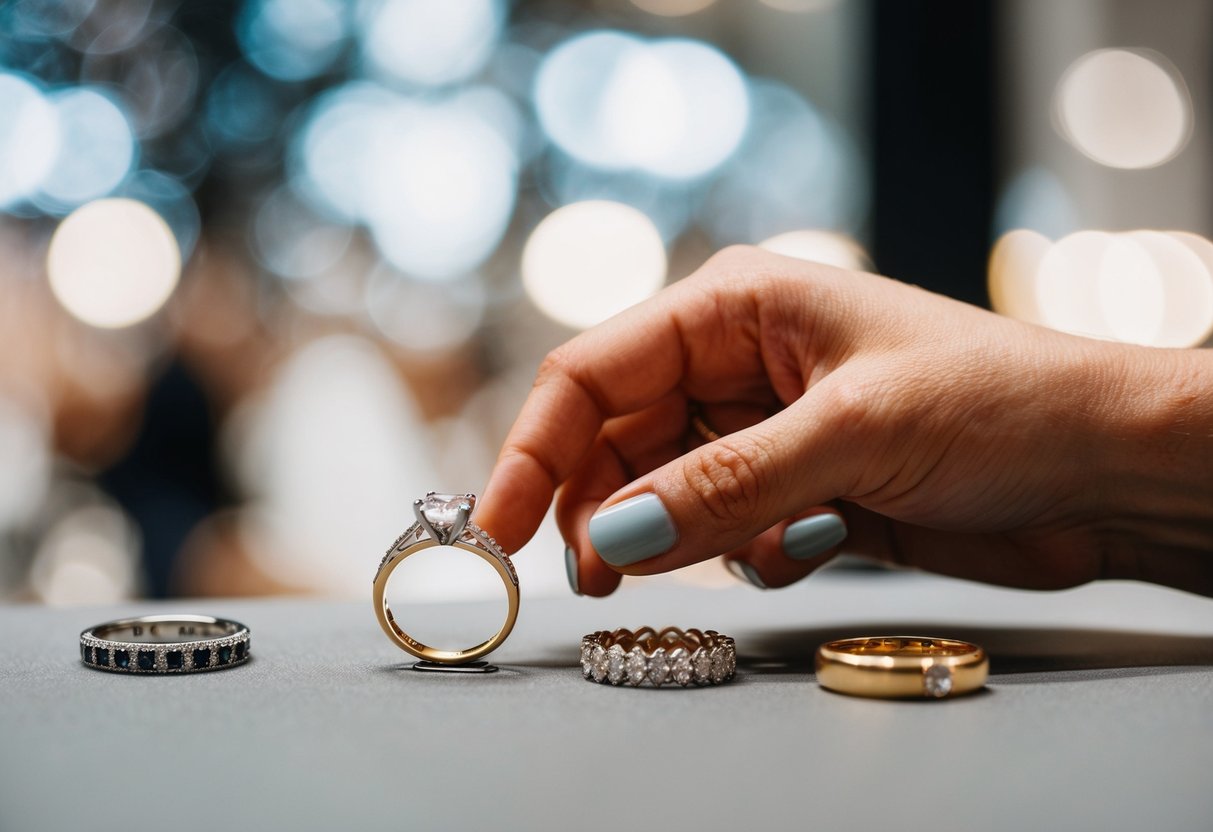
You might find that wearing your rings this way feels more comfortable or makes them more secure. Whether you choose to follow tradition or mix things up, the most important part is what feels right for you.
If you’re curious about the reasons behind these choices or want to know more about different traditions, keep reading to discover all the details behind this timeless question.
Understanding the Tradition of Wedding Rings
Wedding rings hold deep meaning and reflect age-old customs. Their placement and symbolism are crucial for many couples as they express love and commitment in various ways.
Historical Origins and Symbolism
The tradition of wedding rings dates back to ancient Rome. Romans believed that the vena amoris, or “vein of love,” ran from the fourth finger of the left hand directly to the heart. This idea made the left ring finger the ideal spot for a wedding band.
The ring itself symbolizes unity and eternal love. Many couples choose a simple band to represent the unbroken circle of commitment. This symbolism can be traced through centuries, showing how much value is placed on these tokens of love.
Traditional Placement on the Hand
Traditionally, the wedding band is worn on the bottom, closest to the heart, with the engagement ring on top. This arrangement follows the idea that the wedding band symbolizes eternal love and commitment, while the engagement ring represents the promise made before marriage.
During the wedding ceremony, it is common for the engagement ring to be moved to the right hand, allowing the wedding band to be placed first. After the ceremony, many people return the engagement ring to the left hand on top of the wedding band, following this traditional method.
Variations Across Cultures
Cultural differences can influence how couples wear their wedding rings. In some cultures, it is customary for the wedding band to be worn on the right hand. Countries such as Russia and Greece follow this practice, often due to religious customs.
Religious beliefs also play a role in how rings are worn. Some traditions involve specific rituals that affect placement. Each culture puts its own spin on the tradition, making it unique for every couple.
Adapting to your personal preference while respecting traditions can add a special touch to your wedding experience.
Choosing Your Wedding Band

Choosing your wedding band is an important decision. It’s a piece of jewelry that reflects your commitment and personal style.
Considering Comfort and Personal Style
Comfort is key when selecting a wedding band. You’ll likely wear this ring every day, so it should fit well and feel good on your finger.
Consider the width and thickness of the band. A wider band may feel snugger than a thinner one.
Think about your lifestyle too. If you work with your hands a lot, you might prefer a simpler design without extra gems that can catch or snag.
Personal style is also important. Do you prefer classic, modern, or vintage designs? Bold metals or delicate details? Your wedding band should resonate with your sense of style.
Coordinating with the Engagement Ring
Your wedding band will sit next to your engagement ring, so coordination matters.
Look at the metal type. If your engagement ring is gold, choose a wedding band in the same metal for a cohesive look.
Consider the design too. If your engagement ring has intricate details, you might want a simpler band to balance the look. Alternatively, consider a bridal set for a matched look.
If you love gemstones, think about how they will pair. The order of rings, with the wedding band on the bottom, can create a visually appealing stack.
Matching Wedding Rings for Couples
Matching wedding bands can be a beautiful symbol of your union. When you and your partner choose rings together, it strengthens your bond.
Think about coordinating styles or metals to complement each other.
You might choose matching sets that are identical or have subtle differences to reflect your personalities. Consider engraving inside the bands with a special date or phrase that is meaningful to you both.
It’s also worth noting that promise rings can start the conversation about wedding bands. They can reflect a commitment and set the stage for future matching rings.
The Ring Wearing Ceremony
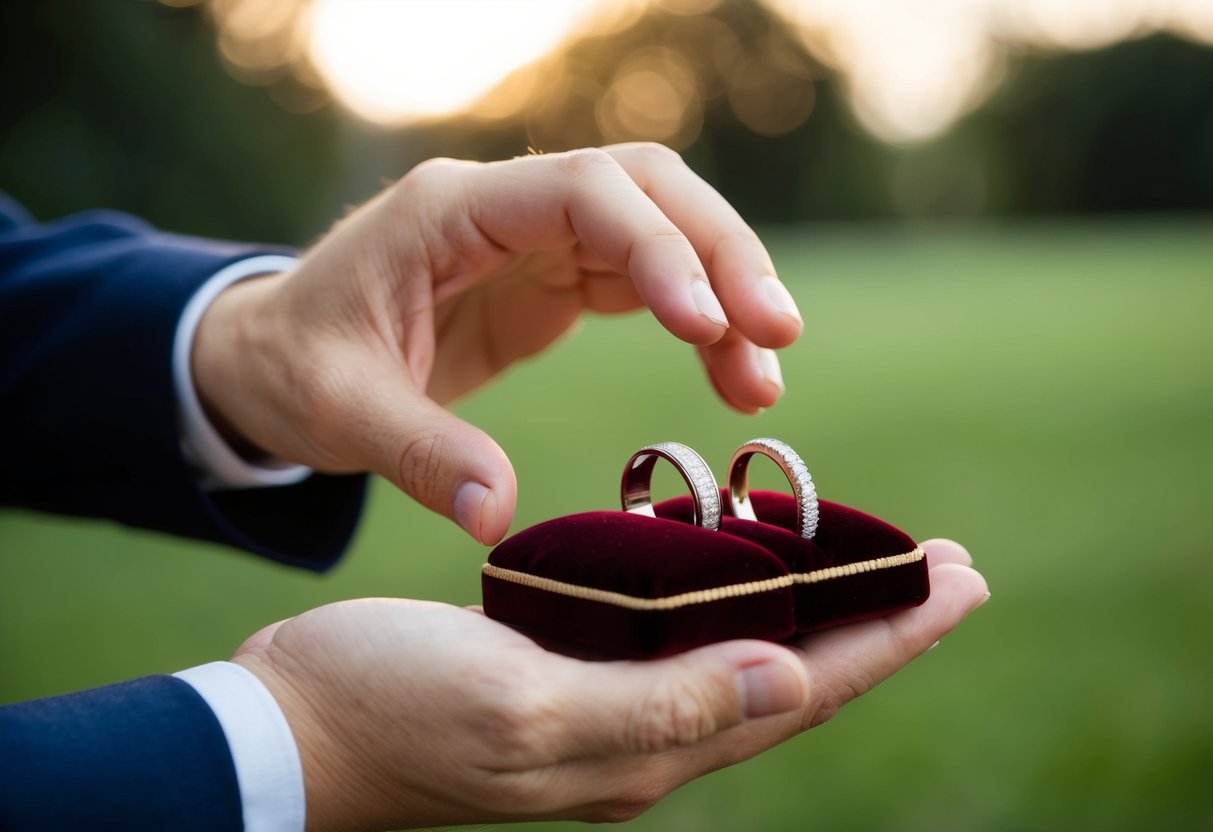
The ring wearing ceremony is a special part of your wedding day. It represents not only the exchange of rings but also the deep feelings and commitments you share with your partner.
The Meaning Behind the Ring Exchange
During the wedding ceremony, the ring exchange is a key moment. When you and your partner swap rings, you are making a promise to each other. Each ring you wear serves as a constant reminder of your commitment.
Traditionally, the wedding band is placed on the bottom, closest to your heart, symbolizing your love and devotion. Your engagement ring can be moved temporarily during the ceremony. This allows the wedding band to be placed first, emphasizing its importance.
The moment of exchange is often filled with emotion. As you slip the ring onto your partner’s finger, you express your love and commitment. This act becomes a cherished memory for both of you.
Sentimental Value and Symbol of Love
The rings you wear hold deep sentimental value. They are not just pieces of jewelry; they are symbols of your love and dedication. Every time you glance at your rings, you are reminded of that special day.
Wearing both the engagement and wedding rings together carries meaning. The engagement ring often symbolizes the promise made before marriage. In contrast, the wedding band represents the vows exchanged during the ceremony.
Many couples cherish these symbols as they mark the beginning of their journey together. Each time you wear your wedding band, it reminds you of the vows taken and the love you share. Whether you choose to wear your rings on top or bottom, their significance remains profound.