
Does a Save-the-Date Mean I’m Invited to the Wedding? Here’s What You Need to Know!
When you receive a save-the-date card, it’s natural to wonder what it really means for your invitation to the wedding. A save-the-date typically indicates that you are invited to the wedding, but it is not the official invitation. These cards are meant to alert you about the wedding date and location, giving you a heads-up so you can plan ahead.

Many couples send save-the-dates especially if they have guests traveling from afar. This way, you can make necessary arrangements, like booking flights or asking for time off work. While it does pave the way for your invitation, it’s important to remember that a save-the-date is just the first step in the wedding invitation process.
Understanding the difference between save-the-dates and formal invitations will help you navigate your wedding plans with ease. Stay tuned as we break down the details and help you understand what to expect next!
Understanding Save-the-Date Cards

Save-the-date cards are important early wedding announcements that help guests plan for your special day. They set the stage for your wedding, giving people a heads-up about the date and location, which is especially helpful for destination weddings or busy seasons.
Purpose and Significance
The main purpose of a save-the-date card is to inform your wedding guests about the date of your wedding in advance. This is useful for people who may need to travel, especially for destination weddings. It allows them to mark their calendars and make necessary arrangements.
Save-the-dates are not formal invitations but rather a friendly heads-up to get your guests excited. They also help you start gathering mailing addresses and email addresses for your guest list, ensuring you reach everyone important to you. It’s a great way to express how much you want them to be part of your day.
Components of a Save-the-Date
A typical save-the-date card should include key information such as:
- Names of the couple: Clearly show who is getting married.
- Date of the wedding: This is the most important detail.
- Location: If possible, include the city and venue, especially if it’s a destination wedding.
- Optional details: Consider adding your wedding website or RSVP information if you have it.
The design can be simple or thematic, reflecting your wedding’s style. Remember, this is a sneak peek of what’s to come, so make it personal and fun! A well-crafted save-the-date will get your guests excited and help ensure they keep the date free.
From Save-the-Dates to Invitations
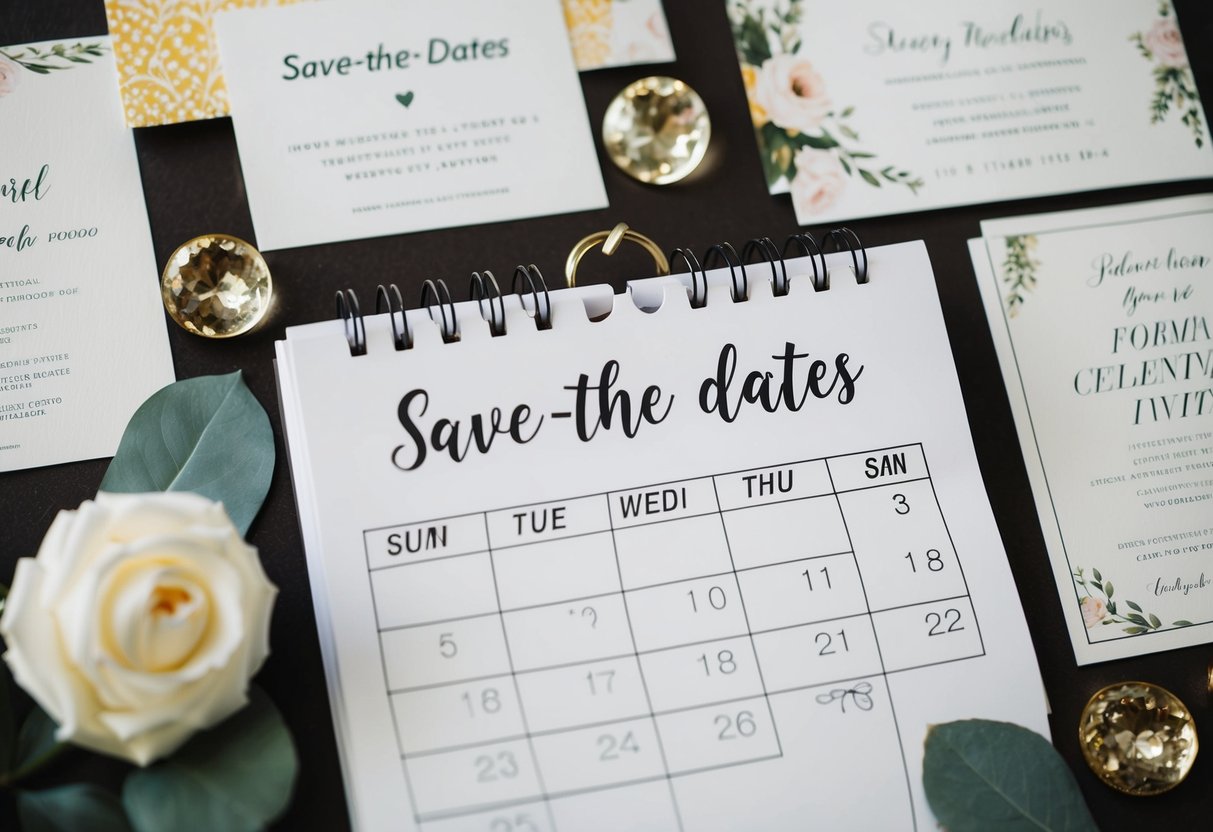
When you receive a save-the-date, it’s a good sign you may be invited to the wedding. However, there are important things to consider. Understanding how save-the-dates and invitations work can help you know what to expect.
Are You Guaranteed an Invitation?
Receiving a save-the-date card means you are on the potential guest list. This card serves as an advance notice, letting you know the date and location. It allows you to mark your calendar and plan ahead. However, it does not guarantee that you will receive a formal invitation later.
Sometimes, changes happen with guest lists due to budget constraints or venue size. The couple may have to make tough decisions about who can ultimately attend. So, while save-the-dates are a hopeful sign, keep in mind that final invitations vary.
Differences Between Save-the-Dates and Invitations
A save-the-date is usually sent out 6 to 8 months before the wedding. Its purpose is to inform you of the date and location so you can make arrangements.
An invitation, on the other hand, is more detailed. It arrives closer to the wedding, typically 8 to 12 weeks beforehand. The invitation includes specifics like the time, venue names, and RSVP details.
While save-the-dates are informal, invitations carry a more formal tone. They can also include dress codes and meal choices, giving you a complete picture of what to expect.
How to Respond to a Save-the-Date
If you receive a save-the-date, there’s no need to respond right away. This card is simply for your information. It’s a friendly heads-up to help you plan, especially if travel is involved.
Once you get the formal invitation, that’s when you should respond. Typically, you will have an RSVP option to let the couple know if you can attend. Be sure to respond by the date they provide to help with their guest list planning.
Remember, receiving a save-the-date is exciting, but it’s part of a bigger picture. Stay aware of further communications about the wedding.
Managing Your Wedding Plans

Managing your wedding plans is an exciting yet important task. You’ll want to make sure you have the right people invited, find a great platform to share details, and send out invitations to your guests. Each part plays a key role in ensuring your wedding goes smoothly.
Creating a Wedding Guest List
Start by making a list of everyone you’d like to invite. Consider family, friends, coworkers, and even distant relatives. Write down names in a spreadsheet for easy editing.
Next, think about your venue’s capacity. Make sure to keep track of how many guests you can invite based on the space.
You might want to categorize your list into must-invite and optional guests. This helps you prioritize if you need to make cuts later. Don’t forget to keep their contact information handy for when you send out the invitations!
Choosing a Wedding Website
Having a wedding website can be a great way to keep your guests informed. Choose a website platform that’s user-friendly. Popular options include The Knot and Zola.
On your site, include essential details like your wedding date, venue, and registry info. You can also share your love story or photos, which adds a personal touch.
Make sure to enable RSVP features. This allows guests to confirm their attendance easily. You can also include a FAQ section to answer common questions about the event.
Sending Out Invitations
When you send out invitations, timing is everything. Aim to send them out about 8 to 12 weeks before your wedding. This gives guests plenty of time to make travel plans.
You can choose between traditional paper invitations or digital ones. Paper invitations are classic and stylish, while digital invites can save time and money.
Don’t forget to include all necessary details like date, time, location, and dress code. Consider adding a personal touch, like a handwritten note, to make your guests feel special.