
Does a Wedding Coordinator Set Up Decor? What to Expect
A wedding coordinator can set up some decor, especially personal details and simple table items, while also managing the timeline and vendors. The exact scope depends on the coordinator’s package, staffing, venue rules, and the size of your wedding decorations.

Yes, a wedding coordinator may set up decor, but you should confirm the specific tasks in writing before you book. A day-of coordinator might place centerpieces, place cards, a guest book, favors, and a seating chart. Large installations, floral arrangements, lighting, drapery, and detailed styling may belong to a wedding decorator, florist, rental company, or extra setup team.
Clear expectations help you enjoy a stress-free wedding. Ask potential coordinators for their setup checklist and service agreement so you know who handles each item before the wedding day.
The Short Answer: What Coordinators Usually Handle
A wedding coordinator often handles simple wedding decor that arrives ready to place, while coordinating vendors and checking that the ceremony and reception match your approved plan.
Personal Décor They May Place
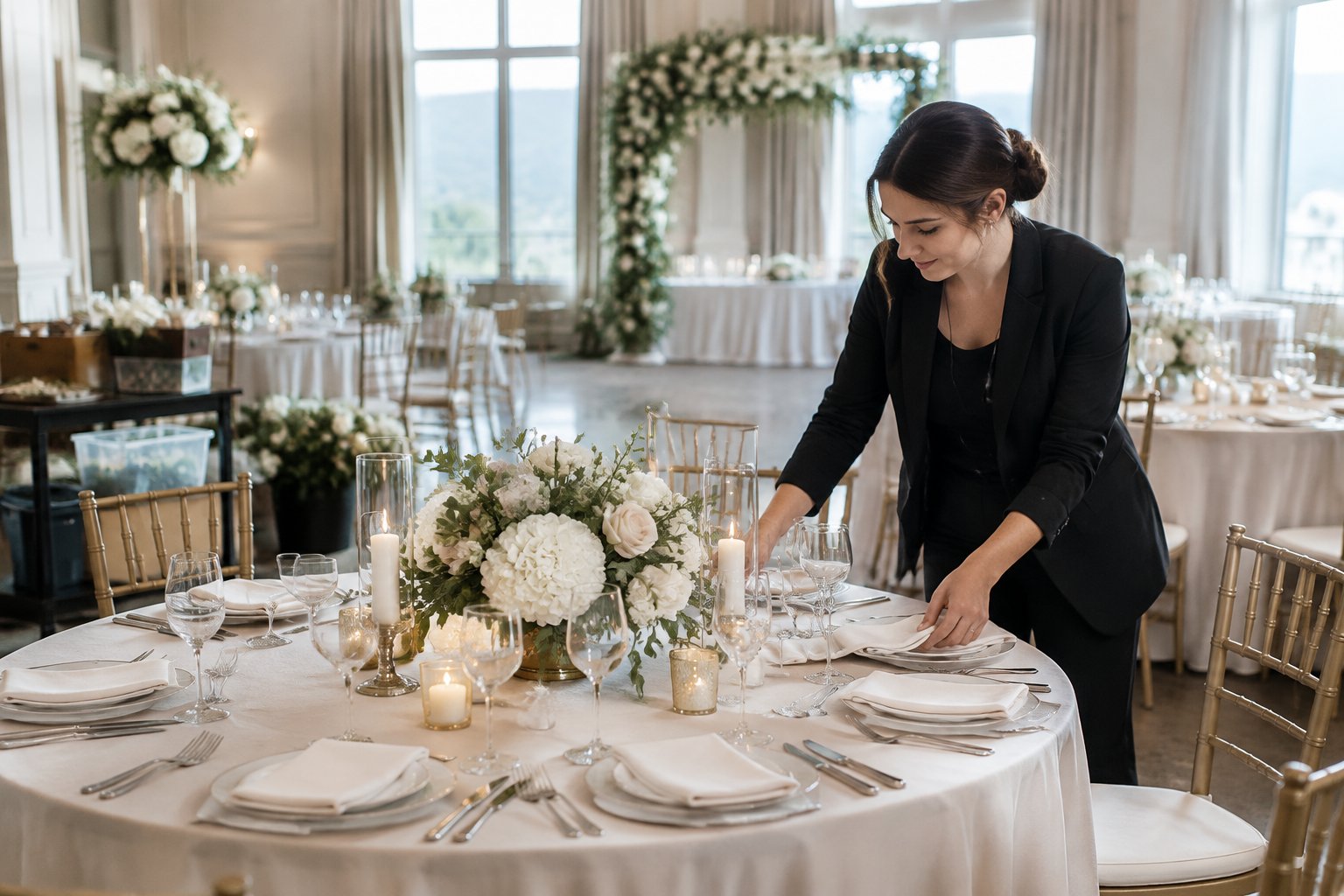
A coordinator may place personal items that you provide in labeled containers. Common examples include:
- Place cards and table numbers
- Guest book and welcome table items
- Favors and card box
- Menus and small signs
- Simple centerpieces
- Family photos and keepsakes
- Ceremony programs
- Cake topper and dessert table details
Your coordinator will need a clear placement plan, photos, or diagrams. Label each box by location, such as “welcome table” or “head table,” and include setup notes for fragile pieces.
Setup Tasks They Usually Supervise Rather Than Perform
A coordinator may supervise setup while the assigned vendor performs the technical or design work. This arrangement applies to floral installations, rental furniture, ceremony backdrops, drapery, lighting, sound equipment, and specialty structures.
The coordinator checks arrival times, directs placement, reviews the finished look, and handles problems. They might move a small item or adjust a table setting, while a florist handles floral arrangements and a rental company places its equipment.
Venue staff may also handle tables, chairs, linens, and house equipment. Ask who provides labor for each item before your wedding day.
Why the Service Agreement Is the Final Answer
Your service agreement defines whether the coordinator supplies setup labor, supervises vendors, handles teardown, or charges for additional hours. Words such as “decor setup” need a task list behind them.
Ask these questions:
- How many staff members will arrive for setup?
- How many hours are included?
- Will you place personal decor?
- Who sets up florals, linens, signage, and rentals?
- Who handles ceremony-to-reception flips?
- Is teardown included?
- What happens if setup takes longer than planned?
Who Is Responsible for Each Type of Wedding Décor?
Responsibility follows the type of work: a planner manages the plan, a designer shapes the look, a florist handles flowers, a rental company handles rented goods, and a coordinator manages the handoffs.
Wedding Coordinator vs. Wedding Planner
A wedding planner works with you throughout wedding planning. They may help create the budget, choose vendors, develop the wedding design, and build the color palette.
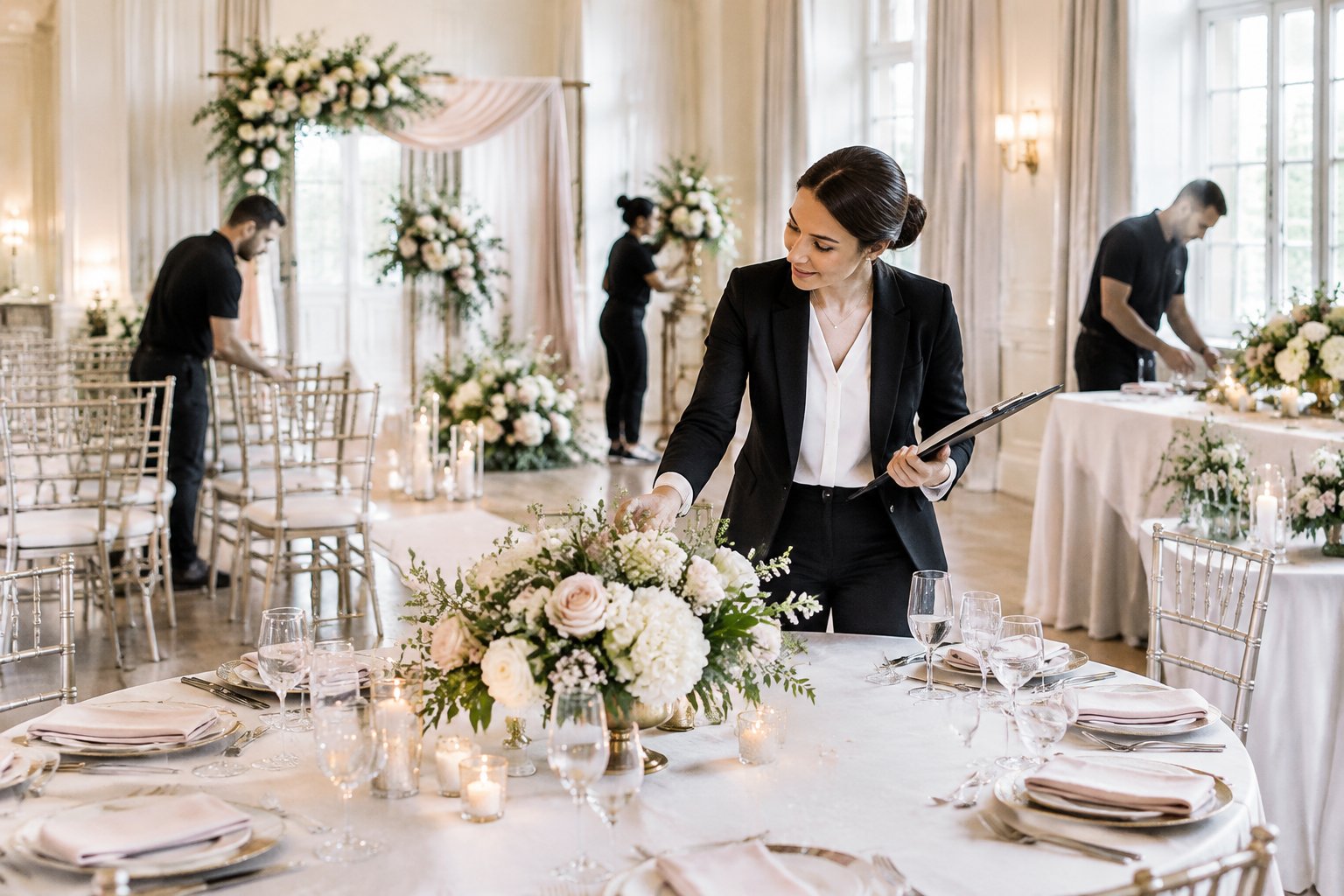
A wedding coordinator steps in closer to the wedding date to organize the plan you have already made. Their work centers on vendor coordination, timeline management, rehearsal coordination, venue logistics, and day-of execution.
Some planners include coordination and decor setup in a full-service package. Others focus on planning and hire a separate wedding decorator or design team. Read the package details carefully.
Wedding Decorator and Wedding Designer Responsibilities
A wedding decorator focuses on installing and arranging decor. A wedding designer develops the visual direction and may oversee the full look, including the color palette, tablescape, ceremony backdrop, drapery, and lighting.
A designer may create the plan while a decorator or installation crew carries it out. This team suits weddings with custom builds, layered styling, hanging elements, or a large ceremony backdrop.
You can also ask whether design fees include sourcing, delivery, setup, changes during the event, and removal.
What the Florist and Rental Company Set Up
Your florist handles floral arrangements such as bouquets, ceremony flowers, arches, aisle markers, and reception centerpieces. The florist may also place candles or small items that form part of the floral design.
Your rental company delivers and places rented tables, chairs, linens, tabletop pieces, lounge furniture, and specialty items. Some companies include setup and pickup, while others charge for labor or delivery.
Your coordinator should confirm arrival windows and placement details with both vendors. The contract for each vendor shows who supplies labor.
When the Wedding Party or Family Handles DIY Décor
Your wedding party or family may handle DIY decor when the pieces are simple, packed clearly, and assigned to specific people. Give each person a written task list and a firm arrival time.
Keep the wedding party focused on guest-facing responsibilities. If setup includes many rooms, heavy items, ladders, or a tight schedule, hire labor through your coordinator, decorator, or venue.
Discuss teardown at the same time. Anyone who sets up may need to stay after the reception to collect items unless another team has that responsibility.
How to Plan Décor Setup Before the Wedding Day
Good wedding planning turns decor setup into a timed, assigned process. Your coordinator needs an inventory, a floor plan, a final guest count, venue access details, and a complete vendor list.
Create a Décor Inventory and Placement Plan
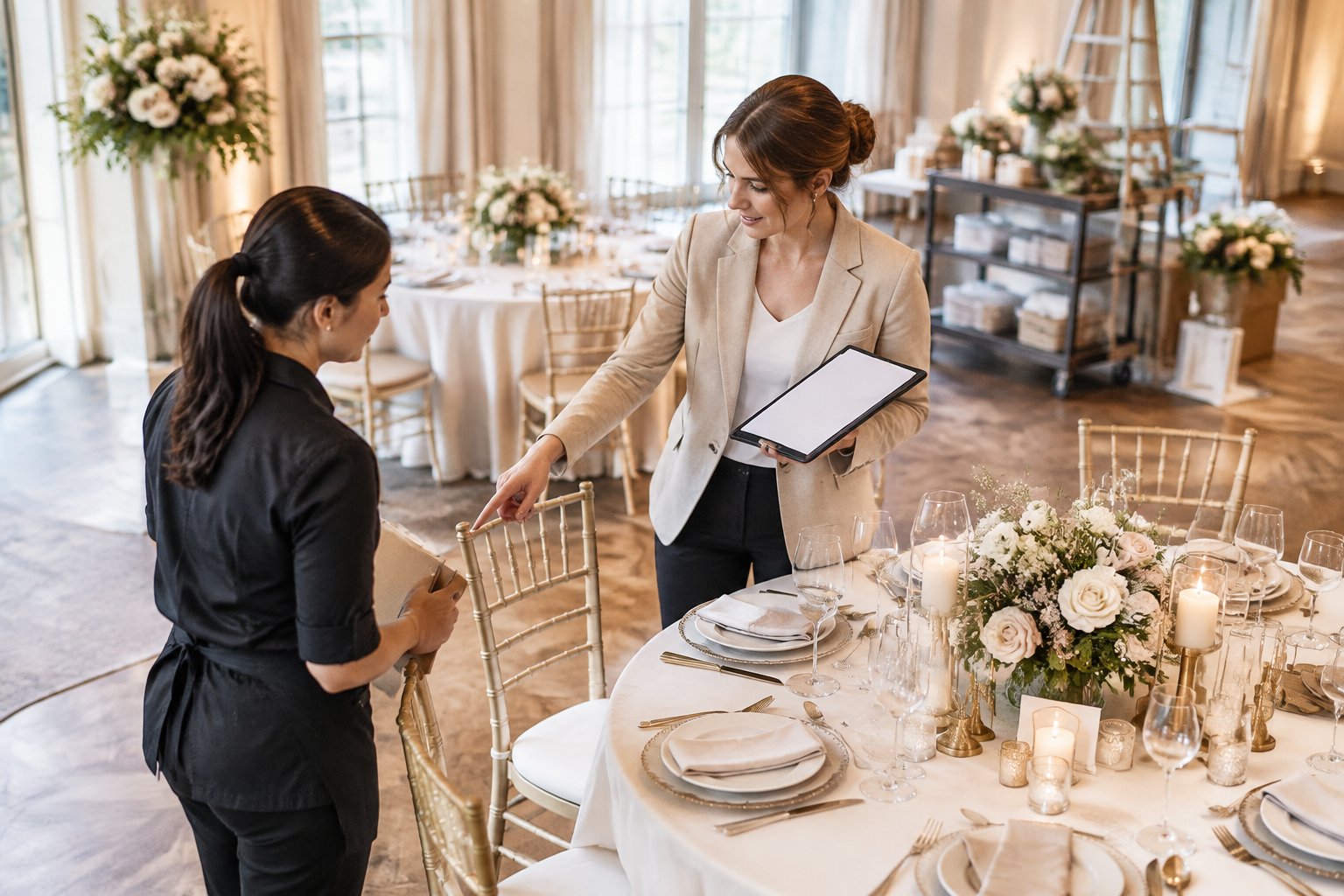
List every decor item and assign four details:
- Item name
- Quantity
- Setup location
- Person or vendor responsible
Add a photo or sketch for unusual pieces. Pack items by area and label each container. For example, place all welcome table items together and write the setup order on the lid.
Your wedding decor checklist can include candles, signage, table numbers, favors, card boxes, guest books, ceremony items, and teardown supplies.
Use the Floor Plan and Final Guest Count
The floor plan determines where tables, chairs, bars, buffet stations, dance areas, and decor will go. Your final guest count affects table numbers, place cards, linens, centerpieces, and seating charts.
Send the approved floor plan to your coordinator, venue, caterer, florist, rental company, and decorator. Mark areas that need open access, such as the dance floor, catering path, emergency exits, and cake table.
A change to the guest count can affect both the quantity of decor and the time needed for setup.
Schedule a Venue Walkthrough and Load-In
Use a venue walkthrough to confirm loading doors, elevators, storage space, setup zones, parking, power access, and cleanup rules. Ask when vendors may enter and when all items must leave.
Load-in times should appear on the master timeline. Include time for unloading, inventory checks, setup, corrections, photography, and guest arrival.
The venue may restrict candles, hanging decor, adhesives, confetti, or open flames. Share those rules with every vendor before delivery day.
Assign Vendor Coordination and Rehearsal Coordination
Your coordinator should own the vendor contact list and confirm each arrival time, service area, setup duty, payment detail, and pickup plan. Give vendors one point of contact so questions do not reach you while you get ready.
Rehearsal coordination covers processional order, ceremony cues, wedding party positions, and timing. Decor instructions should connect to that plan, especially when ceremony items move during a reception transition.
When Does Décor Setup Need Extra Staff or a Decorator?
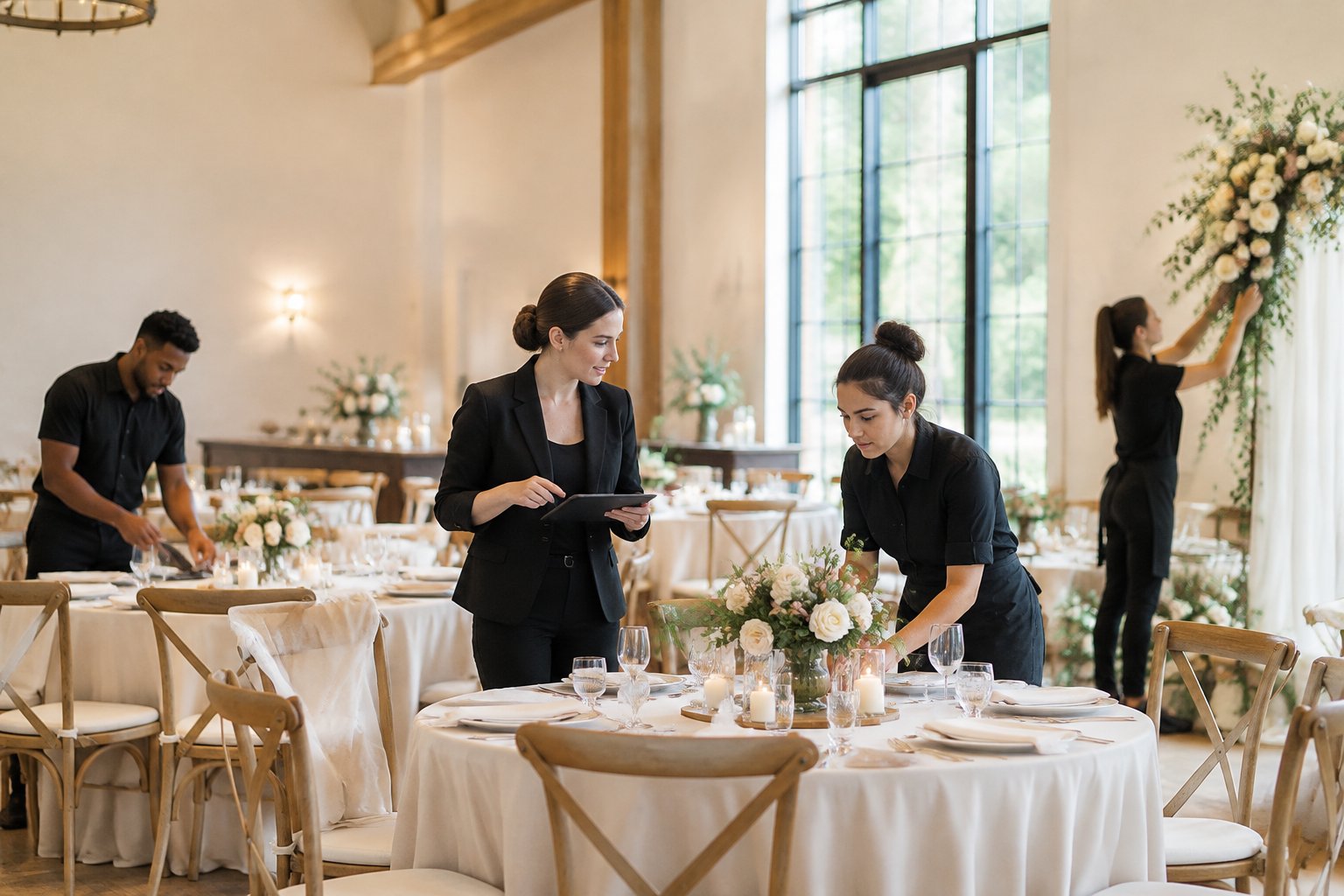
Extra staff or a wedding decorator becomes useful when decor involves installation, heavy lifting, many pieces, a short access window, or a quick change between ceremony and reception.
Large Installations and Structural Décor
Large installations need trained labor and enough setup time. Examples include:
- Ceremony arches and floral walls
- Drapery and hanging fabric
- Chandeliers and specialty lighting
- Stages and raised platforms
- Custom walls or suspended decor
- Large lounge areas
- Dance floor installations
A coordinator can manage the schedule and confirm placement, while a decorator, rental crew, florist, or production team performs the installation. Ask who supplies tools, ladders, safety equipment, delivery, and removal.
Reception Details That Take More Than a Quick Placement
A large reception may need extra labor when each table requires layered linens, chargers, glassware, menus, favors, candles, place cards, and detailed centerpieces. A dessert table, wedding cake display, escort card wall, or cocktail hour lounge can add more setup time.
A coordinator may place ready-to-use details, yet a full tablescape across many tables can exceed the labor included in a coordination package. Count the tables and pieces, then request a labor estimate.
Ceremony-to-reception flips also need enough staff. Moving chairs, changing linens, relocating floral arrangements, and resetting a room during cocktail hour requires a detailed plan.
Venue Rules, Access Windows, and Teardown
Venue rules can limit when your team enters, where deliveries wait, and how quickly everything must be removed. A six-hour setup window may feel generous until several vendors share the same loading area.
Ask whether the venue requires all wedding decorations to leave that night. Confirm who packs personal items, returns rentals, removes florals, clears the wedding cake and dessert table, and checks the room for damage.
Extra labor helps when the venue has a short load-in window, multiple floors, limited parking, or a strict end-of-night exit time.
What Should Be Included in the Coordinator’s Décor Scope?
Your coordinator’s decor scope should name each setup, styling, vendor-management, and teardown task, along with labor limits and added costs.
Questions to Ask Before Signing
Use these questions during consultations:
- Do you set up personal decor?
- Do you style tables, or only place items?
- Who sets up linens, chairs, florals, signage, and ceremony decor?
- How many assistants come with the package?
- Is a ceremony-to-reception flip included?
- Do you handle setup at more than one location?
- Do you coordinate deliveries and pickups?
- Is teardown included?
- What items must arrive labeled and packed?
- What happens if setup exceeds the included hours?
Ask the coordinator to attach a written decor checklist to the contract. Your wedding reception setup ideas can help you identify the tasks that need labor.
Setup, Styling, and Teardown Responsibilities
Setup means placing items in the assigned location. Styling means arranging pieces for a finished visual result, such as adjusting candles, folding napkins, spacing place cards, and balancing a tablescape.
Teardown includes collecting personal decor, packing boxes, separating rental items, removing signage, and placing keepsakes in your designated vehicle. Confirm whether the coordinator supplies packing materials and who takes responsibility for lost or damaged items.
Include hair and makeup timing in the schedule so decor work does not interfere with your getting-ready plans. Your coordinator should also protect time for portraits, the first dance, meal service, and other key events.
Costs for Coordination, Décor, and Additional Labor
Your wedding coordinator cost may cover timeline management, vendor communication, rehearsal coordination, and day-of supervision. Decor labor may be included in a package or priced separately by the hour, staff member, location, or task.
Your wedding decorator cost may include design, sourcing, delivery, installation, styling, and removal. Request an itemized quote that separates decor rentals from labor.
Ask about travel fees, overtime, delivery charges, setup at multiple locations, storage, ladder work, and teardown. An emergency kit may be included with coordination, yet decor repair supplies and replacement items may carry separate costs.
The Day-Of Handoff Checklist
Give your coordinator a handoff packet with:
- Final floor plan
- Decor inventory
- Setup photos
- Vendor contact list
- Delivery and pickup schedule
- Venue rules
- Personal item labels
- Seating chart and place card plan
- Teardown instructions
- Emergency contacts
Walk through the packet with the coordinator before the wedding. Place the emergency kit, extra stationery, tape, scissors, batteries, and approved repair supplies in a known location.
Your contract should state who makes setup decisions if an item arrives late, a table changes size, or weather moves the ceremony indoors. Clear authority lets your coordinator solve the problem while you stay focused on your wedding day.