
Does Everyone Who Gets a Save the Date Get an Invitation? Clarifying Wedding Guest Etiquette
When planning your wedding, you might wonder about the relationship between save-the-dates and invitations. If you send someone a save-the-date, you should also send them an invitation. This ensures that every guest you wish to include in your special day is kept in the loop from the start.
It’s important to keep your guest list in mind as you navigate through this process. Everyone who gets a save-the-date is someone you want at your wedding, so they deserve to be formally invited too. By sending out both, you not only inform your guests but also show them how much you value their presence.
Understanding the role of save-the-dates compared to invitations can help you make your wedding planning smoother. You can avoid any awkward situations by sticking to this rule and being clear with your friends and family about your plans.
Understanding Save-The-Dates

Save-the-dates are an important part of wedding planning. They serve to inform your guests about your wedding date and give them advance notice. Understanding their purpose and how they differ from invitations can help you plan effectively.
Purpose of Save-The-Dates
The main purpose of save-the-dates is to notify your guests about your wedding date as soon as possible. This is especially useful for those who may need to travel or make special arrangements. Sending out save-the-dates at least six to twelve months in advance allows your guests to mark their calendars.
Not everyone you know needs a save-the-date, so send these cards only to those you plan to invite to the wedding. This is a chance to share your excitement about your engagement and upcoming wedding date with your closest friends and family.
Difference Between Save-The-Dates and Wedding Invitations
Save-the-dates and wedding invitations serve distinct purposes. Save-the-dates are informal and simply announce the date of your wedding. They do not include the detailed information that invitations do, such as location, time, or RSVP details.
Wedding invitations are more formal and come later in the planning process. They provide all the specifics guests need to attend your wedding. Think of save-the-dates as a friendly heads-up and invitations as the official request for attendance. Understanding this difference can help you manage your guest list and expectations for your special day.
The Guest List Dynamics
Managing your wedding guest list is essential for sending save-the-dates and invitations. Knowing who to invite and how to communicate that can help build excitement for your big day.
Creating the Guest List
Start by listing everyone you want to invite, including family, friends, and any important guests. Make sure to consider your venue’s capacity and budget when drafting this list.
You can organize your list into categories, such as immediate family, close friends, and acquaintances. This helps prioritize who is most important to include. Remember, you want to create a warm atmosphere, so think about relationships and shared experiences.
Consider consulting with your partner and close family members to ensure you don’t miss anyone important. Once you have a finalized guest list, you will be ready to send out save-the-dates to those selected.
Save-The-Date Vs. Formal Invitation Recipients
Save-the-dates are typically sent to everyone on your guest list who is guaranteed an invitation. They are casual and meant to give your guests early notice so they can plan ahead.
However, you should only send these if you are certain about your guest list. It’s crucial to avoid sending save-the-dates to guests who may not be invited later. That could cause confusion or disappointment.
When it’s time for formal invitations, these should go to everyone who received a save-the-date. You can also choose to have a few additional guests on the invitation list who might not have received a save-the-date, especially if plans change. Always strive for clarity and consideration in your communication to keep the excitement alive!
Etiquette and Expectations

When planning your wedding, it’s important to understand the role of save-the-dates. They help set expectations for your guests and allow them to prepare for your special day. Let’s break down the key details regarding when to send them and considerations for destination weddings.
When to Send Out Save-The-Dates
You should aim to send out save-the-dates about six to eight months before your wedding. This gives guests plenty of time to rearrange their schedules, especially if they need to travel. Make a list of everyone you plan to invite, as everyone who receives a save-the-date should also be on the invitation list.
Keep in mind that it’s not appropriate to send save-the-dates to people you haven’t officially invited. Anyone who gets a save-the-date is expected to receive a formal invitation later. Stick to your guest list carefully to avoid confusion.
Destination Wedding Considerations
Destination weddings often require more planning, especially for your out-of-town guests. Send save-the-dates earlier—around eight to twelve months in advance is advisable. This allows guests to make travel arrangements and accommodations.
When sending save-the-dates for a destination wedding, ensure you provide essential details. Include the city and venue (without revealing all the surprises). This helps guests decide if they can attend. It’s also nice to suggest nearby hotels or transportation options. By giving them this information, you’ll make their travel planning much easier.
Design and Details
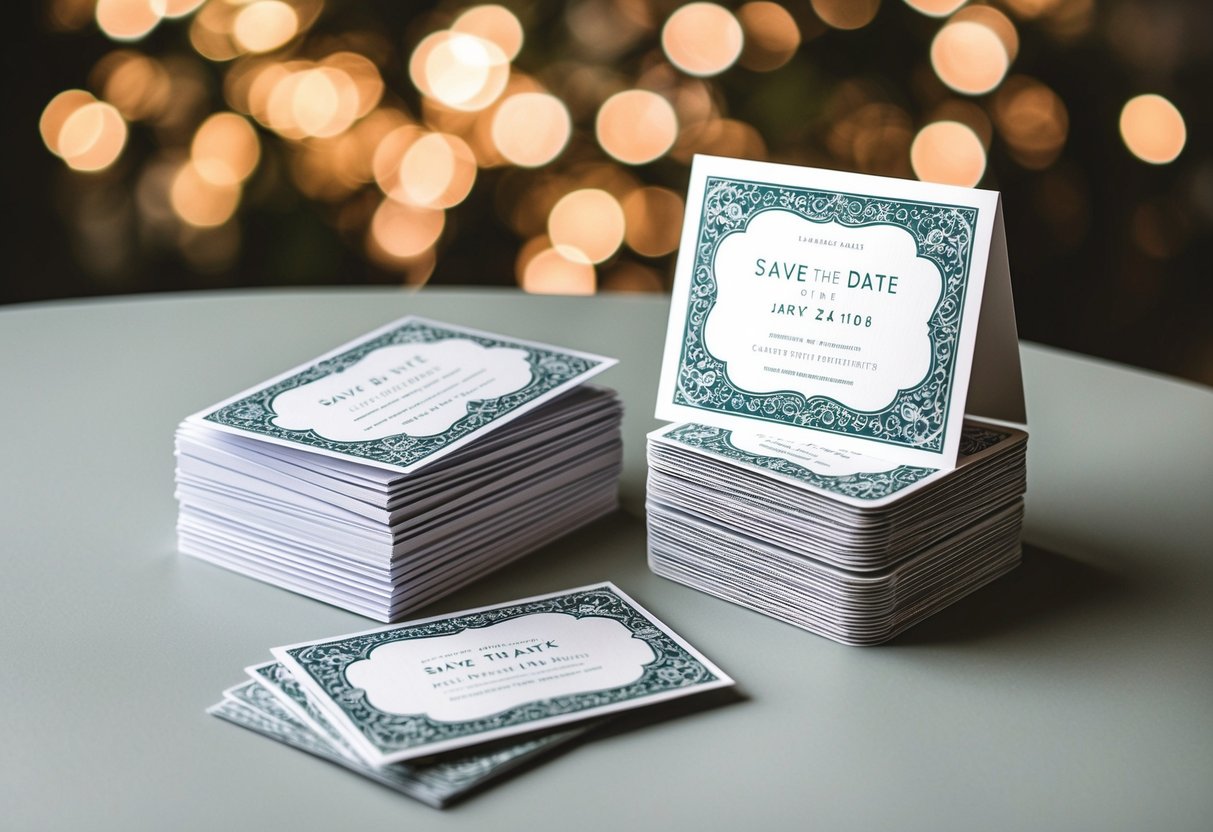
When planning your save-the-date, focus on style and the details that matter to your guests. These elements help create excitement for your upcoming wedding and provide essential information.
Choosing Your Save-The-Date Style
Decide on a style that reflects your personality and wedding theme. Options range from traditional cards to fun save-the-date magnets. Each choice carries a different vibe.
For example, a magnet is a playful way for guests to remember your date. A classic postcard can be more formal but also charming. You may also want to consider incorporating a wedding website link, helping guests stay updated and access additional information.
Think about colors, fonts, and images that represent your relationship. This choice sets the tone for your event and gets everyone excited.
Including Essential Information
Your save-the-date should include key details, even though it does not need to be as formal as the invitation.
Important elements to include are:
- Names of you and your partner
- Wedding date
- City and state where the wedding will take place
- A link to your wedding website for further updates
Also, consider adding travel details or hotel information if many guests will need accommodations. This can make planning easier for them and shows you care about their convenience.
A quick note about your wedding registry may also be helpful, especially if guests want to start thinking about gifts early.