
Does the Earth Have a Mini Moon? The Real Answer
Earth has one permanent natural moon, yet small asteroids sometimes become temporary companions or travel alongside our planet. Yes, Earth can have a “mini moon,” but these objects are tiny, temporary, and often do not orbit Earth in the same way the Moon does.
The term covers two different ideas. A temporary satellite can loop around Earth for weeks or months, while a quasi-satellite follows a similar path around the Sun and only looks as if it circles Earth. These space rocks are too faint to see without powerful equipment, so their discovery depends on careful tracking.
You can keep exploring the night sky with a telescope or follow updates from major sky surveys as astronomers find new near-Earth objects.
The Short Answer: One Permanent Moon, Several Temporary Visitors
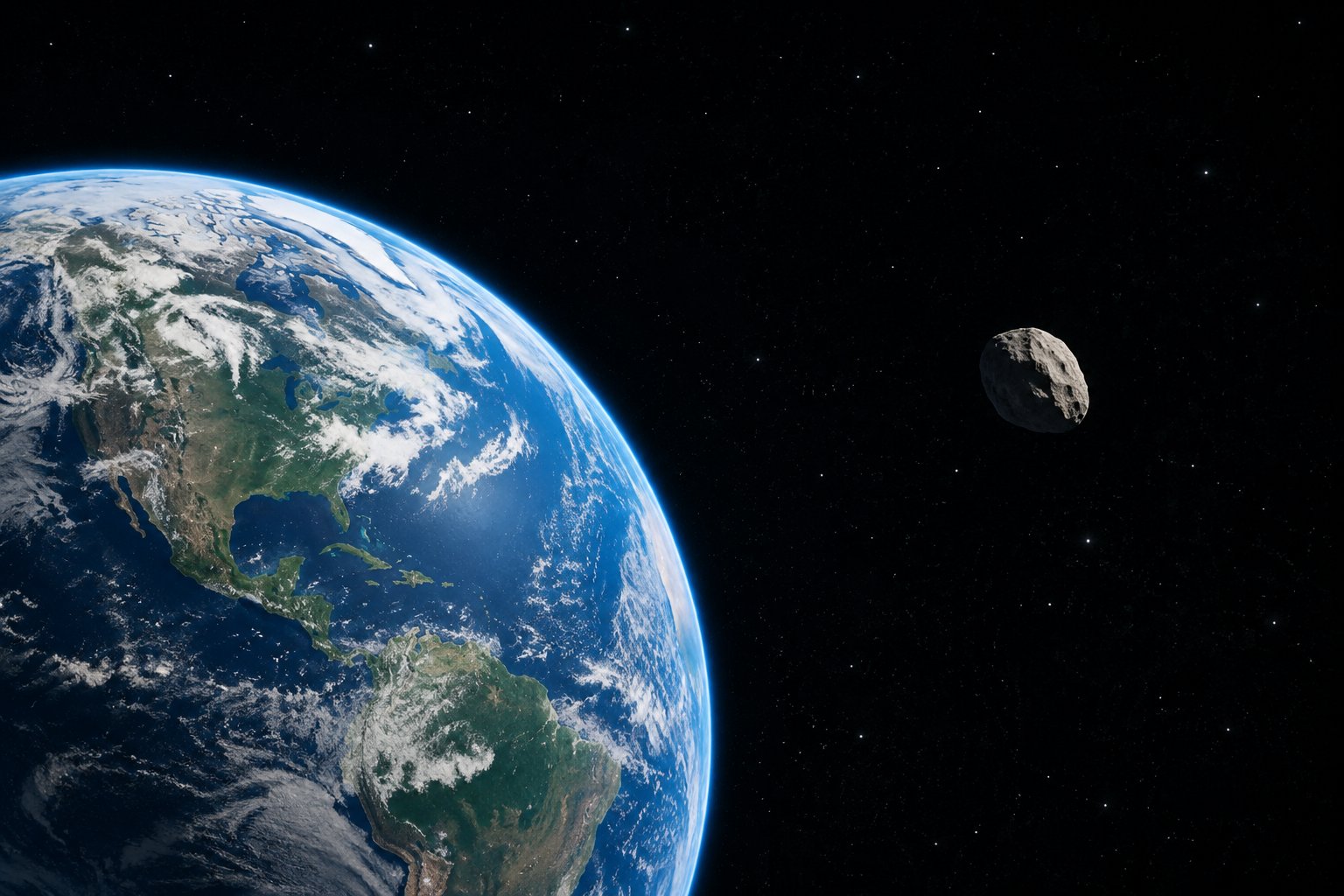
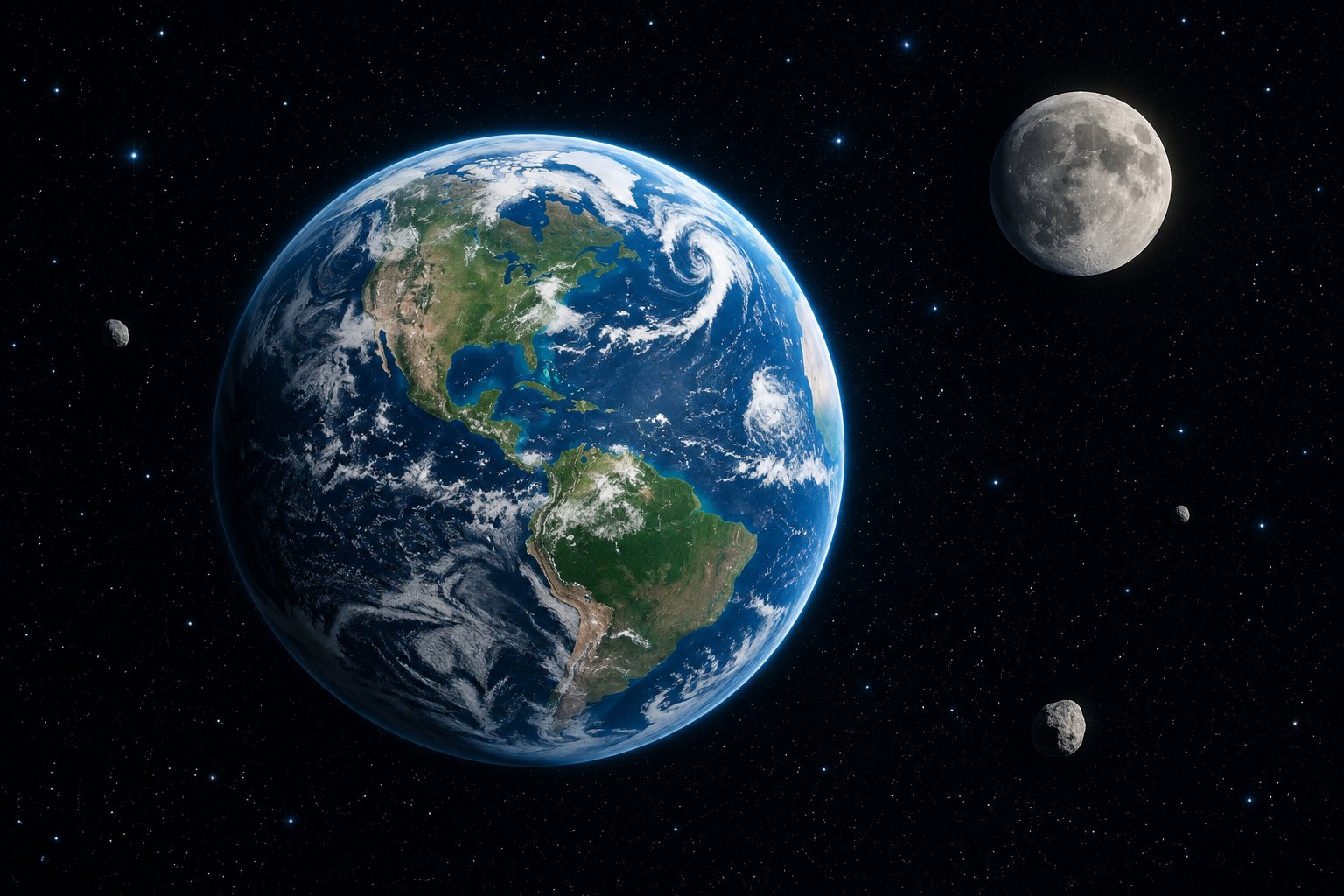
Earth has one permanent Moon, along with temporary satellites and nearby objects that sometimes receive the “minimoon” label. These visitors include near-Earth objects such as asteroids and, in some cases, comet fragments.
A small body becomes a true temporary satellite when Earth’s gravity holds it in an orbit for a limited time. Other objects remain bound to the Sun while moving close to Earth. News stories may call both types “second moons,” even though their paths differ.
What Counts as a Natural Satellite?
A natural satellite follows an orbit controlled mainly by a planet’s gravity. Earth’s Moon fits this definition because it has remained gravitationally bound to Earth for billions of years.
A temporary satellite also circles Earth under its gravity, though its path is unstable. Solar gravity, lunar gravity, and repeated close passes eventually push the object back into an orbit around the Sun.
A minimoon can be only a few meters wide. Its small size makes it faint and difficult to detect, even when it passes relatively close to Earth.
Why “Second Moon” Is Usually Misleading
“Second moon” describes the public excitement, not a formal class of object. A quasi-satellite shares Earth’s trip around the Sun, while a temporarily captured orbiter completes at least part of an Earth-centered path.
The distinction depends on the object’s orbit and gravitational ties. Calling every nearby asteroid a moon hides the difference between a stable natural satellite, a temporary capture, and a solar-orbiting companion.
Quasi-Satellites Travel With Earth, Not Around It
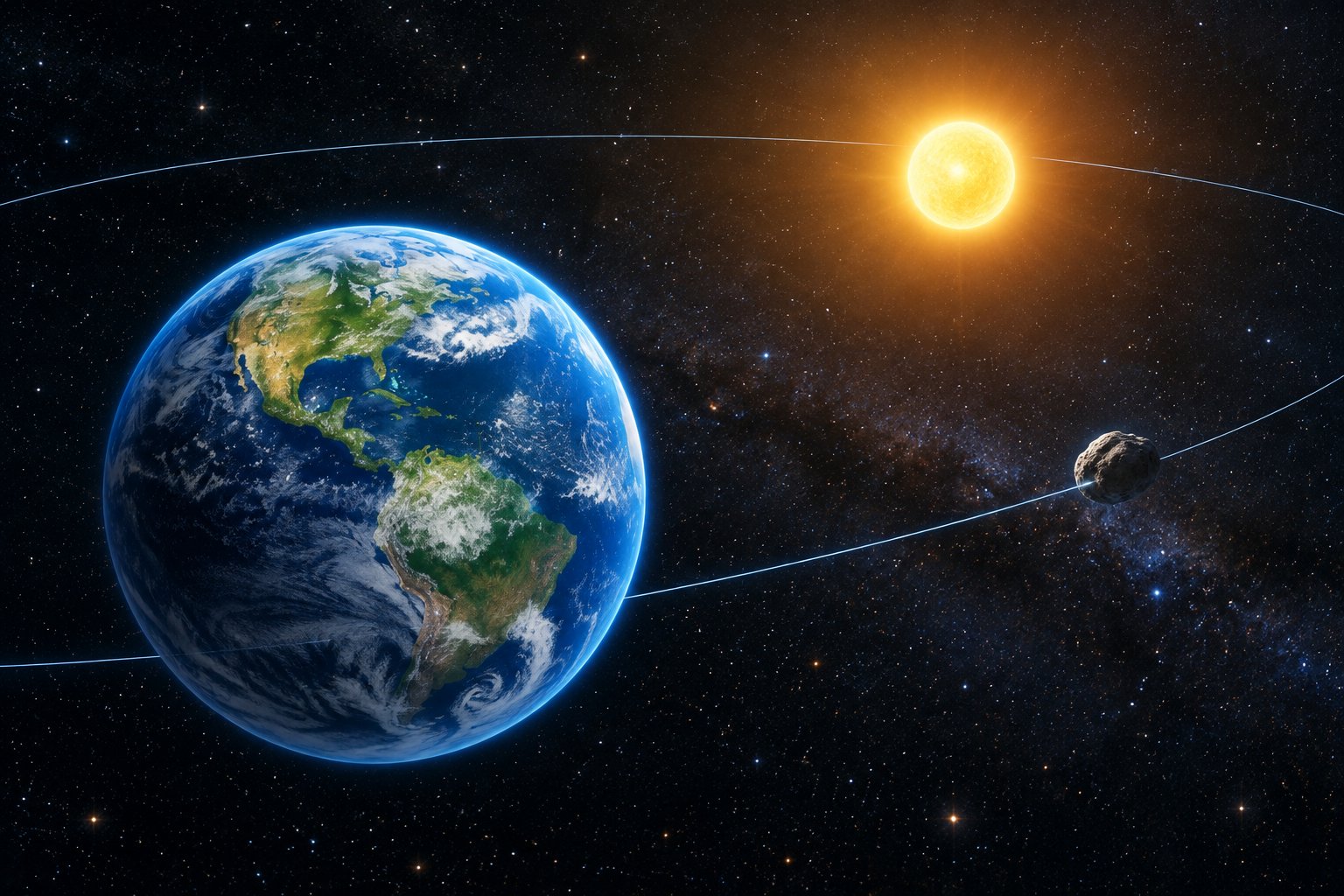
A quasi-satellite travels around the Sun in step with Earth, creating the appearance of a second moon from certain viewpoints. Objects such as 2025 PN7 and Kamoʻoalewa are near-Earth objects in this solar-orbit arrangement.
These asteroids remain tied to the Sun. Their paths can bring them near Earth for decades or centuries, while their position relative to our planet forms a broad looping pattern.
How a Shared Solar Orbit Creates the Illusion
A quasi-satellite follows a solar orbit with a period close to Earth’s one-year orbit. It sometimes moves ahead of Earth and later falls behind, while Earth’s gravity gently changes its path.
When you view the motion from a frame that moves with Earth, the asteroid seems to loop around our planet. From a wider view, both bodies travel around the Sun, and the asteroid never becomes a normal Earth satellite.
This arrangement is called a 1:1 orbital resonance. It keeps the object near Earth’s orbital neighborhood without placing it in a tight orbit around Earth.
2025 PN7 and Its Predicted Stay Near Earth
2025 PN7 is a small asteroid identified as a new quasi-satellite in 2025. Estimates place it at roughly 20 meters across, with an Earth-like solar orbit that has kept it near our planet for decades.
Predictions indicate that 2025 PN7 will remain in this configuration for several more decades before gravitational changes shift it into another type of solar orbit. Its path makes it an interesting near-Earth object, even though it is not a captured moon.
Why Kamoʻoalewa Is Earth’s Best-Known Quasi-Satellite
Kamoʻoalewa, also designated 469219 Kamoʻoalewa, is one of Earth’s best-known quasi-satellites. Its orbit keeps it near Earth’s path around the Sun, and its reddish surface has prompted study of a possible lunar connection.
The asteroid is a target for China’s Tianwen-2 mission. A close study could reveal whether its material resembles lunar rock and help researchers trace how objects move through near-Earth space.
Temporary Captures Are the Closest Thing to a True Mini-Moon
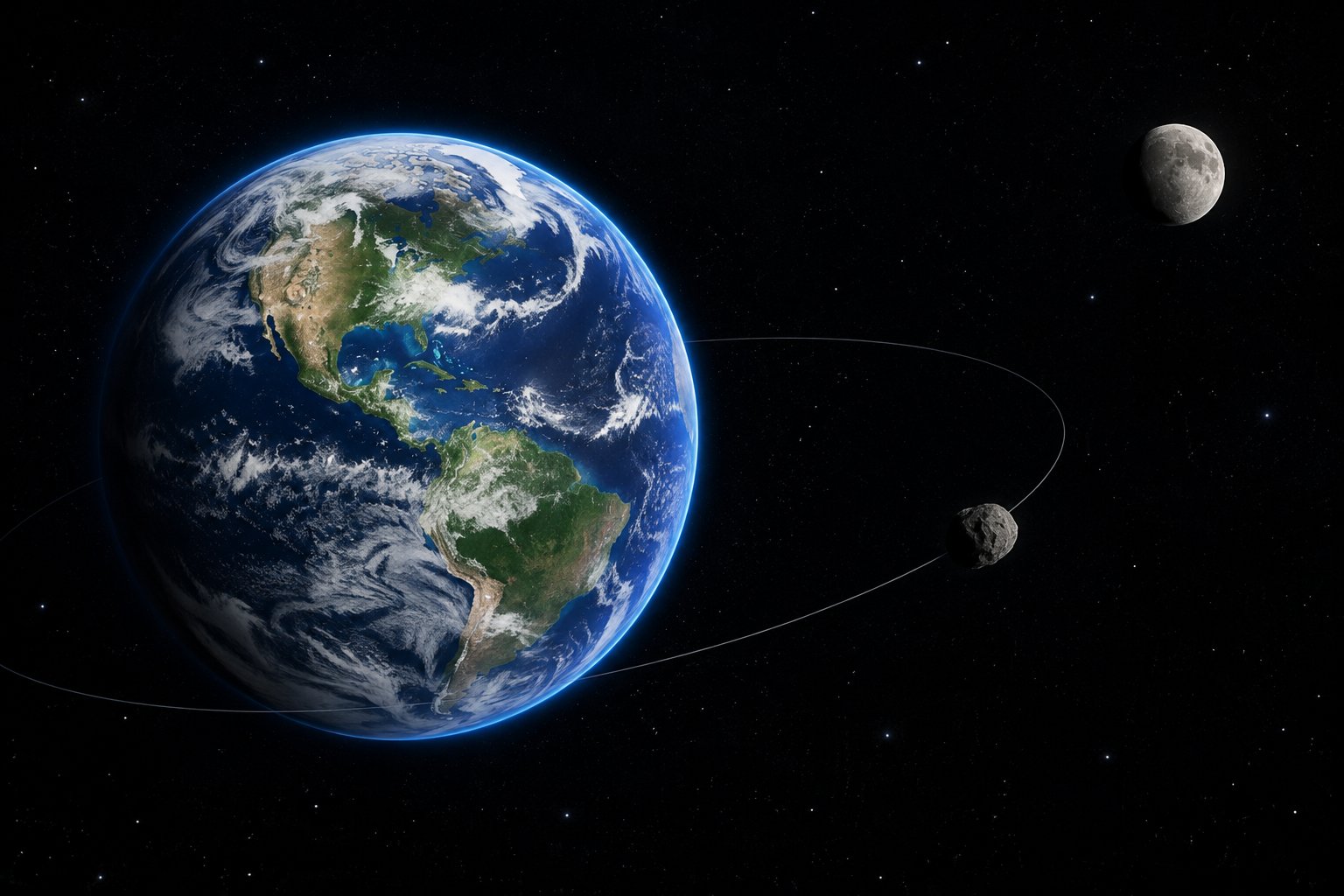
A temporarily captured orbiter is the closest match to a true mini-moon because Earth’s gravity holds it in an Earth-centered path for a limited time. Known examples include 2006 RH120 and 2020 CD3, while 2024 PT5 made a shorter captured flyby.
These events require a precise combination of speed, direction, and distance. Solar gravity remains strong in the Earth-Moon neighborhood, so even a captured asteroid can escape after completing a few loops or spending several weeks nearby.
What Is a Temporarily Captured Orbiter?
A temporarily captured orbiter enters Earth’s gravitational region slowly enough for Earth to hold it for a while. Its path can be wide, irregular, and strongly affected by the Sun and Moon.
Some objects complete one or more revolutions around Earth. Others remain captured for days or weeks without completing a full orbit. Astronomers use orbital calculations to separate these cases.
The capture ends when the object gains enough energy to return to a solar orbit. A small portion of these objects can also enter Earth’s atmosphere.
2006 RH120 and 2020 CD3
2006 RH120 was a small asteroid that made several loops around Earth from 2006 to 2007. Its temporary orbit provided a clear example of how Earth can briefly hold a near-Earth object.
2020 CD3 was discovered in 2020 after survey images showed an object moving in an unusual path. It had likely circled Earth for years before detection and left the Earth-Moon system a few months after astronomers identified it.
Researchers also examined whether 2020 CD3 was a natural asteroid or artificial debris. That check is essential because old rocket stages and spacecraft can follow similar paths.
Why 2024 PT5 Was a Brief Flyby Rather Than a Full Orbiter
2024 PT5 spent about 56 days in a temporary capture event in 2024. It came from the Arjunas, a group of asteroids with solar orbits similar to Earth’s.
Its path brought it under Earth’s gravitational influence, yet it did not complete a full Earth-centered orbit. That makes it a temporarily captured flyby, a short form of minimoon event.
The asteroid was too faint for naked-eye viewing and returned to its solar orbit after the Sun’s gravity changed its path.
How Astronomers Find These Faint Objects
Astronomers find minimoons and related objects by comparing repeated telescope images and calculating their changing paths. NASA-supported programs, the Minor Planet Center, Pan-STARRS, ATLAS, the Catalina Sky Survey, and Spacewatch all contribute to the search for near-Earth objects.
The Moonbase South Observatory and other smaller facilities can add follow-up observations. Fast movement, faint light, and crowded star fields make these objects difficult to track.
How Sky Surveys Turn Repeated Images Into Discoveries
A survey telescope photographs the same region of sky over a series of minutes or nights. Stars stay fixed in the background, while an asteroid shifts position from image to image.
Software links those moving points and estimates a preliminary orbit. More observations improve the result and show whether the object circles Earth, follows a solar orbit, or travels through another near-Earth path.
Objects close to Earth can move across the sky quickly. Their brightness also changes as they rotate and as their distance from Earth shifts.
What NASA and the Minor Planet Center Confirm
The Minor Planet Center collects observations and assigns official designations to newly reported small bodies. NASA uses this information, along with orbit models, to monitor near-Earth objects and estimate their future paths.
Astronomers compare observations from multiple locations to reduce errors. A single image cannot establish an orbit, so a discovery needs follow-up measurements over time.
The process can also identify relationships between objects. A newly found asteroid might join a known group such as the Arjunas or match an Earth-like quasi-satellite orbit.
Why Artificial Objects Must Be Ruled Out
Old spacecraft, rocket stages, and discarded hardware can resemble natural asteroids in telescope images. The S-IVB stages from lunar missions are examples of artificial objects that have received attention during near-Earth searches.
Astronomers check brightness, motion, radar data, and the object’s past trajectory. A natural asteroid often shows a different light pattern from a metal object, although limited observations can leave the classification uncertain.
Separating space debris from rock keeps catalogs accurate and prevents artificial objects from being counted as new minimoons.
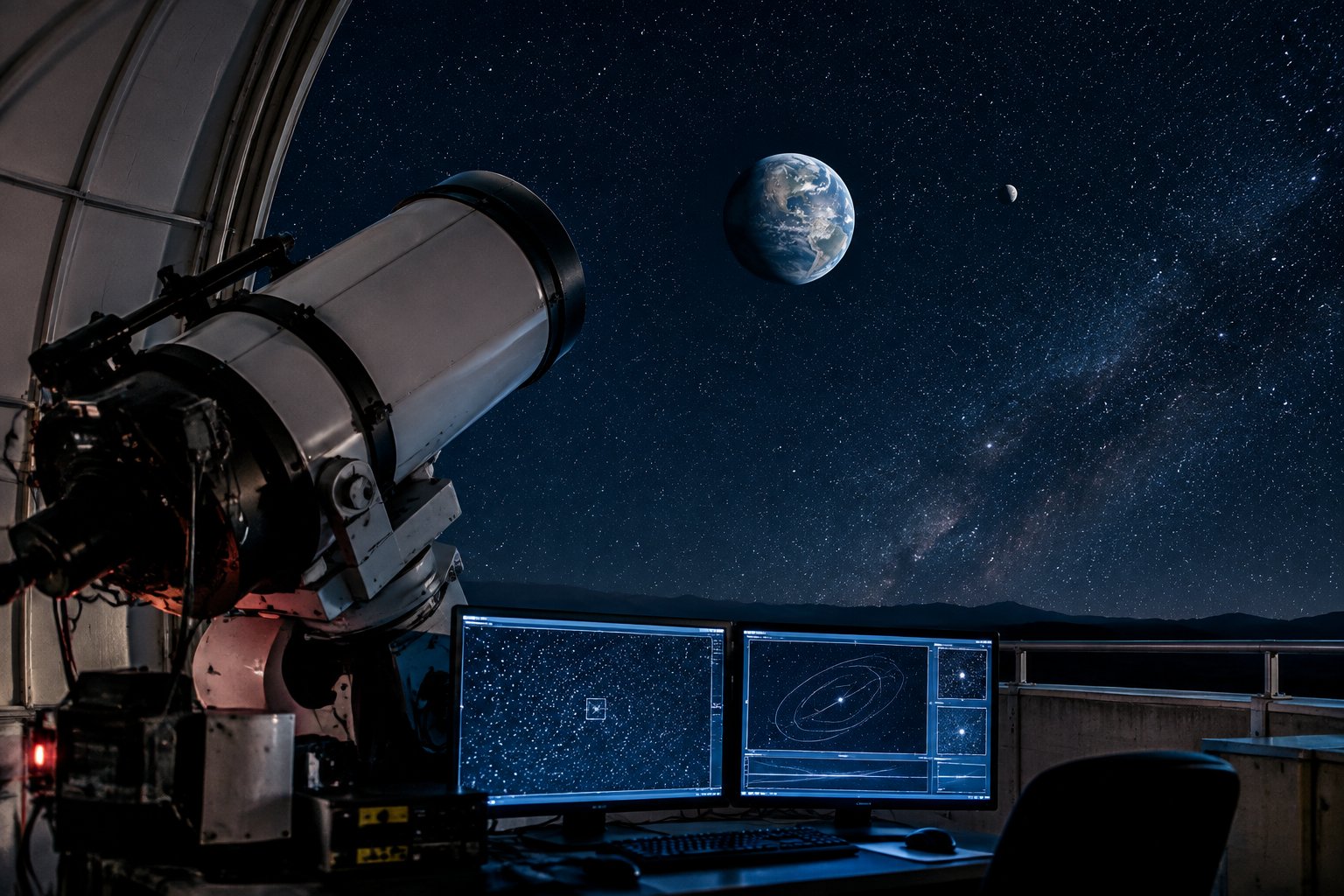
Why Mini-Moons and Quasi-Satellites Matter
Mini-moons and quasi-satellites offer nearby targets for space missions and help researchers study the small bodies that move through Earth’s neighborhood. Their unusual orbits also reveal how gravity shifts asteroids between solar and Earth-centered paths.
Observations can improve asteroid tracking, mission planning, and knowledge of the Earth-Moon system. Some objects might also preserve clues about impacts that sent material away from the Moon.
Low-Speed Targets for Space Exploration
A temporary satellite can be easier to reach than an asteroid on a fast, distant trajectory. Its low relative speed and nearby orbit create useful conditions for testing navigation, rendezvous, sample collection, and asteroid-surface operations.
A short mission could study a minimoon before it escapes. Space agencies could use these targets to test equipment that later travels to more demanding destinations.
Their small size brings challenges. A spacecraft must match the object’s motion, and the target can be faint, irregular, and difficult to predict.
Could Some Objects Be Lunar Material?
Some near-Earth objects might be fragments thrown from the Moon by large impacts. Their chemical makeup and surface texture could preserve evidence of lunar rocks that never passed through Earth’s atmosphere.
Kamoʻoalewa has drawn interest because some observations point toward a possible lunar connection. A spacecraft visit and returned sample would offer a stronger test than telescope data alone.
Asteroids from the main asteroid belt and the Arjuna population remain other possible sources. Each origin would tell a different story about how material reaches near-Earth space.
What the Vera C. Rubin Observatory May Find Next
The Vera C. Rubin Observatory is designed to scan the sky repeatedly through its Legacy Survey of Space and Time, also called LSST. Its wide field of view and sensitive camera should reveal many faint objects that earlier surveys missed.
More frequent observations can find small minimoons during their brief capture periods. They can also improve orbit predictions for quasi-satellites, Arjunas, and other near-Earth objects.
You may hear more “second moon” headlines as the survey grows, yet each discovery will still require orbital analysis to determine whether the object is a temporary satellite, a quasi-satellite, or a passing asteroid.