
Does the Father of the Groom Do Anything at a Wedding? Duties
The father of the groom has a meaningful role at a wedding, with duties that often include supporting the groom, helping with wedding costs, hosting the rehearsal dinner, welcoming guests, and giving a toast. The father of the groom’s role is to support the couple in the ways they request, with the wedding day plans and family traditions setting the details.

Some fathers of the groom take on visible wedding responsibilities, while others provide behind-the-scenes help. You might help manage family communication, join attire shopping, escort the groom’s mother, or dance with the bride.
Your role should fit the groom, the couple, and the kind of celebration they want. Start by asking the couple which tasks would ease their workload and which traditions they want to include. A clear conversation early in the planning process gives you time to help with confidence and respect their choices.
The Father of the Groom’s Modern Role
The modern groom’s father serves as a trusted support person whose role is shaped by the couple’s wishes, family relationships, and wedding plans. You might help with logistics, finances, family introductions, or a special moment during the wedding day.
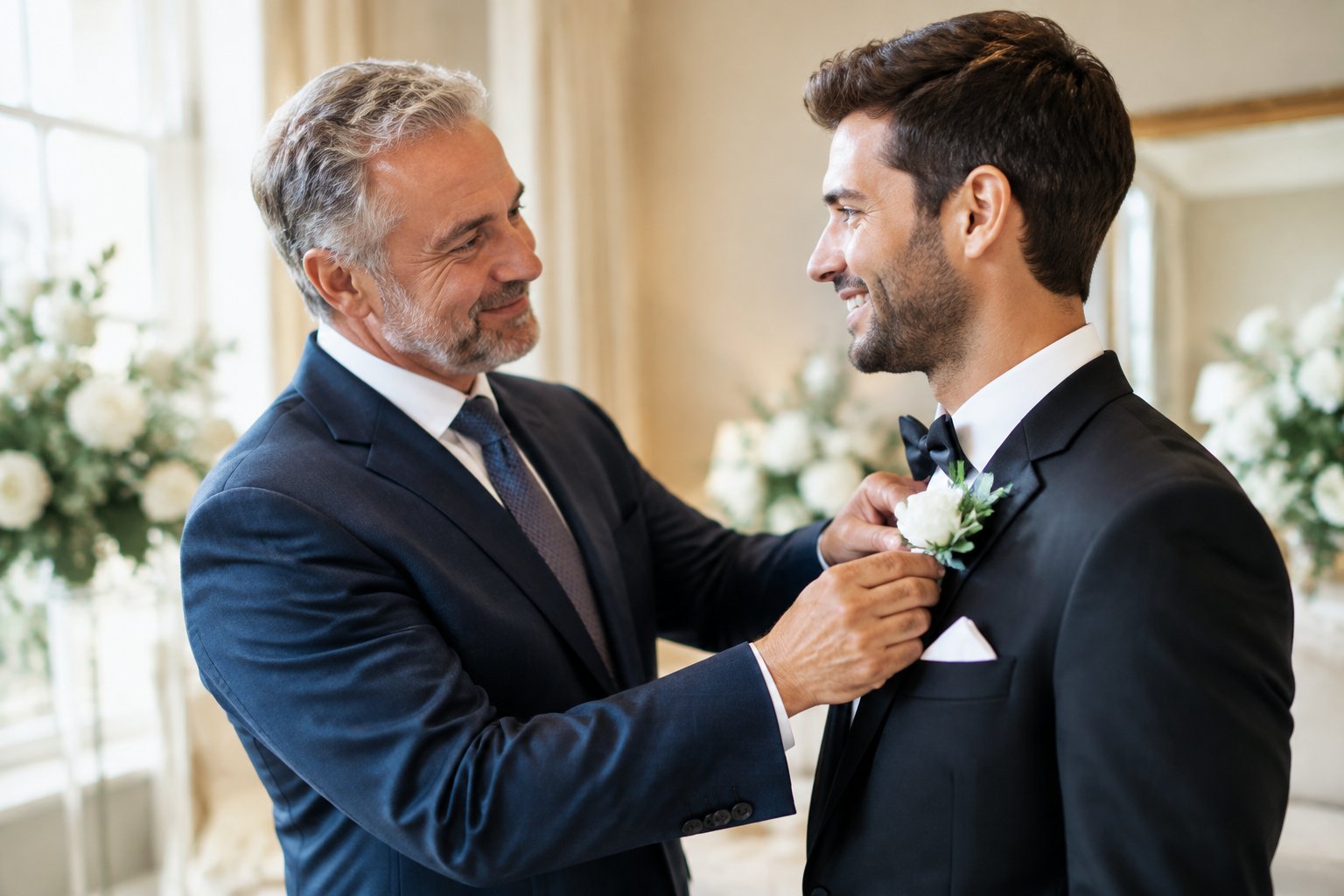
Tradition Is a Starting Point, Not a Rule
Traditional father of the groom duties include helping the parents of the groom host the rehearsal dinner, contributing to wedding expenses, participating in the ceremony processional, and offering a wedding toast. These customs give you useful ideas, though the couple chooses which ones suit their celebration.
Some families divide tasks between the groom’s parents. The mother of the groom might coordinate family details while you handle transportation, vendor questions, or hosting duties. Other couples assign the same responsibilities across both families.
How Couples Can Define the Role Together
Ask the groom and his partner what kind of help they want before you commit to a task. A simple list of responsibilities can clarify who will contact relatives, manage a payment, speak at the reception, or handle an urgent question on the wedding day.
You can also agree on boundaries. The couple might welcome advice about marriage or family traditions while keeping decisions about the guest list, ceremony, and wedding design in their own hands. Clear expectations help you work well with future in-laws and new in-laws.
Including Blended Families and Same-Sex Weddings
Blended families and same-sex weddings offer many ways to share meaningful roles. You might walk with a parent, welcome guests, give a reading, join a chuppah ceremony, or take part in family portraits.
The father of the bride, another parent, stepparents, and close family members can all receive roles that reflect their relationships with the couple. Use names and titles the couple prefers, then coordinate the plan with the wedding party and officiant.
How He Can Help Before the Wedding
Before the wedding, the groom’s father can support the groom with planning tasks, emotional encouragement, family communication, and practical decisions. Your time, attention, and reliable follow-through can reduce pressure during a busy period.
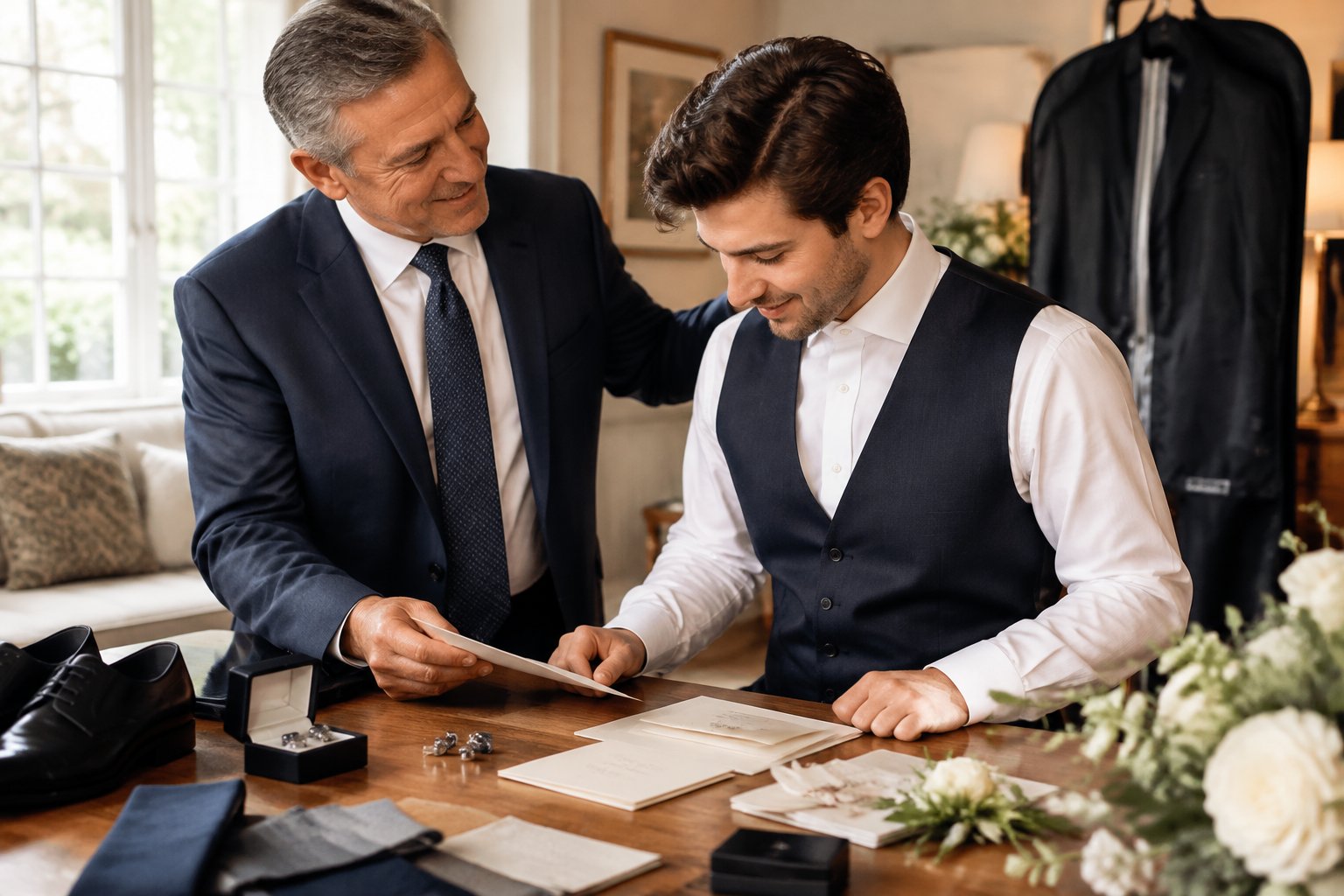
Offer Practical and Emotional Support to the Groom
Ask the groom where he needs help, then take ownership of agreed tasks. You might review transportation plans, help contact relatives, pick up wedding items, or provide a calm place to discuss marriage advice.
Give encouragement without taking control. A supportive conversation about stress, finances, or family concerns can help the groom feel prepared. You can also spend relaxed time together before the wedding so your relationship stays at the center of the planning.
Help With the Guest List, RSVPs, and Seating Chart
You can help the couple build the guest list by supplying accurate family contact details and checking relatives’ addresses. After invitations go out, follow up with guests from your side who have not sent their rsvps.
Share family seating concerns early. If two wedding guests need separate tables or a relative needs accessible seating, tell the couple or planner before the seating chart is finalized. Keep private family issues confidential and let the couple make the final call.
Join Attire Shopping and Coordinate the Dress Code
Join the groom and groomsmen when they shop for a suit or tuxedo if the groom wants your input. Confirm the wedding attire requirements, order your own outfit on time, and check details such as shoes, tie color, shirt, and pocket square.
Ask whether the wedding party will wear matching tuxedos or coordinated styles. Your outfit should fit the dress code and allow you to move comfortably during the ceremony, reception, and photographs.
Build a Relationship With the Other Family
Make time to meet the other family before the wedding through an engagement party, bridal shower, casual meal, or planning conversation. Learn names, pronunciation, and any cultural practices that will shape the celebration.
A warm introduction helps family members feel welcome. You can also coordinate family portraits with the couple or photographer so important relatives know when and where to gather.
Financial Contributions to Discuss Early
Financial help from the groom’s family should be discussed early, with a clear amount, purpose, and payment plan that protect the wedding budget and family relationships. Traditional expectations can include specific wedding costs, though couples and families now arrange contributions in many ways.

What the Groom’s Family Traditionally Pays For
Traditional lists often connect the groom’s family with the rehearsal dinner, the groom’s attire, boutonnieres, corsages, the officiant’s fee, and transportation for close family. Some families also contribute toward the marriage license, wedding rings, wedding reception, or honeymoon.
These customs do not create an obligation. The couple might cover the engagement ring, wedding expenses, and other costs themselves, or both families might contribute to shared priorities.
How to Set a Comfortable Wedding Budget
Decide what you can give without borrowing money or putting essential household needs at risk. Tell the couple whether your contribution is a gift or a loan, when funds will be available, and which expense you will cover.
Put the agreement in writing, even when the conversation feels comfortable. A short message can confirm the amount, due date, and payment recipient. This prevents confusion when vendor deposits and final balances come due.
Helpful Alternatives to Covering Major Costs
You can contribute time and skills when a large financial gift is not possible. Offer to manage rehearsal dinner arrangements, drive relatives, collect welcome bags, or handle a vendor payment that fits your budget.
You might also pay for one defined item, such as your suit, family transportation, or a meal for relatives. Ask the couple which expense would help most before choosing one.
Hosting the Rehearsal Dinner
When you host the rehearsal dinner, your job is to create a welcoming gathering that honors the couple and gives both families time to connect before the wedding celebration. The event can be formal, casual, local, or centered on a family tradition.

Who Usually Hosts the Rehearsal Dinner?
Tradition places the rehearsal dinner with the groom’s parents, though anyone close to the couple can host it. The parents might share the work, or the couple might plan and pay for the event themselves.
Ask the couple whether they want you to handle the entire event or share decisions about the venue, menu, and guest list. Their answer should guide your budget and planning role.
Planning the Guest List and Event Details
Confirm the guest list with the couple before making reservations. Include the wedding party, close family, the officiant, and any other wedding guests the couple wants at the meal.
Choose a venue that fits the group, schedule, and accessibility needs. Confirm the menu, dietary requests, transportation, start time, dress code, and payment details. Keep the event length comfortable so everyone can rest before the wedding.
How to Welcome Both Families as Host
Greet guests as they arrive and introduce people who have not met. A brief welcome can thank everyone for traveling, celebrate the couple, and invite guests to enjoy the evening.
If you give a toast, keep it warm and focused on the couple. Welcome the bride or groom joining your family according to the language and family structure the couple prefers, including daughter-in-law or another chosen title.
Ceremony and Reception Responsibilities
On the wedding day, the father of the groom can escort a parent, welcome guests, offer a toast, and join a planned dance or ceremony role. Confirm each detail with the couple, coordinator, or officiant before the day begins.
Walking the Groom’s Mother Down the Aisle
In many wedding ceremonies, you walk the groom’s mother down the aisle and help her reach her seat. Check the processional order during the rehearsal because some couples enter together, walk separately, or use a different family arrangement.
If the ceremony includes a chuppah, cultural ritual, or a nontraditional processional, follow the officiant’s instructions. Your role can honor the groom’s mother while fitting the couple’s ceremony design.
Greeting Guests in the Receiving Line
Stand in the receiving line if the couple asks you to participate. Offer a brief welcome, congratulate guests, and keep the line moving so everyone has a chance to greet the newlyweds.
If there is no receiving line, mix and mingle during the reception. Introduce relatives, thank guests for coming, and direct questions to the planner or venue staff when they concern logistics.
Giving a Father of the Groom Speech or Wedding Toast
A father of the groom speech works best when it is personal, brief, and centered on the couple. Share one or two appropriate memories about the groom, welcome his spouse, and offer a wish for their marriage.
Practice aloud and confirm the speaking order with the best man or reception coordinator. Keep private stories, past relationships, and embarrassing details out of the toast. Aim for about three to five minutes unless the couple gives you a different limit.
Dancing With the Bride or New Spouse
A father of the groom dance with the bride or new spouse can be included when the couple wants it. Some couples plan a parent dance, a dance with the bride, or a shared dance involving both families.
Ask which song and format the couple prefers, then follow the DJ’s cue. If the dance is not part of the reception, you can still offer congratulations, join the dance floor, and spend time with the newlyweds.