
Does the Groom’s Father Dance with the Bride? Understanding Wedding Traditions and Etiquette
At many weddings, the father of the groom plays an important role in the celebration. The tradition of the groom’s father dancing with the bride is not a universal practice, but it can carry significant meaning in certain ceremonies. This dance often symbolizes familial bonds and welcomes the bride into the groom’s family.
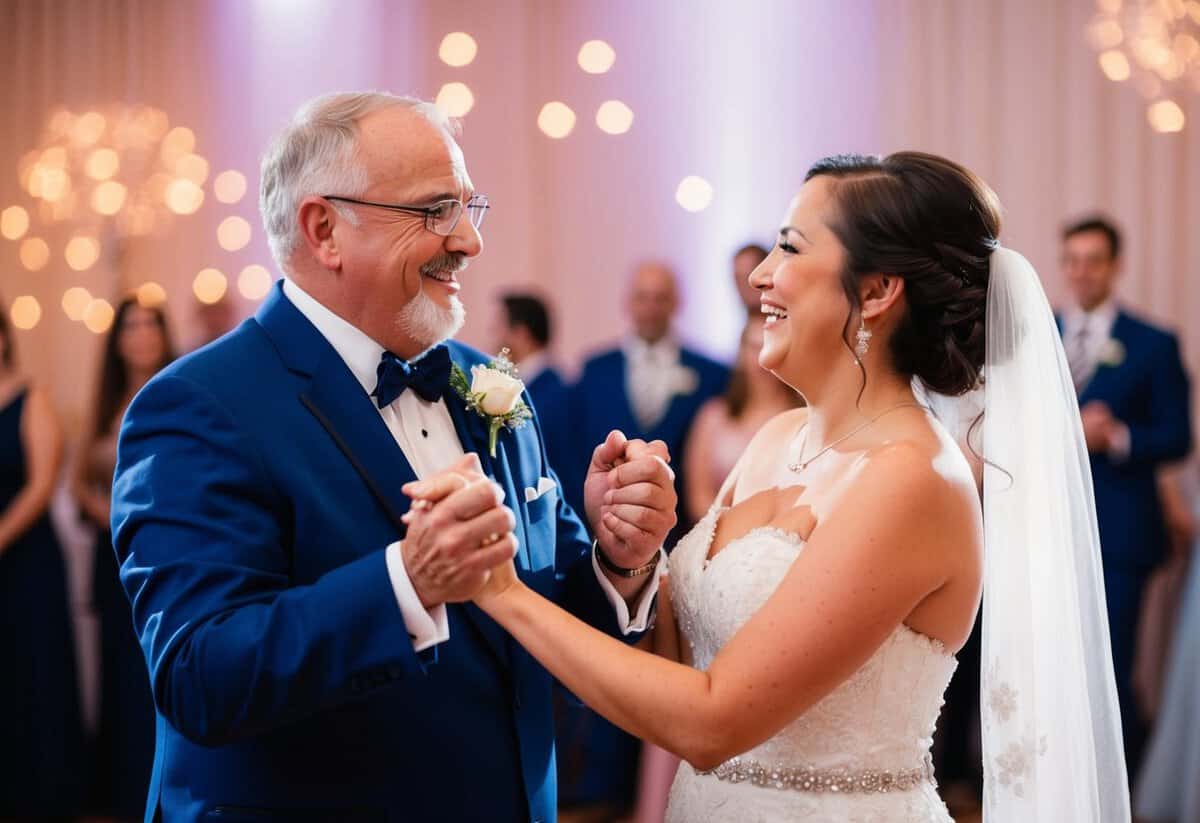
You might wonder why this dance is included in some weddings. It’s a moment filled with respect and warmth, allowing the bride and groom’s families to connect. If you’re considering including this dance in your own wedding festivities, it’s worth thinking about what it would mean for you and your loved ones.
As you plan your special day, it’s helpful to know the various traditions that can add to the celebration. Understanding the significance of these dances can help you make choices that reflect your values and relationships. Whether you opt for this dance or not, it’s all about what feels right for you and your family.
Wedding Reception Overview
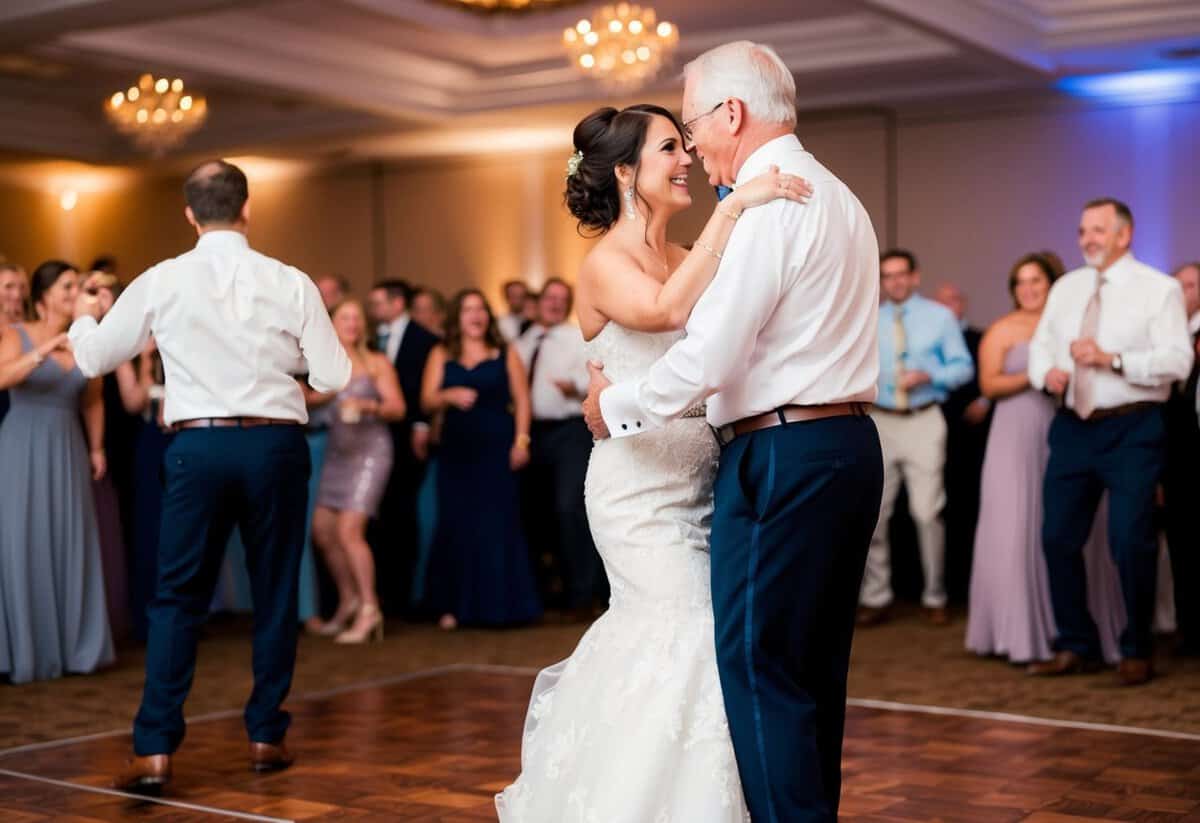
A wedding reception is a joyful celebration where the newlyweds share special moments with their loved ones. One of the highlights of this event is the parent dances, which honor the bond between the couple and their families.
Significance of Parent Dances
Parent dances play an important role at your wedding reception. They symbolize love, appreciation, and the passage of responsibilities from one generation to the next.
The bride dances with her father, creating a touching moment as they celebrate their relationship. Similarly, the groom’s dance with his mother reflects his respect and gratitude for her support.
In some traditions, the bride may also dance with the groom’s father. This dance recognizes the joining of two families and helps strengthen those bonds. It’s a heartfelt way to honor the important parental figures in your life.
Order of Dances at the Reception
The order of dances at a reception is important for setting the mood. It typically begins with the couple’s first dance, which is a cherished moment where you can express your love and connection.
After that, the parent dances occur. You may choose to follow this with the groom dancing with his mother and the bride dancing with her father.
Many receptions also include a dance with the groom’s father and the bride, symbolizing family unity.
Don’t forget about the cake cutting! This fun tradition often follows the dances and gives everyone a chance to celebrate together. Each part of the reception is designed to foster connection and create lasting memories.
Father of the Groom’s Role
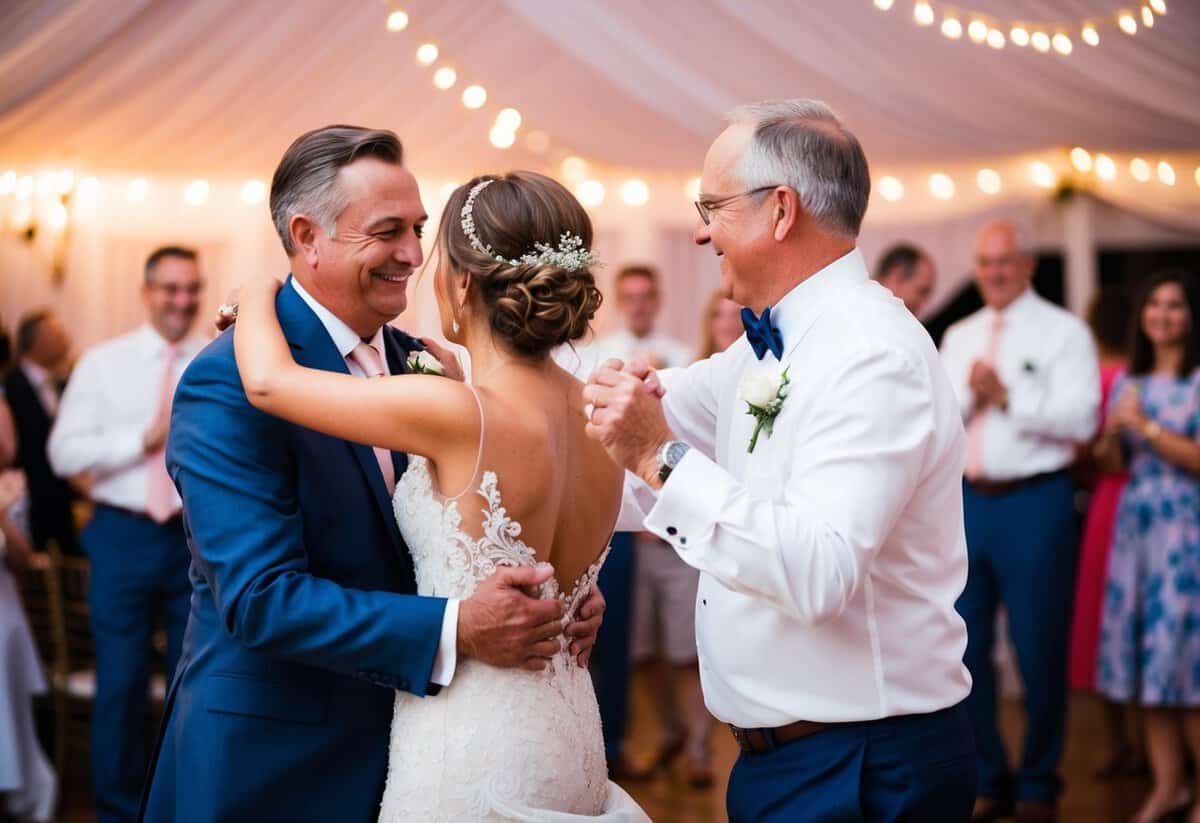
The father of the groom plays a significant part in the wedding. His involvement includes planning, greeting guests, and taking part in dances. Understanding these responsibilities can help you be more prepared for this important day.
Wedding Planning Contributions
As the father of the groom, you have key responsibilities in wedding planning. While traditionally the bride’s family takes the lead, your role remains very important.
You may help set a wedding budget or contribute financially. Discuss what you’ll cover with the couple to ensure everyone is on the same page. This can include costs for the rehearsal dinner, transportation, or even attire.
Your input can help make decisions about the wedding day that reflect both families. If you have a special connection with a vendor, you might suggest them. Your experience can be a valuable resource during planning.
Receiving Line and Greeting Guests
On the wedding day, you’ll play an important role in the receiving line. This is your chance to welcome guests and share your joy.
You’ll stand beside the groom and his mother, greeting family and friends as they arrive. Make sure to be warm and engaging. A friendly acknowledgment goes a long way in making guests feel valued.
If there are guests you haven’t met before, this is a perfect time to introduce yourself. It shows respect to both sides of the family and sets a positive tone for the celebration.
Dance Partners and Etiquette
One of the memorable moments during the reception is dancing. Tradition usually dictates that you will dance with the bride after her dance with her father.
This gesture symbolizes the joining of families and your acceptance of the bride into your family. Be sure to ask the bride or her father about the order of dances to ensure everyone is comfortable.
When participating in dances, maintain a joyful and light-hearted attitude. This is a wonderful opportunity to show emotional support for the newlyweds. It creates lasting memories that everyone will treasure.
Traditions and Modern Variations
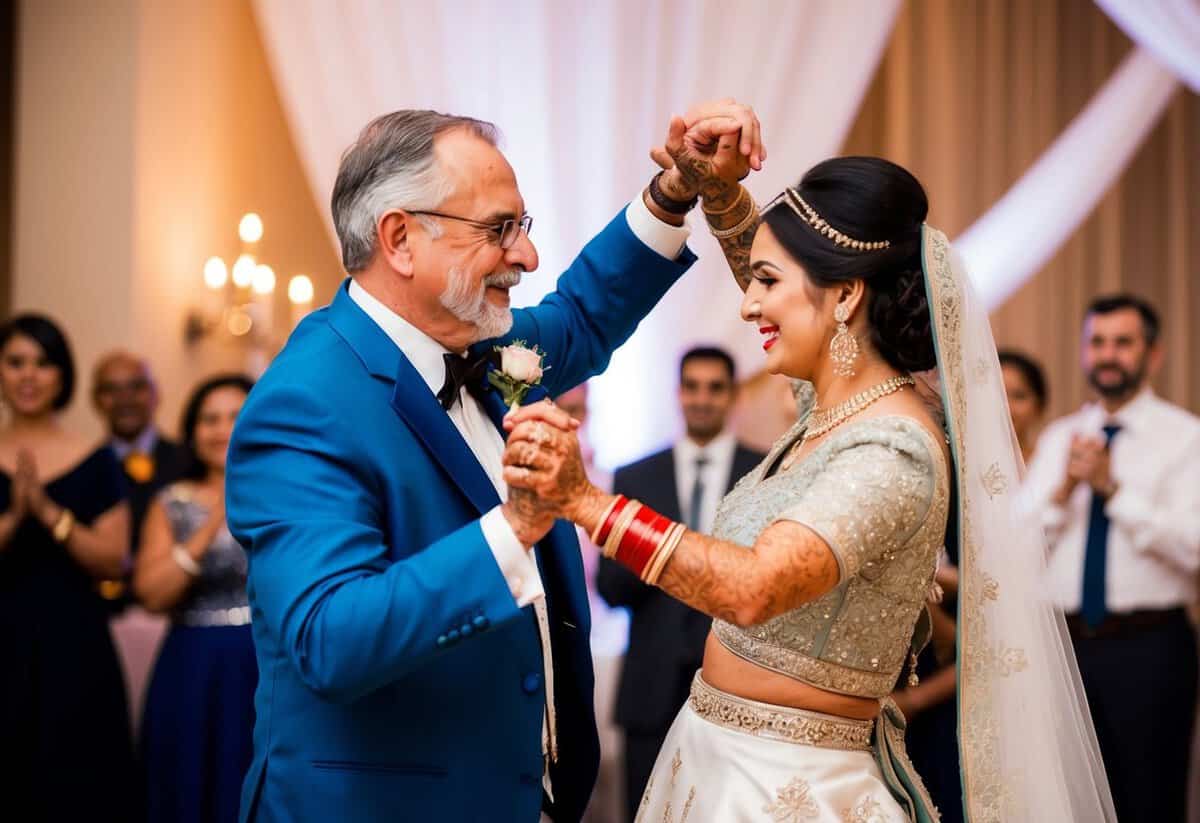
Wedding traditions around the father-daughter dance are often meaningful, but they can also adapt to suit modern families. Understanding how these customs work helps you shape your special day, especially when blending families.
Navigating Blended Family Dynamics
When families come together, it’s important to acknowledge everyone’s feelings. The father of the bride usually has a special dance with his daughter. However, in blended families, you might include additional figures. This could be a stepfather or another parent who plays a significant role in your life.
Since the sequence of dance partners may vary, consider starting with the traditional father-daughter dance. Then, invite other important family members to join in. This creates a sense of unity and respect for all parents involved. Communication and planning can help everyone feel included in this special moment.
Alternative Celebratory Activities
If the idea of dancing isn’t appealing, there are many dancing alternatives to celebrate your bond with your partner’s family.
You may choose activities like a group toast or sharing stories about loved ones.
Another option is to create a video montage that highlights family memories, which can add a personal touch.
You can also have a receiving line instead of formal dances. This allows everyone to greet and congratulate the couple, helping to blend families at the celebration.
Finding activities that resonate with your family can make your wedding unique and memorable. Embrace creativity to create joyful moments that everyone will cherish.