
Does the Mother of the Groom Sit on the Aisle? Understanding Seating Arrangements at Weddings
At weddings, every detail matters, especially when it comes to seating arrangements. If you’re curious about whether the mother of the groom sits on the aisle, you’ll find that it often depends on family traditions and the couple’s preferences. Typically, the mother of the groom does sit in the front row, but she usually does not sit directly on the aisle.
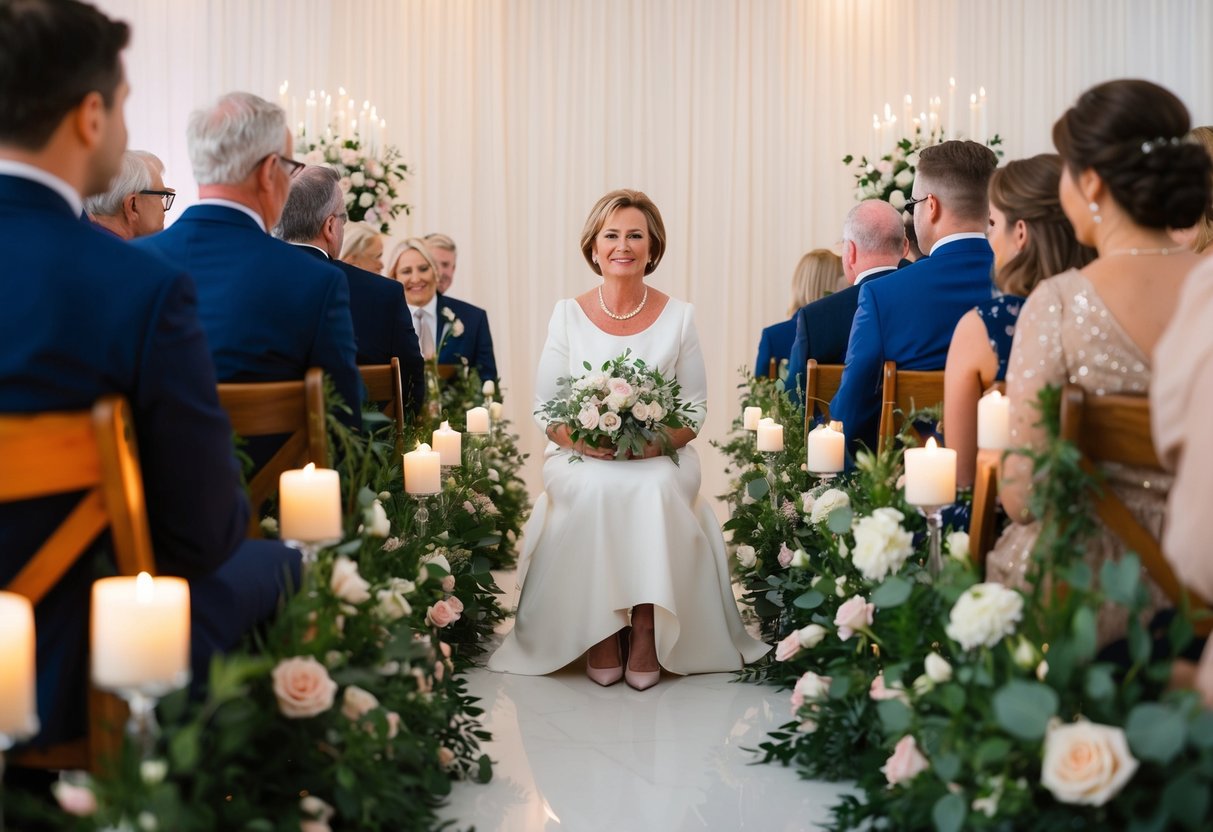
Understanding this seating choice is key to setting the right tone for the ceremony. Many couples choose to have the bride’s family seated on the left and the groom’s family on the right. This way, the groom’s mother sits close to the aisle, but she may not occupy the seat directly next to it.
Knowing these nuances can help make your wedding planning smoother and more enjoyable.
Wedding Ceremony Basics
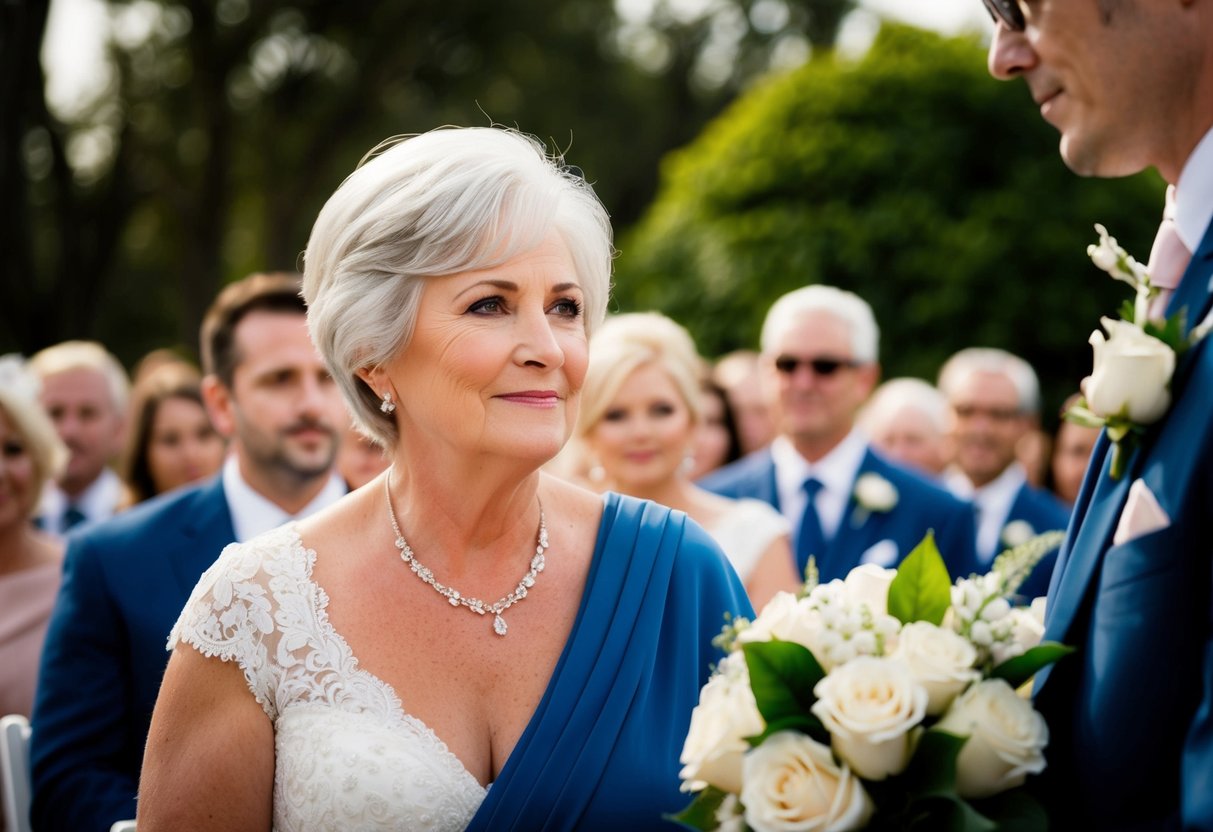
Understanding the seating arrangements and processional order can enhance your wedding ceremony. Each detail plays a vital role in creating a meaningful experience for everyone involved, especially for the families of the bride and groom.
Significance of Seating Arrangements
Seating arrangements during the wedding ceremony are more than just a formality. They symbolize family roles and relationships. Traditionally, the bride’s family sits on the left side, while the groom’s family sits on the right. This arrangement allows each family to witness the union of their loved ones.
The mother of the groom often sits on the groom’s side, which can be near the aisle. This positioning helps emphasize her support during this special moment. It is also customary for the groom’s parents to sit together. This arrangement fosters a sense of unity and celebration within the families.
Traditional Processional Order
The wedding processional sets the tone for the ceremony. It is important to plan the order carefully.
Typically, the processional begins with the officiant who takes their place at the front. Next, the bridesmaids walk down the aisle, followed by the groomsmen.
The bride usually enters last, accompanied by her father or another significant person. After the bride arrives, the groom joins her at the altar.
This order not only highlights the bride’s special moment but also establishes the significance of the participants involved in the ceremony. Having a clear processional order helps ensure everything flows smoothly, creating a memorable experience for you and your guests.
The Groom’s Family
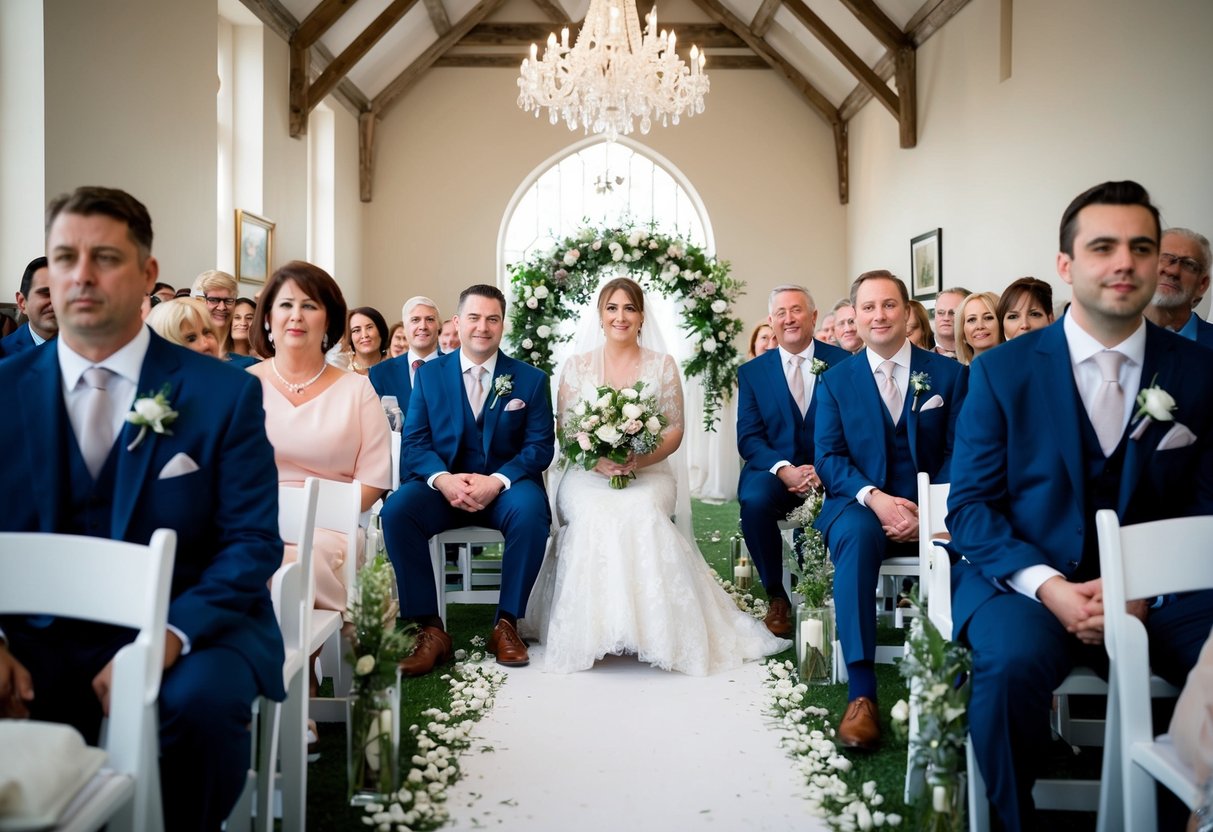
The groom’s family plays an important role in the wedding ceremony. Understanding their seating and responsibilities can help keep everything organized and respectful of family dynamics.
Role of the Groom’s Mother
Your mother will have a special role during the ceremony. She is often seen as a key figure who supports you throughout the day.
Traditionally, she walks down the aisle either on her own or escorted by a close family member. This moment highlights her importance in your life.
Once she reaches her seat, it’s common for her to sit on the right side of the aisle. This seating arrangement is not just a tradition; it signifies the connection between you and her.
Additionally, she may participate in certain rituals, such as lighting a family candle with the mother of the bride. This helps to blend both families together in a meaningful way.
Seating Etiquette for the Groom’s Parents
The seating arrangement for the groom’s parents is quite structured. The groom’s mother is seated first, often followed by the groom’s father.
If your parents are divorced, they should still be seated with care to avoid awkwardness. Your father usually sits a couple of pews behind your mother, ensuring that both parents feel included without any discomfort.
When considering family dynamics, clear communication is essential. Make sure your parents know where they are seated to avoid confusion on the day.
As guests arrive, it’s also important for the groom’s parents to lead the way with their seating. They set the tone for how families will come together during the ceremony. This can help create a warm atmosphere for all.
Cultural and Religious Considerations
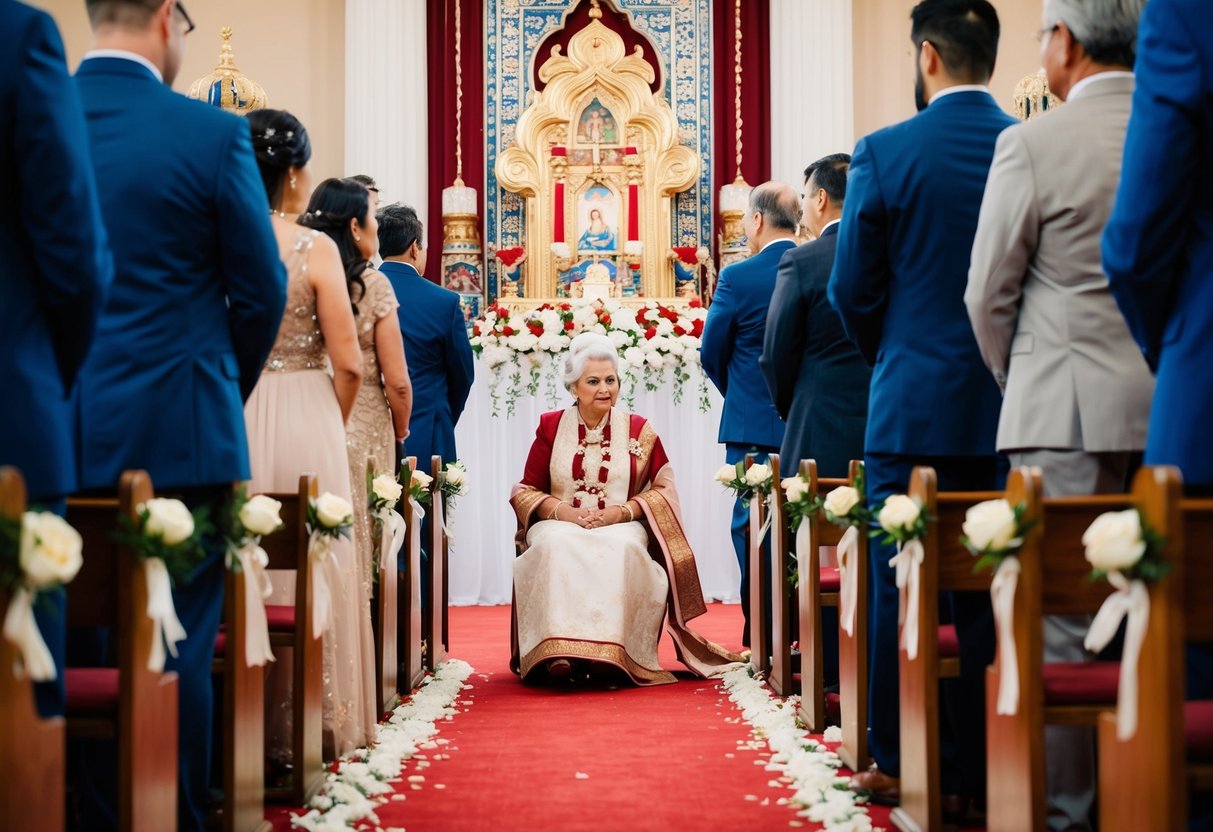
Weddings draw from a rich tapestry of cultural and religious traditions. These customs can shape who sits where, including the mother of the groom’s seat. Understanding these practices helps you navigate the ceremony better.
Christian Wedding Traditions
In many Christian weddings, the mother of the groom typically sits in the front row, often on the side of the aisle. This seat highlights her importance while the ceremony unfolds. During the processional, she may be escorted to her seat by a groomsman or the head usher, signifying her role in the family.
The seating can vary; some couples choose a more relaxed setting, allowing parents to sit together. Others might follow a traditional layout, ensuring the groom’s family is prominently placed. These choices often reflect the couple’s preferences and family dynamics.
Jewish Wedding Customs
In Jewish wedding traditions, seating can be quite meaningful. The mother of the groom usually sits near the front, close to the chuppah, which is the canopy under which the couple stands. Her seating underscores her support and presence during the ceremony.
Family members are often escorted down the aisle during the processional, which can include both parents walking together. This symbolic act showcases the unity of the families as they come together. This special moment establishes bonds and traditions that can be cherished for years.
Hindu Wedding Processional
Hindu weddings feature unique elements, especially the baraat, a joyful procession that includes the groom and his family. The mother of the groom is traditionally included in the ceremony, sitting near the mandap, or sacred altar. Her role carries great significance as she supports her son during this important life event.
During the processional, she may either walk down the aisle accompanied by family or take her seat with the rest of the family as the ceremony begins. This moment marks a blend of cultural customs and the personal importance of family support.
These traditions highlight the diverse approaches to seating for the mother of the groom. Each culture offers its unique spin, reflecting values and family priorities.
Special Considerations
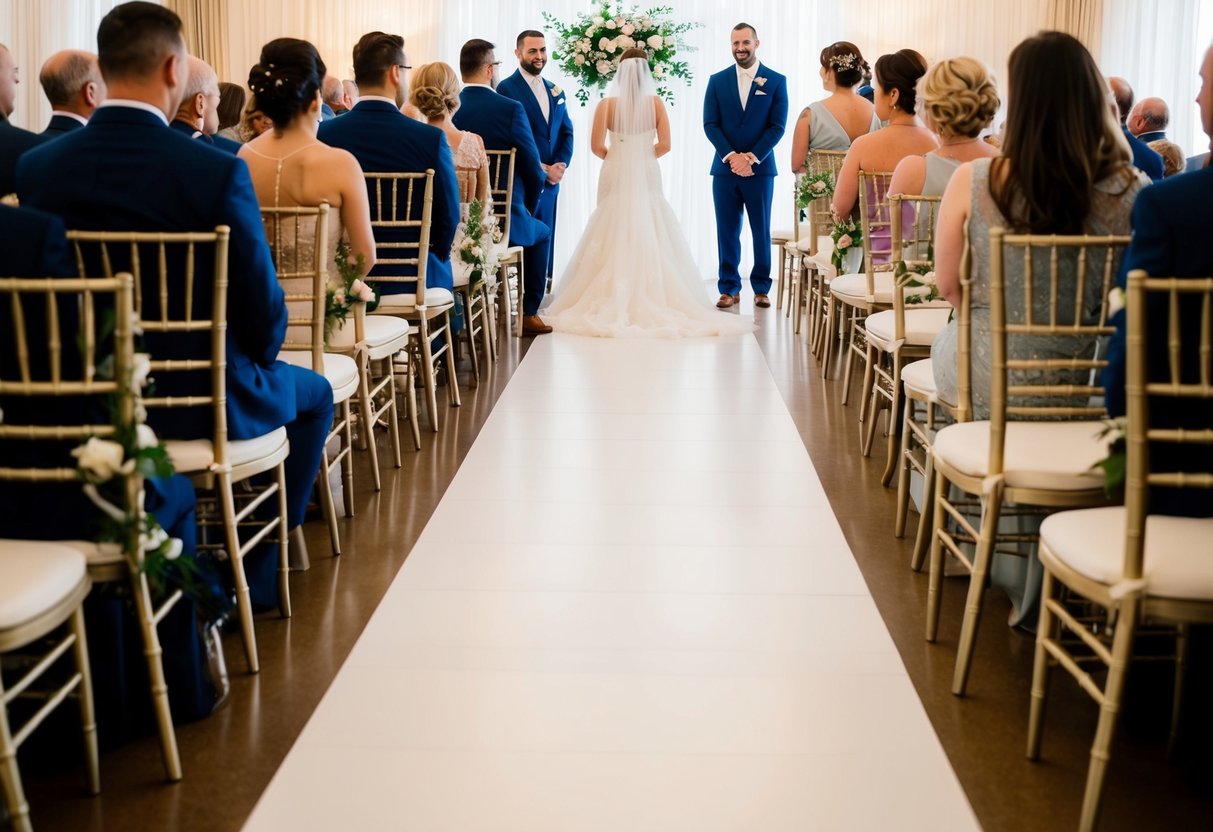
When it comes to seating the mother of the groom, there are a few special considerations to keep in mind. These include how to handle divorced parents, ways to include everyone in same-sex marriages, and the dynamics of your guest list and wedding party.
Handling Divorced Parents
If your parents are divorced, it’s important to consider their feelings during the ceremony. You might want to seat them in a way that minimizes any awkwardness.
One common approach is to seat the mother of the groom on the aisle with a friend or another family member. The father can sit a few rows back, which helps avoid tension.
Make sure to communicate your plans clearly with both parents. This will help them understand where they will be seated and prevent any surprises.
Inclusive Practices for Same-Sex Marriages
Same-sex marriage ceremonies can bring unique dynamics when it comes to seating. It’s vital to ensure that both mothers feel equally valued during the event.
You can choose to seat both mothers on the aisle, or you might consider a side-by-side arrangement. This highlights the importance of both families in your union.
Also, think about family members’ feelings and relationships. Balancing everyone’s comfort will make this memorable moment even more special.
Guest List and Wedding Party Dynamics
Your guest list and wedding party dynamics are crucial in making seating decisions. Consider how you want your guests to feel during the ceremony.
If you have complicated family situations, clearly communicating seating arrangements ahead of time can help.
For example, assigning specific seats for your wedding party members can guide the seating for guests. This creates a smoother flow and helps keep everyone comfortable.