
Engagement and Wedding Photography Packages Explained
Choosing between engagement and wedding photography packages starts with one question: how much of your story do you want documented? A simple ceremony may need a few hours, while a full wedding day with separate preparations, travel, speeches, and dancing often calls for eight to ten hours.
The best package for most couples includes enough wedding-day coverage for the full timeline, professionally edited high-resolution images, an online gallery, personal print rights, and an engagement session when you want practice in front of the camera. The right fit also leaves room for your guest count, venue layout, and priorities.

Compare each proposal line by line before you book. Check the coverage hours, photographer count, delivery schedule, image resolution, album terms, travel fees, and rights to print and share your photos. If you want more ideas for planning your photo list, review this wedding day photo checklist before your consultation.
What Should a Photography Package Include?
A clear photography package should state the coverage time, team size, editing service, final image delivery, and rights you receive. Wedding photography packages may bundle these services, while engagement photography packages often focus on session time, planning, and a set number of finished images.
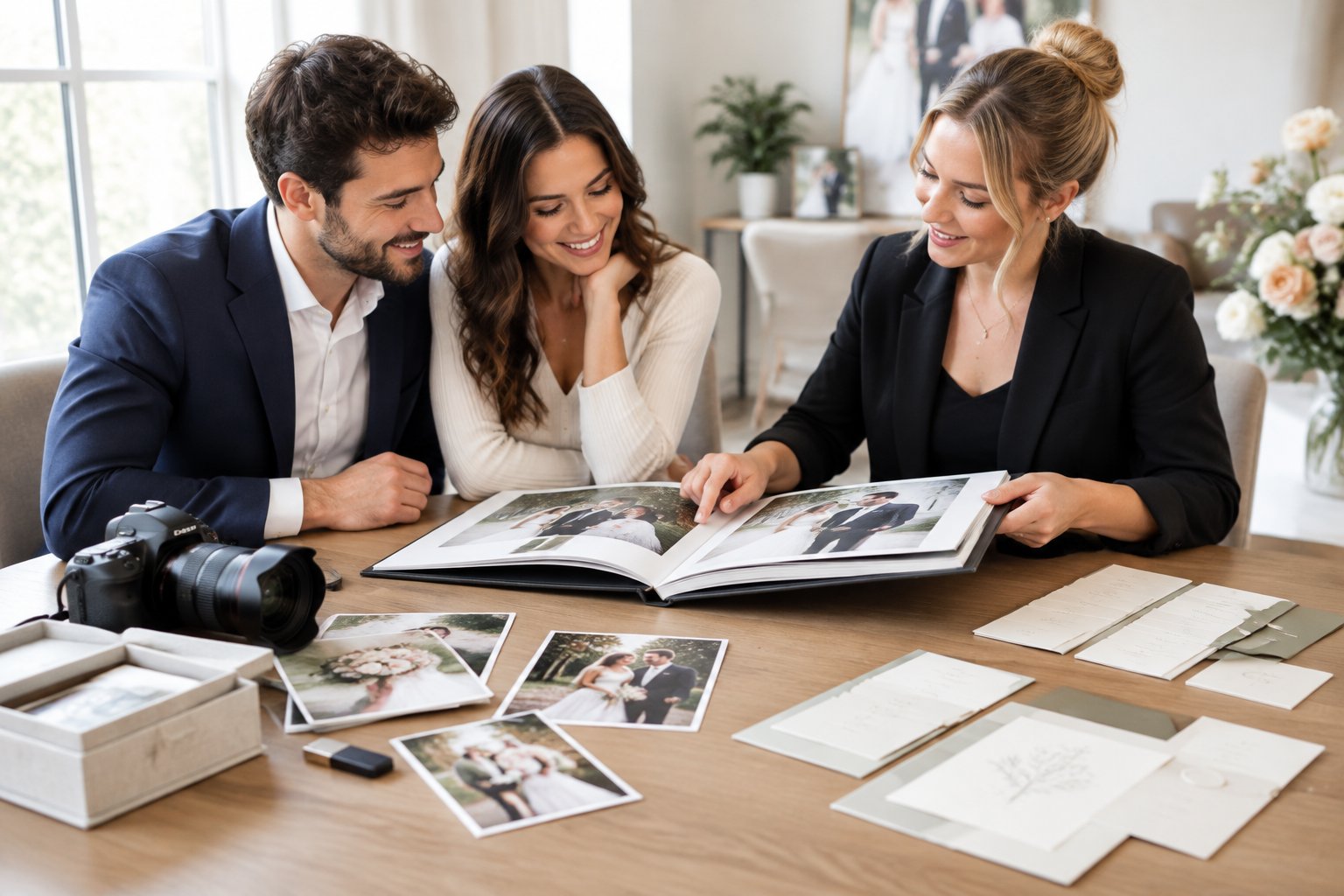
Your contract should spell out each deliverable in plain language. Ask about overtime, travel, backup equipment, image storage, and the process for ordering albums or prints.
Wedding-Day Coverage, Hours, and Team Size
Coverage hours describe the continuous time your wedding photographer works on the wedding day. A four-hour package may suit a courthouse ceremony and portraits. Six hours can cover a compact celebration held at one venue.
Eight to ten hours gives you more room for preparations, the ceremony, family portraits, reception details, speeches, and the first dance. One photographer works well when your guest list is modest and the day stays in one place.
A second photographer helps when you and your partner prepare in separate locations, when guests are spread across several spaces, or when you want simultaneous coverage. Ask whether the package includes planning calls or timeline help. Those services can help you place portraits and family photos without creating long gaps in your day.
Engagement Session Inclusions and Planning
An engagement session may include one to two hours of photography, location guidance, outfit advice, and a gallery of edited images. Some photographers include a session in their wedding photography packages, while others offer it as a separate booking or discounted add-on.
Confirm the number of locations, outfit changes, final images, travel limits, and rescheduling policy. Location scouting may carry an extra fee when you want several sites or a remote setting.
The session gives you time to learn how your photographer directs couples. You also receive images for save-the-date cards, invitations, your wedding website, or a guest book.
Editing, Retouching, and Final Image Delivery
Professional photo editing should cover color, exposure, cropping, and consistency across the gallery. Retouching may include small skin or clothing adjustments, while detailed changes such as removing large objects or altering backgrounds may cost extra.
Ask whether you receive all selected final images or a fixed number. Your agreement should also list the delivery format, gallery access period, estimated turnaround, and whether high-resolution files are included.
Raw files and unedited images are separate from finished final images. Most couples need polished JPEG files for sharing and printing, so confirm the image size and file quality before signing.
How Much Do Engagement and Wedding Packages Cost?
Engagement sessions often cost about $150 to $3,000, while wedding photography can range from roughly $1,500 to $12,000 or more in the United States. Your location, photographer’s experience, coverage length, team size, editing work, and products shape the final quote.
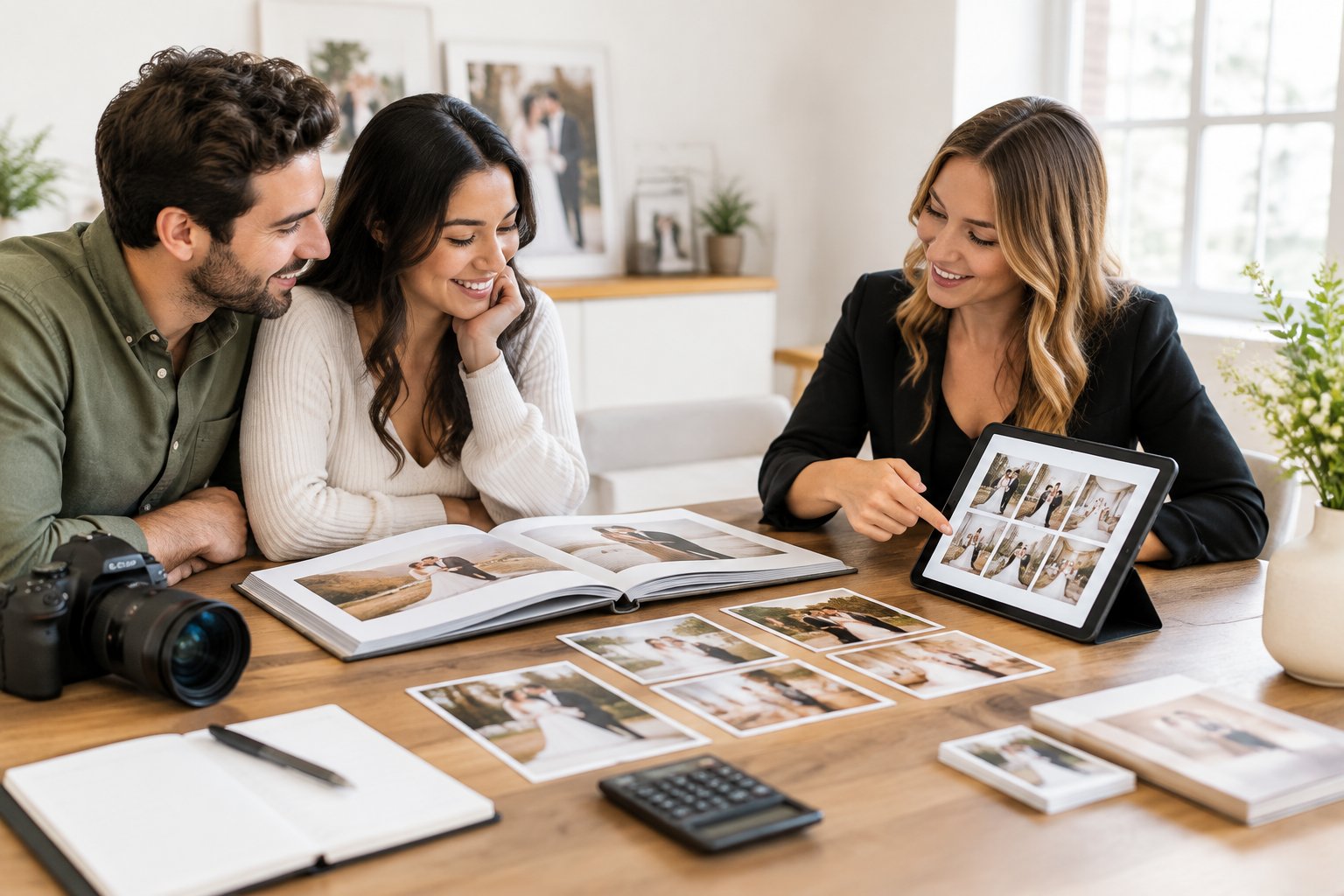
Use price ranges as planning guides, then compare what each proposal delivers. A lower starting price can exclude digital files, travel, an engagement session, or reception coverage.
Typical Engagement Session Price Ranges
A short engagement session may start near $150 to $300. A one- to two-hour session with edited images often falls around $300 to $800. Premium sessions with multiple locations, extensive planning, or a large image collection can reach several thousand dollars.
The quote should identify session length, locations, outfit changes, edited image count, and delivery method. Ask whether the photographer provides location scouting or charges for permits, parking, and travel.
If you book wedding photography with the same photographer, an engagement session may be included or priced as a package add-on. Compare the combined price with booking each service separately.
Coverage Tiers for Small and Full-Day Weddings
A small wedding with one venue may fit a four- to six-hour package. That time can include the ceremony, family portraits, couple portraits, and part of the reception.
An eight-hour package gives you broader coverage for preparations through early reception events. Ten hours or full-day coverage suits a longer timeline with separate getting-ready locations, travel, dinner, speeches, cake cutting, and dancing.
When comparing tiers, note whether the time is continuous and whether the package includes one photographer or a second photographer. Ask for the extra-hour rate before the wedding date.
What Raises the Total Investment
The total price rises with added coverage, a second photographer, multiple locations, travel, complex timelines, and larger guest counts. Albums, wall art, additional retouching, rehearsal dinner coverage, and expedited delivery also increase the investment.
Peak dates and high-demand photographers may carry higher rates. A destination wedding adds travel, lodging, permits, and extra planning time.
Set your priorities before reviewing add-ons. If your families prepare in different places, team size may offer more value than an album at booking. If you want a physical heirloom, reserve part of your budget for album design and printing.
Choosing the Right Coverage for Your Day
Choose coverage by mapping your timeline from the first meaningful moment through the final reception event you want photographed. Your guest count, travel time, locations, and interest in preparation photos guide the decision.
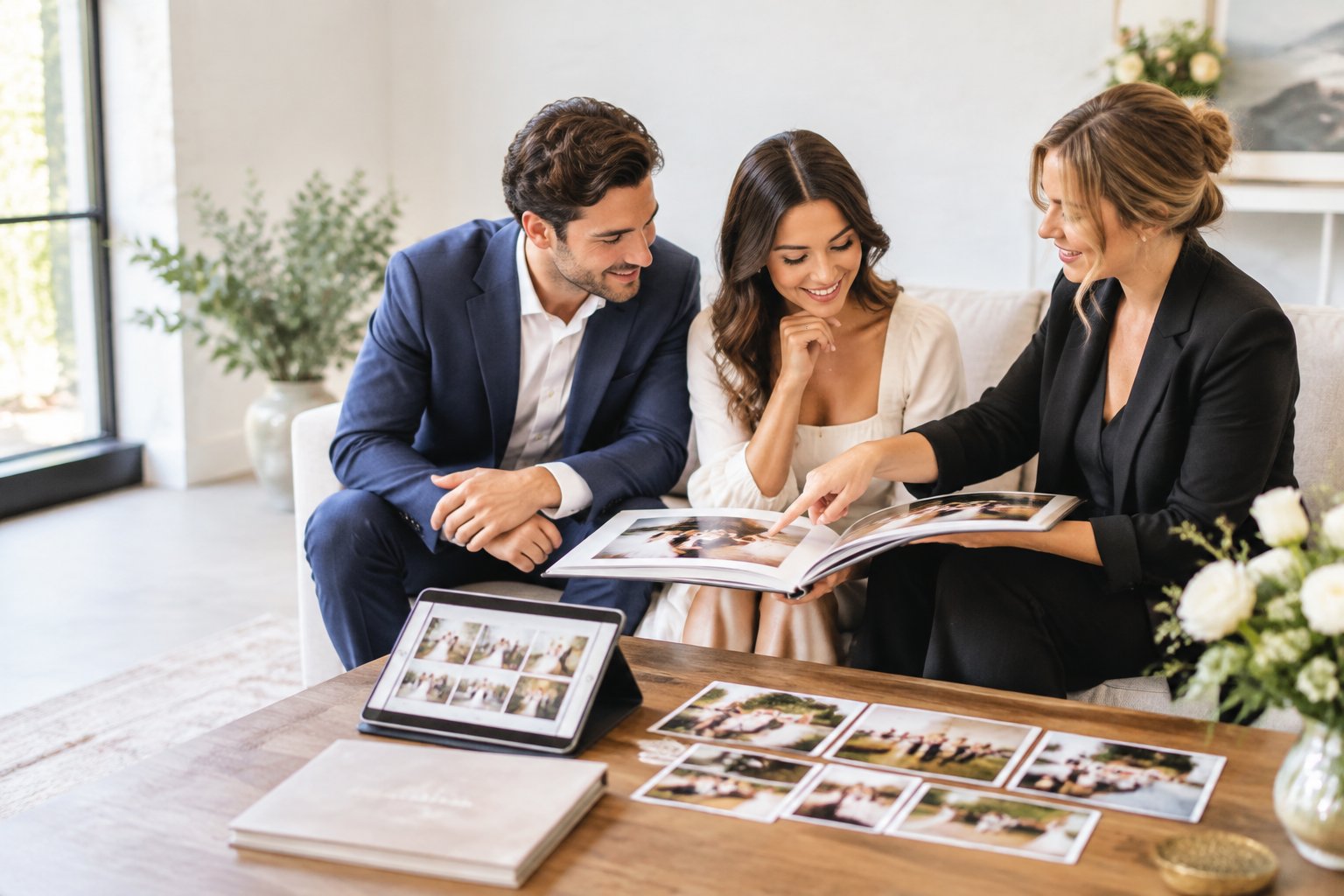
Write down when hair and makeup begin, when each partner gets dressed, when guests arrive, and when the reception ends. Add travel time between sites before selecting a package.
When One Photographer Is Enough
One photographer can cover a small or medium wedding when the couple prepares at the same venue and the schedule allows time for each part of the day. This setup also works well for an elopement, courthouse ceremony, or intimate celebration with a short guest list.
Discuss the family photo plan and ceremony restrictions in advance. A single professional can move efficiently when the venue layout is simple and the timeline has breathing room.
When to Add a Second Photographer
A second photographer helps when both partners want preparation coverage at the same time. The added team member can also photograph guest reactions, room details, and alternate angles while the lead photographer focuses on the couple.
Consider a second photographer for a large guest list, multiple locations, a long reception, or a ceremony and cocktail hour held in separate spaces. Ask whether the second photographer is included for the full booking or only selected hours.
Matching Session Length to Locations and Outfits
Allow extra time when your engagement session includes multiple locations or outfit changes. Travel, parking, walking, and changing clothes reduce the time available for portraits.
A one-hour session fits one nearby location and a focused set of images. Two hours gives you room for a second look, more relaxed direction, or a location change. Share your priorities with your photographer so the plan matches the time you purchase.
For ideas on using the finished images, browse these wedding photo display ideas before choosing locations or outfits.
Understanding Digital Files, Galleries, and Print Rights
Your package should explain the resolution, delivery method, gallery access, storage period, and personal print rights attached to your digital images. These details affect how you archive, share, and print your wedding photographs.

Ask for sample contract language if the proposal uses broad terms such as “digital files” or “high resolution.” Confirm whether the files are edited JPEGs, how many you receive, and when they arrive.
High-Resolution Images and Digital Downloads
High-resolution images contain enough pixel information for common personal prints and enlargements. Ask for the pixel dimensions at the longest edge and the JPEG quality used during export.
Your package may include full-size files, web-size files, or both. Full-size files suit archiving and larger prints. Smaller files download quickly and work well for social media.
Check whether the photographer delivers all selected final images or a set number. Extra images, advanced retouching, and album design may follow a separate pricing schedule.
Online Galleries, USB Drives, and Delivery Timelines
An online gallery gives you a private place to view, download, and share your finished images. Ask how long the gallery remains active, whether your download link is protected, and whether the photographer keeps a backup copy.
Some packages include a USB drive in addition to online delivery. A USB provides a physical copy, while an online gallery makes sharing with family easier. Keep a second backup in a separate location after downloading your files.
Delivery may take several weeks or longer after the wedding because culling, editing, gallery preparation, and album design require separate work. Your contract should provide an estimated delivery window and any sneak-peek schedule.
What Personal Print Rights Actually Allow
Personal print rights let you print and share your finished images for private use, subject to the photographer’s contract. They may cover family gifts, social posts, personal albums, and wall art.
Print rights do not transfer copyright or permit commercial sales. They also do not grant access to raw files or permission to claim authorship.
Read the release carefully before ordering prints. Check whether your guests may download files, whether professional labs are allowed, and whether the photographer limits commercial or editorial use.
Add-Ons That Turn Photos Into Keepsakes
The most useful photography add-ons turn your digital gallery into items you will display, revisit, or share during your wedding season. Albums, guest books, wall art, and engagement sessions each serve a different purpose.
Albums, Guest Books, and Save-the-Date Photos
An album organizes your favorite wedding images into a durable story you can hold. Ask about page count, cover materials, paper type, design rounds, shipping, and the deadline for choosing images.
Engagement photography works well for save-the-date cards, invitations, wedding websites, and guest books. A guest book with engagement images gives family and friends space to leave messages beside photographs of you as a couple.
Before ordering, request the product size and a sample layout. Your photographer can also explain how many images fit comfortably on each spread.
Canvas Prints and Wall Art Options
A canvas print creates a soft, textured display for a favorite portrait or candid frame. Canvas prints work well in bedrooms, hallways, and living areas when the image has clear subjects and enough space around the edges.
Wall art may also include framed prints, metal panels, or fine-art paper. Compare the finished size, frame style, mounting method, color correction, and delivery time.
Check the print rights before using an outside lab. A personal print release may allow you to order wall art from the vendor you choose, while some photographers offer professional-lab products through the gallery store.
When an Engagement Session Is Worth Adding
An engagement session is worth adding when you want practice with posing, images for wedding stationery, or portraits in a meaningful place. It also gives you time to test communication with your photographer before the wedding day.
Choose a session that matches your plans. One location works for a focused set of portraits. Additional time supports outfit changes, multiple locations, or a more relaxed pace.
If you are deciding how to display the results, these wedding keepsake ideas can help you choose between a guest book, framed print, album, and other personal products.