
English Garden Wedding Venues: A Practical Planning Guide
Choosing among english garden wedding venues starts with the setting, then moves to weather, guest comfort, access, and cost. The strongest choice gives you flowering borders, mature trees, and a graceful ceremony backdrop while also providing a reliable indoor plan, practical guest facilities, and clear supplier rules.
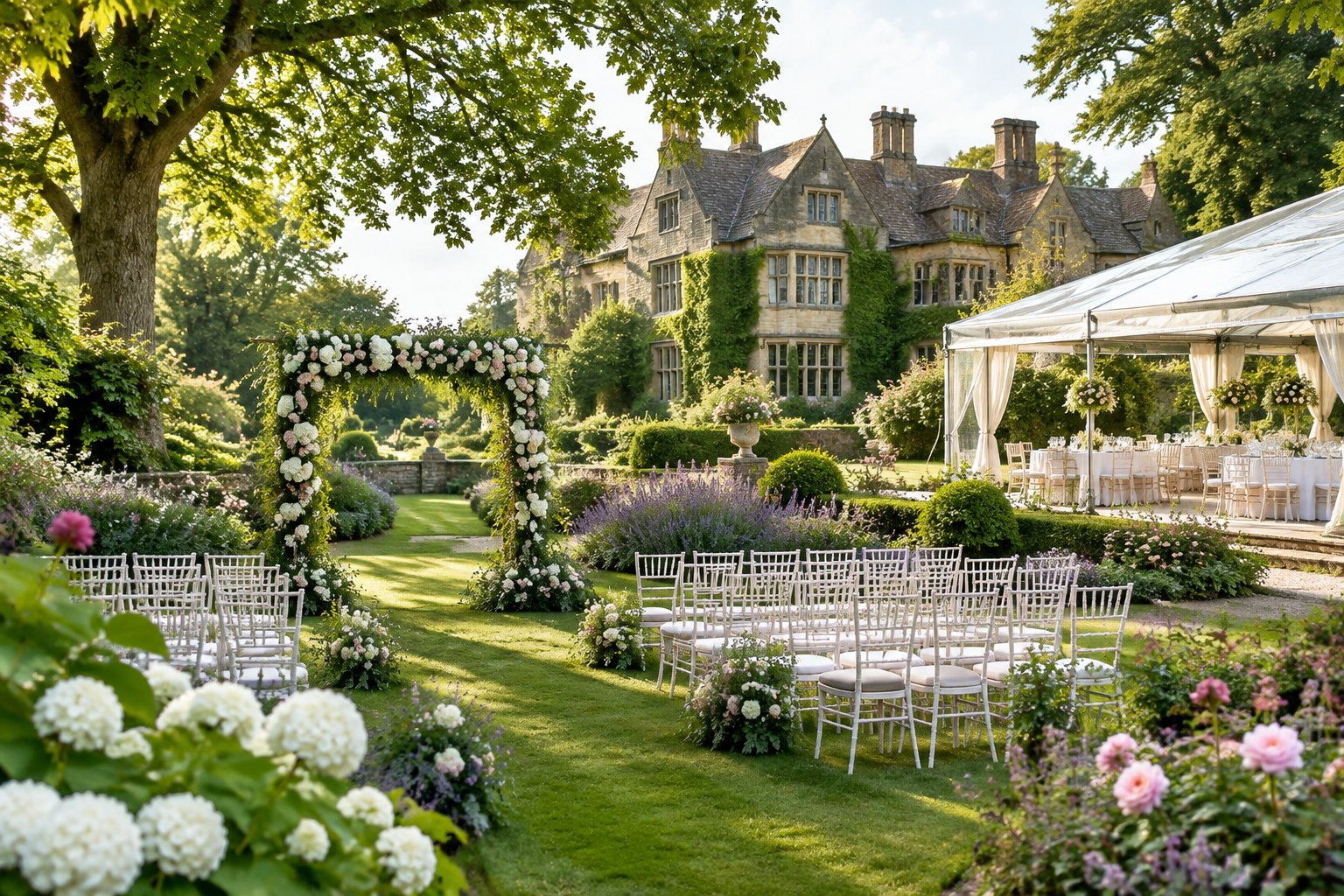
You can create this look at a historic estate, botanical garden, private property, or glasshouse venue across the United States. Start by listing your guest count, preferred season, ceremony style, and reception needs. Then ask each venue for a full cost sheet and a rain plan before you schedule a tour. As you compare options, explore these wedding venue ideas for more ways to shape your search.
What Defines the Right Setting for Your Day?
The right setting combines beautiful gardens with a clear guest flow, a strong weather plan, and spaces that suit your ceremony and reception.
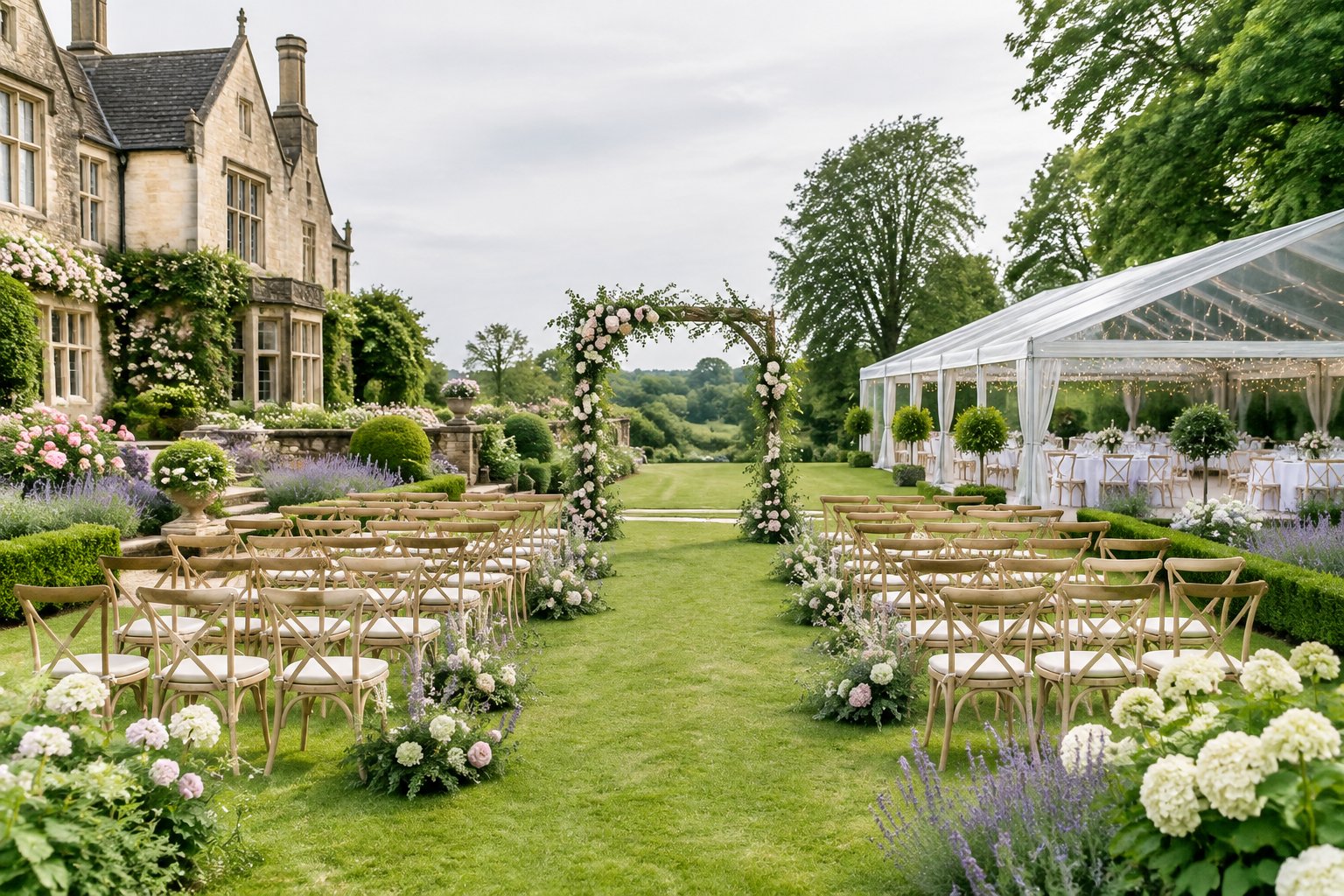
Walk the property from the guest entrance to the ceremony, cocktail hour, dinner, and dancing. Look for comfortable paths, useful shade, attractive views, and a backdrop that fits your style. A venue with mature planting can reduce the amount of décor you need, while a simpler landscape gives you more freedom to build a custom design.
Walled Gardens, Lawns, and Secret-Garden Spaces
Walled gardens create a private, sheltered feel with brick, stone, hedges, and established borders. They suit an intimate wedding ceremony and work well for welcome drinks or dinner under the stars.
Open lawns give you room for larger guest counts, dining layouts, lawn games, and a marquee. Check the ground after rain, ask where chairs and catering equipment can go, and confirm whether vehicles can reach the setup area.
Secret-garden spaces add discovery through winding paths, gates, arches, and hidden courtyards. These areas make memorable ceremony sites, though you should confirm lighting and accessibility after sunset.
Orangeries, Conservatories, and Rain-Ready Rooms
Orangeries and conservatories bring garden views indoors through large windows and glass roofs. They provide natural light for your ceremony while protecting guests from rain, wind, or strong sun.
Ask how the room handles heat, airflow, and glare during your wedding month. Check its seated capacity with a dance floor, bar, buffet, and band included. A pretty room can feel crowded once every event element is in place.
Choosing Between Formal, Wildflower, and Botanical Styles
Formal English gardens suit a polished celebration with clipped hedges, roses, fountains, and symmetrical paths. Wildflower gardens feel relaxed and colorful, with meadow planting that pairs well with linen, wood, and loose floral arrangements.
Botanical gardens offer plant collections, labeled displays, unusual trees, and glasshouse spaces. Japanese gardens and tropical gardens create distinct moods, though they call for styling that respects the existing landscape. Choose the setting that already supports your color palette and level of formality.
How to Choose a Venue That Works in Every Season
Choose a venue with a usable indoor room, a documented rain plan, and enough capacity for every guest to sit, dine, and dance comfortably.
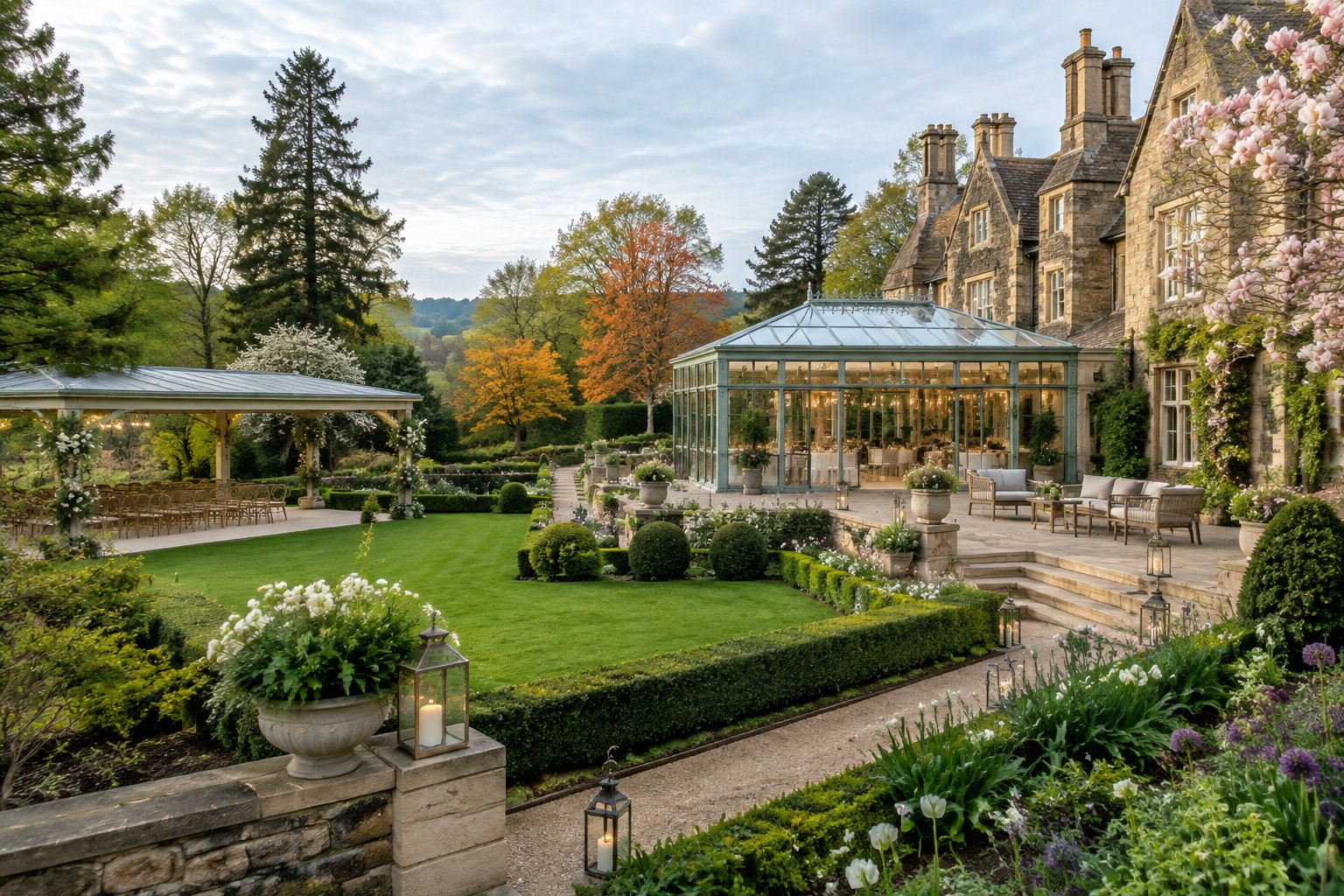
Tour outdoor wedding venues during the month you plan to marry, or request dated photos from that season. Check shade, sunset direction, planting conditions, mud risk, and guest travel between spaces. A garden that looks perfect in June might feel different in October, when daylight ends earlier and the lawn needs more care.
Creating a Weather Backup Plan
Your backup plan should name the exact room, layout, timing, and rental items required. Ask whether the wedding ceremony can move indoors, whether dinner can remain in the planned space, and who makes the weather call.
Confirm the deadline for ordering a tent, heaters, flooring, fans, umbrellas, or extra lighting. Ask to see photos of a real rain-plan wedding. The pavilion might cover a ceremony, while a larger reception requires a tent or an indoor ballroom.
Matching Guest Numbers to Indoor and Outdoor Capacity
Get separate capacities for the ceremony, seated meal, cocktail hour, and dance floor. A venue might hold 150 guests outdoors while its indoor dining room seats 90.
Measure the route between the ceremony and reception. Guests who need a shuttle, mobility support, or a long walk through wet grass need a clear plan. Ask where children, older guests, and anyone using a wheelchair can rest during the day.
Checking Accessibility, Noise Limits, and Curfews
Look for firm, level routes, accessible restrooms, nearby parking, and seating areas. Ask whether mobility devices can reach the ceremony site, bar, dining room, and restrooms.
Confirm music limits, amplified sound rules, generator policies, and the time dancing must end. A quiet garden venue might have residential neighbors or conservation rules that shape your band and DJ choices. If you like a venue such as Planterra Conservatory, ask how its glasshouse layout, access rules, and event hours affect your schedule.
Venue Styles and Standout Examples to Consider
The strongest venue style matches your guest experience, ceremony setting, and reception needs in one connected property.
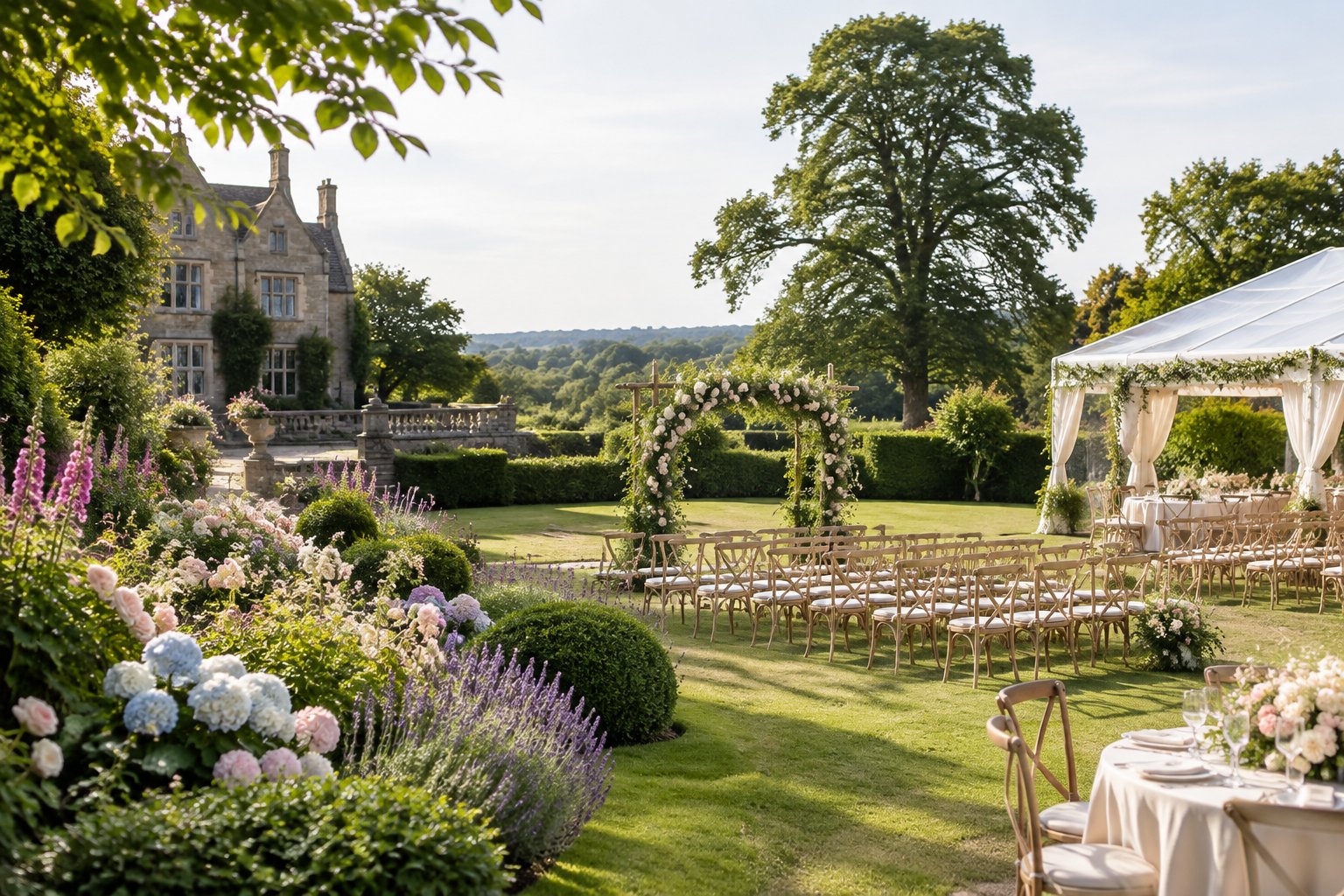
Consider how much of the venue you control, how private the grounds feel, and how much setup your celebration requires. Historic properties bring character, botanical spaces offer built-in plant interest, and contemporary estates give you more flexibility with layout and décor.
Historic Manor Houses and Country Estates
A manor house or country estate gives your garden wedding venue architectural depth, formal rooms, and outdoor ceremony options. Stone walls, terraces, stairways, and mature trees create natural focal points for vows and portraits.
Ask whether the property offers exclusive use, overnight rooms, getting-ready suites, and a covered route between buildings. Review restrictions on candles, hanging décor, lawn access, and photography in private rooms.
Botanic Gardens and Glasshouse Celebrations
Botanic gardens offer rare plants, seasonal displays, and paths that create an immersive guest experience. A glasshouse or conservatory protects the event from weather while keeping greenery close to the ceremony and dinner.
Check public access, event boundaries, setup windows, plant-protection rules, and guest movement. Ask whether your vendors can bring equipment through the grounds and whether the venue provides a backup room during peak visitor hours.
Contemporary Garden Spaces and Private Estates
Modern garden venues may include landscaped courtyards, rooftop gardens, private estates, and flexible outdoor event fields. These properties suit clean-lined furniture, bold lighting, and a less traditional version of the English garden style.
Ask what infrastructure is already installed. Power, restrooms, catering access, flooring, parking, and lighting affect your rental budget. Compare the full package with a venue such as The Pavilion or Planterra Conservatory, where the event structure may shape the layout from the start.
How to Create an Authentic English Garden Look
An authentic English garden wedding uses seasonal flowers, relaxed arrangements, natural textures, and lighting that lets the existing landscape lead.
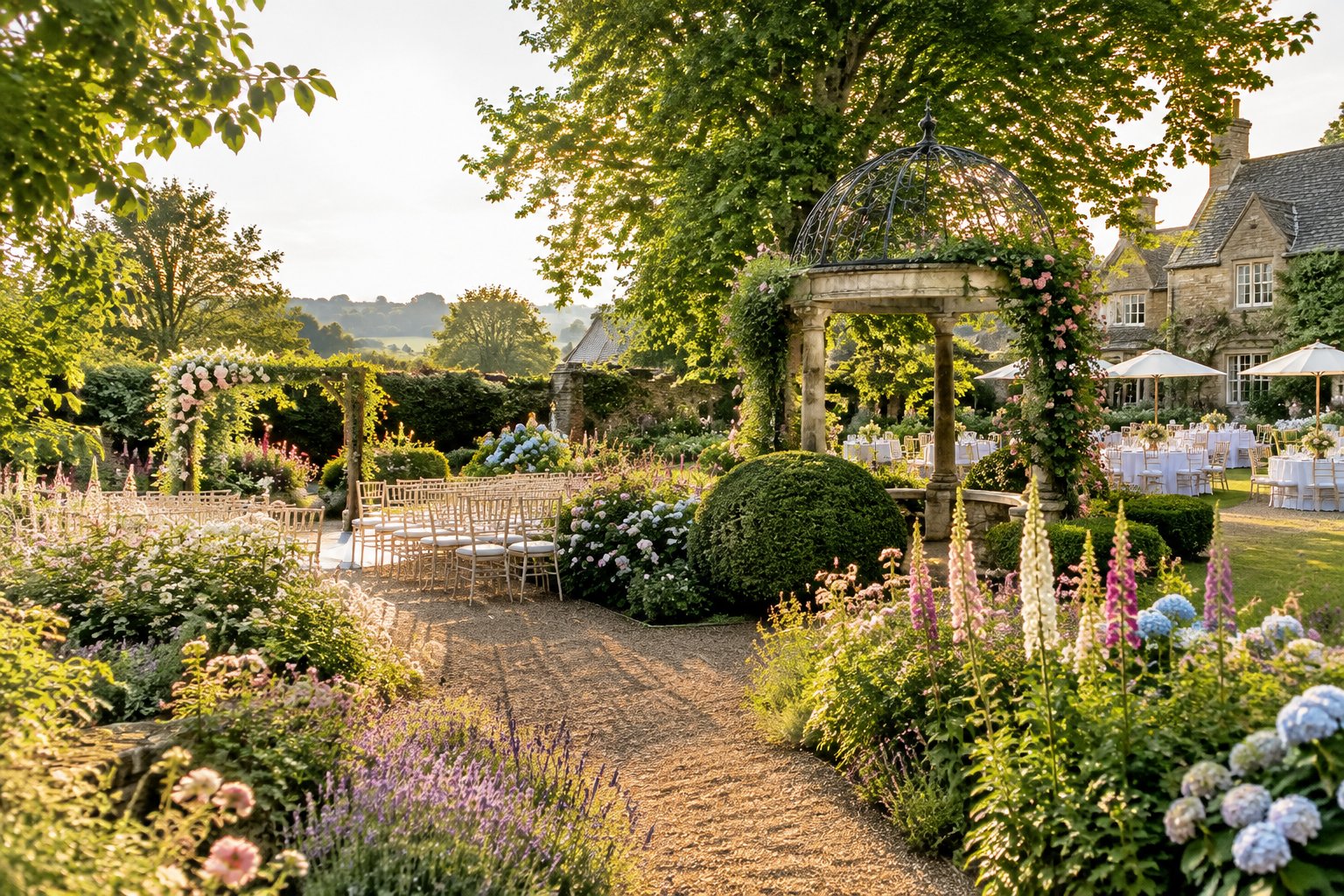
Begin with the venue’s strongest features. A rose border, stone wall, mature tree, pergola, or garden gate can frame the wedding ceremony with little added décor. Keep your palette close to the landscape, using soft pastels, leafy greens, warm whites, muted lavender, or gentle yellow.
Using Seasonal Flowers and Relaxed Meadow Arrangements
Choose flowers that bloom during your wedding month and ask your florist to work with local availability. Roses, sweet peas, peonies, foxgloves, delphiniums, lavender, dahlias, and garden foliage all support the look across different seasons.
Loose arrangements in ceramic pitchers, bud vases, jam jars, and vintage vessels feel gathered and personal. For a meadow style, combine airy stems with grasses and seed heads. For formal English gardens, use roses, clipped greenery, and a restrained color scheme.
Styling the Ceremony Without Overdecorating
Use the existing garden as your main backdrop. A simple wooden arbor, iron arch, or pergola needs only a light floral installation when mature planting already frames the couple.
Line the aisle with potted herbs, small posies, scattered petals, or seasonal plants. Confirm whether the venue allows stakes, hanging décor, petals, confetti, and floral foam. Place signage where guests need direction, especially between parking, the ceremony, restrooms, and reception.
Adding Evening Atmosphere With Light and Texture
Warm string lights across a dining area create a gentle glow after sunset. Add lanterns along paths, soft uplighting on trees or walls, and candlelight on tables when the venue permits open flames.
Layer natural linen, rattan, wood, ceramic, aged brass, and textured glass through your tablescape. Check the garden after dark during your tour so you can identify dark paths, low branches, and areas that need extra lighting.
Questions to Ask Before Booking
Ask for written answers about inclusions, event spaces, suppliers, catering, décor, timing, and weather protection before you sign.
What Is Included in the Hire Fee?
Ask whether the fee includes chairs, tables, setup, cleanup, restrooms, parking, power, lighting, security, and an on-site coordinator. Request a list of extra charges for overtime, deliveries, rehearsal access, ceremony furniture, heating, flooring, and rain equipment.
Confirm taxes, service fees, damage deposits, insurance requirements, and payment deadlines. Ask what happens if the venue changes ownership, closes part of the grounds, or needs to move your event indoors.
Can You Hold Both the Ceremony and Reception On-Site?
Ask which ceremony locations are licensed or approved for your event type and whether indoor alternatives are available. Confirm the time needed to reset the ceremony space for cocktails or dinner.
Review guest routes, restroom access, parking, and transportation between areas. A single-site celebration keeps the schedule easier to manage when every space connects well.
What Supplier, Catering, and Decor Rules Apply?
Ask whether you can choose your own caterer, bar service, florist, planner, rental company, band, and photographer. Review preferred-vendor lists, outside-vendor fees, corkage, minimum spends, and insurance requirements.
Confirm rules for candles, confetti, hanging installations, tents, generators, amplified music, food trucks, and late-night snacks. Ask where vendors load in, store equipment, wash dishes, and remove waste.
Budgeting for a Garden Celebration
Build your budget around the complete site cost, including rentals, weather protection, power, restrooms, lighting, staffing, and cleanup.
Garden wedding venues can reduce floral and backdrop costs when the grounds are established. They can also add infrastructure expenses when the property needs a tent, portable restrooms, generators, flooring, or shuttle service.
Venue Hire, Marquees, and Wet-Weather Costs
Compare the base hire fee with a detailed event estimate. Include chairs, tables, linens, tenting, flooring, heaters, fans, restrooms, power, lighting, security, delivery, and overtime.
Ask whether the rain plan has a fixed price or requires a last-minute rental. Reserve essential equipment early when your contract places the cost on you. A clear quote helps you compare a full-service estate with a lower-cost outdoor site.
Where Existing Gardens Can Reduce Decor Spend
Established planting can provide ceremony framing, portrait locations, cocktail-hour scenery, and table views. Use the venue’s strongest features as anchors for your design, then add focused details such as aisle posies, table flowers, menus, and candles.
You can find more ways to control styling costs through garden-inspired cheap wedding table decoration ideas and garden-inspired easy wedding centerpiece ideas. Ask your florist to identify areas that already look full during your wedding month.
Planning for Accommodation and a Full Wedding Weekend
Add lodging, welcome events, transportation, rehearsal access, brunch, and vendor meals when you plan a multi-day celebration. Check room blocks, nearby hotels, rideshare access, parking, and shuttle routes.
A private estate can support a relaxed weekend with guests staying nearby, while a public garden may suit a single-day event with outside accommodations. Price each event separately and confirm which venue hours cover setup, rehearsal, wedding activities, and cleanup.