
Find Cheap Wedding Venues Without Sacrificing Style
You can find cheap wedding venues by widening your search beyond traditional wedding halls and comparing the full cost of each space. Community centers, public parks, restaurants, courthouses, libraries, and private homes often provide a polished setting at a lower starting price.
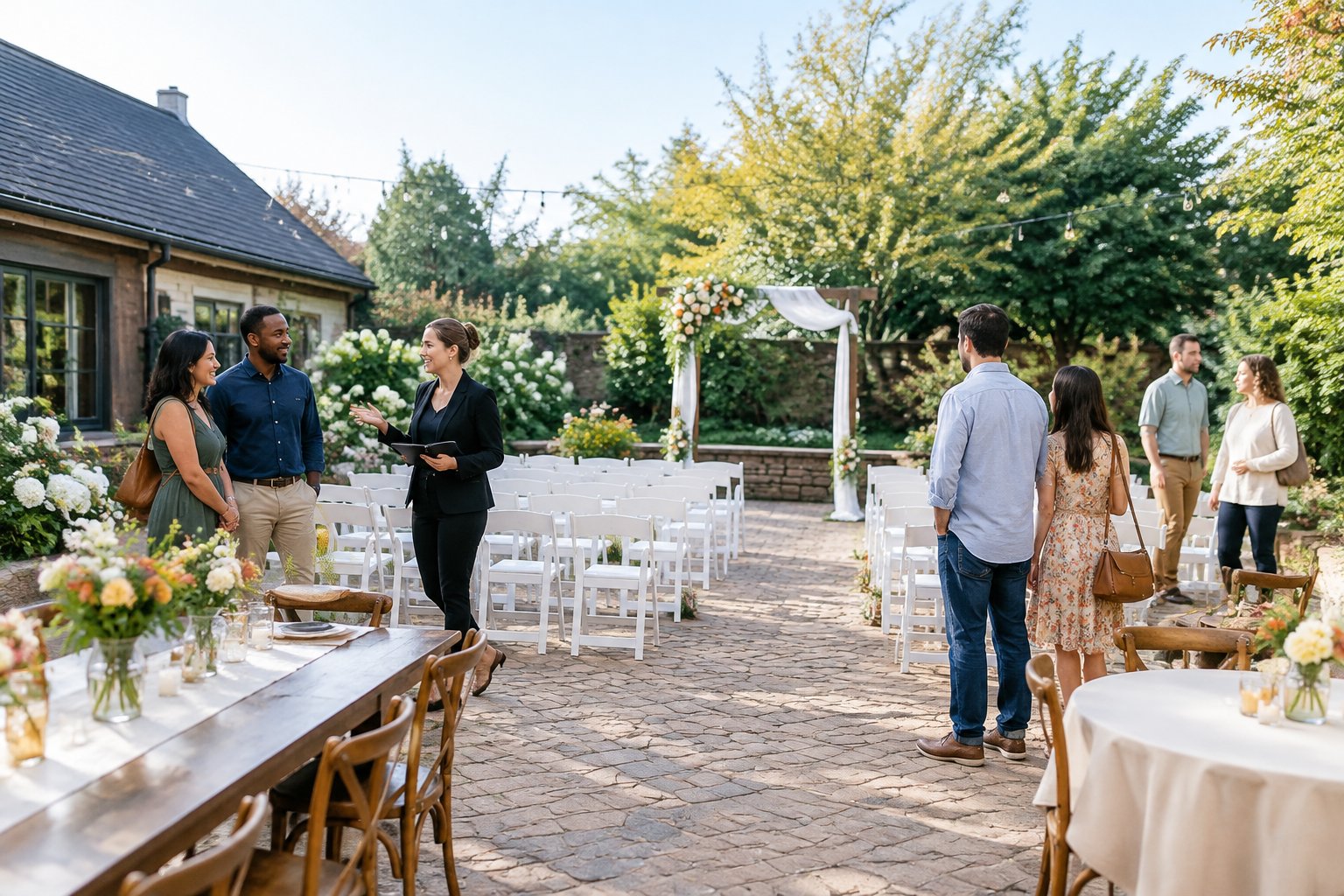
The best place to start is a community center or public park for couples who need a flexible, affordable wedding venue with space for guests, tables, and a ceremony. Your final choice should match your guest count, preferred style, food plans, and wedding budget. A low rental fee loses its value when permits, rentals, staffing, or catering add hundreds of dollars.
Focus on spaces with built-in character and useful features. A historic library can reduce décor needs, while a restaurant can include food and seating in one package. If you want help setting a practical spending limit first, use this guide to make a realistic wedding budget. Then request detailed quotes from venues near you and compare the complete event cost before you reserve a date.
Start With a Realistic Venue Budget
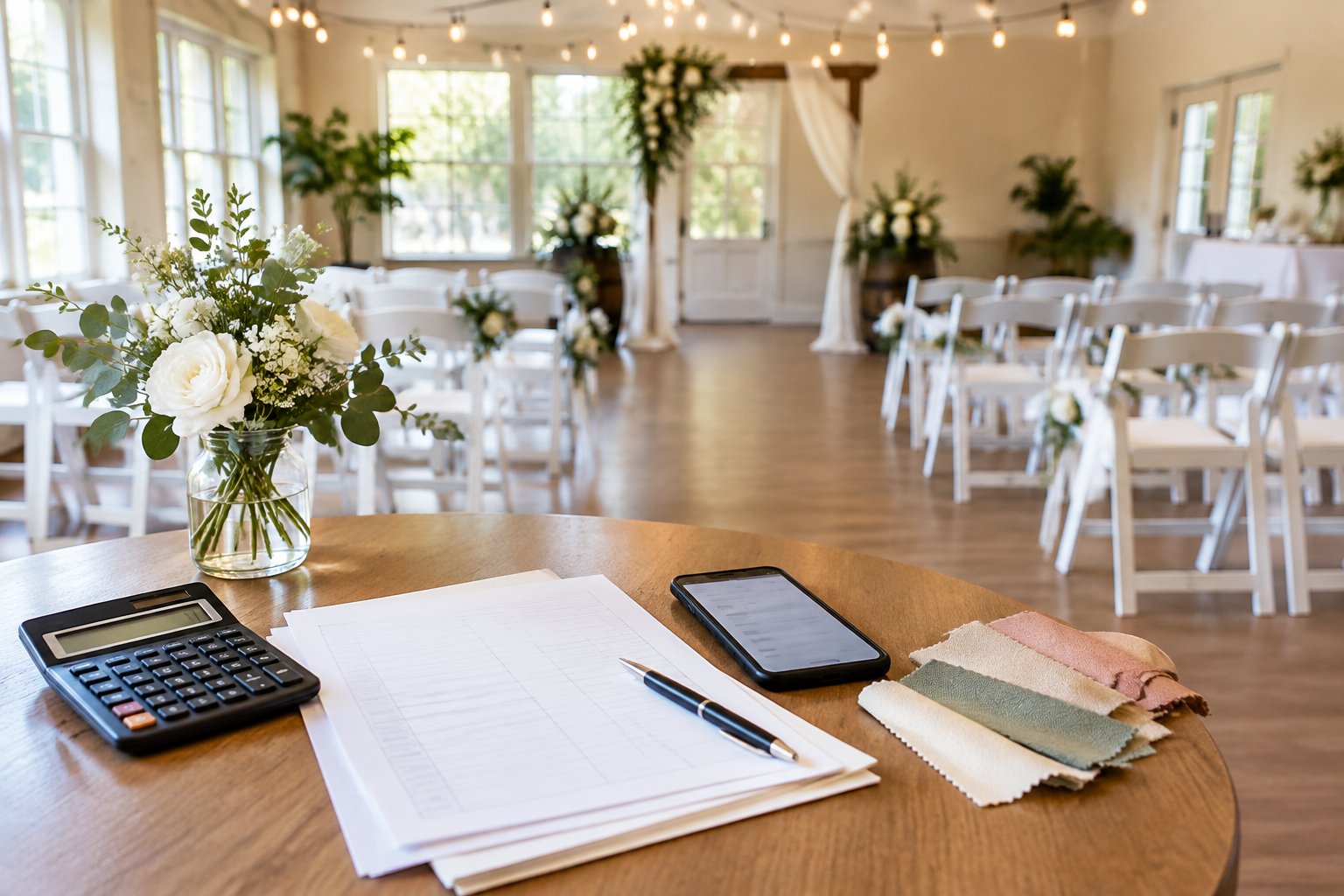
A realistic venue budget includes the rental, food, service, taxes, rentals, and every required fee. Set that figure before you tour wedding venues so an attractive room does not pull money from photography, attire, or other priorities.
How Much Do Wedding Venues Cost?
Venue rental costs range widely across the United States. A small community room or public park may charge a modest flat rate, while a full-service venue can charge thousands for the date, catering, and staffing.
Ask whether the quote covers:
-
Ceremony and reception space
-
Tables, chairs, linens, and basic setup
-
In-house catering or approved caterers
-
Bar service and corkage fees
-
Cleaning and security
-
Insurance requirements
-
Overtime and access for setup
A space with a higher rental fee can fit your wedding budget better when it includes furniture, staff, and food. A cheap room can cost more after you add every outside service.
Calculate the True Cost Beyond the Rental Fee
Create a side-by-side estimate for every venue. Add the rental fee, deposits, taxes, service charges, catering, rentals, transportation, permits, and cleanup.
Ask the venue to separate required charges from optional upgrades. Confirm whether the listed food price includes staffing, drinks, cake cutting, and service fees. If you bring alcohol, check corkage fees and rules for licensed bartenders.
A wedding planner can help you spot missing costs, especially when a venue requires separate vendors. You can also use a simple spreadsheet with one line for each charge and a final total for 50, 75, or 100 guests.
Choose a Guest Count That Fits the Budget
Guest count drives both venue and catering costs. Measure the room against your confirmed invite list, including the wedding party, children, vendors, and accessibility space.
A small wedding lets you consider intimate rooms, restaurants, private clubs, and homes. You can also choose one location for the ceremony and reception, which reduces transportation and duplicate rental costs. Keep your guest list firm while requesting quotes so each venue receives the same information.
Low-Cost Venue Types Worth Considering
The strongest low-cost options combine a reasonable rental fee with built-in seating, scenery, kitchen access, or décor. Compare the rules and included services for each space before you decide which style suits your celebration.
Community Centers, Schools, and Banquet Halls
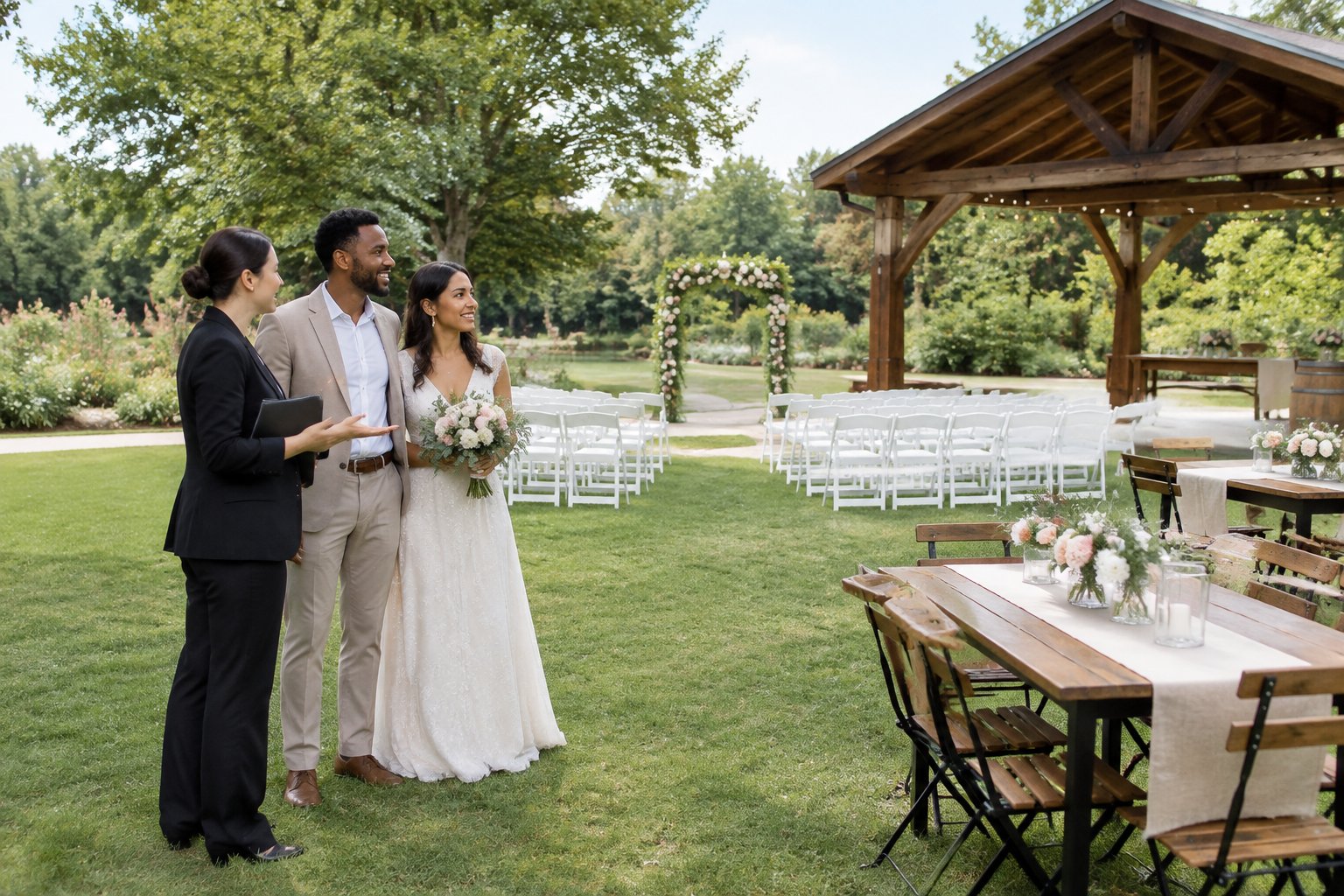
Community centers can offer meeting rooms, kitchens, restrooms, tables, and chairs in one booking. Ask about resident discounts, weekend hours, cleaning rules, and whether staff must remain on site.
Schools may rent auditoriums, gyms, courtyards, or performing arts spaces during dates that do not conflict with school activities. A banquet hall provides an event-ready layout, though you should confirm whether catering is required through the hall.
Search local parks and recreation departments, school district facilities, union halls, and cultural centers. These listings may use terms such as event rental, reception hall, or multipurpose room.
Courthouse and City Hall Ceremonies
A courthouse wedding or city hall ceremony works well when your priority is a legal marriage with a small group of guests. You will need a marriage license and an appointment or ceremony reservation, depending on local rules.
You can host dinner afterward at a restaurant, private home, or reserved community room. Check guest limits, photo rules, officiant requirements, identification documents, and filing fees with your local clerk.
Courthouse weddings also suit couples who want a larger reception on a different date. Separating the legal ceremony from the party gives you more choices for the celebration space.
Restaurants, Inns, and Private Clubs
A restaurant wedding can reduce rental needs because the venue already has tables, chairs, lighting, staff, restrooms, and a kitchen. Ask about private dining rooms, brunch menus, weekday rates, minimum spending, cake fees, and bar packages.
An inn can provide a comfortable setting for a small guest list and may offer rooms for relatives who travel. Private clubs may have attractive dining rooms, gardens, or patios with food service included in the event package.
Review the menu before comparing prices. A per-person quote that includes staff, beverages, and dessert may be easier to manage than a low room fee with separate catering.
Museums, Art Galleries, and Historic Libraries
A museum wedding venue or art gallery gives you built-in visual interest. Exhibits, architecture, and large windows reduce the amount of décor you need.
Historic libraries often provide elegant rooms for ceremonies, cocktail hours, or intimate receptions. Ask about photography restrictions, candle rules, music volume, dancing, elevator access, and event insurance.
These spaces may have firm vendor lists and shorter setup windows. Request a floor plan so you know where guests will sit, eat, dance, and move between rooms.
Churches, Campus Chapels, and Libraries
A church or campus chapel can provide a meaningful ceremony setting with seating, sound equipment, and a prepared altar area. Some locations require members, approved clergy, premarital counseling, or specific ceremony rules.
Libraries may rent meeting rooms, reading rooms, or courtyards for receptions. Campus chapels and student event spaces can offer architectural charm at a lower rate during school breaks.
Ask whether the rental covers only the ceremony or also a reception. Confirm music policies, decorations, photography, parking, and cleanup before comparing the price with secular spaces.
Farms, Vineyards, and Ballrooms
Farms and vineyards provide natural scenery that reduces floral and backdrop costs. Look for smaller event areas, Sunday bookings, or seasonal packages that fit your guest count.
A ballroom can feel polished when it includes lighting, linens, chairs, and a clear floor plan. Ask about minimum guest counts, food and beverage requirements, dance-floor fees, and setup charges.
An event center offers practical space for larger groups and may include audiovisual equipment or storage. Cruise ship venues, aquariums, zoos, and aquariums create memorable settings, though transportation, food packages, and guest access can raise the full price.
Affordable Outdoor and At-Home Celebrations
An outdoor wedding can lower venue costs when the site already provides scenery and gathering space. Build your estimate around permits, restrooms, power, seating, weather protection, and cleanup before choosing a location.
Parks, Gardens, and Nature Sites
National parks, state parks, public parks, and city parks may offer ceremony permits for a modest fee. Some include picnic shelters, benches, parking, or restrooms, while others provide only the site.
Botanical gardens and rose gardens supply natural color and established paths for guests and photos. Ask about guest limits, rain locations, amplified sound, alcohol, setup time, and required insurance.
A park wedding works best when your layout stays compact. Place the ceremony, refreshments, and seating near existing facilities to reduce rentals and guest travel.
Beach and Waterfront Options
A public beach can create a beautiful ceremony backdrop with minimal décor. Check local rules for permits, chairs, arches, alcohol, amplified music, parking, and cleanup.
Plan around tides, wind, heat, and sunset timing. A beach wedding also needs a firm surface or accessible route for guests who use mobility devices. Reserve a nearby indoor space if the site offers no shelter.
Waterfront restaurants, parks, and community docks provide similar views with easier access to restrooms and power. Compare parking and rental needs before choosing the beach itself.
Backyards and Private Property
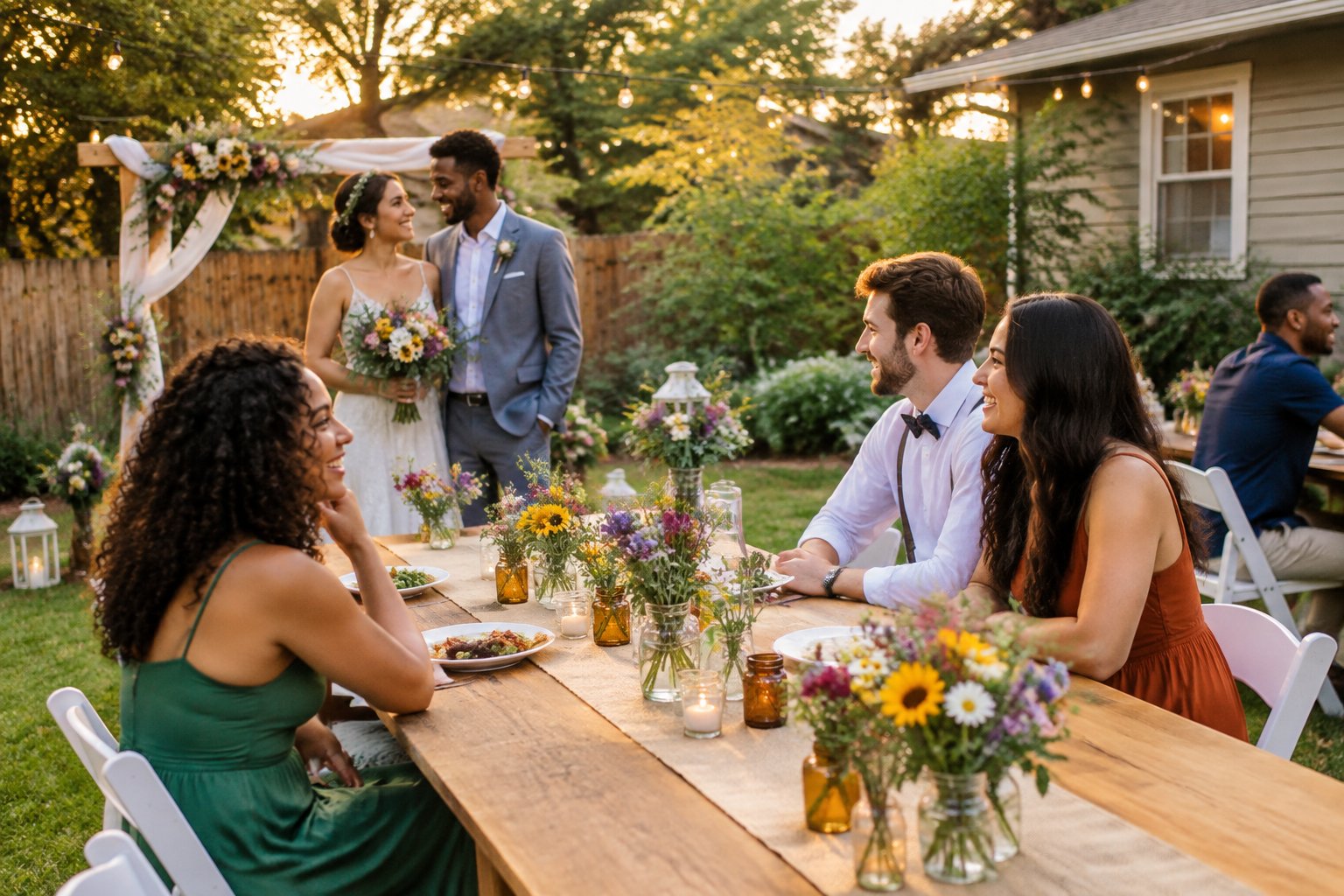
A backyard wedding gives you control over the guest list, schedule, food, and décor. A family home, private garden, or small farm can feel personal while providing a low-cost setting.
Measure the usable area before sending invitations. Leave room for dining, dancing, food service, restrooms, parking, and a clear path for guests.
Confirm local noise rules, event permits, liability coverage, and neighbor concerns. Get written permission when the property belongs to someone outside your household.
Plan for Outdoor Logistics and Weather
Outdoor logistics determine whether a low site fee stays low. Price chairs, tables, lighting, shade, flooring, waste removal, and delivery before you sign a permit.
String lights need safe power and weather-rated equipment. Generator rentals may be needed when outlets are unavailable, and portable restrooms may be required for a large guest count.
Choose a rain plan with a specific location, decision time, and transportation plan. A tent can protect guests, though its rental, flooring, lighting, and setup fees belong in the first quote.
How to Lower the Price of Any Venue
You lower the price of almost any venue by choosing a less requested date, limiting the event footprint, and negotiating the complete package. These changes preserve the atmosphere while reducing rental hours and per-person charges.

Book a Weekday or Off-Peak Date
Weekday weddings often cost less because demand is lower. Thursday, Sunday, and daytime dates can open options that exceed your budget on Saturday evenings.
Ask about January, February, and late-summer dates in your area. Venue pricing varies by climate and location, so request a calendar with the lowest available rates.
Offer flexibility with your date when contacting venues. A short list of acceptable months and days gives the manager more ways to match you with an open space.
Keep the Ceremony and Reception Together
One location for the ceremony and reception reduces transportation, setup, and duplicate décor. Guests also spend less time moving between sites.
Ask whether the venue can flip the ceremony area during cocktail hour. A room with a separate lounge, patio, or dining area makes this change easier.
If you prefer separate locations, select spaces within a short distance and compare shuttle costs with the price of a larger single venue. Include the extra travel time in your schedule.
Use Existing Décor and Included Rentals
Choose a space with attractive architecture, gardens, lighting, chairs, tables, or linens already included. These features reduce the number of items you need to rent or decorate.
Use one strong focal point, such as a floral installation, ceremony arch, or statement sign. Repeat colors through napkins, candles, and small arrangements to create a finished look.
Ask for an inventory of included items. Confirm quantities, condition, setup responsibility, replacement fees, and the cost of adding anything missing.
Ask About Packages, Minimums, and Flexible Catering
Request packages for small weddings, brunch receptions, weekday events, and shorter rental windows. A package can combine space, food, staffing, and rentals into one easier quote.
Ask whether the food and beverage minimum applies to every guest, including children and vendors. Compare plated meals, family-style service, buffet menus, stations, and cocktail receptions.
Check the rules for outside caterers and corkage fees. A venue with flexible catering can fit your plans better when you have a trusted food vendor or a smaller guest list.
Compare Options Before You Sign
A complete quote and a clear wedding venue contract protect your savings. Compare affordable wedding venues by total cost, guest experience, rules, and included services instead of comparing rental fees alone.
What to Ask During a Venue Tour
Take the same questions to every tour so your notes stay useful. Ask:
-
What is the total price for your date and guest count?
-
Which taxes, service charges, and deposits apply?
-
What furniture, lighting, sound equipment, and décor are included?
-
Who handles setup, cleanup, and trash removal?
-
Which caterers and bartenders are approved?
-
Are outside food, alcohol, cake, or vendors allowed?
-
What time can vendors enter, and when must everyone leave?
-
What happens if your guest count changes?
-
What is the backup plan for rain, heat, or power problems?
-
Is parking accessible, and are restrooms close to the event space?
Photograph the layout with permission and record measurements for tables, a dance floor, a buffet, and accessible pathways.
Read the Wedding Venue Contract Carefully
Review the contract before paying a nonrefundable deposit. Check the event date, access hours, guest limit, payment schedule, cancellation terms, postponement rules, insurance requirements, and damage deposit.
Look for language about overtime, vendor substitutions, alcohol service, cleaning, security, amplified music, candles, confetti, and décor attachment. Ask the venue to put every promised inclusion in writing.
Confirm how the venue handles severe weather, government restrictions, emergencies, and property damage. Keep the signed contract, payment records, floor plan, and email promises in one folder.
Spot Add-Ons That Can Erase Your Savings
Add-ons can turn an inexpensive wedding venue into an expensive booking. Watch for separate charges for chairs, linens, ceremony setup, kitchen use, cake cutting, bartender service, corkage, parking, security, heating, cooling, and overtime.
Ask for a sample final invoice based on your guest count. Compare the full amount with similar small wedding venues and small wedding venue packages in your area.
Before you sign, request a written list of optional upgrades and required services. Remove anything that does not improve your guest experience, then confirm the remaining total in the contract.