
Floral Cost for Wedding: 2026 Pricing Guide
Wedding flower costs in the United States commonly land between $2,500 and $5,000 in 2026, while full-service floral plans with large installations can reach $7,500 or more. Your final floral cost for wedding celebrations depends on guest count, flower choices, season, design labor, delivery, setup, and the number of spaces you want decorated.
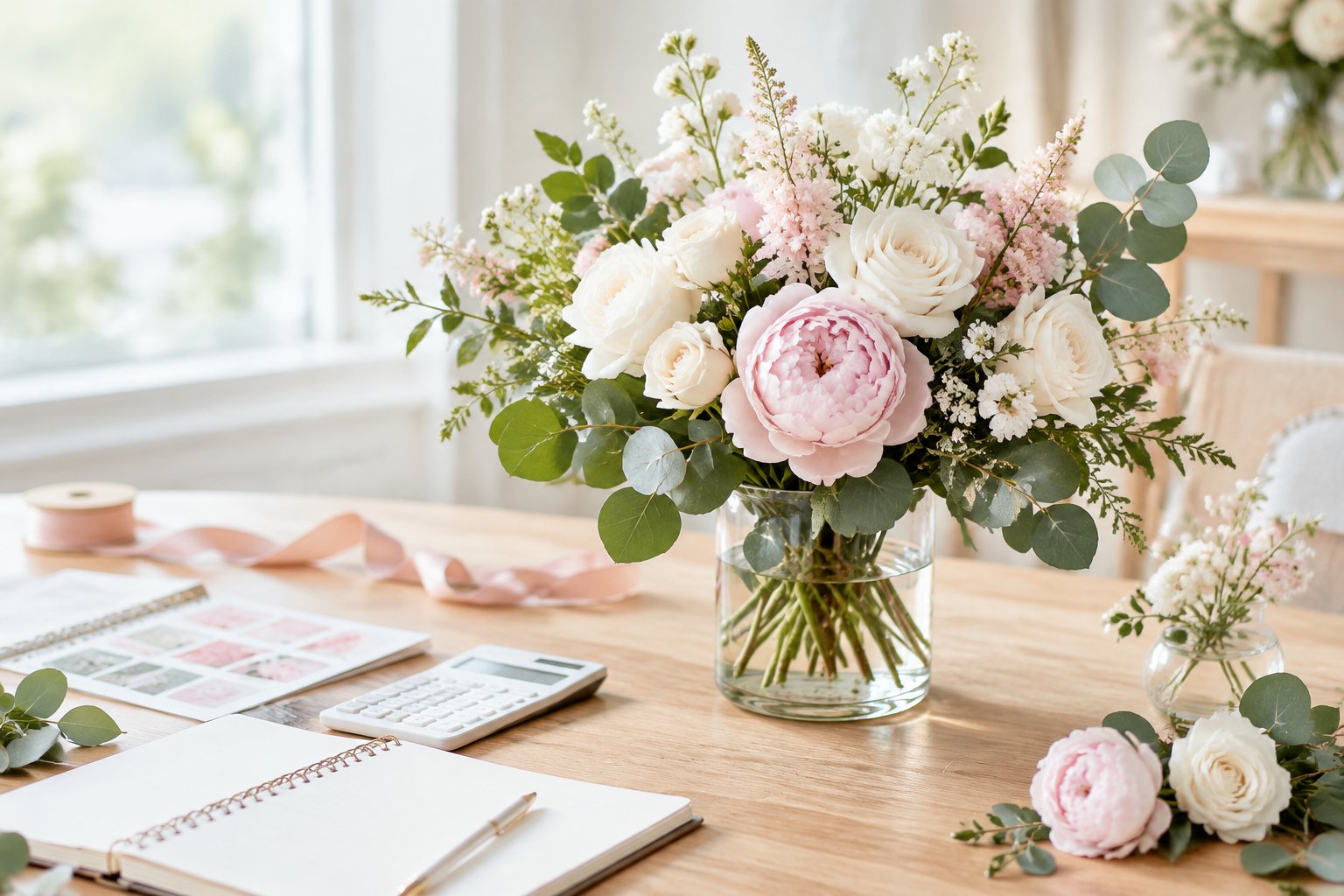
A smaller celebration with a bouquet, personal flowers, modest ceremony designs, and simple reception pieces may stay near the lower end. A large wedding with a floral arch, tall centerpieces, premium blooms, and extensive installation work can move well above the national range. Many couples use 8% to 10% of the total wedding budget as a starting point for wedding florals.
Your first step is to list the arrangements you want, then ask a professional florist to price the flowers, design work, delivery, setup, and breakdown together. If you want help planning your wedding flowers, explore wedding flowers and bring your priorities to a floral consultation.
What Is a Realistic Wedding Floral Budget?
A realistic wedding flower budget for many U.S. couples is $2,500 to $5,000, with full-service designs ranging from about $1,500 to $7,500 or more. Your wedding florist cost rises with premium flowers, large installations, more tables, complex mechanics, and added labor.

Your quote includes more than stems. A professional florist or floral designer may source flowers, create recipes, prepare arrangements, transport them, install ceremony pieces, move designs during the day, and collect rentals afterward.
How Much of the Total Wedding Budget Should Go to Flowers?
Set aside about 8% to 10% of your total wedding budget for flowers as a starting point. A $30,000 wedding could support a floral budget of about $2,400 to $3,000, while a $60,000 wedding could support $4,800 to $6,000.
Your guest count and design goals should adjust that starting figure. A 100-person wedding with 12 reception tables needs more centerpieces than a 40-person celebration. A ceremony arch, hanging installation, or flower-filled sweetheart table also pushes spending upward.
You can reserve more money for wedding florals when flowers shape the look of your venue. If you prefer simple personal flowers and a few table arrangements, a smaller share may fit your plans.
Why National Averages Vary So Much
National averages combine very different weddings and markets. Your wedding flower costs change with:
-
Location: Major cities often have higher labor, rent, delivery, and staffing costs.
-
Guest count: More guests create more tables and more centerpieces.
-
Flower selection: Rare, delicate, imported, or out-of-season blooms cost more.
-
Design style: A hand-tied bouquet needs less construction than a cascading bouquet or suspended installation.
-
Venue logistics: Long loading paths, stairs, restricted access, and separate ceremony and reception spaces add labor.
-
Services: Delivery, setup, breakdown, rentals, taxes, and design fees may appear as separate line items.
Ask whether the proposal includes these services before comparing one florist quote with another. A lower starting price can change after delivery, installation, and rental charges are added.
Sample Spending Levels From Simple to Luxury
These ranges give you a planning framework:
|
Floral style |
Approximate budget |
Common inclusions |
|---|---|---|
|
Simple |
$1,500 to $2,500 |
Bridal bouquet, limited personal flowers, modest ceremony accents, simple reception pieces |
|
Classic |
$2,500 to $5,000 |
Wedding party flowers, aisle arrangements, ceremony focal point, guest table centerpieces |
|
Full-service |
$5,000 to $7,500 |
Larger ceremony designs, upgraded centerpieces, more personal flowers, delivery and installation |
|
Luxury |
$10,000+ |
Large floral arches, hanging work, floral meadows, premium blooms, multiple installation areas |
Saving money on wedding flowers works best when you choose a few high-impact areas and let your florist simplify lower-priority pieces. Share your total budget early so the floral designer can recommend practical substitutions and appropriate scale.
Personal Flower Prices to Budget First
Personal flowers usually begin around $1,000 for a couple with a bridal bouquet, wedding party flowers, boutonnieres, and corsages. The bridal bouquet takes the largest share, while each additional attendant adds a smaller individual cost.
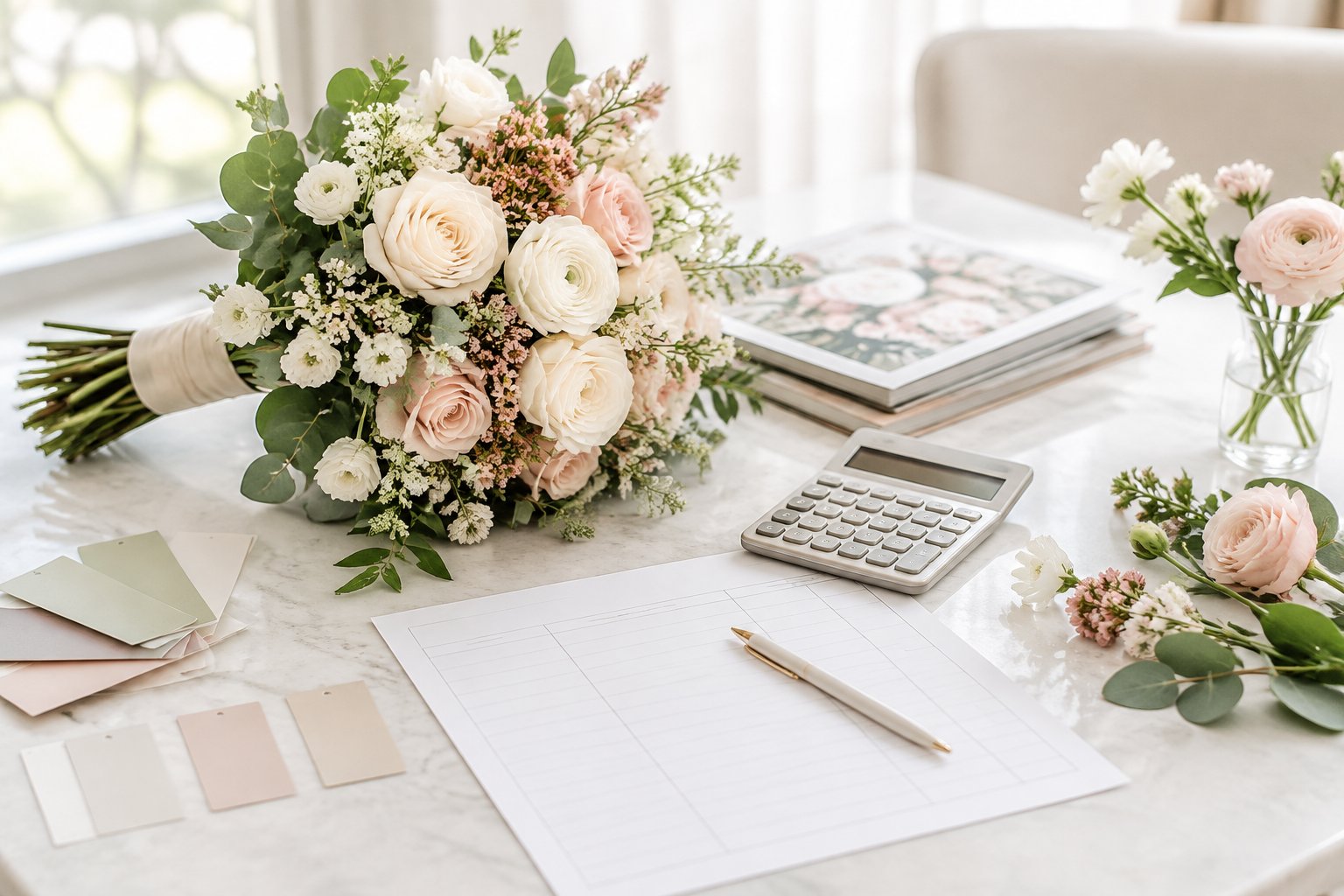
Your personal flowers appear in close-up photos and help coordinate the wedding party. Count every person who needs flowers before requesting a quote, including parents, grandparents, ushers, and children.
How Much Does a Bridal Bouquet Cost?
A bridal bouquet cost commonly falls between $150 and $350. A compact hand-tied bouquet with seasonal flowers sits near the lower end, while a larger bouquet with premium blooms, trailing elements, or detailed mechanics can reach $500 or more.
Size, shape, flower type, and labor drive the price. A rounded bouquet with roses and seasonal filler uses a different recipe from a loose garden-style design with peonies, garden roses, and specialty foliage.
You can control the bridal bouquet price by choosing one or two focal flowers, keeping the shape compact, or allowing your florist to select the best seasonal substitutes.
What Do Bridesmaid Bouquets and Wedding Party Flowers Cost?
Bridesmaid bouquets commonly cost $60 to $150 each. Smaller bouquets with fewer stems reduce the total, while bouquets designed to match a large bridal arrangement cost more.
Build your wedding party flower budget with these working ranges:
-
Bridesmaid bouquet: $60 to $150 each
-
Junior attendant bouquet: $40 to $90
-
Boutonniere: $15 to $40 each
-
Corsage: $25 to $50 each
-
Extra personal bouquet: $50 to $150
The number of attendants affects your total quickly. Eight bridesmaid bouquets at $100 each add $800 before boutonnieres, corsages, and delivery are included.
How Much Do Boutonnieres and Corsages Cost?
Boutonnieres commonly cost $15 to $40 each, while corsages often cost $25 to $50 each. A boutonnière may use one focal bloom with greenery and ribbon, while a corsage needs a larger design and a wristband or pinning method.
Create a count for every person receiving a boutonniere or corsage. Include both sides of the family, officiants, readers, ushers, and grandparents when applicable.
Ask your florist whether the quote includes pinning these pieces on site. On-site assistance adds labor, yet it can keep delicate personal flowers secure and ready for photos.
Flower Girl and Hair Flower Costs
Flower girl petals cost about $20 to $50, depending on the basket, petal volume, and fresh flower selection. A flower crown commonly costs $50 to $100, while small hair flowers may cost $25 to $75.
Fresh petals offer a low-cost way to include a flower girl. A crown or hair flowers create a stronger visual detail and require careful placement so the flowers stay comfortable throughout the ceremony.
Ceremony Designs and Their Cost Drivers
Ceremony flowers range from about $500 for focused accents to $2,500 or more for a large floral arch or custom installation. The biggest cost drivers are flower volume, structure, mechanics, installation time, venue access, and whether the pieces move to the reception.
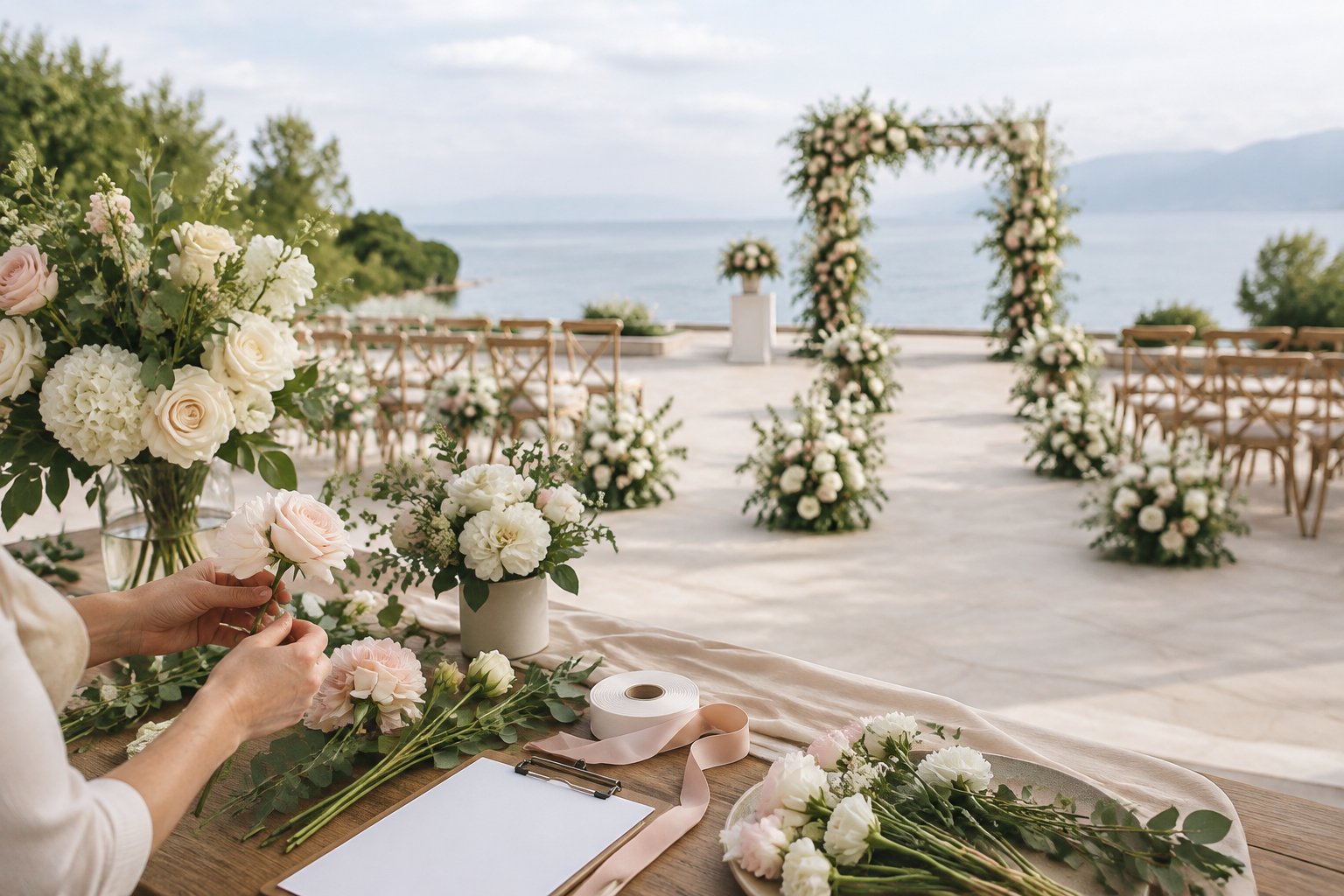
A ceremony design should direct attention toward the altar, aisle, or couple. Concentrating flowers in one strong focal area can create a polished look without decorating every available surface.
What Does a Ceremony Arch Cost?
A ceremony arch commonly costs $500 to $2,500 or more. A partial floral arch with greenery and flowers on one side costs less than a full, lush floral arch covering the entire structure.
Your quote reflects:
-
Arch or frame rental
-
Structural mechanics and securing methods
-
Flower and greenery volume
-
Assembly and installation time
-
Delivery and removal
-
Venue access and safety requirements
A floral arch with premium flowers, hanging elements, or a large footprint reaches the upper end quickly. Ask whether the structure is included in the floral proposal or billed as a rental.
Budgeting for Aisle Flowers and Altar Pieces
Aisle arrangements often cost $20 to $50 per row for small chair markers, clusters, or petal designs. Larger aisle flowers and altar pieces can range from $100 to $500 or more per arrangement.
You can create a strong aisle design with alternating chair flowers, a few ground clusters, or floral meadows placed near the ceremony entrance. Altar arrangements provide more visual impact because they remain in the background of your vows and ceremony photos.
Confirm the number of aisle rows, the side of each row receiving flowers, and whether petals are allowed at your venue. Rules about candles, foam, hanging work, and outdoor ground installations affect your design choices.
When Floral Installations Are Worth the Spend
A floral installation earns its place in the budget when it fills a large visual area, frames important photos, or transforms a plain venue. Floral arches, floral meadows, large hanging designs, greenery garlands, and lantern groupings create scale that small arrangements cannot match.
Choose an installation when the ceremony backdrop is a major priority or when one design can be moved to the reception. A ceremony arch can become a sweetheart table backdrop, while aisle arrangements can decorate the bar, entry, or lounge.
Request a labor estimate for every floral installation. The design may require a team, ladders, reinforced mechanics, venue coordination, and a scheduled breakdown.
Reception Flower Costs by Table and Focal Point
Reception flowers often become the largest part of your quote because centerpiece prices multiply across every guest table. Low centerpieces commonly cost $75 to $250 each, while tall or lush designs range from $200 to $600 or more.

Your reception flower costs depend on the number of tables, table shape, centerpiece height, vessel rentals, flower density, and the number of secondary areas you decorate.
How Centerpiece Counts Change the Total
Count reception tables before setting a per-table flower budget. Twelve centerpieces at $150 each total $1,800, while 20 centerpieces at the same price total $3,000.
Typical ranges include:
-
Bud vase groupings: $50 to $150 per table
-
Low centerpiece: $100 to $250 per table
-
Tall centerpiece: $250 to $600 or more per table
-
Greenery garland: $100 to $400 per table, depending on length and fullness
Round tables need one main arrangement or a cluster of smaller vessels. Long tables may need repeated groupings, a continuous garland, or several floral accents to look balanced.
Ask whether candles, vessels, stands, and cleanup are included. Rental pieces and collection fees can change the final reception flowers total.
Cake, Head Table, and Bar Floral Costs
Cake flowers commonly cost $50 to $150, while head table flowers may range from $150 to $700. Bar, welcome table, escort card, and dessert table flowers can add $100 to $300 per area.
Cake flowers should be planned with your baker because some blooms require protective barriers or special placement. Head table designs cost more when they run across the full table length or include a lush greenery garland.
Choose one or two secondary reception areas for floral accents when you want to control spending. The welcome table and sweetheart table receive strong guest and photo attention, while small flowers at every station increase labor and delivery needs.
Fresh Flowers vs. Greenery and Potted Plants
Fresh flowers create color and softness, while greenery, eucalyptus, ferns, ruscus, and potted plants add volume and texture at lower price points. Potted plants also offer a reusable design element for some venues and outdoor celebrations.
A greenery-forward centerpiece can use a few fresh flowers as focal points. Eucalyptus and ruscus create movement, while ferns bring fullness to garden-style designs.
Ask your florist which greenery is available during your wedding season. Some foliage costs more when it requires special sourcing, treatment, or extra labor to keep it fresh.
Flower Choices That Raise or Lower the Quote
Premium and imported flowers raise your wedding flower cost, while seasonal local blooms, flexible color palettes, and affordable filler flowers help control it. Your florist can keep the design style consistent while adjusting the flower recipe.
Premium and Imported Flowers to Price Carefully
Peonies, garden roses, gardenias, lily of the valley, orchids, amaryllis, anemones, ranunculus, dahlias, hydrangeas, and calla lilies can raise a quote because of season, availability, stem price, fragility, or import costs.
Premium flowers have the greatest budget impact when you use them throughout every arrangement. A few focal blooms in the bridal bouquet, ceremony design, or head table create emphasis with fewer expensive stems.
Ask about substitution plans before signing your proposal. A florist can recommend a similar bloom, color, or texture if a specific flower becomes unavailable.
Affordable Blooms That Still Look Elevated
Roses, tulips, lisianthus, sunflowers, zinnias, carnations, chrysanthemums, daisies, and baby’s breath offer flexible ways to build full arrangements. Their final cost still depends on color, grade, season, and quantity.
Carnations and chrysanthemums create volume in garden-inspired or modern designs. Roses and lisianthus provide familiar shapes, while baby’s breath and seasonal foliage fill open spaces with texture.
Give your florist a color palette and design feeling instead of requiring every stem by name. This approach leaves room for substitutions that protect the look and budget.
How Seasonal and Local Flowers Affect Cost
Seasonal flowers usually offer better availability and pricing because they require less special sourcing. Local flowers can also reduce shipping needs, though local pricing depends on the farm, growing conditions, flower variety, and wedding date.
Spring may offer tulips, ranunculus, and anemones. Summer brings many garden roses, zinnias, and local field flowers. Fall supports dahlias, chrysanthemums, and warm-toned seasonal blooms.
Share your wedding date before choosing exact flowers. Your florist can identify what is likely to be fresh, available, and reasonably priced during that period.
How to Get More From Your Florist Quote
You get more value from a wedding florist quote when it clearly lists flowers, design labor, rentals, delivery, setup, breakdown, taxes, and repurposing plans. A detailed proposal makes it easier to compare choices and adjust priorities.
What a Full-Service Floral Proposal Usually Includes
A full-service proposal may include consultation, flower sourcing, design time, personal flowers, ceremony flowers, reception flowers, containers, delivery, setup, installation, breakdown, and rental collection.
Look for these details:
-
Item names and quantities
-
Flower or color descriptions
-
Labor and design fees
-
Delivery and setup charges
-
Rental items and deposits
-
Breakdown or strike fees
-
Taxes and payment schedule
-
Substitution terms
-
Cancellation and change policies
Ask the wedding florist whether minimum spending applies. Some studios set a minimum because sourcing, staffing, and installation require a baseline level of work.
Which Pieces Can Be Repurposed After the Ceremony?
Ceremony flowers can move to the reception when venue timing, vessel design, and staffing allow it. A ceremony arch arrangement can decorate the sweetheart table, aisle clusters can move to the bar, and bridesmaid bouquets can sit in vases near the cake or guest book.
Tell your floral designer about repurposing before the proposal is written. Moving flowers requires labor, containers, transport planning, and enough time between the ceremony and reception.
Choose designs that lift safely and travel well. Ground meadows, large urns, and secured aisle pieces need specific handling plans.
Questions to Ask Before You Book a Wedding Florist
Ask these questions before signing:
-
What is included in the quoted wedding florist cost?
-
Is there a minimum order?
-
Which fees cover delivery, setup, installation, and breakdown?
-
How many proposal revisions are included?
-
What happens if a requested flower is unavailable?
-
Which ceremony flowers can move to the reception?
-
Who provides arches, stands, vessels, candles, or lanterns?
-
How many staff members will work on the wedding?
-
When is the final guest count and flower list due?
-
What payment schedule and cancellation terms apply?
Share your priority pieces and firm budget during the first consultation. A professional florist can then adjust flower types, arrangement size, and installation scope before you commit to the final design.