
Flower Packages for Weddings With Price Guide
Wedding flower packages in the United States commonly cost about $1,500 to $6,000, with smaller celebrations starting near $500 and full-service designs with ceremony installations reaching $7,500 or more. For most couples, a pre-arranged or florist-designed package is the best starting point because it groups personal flowers and décor into a clearer budget.
Your guest count, flower choices, season, design style, delivery distance, and setup needs shape the final price. A courthouse ceremony might need only a bridal bouquet and a boutonniere, while a large venue may require centerpieces, ceremony flowers, rentals, and an installation crew.
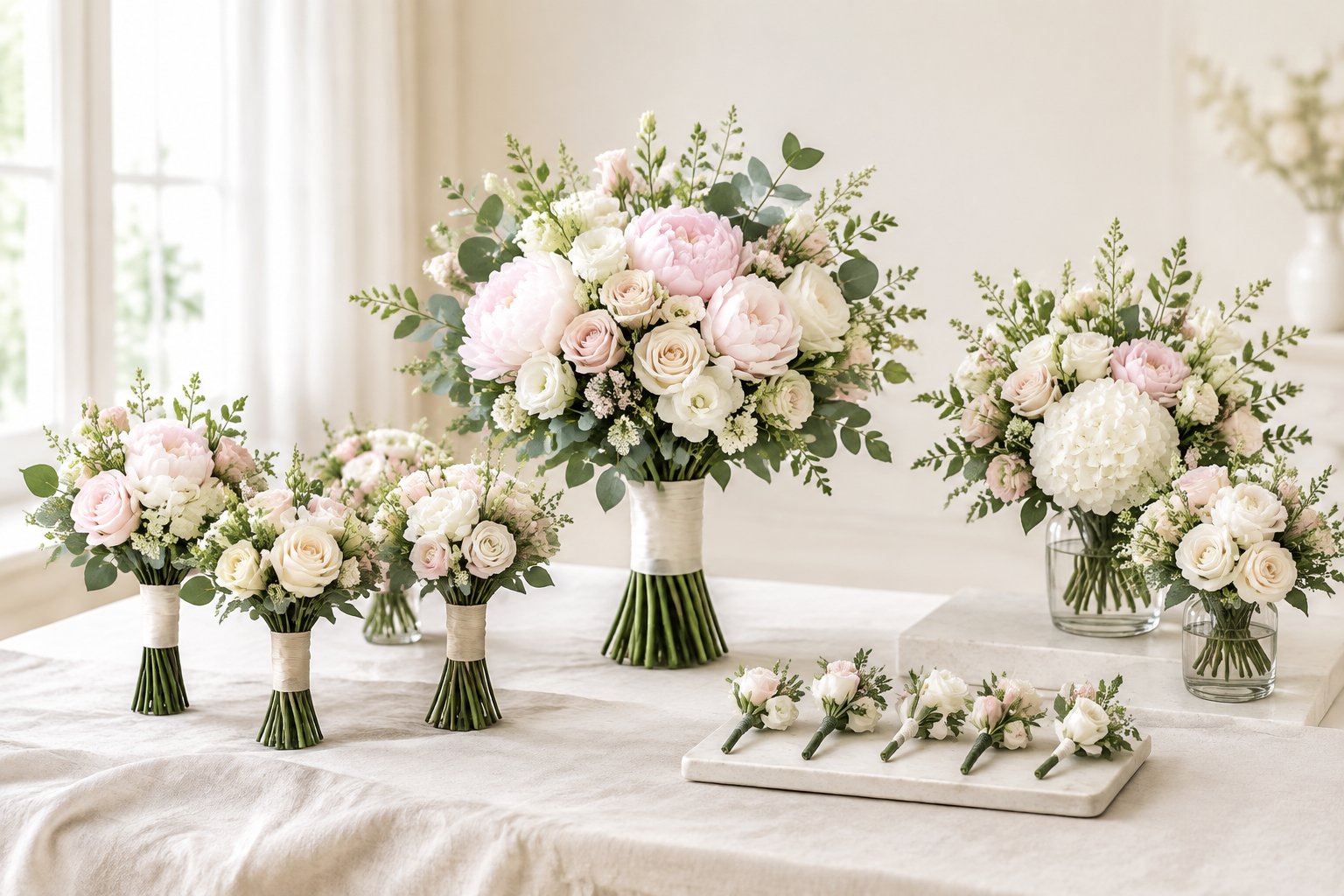
Start by setting a total floral budget, then choose the moments you want flowers to highlight. You can compare ideas with this guide to how much should I spend on my wedding flowers before requesting detailed quotes from florists.
Wedding Flower Package Prices at a Glance
A practical wedding flower package price guide places intimate celebrations around $500 to $1,500, medium weddings around $1,500 to $3,500, and large or full-service weddings around $3,500 to $7,500 or more. These ranges include common personal flowers and reception décor, while taxes, delivery, setup, rentals, and large installations can raise the total.
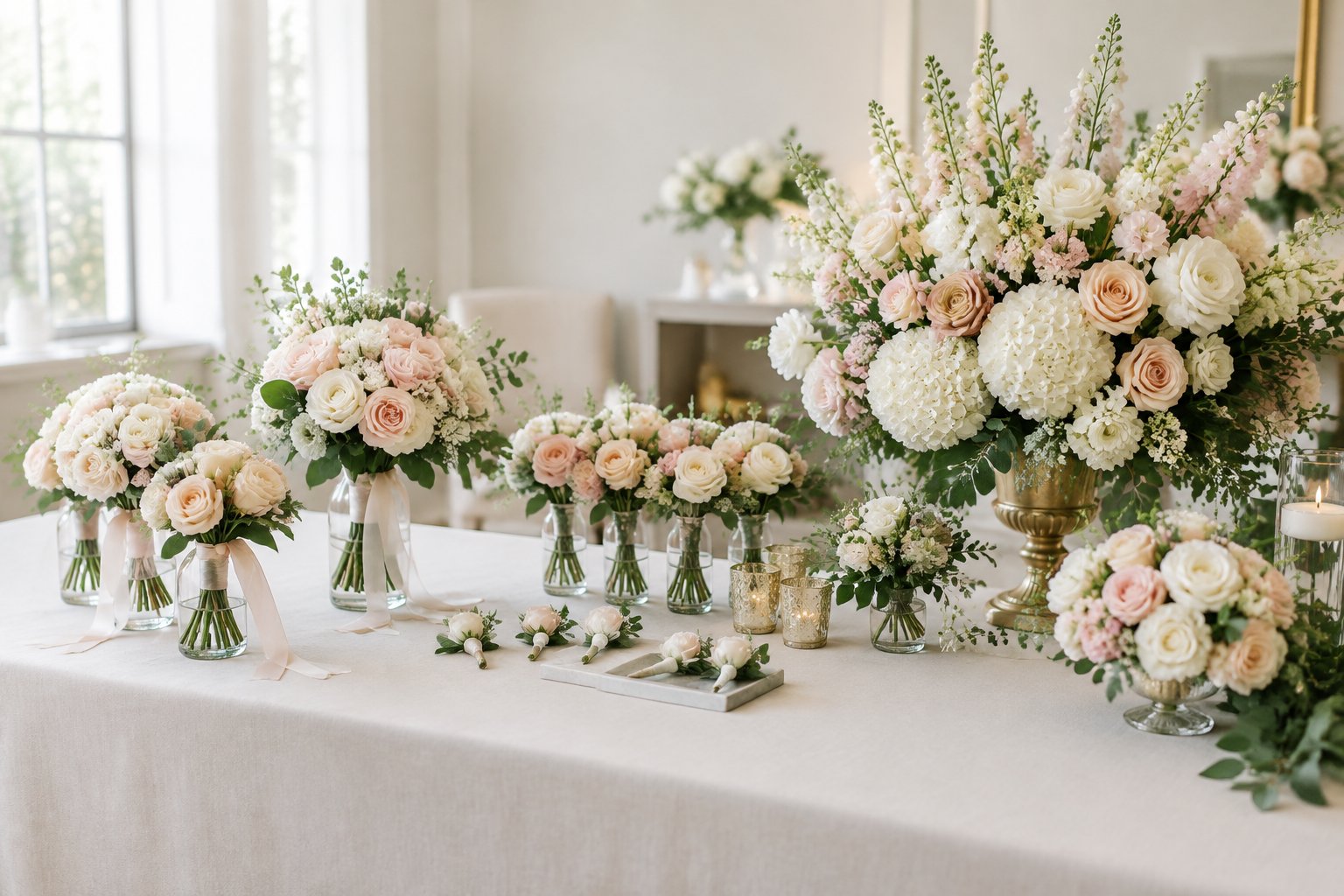
Package prices also reflect how much design labor you purchase. A collection of ready-made arrangements has a lower service cost, while a custom plan with ceremony structures, delivery, placement, and takedown requires more time.
|
Wedding size |
Common package price |
Typical contents |
|---|---|---|
|
Elopement or intimate |
$500–$1,500 |
Bridal bouquet, boutonniere, small ceremony flowers |
|
Medium wedding |
$1,500–$3,500 |
Personal flowers, centerpieces, ceremony accents |
|
Large wedding |
$3,500–$7,500+ |
Full personal flowers, reception décor, installations, service |
How Much Do Elopement and Intimate Packages Cost?
Elopement and intimate wedding flower packages commonly cost $500 to $1,500. A smaller package might include one bridal bouquet, one or two boutonnieres, a few bridesmaid bouquets, and a small ceremony arrangement.
You can keep costs near the lower end by choosing seasonal flowers, limiting delivery locations, and selecting bouquets with a moderate stem count. Adding corsages, aisle markers, multiple ceremony arrangements, or reception centerpieces moves the package toward the upper end.
A package for 20 to 50 guests may include:
-
One bridal bouquet
-
One to four bridesmaid bouquets
-
One to four boutonnieres
-
One or two corsages
-
A welcome arrangement or signing-table flowers
-
Four to eight small centerpieces
What Do Medium and Large Wedding Packages Typically Cost?
Medium wedding packages fall near $1,500 to $3,500, while large weddings with broad floral coverage often reach $3,500 to $7,500 or more. Guest count affects the number of centerpieces, while venue size affects ceremony décor and installation labor.
A medium package may cover a wedding party of six to 12 people, 10 to 18 reception tables, a ceremony focal arrangement, and a sweetheart table accent. A larger package may add an arch, aisle flowers, cocktail-hour pieces, cake flowers, lounge décor, and multiple delivery locations.
Luxury flowers, out-of-season blooms, tall centerpieces, hanging designs, and custom color palettes increase the quote. You can focus the budget on the bridal bouquet, ceremony focal point, and reception tables while using lighter accents in secondary spaces.
What Is Usually Included at Each Price Point?
Lower-priced packages focus on personal flowers, mid-range packages add reception and ceremony pieces, and premium packages include custom design labor plus venue services.
-
Around $500 to $1,500: Bridal bouquet, bridesmaid bouquets, boutonnieres, corsages, and limited ceremony flowers.
-
Around $1,500 to $3,500: Personal flowers, centerpieces, ceremony arrangements, delivery, and selected reception accents.
-
Around $3,500 to $7,500+: Full-service design, larger arrangements, arch or installation work, delivery, setup, rentals, and possible breakdown service.
Read the item list closely. A package price may cover the flowers and design while charging delivery, taxes, setup, rental vessels, or labor separately.
Choose the Right Package Type
The right package type depends on how much design control and event-day support you want. Pre-arranged collections offer clear item counts, full-service packages handle design and placement, wholesale packs lower flower costs, and DIY kits give you hands-on control.
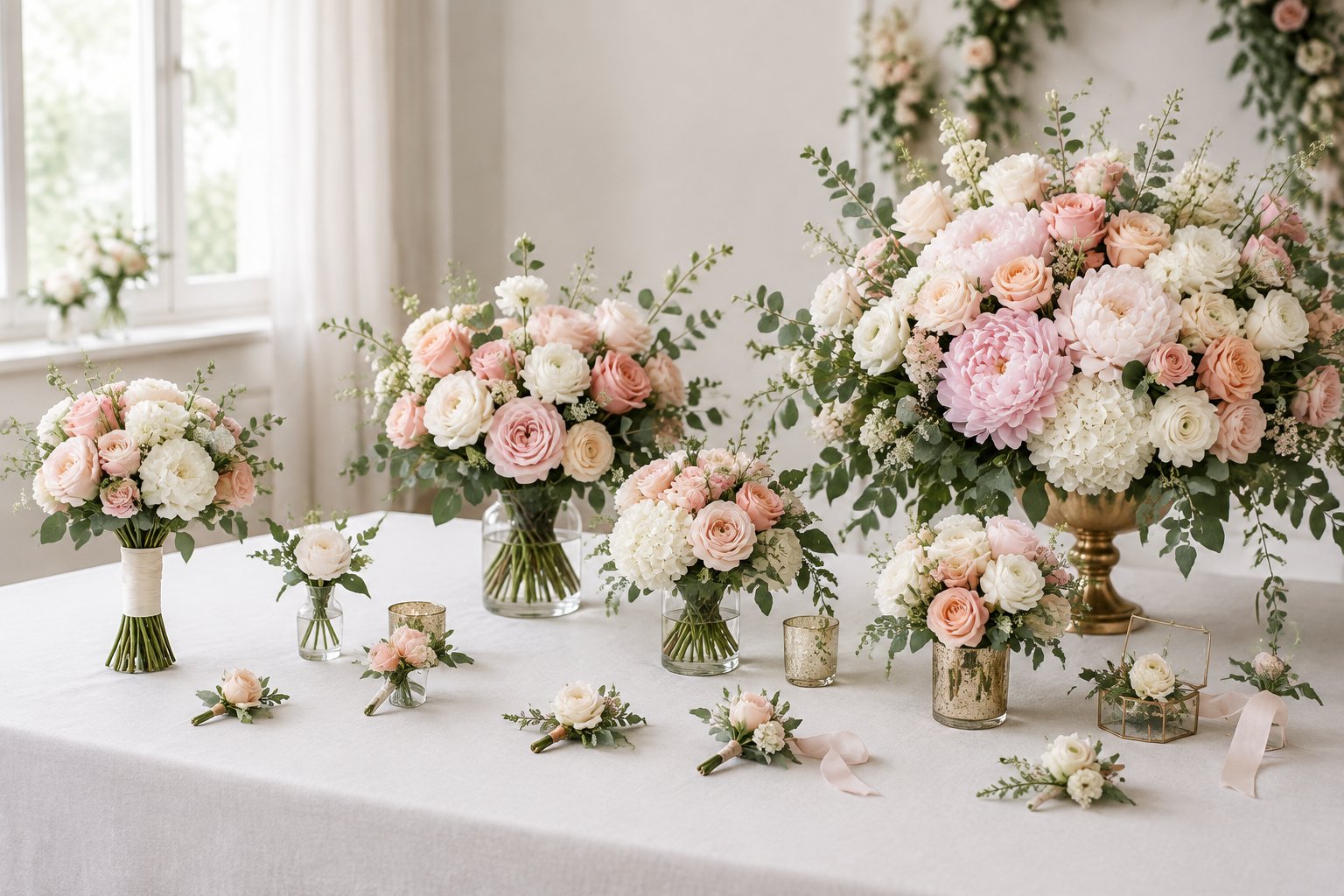
Your venue, schedule, flower knowledge, and available helpers should guide the choice. Fresh flowers also need hydration, storage, careful transport, and enough arranging time before guests arrive.
Pre-Arranged Collections
Pre-arranged collections bundle finished bouquets, boutonnieres, corsages, and centerpieces in a coordinated palette. They suit couples who want a polished look with fewer design decisions.
You can choose a collection by color, mood, or wedding size, then adjust the quantity of each item. Ask whether the flowers arrive ready for display, how they are packaged, and which substitutions are allowed when seasonal availability changes.
This format works well for couples who have a clear venue layout and want predictable item pricing. Delivery timing still deserves attention because fresh arrangements need a cool, safe place before the ceremony.
Florist-Designed Full-Service Packages
Florist-designed full-service packages include planning, flower sourcing, arranging, delivery, and venue placement. They fit weddings with custom installations, complex timelines, large guest counts, or limited setup help.
Your florist can coordinate the design with the venue, planner, rental company, and photographer. A proposal should show personal flowers, ceremony décor, reception pieces, labor, delivery, setup, and any rental charges.
Full service costs more because you pay for design time and event-day labor. It gives you a reliable plan for arches, large centerpieces, aisle décor, and room transitions.
Wholesale Bulk Flower Packs
Wholesale bulk flower packs provide stems for bouquets, centerpieces, and ceremony designs. They suit couples who have arranging experience or a trusted team of friends and family.
You receive more control over flower quantities and color combinations. The trade-off is the work involved in processing stems, hydrating flowers, arranging each piece, storing finished designs, and transporting them safely.
Farm-fresh flowers can arrive at different stages of bloom. Follow the supplier’s care instructions and schedule delivery early enough for the flowers to hydrate and open before the wedding.
DIY Wedding Flowers Kits
DIY wedding flowers kits group flowers, greenery, recipes, supplies, or design instructions for couples who want to create their own arrangements. They offer a creative option for smaller weddings and flexible reception décor.
Budget for buckets, clippers, floral tape, ribbon, vases, water, and refrigeration or a cool storage area. Assign a design lead and a setup team before the wedding week so your family members are not making every decision on the event day.
DIY works best when your designs are compact and repeatable. Large arches, hanging installations, and tall centerpieces require extra tools, time, and venue coordination.
What Should a Complete Floral Package Include?
A complete floral package should list every personal flower, ceremony piece, reception arrangement, service fee, rental, and delivery charge. You should see quantities, sizes, flower types or substitution rules, and the labor required to place the designs.
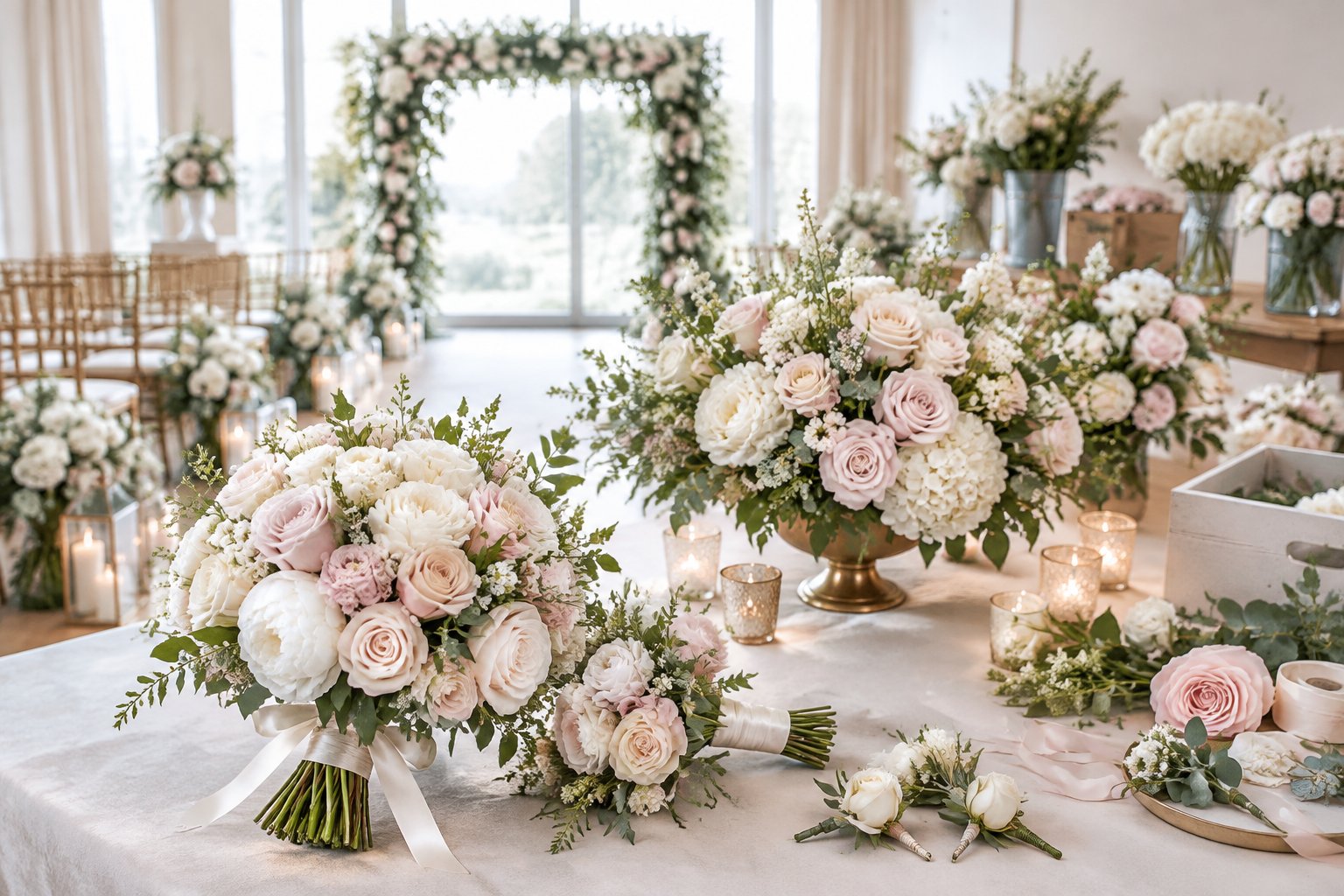
Ask for a proposal that separates wedding party flowers from venue décor. This makes it easier to reduce costs by changing one category while keeping important photo moments intact.
Wedding Party Flowers
Wedding party flowers form the personal part of your package. They may include:
-
Bridal bouquets
-
Bridesmaid bouquets
-
Boutonnieres for the couple, attendants, family members, and officiant
-
Corsages for parents, grandparents, or special guests
-
Flower-girl petals or a small bouquet
-
Toss bouquet
-
Hair flowers or floral pins
Confirm who receives each item and whether the package includes delivery to the getting-ready location. A separate delivery address or an early photography schedule may add a travel charge.
Bouquet size affects price through flower quantity, labor, and mechanics. A compact hand-tied bouquet uses fewer stems than a large cascading design with a structured shape.
Ceremony and Reception Flowers
Ceremony flowers may include an arch arrangement, aisle markers, chair flowers, altar pieces, welcome-sign flowers, and petals. Reception flowers may include centerpieces, sweetheart-table décor, cake flowers, bar arrangements, and place-card accents.
Greenery can fill space across arches, runners, and table designs while creating a consistent look. Ask whether ceremony pieces can be moved to the reception after the vows, who moves them, and whether the timeline allows enough time.
Your proposal should state the number and size of centerpieces. “Reception flowers” does not provide enough detail to compare two quotes.
Optional Add-Ons and Rentals
Common add-ons include floral arches, hanging arrangements, aisle installations, cake flowers, floral chandeliers, lounge pieces, candles, vases, compotes, stands, and table runners.
Rental vessels and structures may require a deposit and return service. Breakdown service may also be priced separately, especially when the florist must return after the reception to collect arches, stands, or rented containers.
Prioritize add-ons by visibility. Ceremony focal flowers, the bridal bouquet, and reception tables appear often in photographs, while small décor in low-traffic areas may offer less value for your budget.
Match Flowers and Styles to Your Budget
Flower choice and design style can shift your package price by hundreds or thousands of dollars. Roses, hydrangeas, and eucalyptus offer flexible options, while premium garden roses, delicate seasonal blooms, large installations, and complex mechanics increase labor and material costs.
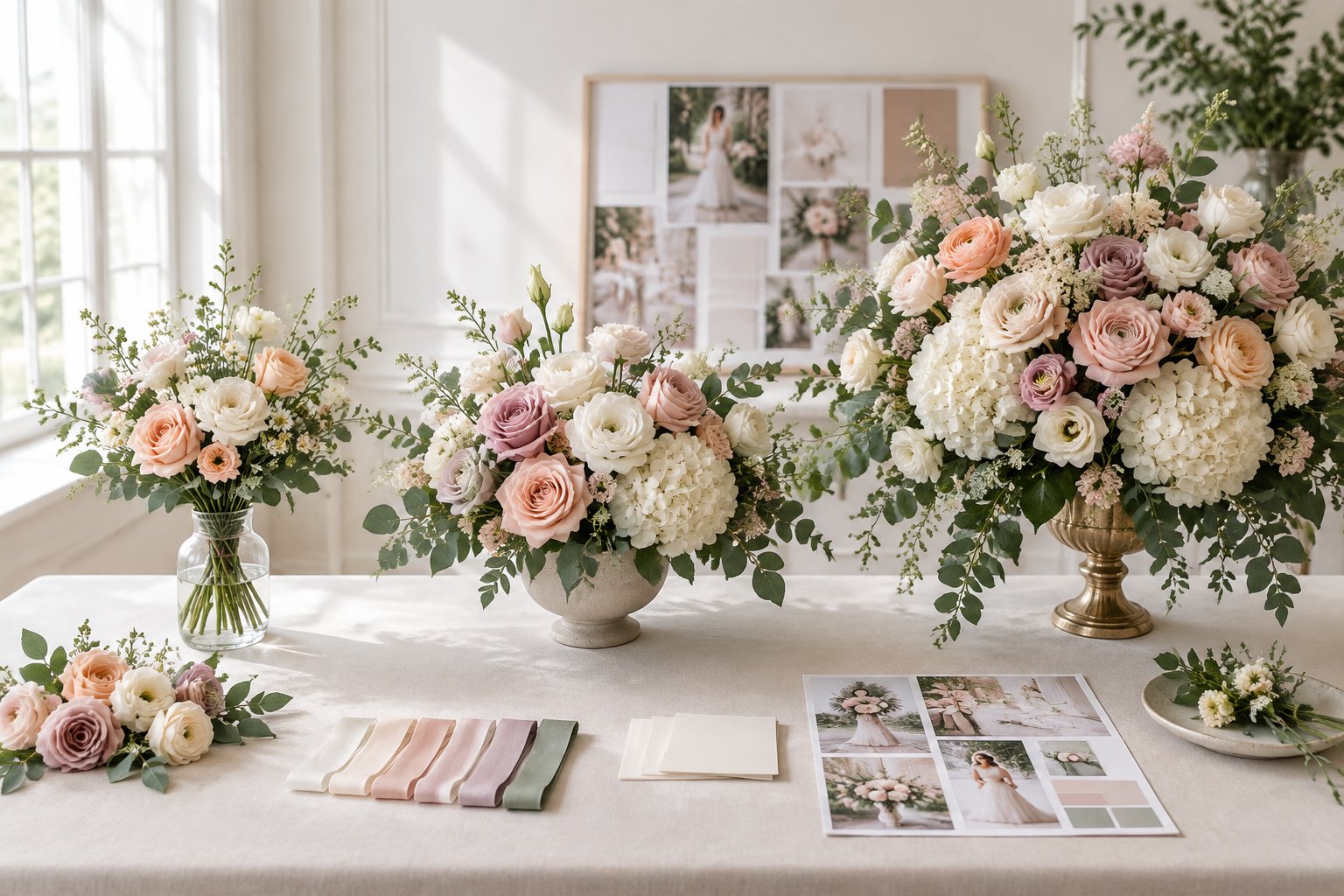
Share your preferred colors and a few must-have flowers with your florist. A flexible palette gives the designer room to use seasonal flowers that match the look at a better price.
Timeless White and Greenery Designs
White and green designs use flowers such as roses, white roses, hydrangeas, and eucalyptus for a clean palette. The look works in ballrooms, gardens, barns, courthouses, and modern venues.
White roses provide a familiar focal bloom, while hydrangeas add volume to arrangements. Eucalyptus brings movement and texture to bouquets, arches, and table designs.
You can control the budget by using a focal flower in bouquets and a fuller, foliage-led design for larger installations. Ask how the florist will protect white flowers from bruising and discoloration during transport.
Romantic Garden-Inspired Palettes
Garden-inspired packages combine soft colors, loose shapes, and layered textures. Garden roses bring a ruffled form, while roses, hydrangeas, and seasonal filler flowers create fullness.
Pastel pink, blush, cream, peach, and lavender palettes suit romantic designs. A florist may recommend seasonal substitutions that preserve the color story when a specific bloom is unavailable.
Loose arrangements need careful design work because the shape depends on varied stems and open spacing. Share your preferred bouquet size and centerpiece height so the quote reflects the final scale.
Modern and Seasonal Flower Choices
Modern designs use strong shapes, limited color palettes, unusual textures, or a single flower type. Calla lilies create a sleek line, while grouped roses or sculptural greenery create a clean contemporary look.
Seasonal flowers cost less when local supply is strong and the stems arrive at a reliable stage of bloom. Your date and region influence what is available, so ask for two or three approved alternatives before signing the proposal.
You can create a modern look with fewer flower types and repeated forms. This approach makes the design easier to produce across bouquets, ceremony flowers, and reception arrangements.
How to Compare Quotes and Avoid Surprise Costs
Compare quotes by matching quantities, arrangement sizes, flower quality, labor, delivery, setup, rentals, taxes, and substitution terms. The lowest total can represent less service or fewer flowers, so review each line item before choosing.
A clear quote should identify the event date, venue, delivery locations, setup window, design style, flower palette, and expected guest or table count. Ask the florist to mark every included service and every possible extra.
Delivery, Setup, Taxes, and Takedown
Delivery and setup can add several hundred dollars, especially for long distances, multiple venues, stairs, limited loading access, or complex installations. Taxes and service charges may appear after the design subtotal.
Ask these questions:
-
What delivery radius is included?
-
Does setup include ceremony placement and reception centerpieces?
-
Who distributes bouquets and boutonnieres?
-
Is takedown included?
-
Are rental returns included?
-
Does a second venue require another delivery charge?
A florist may arrive one to two hours before a standard ceremony, while a large installation needs more setup time. Confirm the load-in window with your venue before approving the design.
Stem Counts, Arrangement Sizes, and Substitutions
A bouquet labeled “standard” can vary by florist, so request its approximate size, flower count, and shape. For centerpieces, confirm the vessel, height, width, and number of stems or flower heads when the florist provides those details.
Substitution terms protect the schedule when weather or supply problems affect farm-fresh flowers. Ask whether replacements will match the color, texture, price level, and arrangement size.
You can reduce uncertainty by listing priority flowers and acceptable alternatives. For example, you might request white roses first, garden roses as a preferred upgrade, and another white focal flower as an approved substitute.
When to Order for the Best Availability
Reserve your wedding date several months ahead when you need custom colors, large installations, premium flowers, or a full-service florist. Early planning gives your designer time to check seasonal supply, order structures, and coordinate venue access.
Finalize the flower list and substitutions before the florist’s ordering deadline. A smaller pre-arranged order may have a shorter lead time, while custom work needs more planning for design approval and event logistics.
Schedule delivery early enough for fresh flowers to hydrate and open according to the design plan. Confirm the exact arrival date, storage instructions, and person responsible for receiving the order before your wedding week.