
Flowers for Wedding Reception Cost: A Clear Budget Guide
For most U.S. couples, flowers for a wedding reception cost about $1,500 to $5,000 in 2026, while lush designs with premium blooms or large installations can reach $7,500 or more. Your guest count, table layout, flower choices, design style, delivery needs, and setup labor shape the final quote.
Reception flowers usually take the largest share of your wedding flower budget because each guest table needs a design. A small celebration with bud vases and seasonal flowers can stay near the lower end. A larger reception with tall centrepieces, a head-table installation, cake flowers, and a floral backdrop needs more room in the budget.
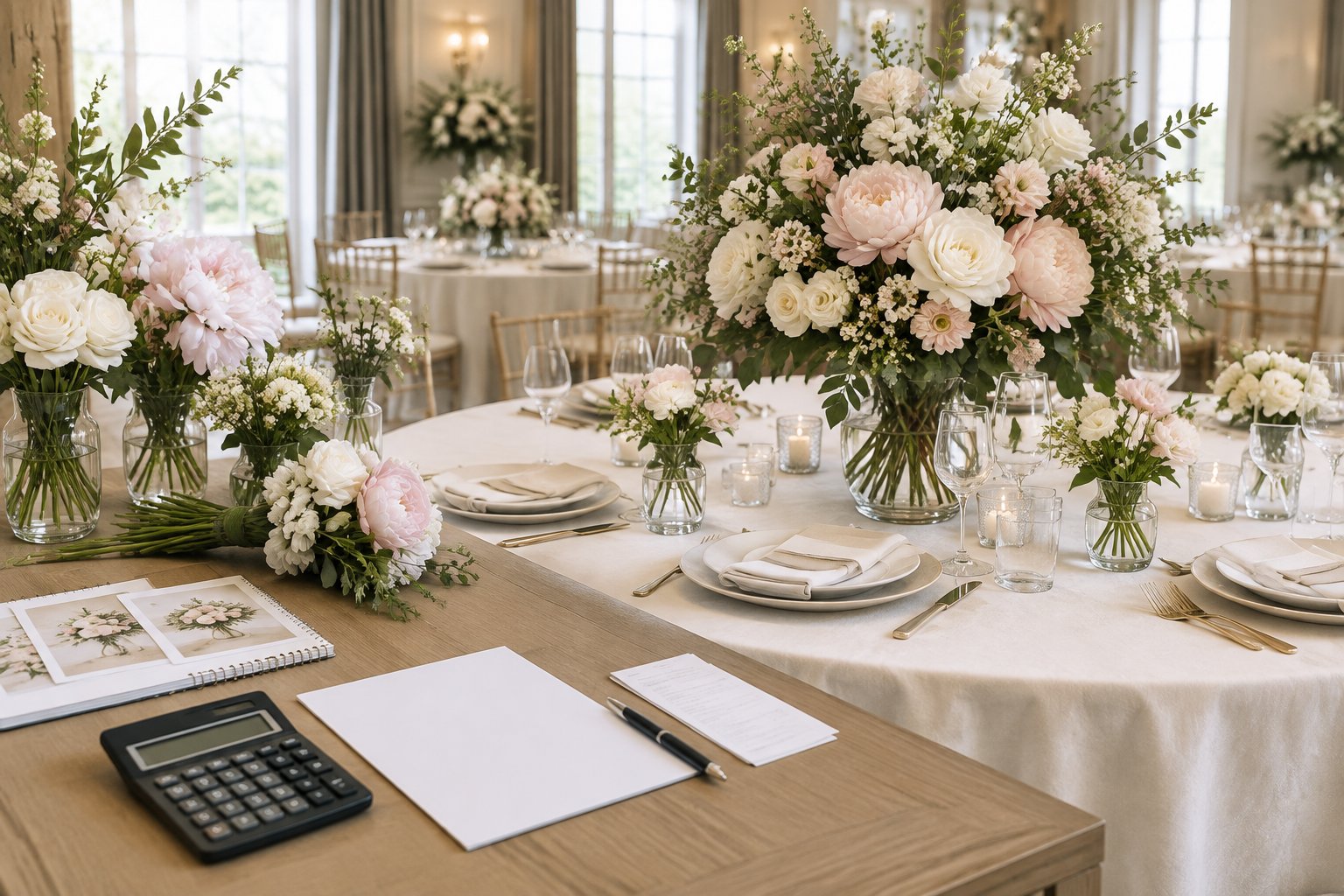
Start by choosing the floral moments you want guests to notice most. A professional florist can then build the reception flowers around your budget, guest count, and wedding date. You can also compare your plans with this guide to how much should I spend on flowers for my wedding before requesting proposals.
What Does Reception Floral Décor Typically Cost?
Reception floral décor costs about $75 to $250 per table for modest designs, while tall, lush, or premium centrepieces can reach $300 to $500 or more per table. A full reception plan often lands between $1,500 and $5,000 before large-scale installations and premium upgrades.
Your wedding florist prices more than fresh flowers. The quote can include floral design, vessels, candles, delivery, setup, breakdown, rentals, and labor. A clear proposal helps you see which choices raise the wedding flowers cost.

Typical Spend by Reception Size and Style
Your reception size gives you a useful starting point:
|
Reception plan |
Approximate floral spend |
Common inclusions |
|---|---|---|
|
Small or simple |
$750–$2,000 |
Bud vases, low centrepieces, sweetheart table flowers |
|
Mid-range |
$1,500–$5,000 |
Guest tables, head table, cake flowers, delivery, setup |
|
Lush or luxury |
$5,000–$10,000+ |
Large installations, tall designs, premium blooms, full room styling |
A 50-person reception may need five to seven tables. A 150-person event can require 15 or more. That table count alone can create a large difference in the average cost of wedding flowers.
Your venue also affects the quote. A space with attractive architecture, built-in décor, or garden views needs fewer flowers. A large blank ballroom needs more volume to feel finished.
How Much Do Table Centrepieces Cost per Table?
Bud vase groupings cost about $75 to $150 per table. Low centrepieces commonly fall between $100 and $250, while tall designs range from $250 to $500 or more.
The price reflects flower quantity, vessel type, arrangement height, candle use, greenery, and labor. Long banquet tables need several arrangements or a continuous design, while round tables often use one central arrangement.
For a 10-table reception, a $100 centrepiece adds about $1,000 before delivery, setup, taxes, and rentals. A $300 design brings the table total to about $3,000.
You can find more layout ideas in these floral wedding table decoration ideas.
What Is Included in a Florist’s Reception Quote?
A florist’s reception quote may include:
-
Flower sourcing and conditioning
-
Design labor and arrangement mechanics
-
Vases, compotes, stands, or urns
-
Delivery and venue loading
-
Setup and placement
-
Candles or other rented décor
-
Breakdown and rental returns
-
Sales tax and service fees
Ask whether each item is included or listed separately. Confirm delivery mileage, parking, venue access time, elevator rules, setup hours, and removal fees before approving the proposal.
Build a Reception Flower Budget by Priority
Build your wedding flower budget by protecting the pieces that appear in the most photos, then scale back low-visibility details. Your bridal bouquet, reception tables, and one strong focal area usually deserve priority.
Personal flowers create a predictable starting cost. Reception décor grows with your guest count, table count, venue size, and design density. A written priority list keeps the proposal focused.
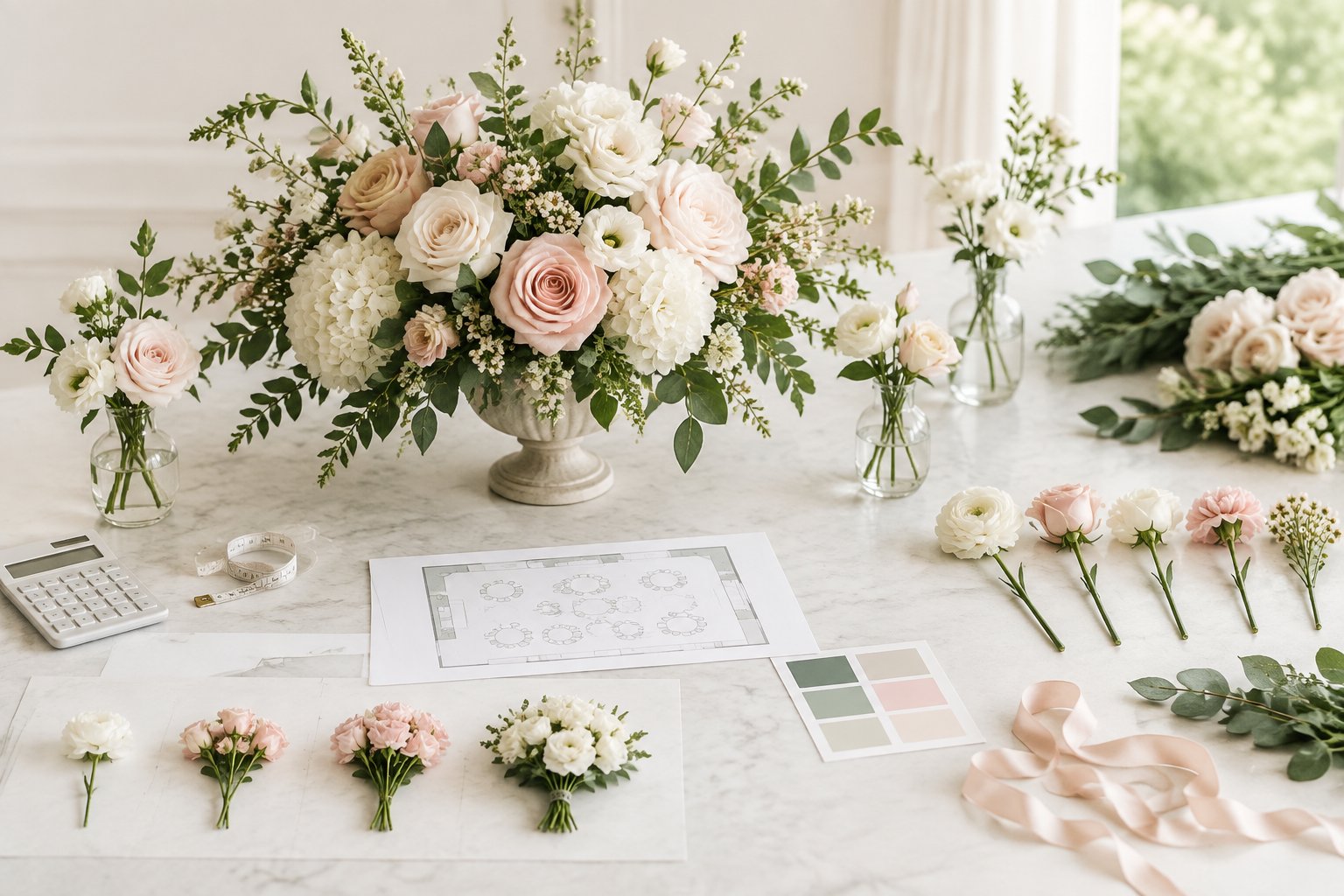
Personal Flowers vs. Reception Décor
Personal flowers include the bridal bouquet, wedding bouquet details, bridesmaid bouquets, boutonnieres, corsages, and other flowers worn or carried by the wedding party.
Common planning ranges include:
-
Bridal bouquet: $150–$350, with larger designs reaching $500 or more
-
Bridesmaid bouquet: $75–$175 each
-
Boutonniere: $15–$35 each
-
Corsage: $35–$75 each
-
Flower girl basket and petals: $25–$75
-
Hair flowers: $25–$150
Reception décor includes guest-table centrepieces, sweetheart-table flowers, head-table designs, cake flowers, welcome-sign flowers, bar arrangements, and room installations.
Personal flowers stay tied to the number of people receiving them. Reception flowers rise with the number of tables and the size of each design.
Low, Mid-Range, and Luxury Reception Budgets
A low reception flower budget of about $750 to $2,000 suits a small guest list, a venue with strong décor, or a plan built around greenery, candles, and compact arrangements.
A mid-range budget of about $1,500 to $5,000 supports guest-table flowers, a sweetheart table, selected personal flowers, delivery, and setup. Seasonal blooms and flexible color choices help keep this range workable.
A luxury reception budget of $5,000 to $10,000 or more supports large centrepieces, premium flowers, hanging designs, a floral installation, and multiple decorated areas.
Set aside about 8% to 13% of your total wedding budget for all wedding flowers. A $30,000 wedding gives you roughly $2,400 to $3,900 for florals, while a flower-heavy design needs a larger share.
Where Guest Count Raises the Total Fast
Guest count raises the total through table numbers, attendant flowers, family flowers, and place-setting details. A 50-person wedding might use six tables. A 150-person reception might need 15 or more.
If each table receives a $150 centrepiece, six tables cost about $900 and 15 tables cost about $2,250. The same design recipe creates a $1,350 difference before delivery and setup.
Long tables also change the math. A continuous greenery garland or several arrangements may cost more than one centrepiece per round table. Ask your florist to price the plan using your exact floor layout.
Price the Main Reception Flower Elements
Guest tables usually create the largest reception floral expense, while cake flowers, bar accents, and statement pieces add smaller but important line items. You can control the total by mixing modest table designs with one high-impact focal arrangement.
Your proposal should show each reception area separately. This makes it easier to remove a detail, reduce its size, or replace it with greenery and candles.
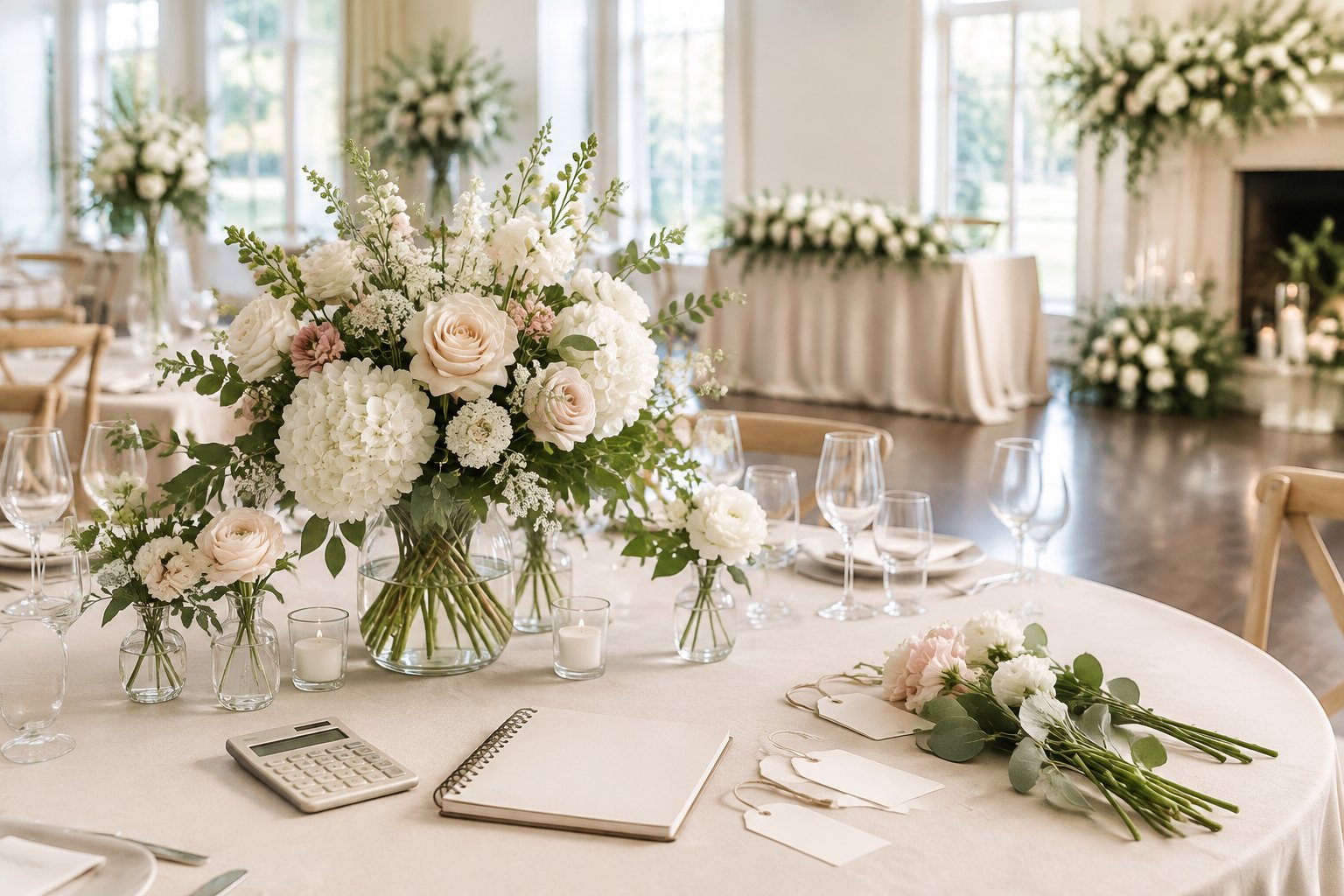
Guest Table and Head-Table Designs
Bud vases cost about $75 to $150 per table. Low arrangements range from $100 to $250, while tall designs often reach $250 to $500 or more.
Greenery garland costs depend on length, fullness, and the foliage used. Eucalyptus, ferns, and ruscus create volume and movement across long tables. Dense garlands need more product and labor than a loose line of greenery.
A sweetheart table may cost $150 to $600 for flowers around the front, sides, or tabletop. Head-table florals can range from $400 to $2,000 or more because the table is longer and designed as a focal point.
Mixed centrepieces help control costs. You might place a fuller arrangement on selected tables and use bud vases or candles on the rest.
Cake, Bar, and Welcome-Sign Flowers
Cake flowers commonly cost $50 to $200, depending on the number of blooms and whether the florist must coordinate with the baker. Bar, escort-card, welcome-sign, and cocktail-hour arrangements can add $75 to $500 across the reception.
These details work well with leftover blooms from your main floral recipe. Ask your florist to use the same flower types and greenery so the reception feels connected.
A small arrangement at the welcome sign creates a clear entry detail. A few bud vases at the bar add color without requiring a large installation.
Statement Pieces and Room-Filling Décor
Statement pieces include a ceremony backdrop moved to the reception, a floral wall, a suspended installation, a large sweetheart-table design, or floral meadows around a dance floor.
A partial floral installation may cost $800 to $1,800. A full arch or large room feature can reach $1,500 to $4,000 or more. Hanging work and complex structures add labor, mechanics, venue coordination, and setup time.
Use one statement piece when you want drama on a controlled budget. A concentrated design photographs well and gives guests a visual anchor without decorating every surface.
How Flower Choice and Design Affect the Quote
Flower choice, stem count, season, and design complexity can move the quote by thousands of dollars. A florist can create a similar color story with different blooms when your preferred flowers are expensive or hard to source.
Fresh flowers with short growing seasons need careful ordering. Designs with many flower varieties also take more time to source, process, and arrange.
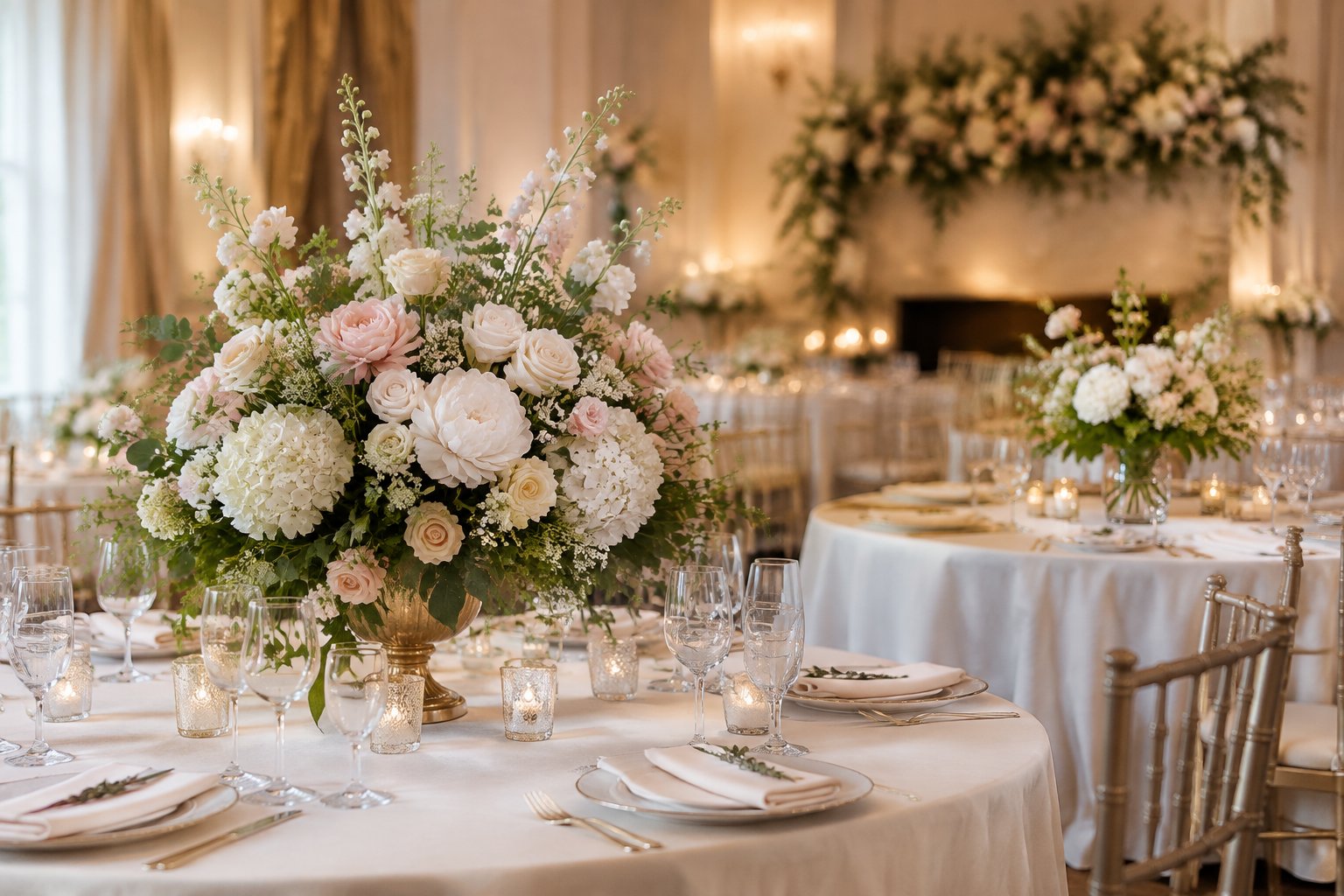
Which Blooms Cost More Than Others?
Peonies, garden roses, orchids, hydrangeas, lily of the valley, and gardenias often sit at the higher end of wedding flower pricing. Their cost reflects demand, growing conditions, availability, fragility, or import needs.
Standard roses, carnations, chrysanthemums, daisies, and baby’s breath provide dependable volume at a lower price point. Ranunculus and dahlias add texture, though their price changes with season and supply.
You can reserve premium blooms for the bridal bouquet, sweetheart table, or a few focal centrepieces. Use standard roses, greenery, or filler flowers throughout the remaining designs.
For more detail on premium choices, see which flowers are most expensive for a wedding.
Why Seasonality and Imports Matter
In-season flowers are easier to source during their natural growing period and often offer better value. Imported flowers include added shipping, handling, and supply costs.
Your wedding date also affects availability around major floral holidays. A florist can recommend a local or seasonal substitute with a similar color, shape, or texture.
Give your florist a flexible flower list when possible. Naming a palette and design feeling allows the studio to select blooms that suit the date and the quote.
Simple Arrangements vs. Complex Installations
A compact hand-tied bouquet uses fewer stems and less construction time than a cascading bouquet. A low compote centrepiece also needs fewer mechanics than a tall arrangement on a stand.
Complex installations require on-site building, secure mechanics, extra tools, and more crew time. Arches, floral meadows, hanging pieces, and suspended flowers need venue approval and careful installation planning.
A focused design with two or three flower varieties costs less to source than a recipe containing many specialty blooms. Greenery such as eucalyptus, ferns, and ruscus adds shape while reducing the number of focal flowers needed.
Seasonal Flower Choices for Every Reception Style
Seasonal flowers give you more reliable availability and help your reception budget stretch further. Your florist can pair local blooms with foliage, filler flowers, and a small number of premium stems to match your color palette.
Availability varies by region and weather, so treat seasonal lists as planning ideas. Ask for substitutions before you approve a fixed flower recipe.
Spring and Summer Flower Options
Spring receptions suit tulips, anemones, sweet peas, freesia, ranunculus, peonies, and snapdragons. These flowers bring soft movement, bright color, or romantic texture to low centrepieces and bouquets.
Summer offers sunflowers, dahlias, lisianthus, zinnias, hydrangeas, roses, and calla lilies. Sunflowers and zinnias bring strong color at a friendly price. Lisianthus fills arrangements with ruffled texture, while calla lilies create a clean, modern line.
Warm weather affects flower care. Ask how the florist will keep hydrangeas, sweet peas, and other delicate blooms hydrated during delivery and setup.
Autumn and Winter Flower Options
Autumn receptions work well with dahlias, chrysanthemums, zinnias, roses, carnations, sunflowers, and calla lilies. Deep red, rust, gold, cream, and blush palettes give seasonal flowers a rich appearance.
Winter designs can include amaryllis, anemones, roses, carnations, chrysanthemums, freesia, and baby’s breath. Evergreens and other winter foliage add structure when fewer local blooms are available.
Holiday demand can affect certain flowers and colors. Share your date early if you want a specific winter bloom or a large quantity.
Affordable Flowers That Still Look Full
Carnations, chrysanthemums, daisies, baby’s breath, standard roses, lisianthus, and greenery create fullness without relying on premium stems. Eucalyptus, ferns, and ruscus add texture across tables and installations.
A greenery-heavy design with focused color flowers gives tables visual volume. Dense baby’s breath creates a soft cloud effect, while carnations provide layered petals in many colors.
Ask for a recipe built around two or three affordable flowers, one focal bloom, and seasonal foliage. This gives your florist room to source well-priced materials for your date.
Ways to Reduce Reception Flower Costs Without Losing Impact
The most effective ways to reduce reception flower costs are reusing ceremony flowers, choosing fewer focal areas, and asking for an itemized proposal. These steps preserve the parts guests see for hours while trimming details with less visual value.
Share your spending limit before the design is complete. Your florist can change stem counts, vessel sizes, flower varieties, and placement before the proposal becomes difficult to revise.
Reuse Ceremony Arrangements at the Reception
Ceremony arrangements can move to the reception entrance, sweetheart table, bar, or guest tables. Aisle arrangements can become cocktail-hour flowers, and altar arrangements can frame the head table after the ceremony.
Ask about labor and timing before counting on reuse. Large arches and floral installations need a crew, transport equipment, and enough time between events.
Bridesmaid bouquets can sit in reception vases after the processional. This approach gives the flowers a second location while reducing the number of separate centrepieces you need.
Choose Fewer High-Impact Floral Moments
Protect your bridal bouquet, guest tables, and one ceremony or reception focal point. Reduce flowers at secondary spaces such as restrooms, cocktail tables, chair backs, or every section of the welcome area.
Use candles, linens, glassware, and greenery to fill visual space. Alternating fuller centrepieces with bud vase groupings creates rhythm across the room and lowers the per-table average.
You can also reduce the size of a cascading bouquet, choose a compact hand-tied bouquet, or keep premium blooms for one arrangement. A few peonies or orchids create focus without filling every vase.
Questions to Ask Before Approving the Proposal
Ask your florist:
-
What is included in the design, delivery, setup, and breakdown fees?
-
Are taxes, rentals, candles, vessels, and mileage included?
-
Which flowers are in season on your wedding date?
-
What substitutions will you make if a flower is unavailable?
-
Can ceremony arrangements move to the reception?
-
Who handles transport and repositioning?
-
How many tables and arrangements does the quote cover?
-
Which items can you remove to meet your wedding flower budget?
-
When is the final guest count due?
-
What deposit and payment schedule applies?
Request an itemized proposal with quantities, per-item prices, service charges, and the final total. You can then compare florist quotes using the same reception plan.