
Flowers for Weddings Cost: 2026 Pricing Guide
Flowers for weddings cost about $2,500 to $8,000 for many U.S. couples in 2026, with smaller floral plans starting near $1,500 and elaborate designs reaching $10,000 or more. Your final wedding flower cost depends on the guest count, flower varieties, season, design size, delivery distance, and installation work.
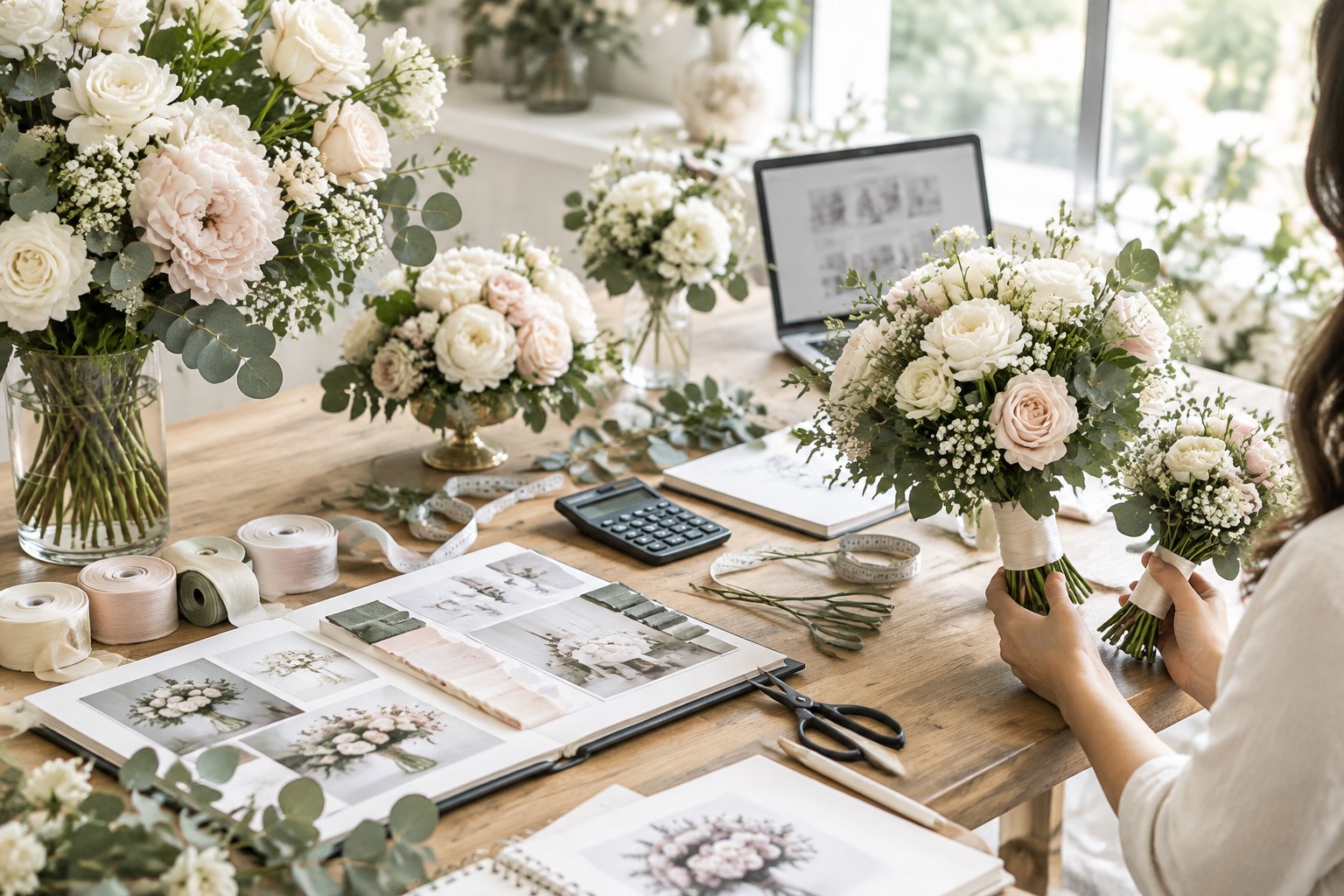
A practical starting point is 8% to 12% of your wedding budget. A $40,000 wedding, for example, might set aside $3,200 to $4,800 for wedding florals. A ceremony arch, premium blooms, large centerpieces, and full-service setup push the number higher.
Set your target before requesting proposals, then tell a wedding florist which pieces deserve the most attention. You can also compare ideas and budget priorities through this guide to how much should I spend on flowers for my wedding before booking a consultation.
2026 Price Snapshot and Budget Tiers
The average wedding flower cost falls near $2,500 to $5,000 for a moderate celebration, while full-service floral design with installations often reaches $5,000 to $8,000 or more. Your wedding flower budget becomes easier to manage when you separate personal flowers, ceremony designs, reception decor, and service fees.
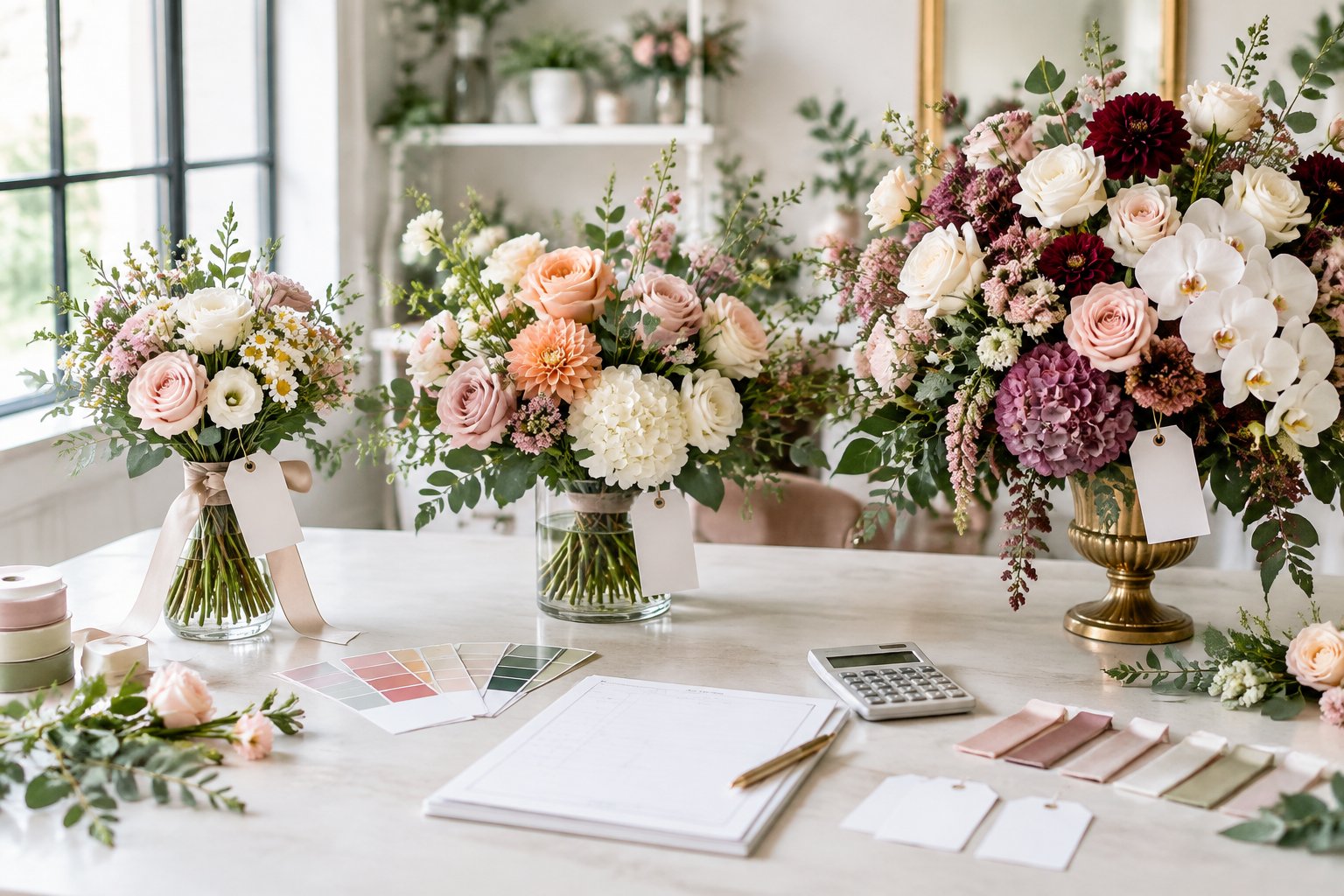
What Is the Average Wedding Flower Cost?
National averages differ because some estimates count bouquets and centerpieces only, while others include design labor, rentals, delivery, setup, and breakdown. Use these ranges as planning guidance:
|
Floral plan |
Typical 2026 budget |
What it may include |
|---|---|---|
|
Focused |
$1,500-$2,500 |
Bridal bouquet, personal flowers, simple table flowers |
|
Moderate |
$2,500-$5,000 |
Personal flowers, centerpieces, ceremony accents |
|
Full-service |
$5,000-$8,000 |
Arch or backdrop, reception designs, delivery, setup |
|
Design-forward |
$8,000-$12,000+ |
Large installations, premium blooms, dense tablescapes |
Your quote may include a product markup, design labor, flower processing, mechanics, refrigeration, transportation, setup, and removal. Ask whether taxes, rentals, candles, and venue fees appear separately.
What Can Each Budget Tier Realistically Cover?
A budget below $2,500 works best when you choose a small number of floral features. You might prioritize a bridal bouquet, a few bridesmaid bouquets, boutonnieres, bud vases, and candles.
At $2,500 to $5,000, you can add fuller reception centerpieces and a ceremony focal point. A modest arch cluster, aisle markers, or altar arrangements may fit when the table designs stay compact.
At $5,000 to $8,000, you have room for a larger ceremony design, more abundant reception flowers, and professional delivery and setup. You can also use premium flowers in selected pieces.
Budgets above $8,000 support floral installations, full floral arches, hanging designs, lush head tables, and more complex venue transformations. Labor and rental needs rise with the size of each design.
How Does Guest Count Change the Total?
Guest count affects costs through the number of tables, personal flowers, and service needs. A 50-person wedding might use six to eight centerpieces, while a 150-person wedding could need 15 to 20.
A rough planning range of $25 to $35 per guest suits a moderate floral plan, though a ceremony arch or premium flower request can change the result. Venue layout also matters. Long tables, cocktail areas, lounge spaces, and multiple rooms require more decor points than a compact reception.
Costs by Floral Category
Personal flowers often begin around $700, while ceremony and reception designs create the largest swings in a wedding flower cost breakdown. Prices rise with size, stem count, premium varieties, custom mechanics, and the labor required to install each piece.
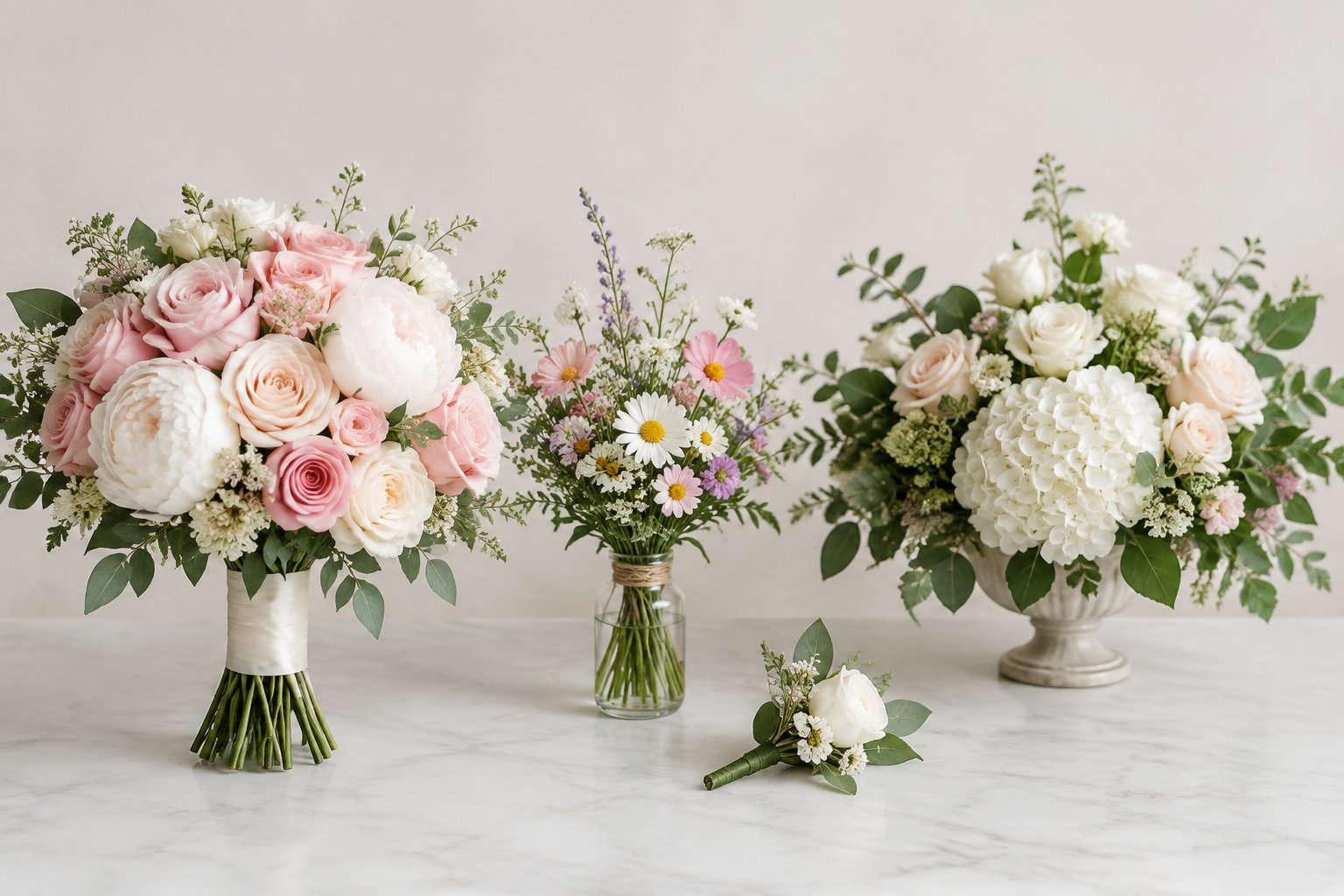
Personal Flowers: Bouquets, Boutonnieres, and Corsages
Personal flowers travel with the wedding party, so quantities grow with your attendants and family members.
|
Item |
Common 2026 range |
|---|---|
|
Bridal bouquet |
$150-$350 |
|
Premium bridal bouquet |
$350-$600+ |
|
Bridesmaid bouquet |
$75-$150 each |
|
Boutonniere |
$15-$35 each |
|
Corsage |
$35-$75 each |
|
Toss bouquet |
$40-$100 |
|
Hair flowers |
$25-$150 |
|
Flower girl petals or posy |
$25-$100 |
A bridal bouquet uses more design time than a standard hand-tied bouquet when it includes cascading movement, wired flowers, special ribbon, or many varieties. A simple collection of standard roses, greenery, and seasonal blooms keeps the price more controlled.
Ceremony Designs: Arches, Aisles, and Altars
Ceremony flowers range from a few aisle arrangements to a full floral arch.
-
Aisle markers: $40-$150 each
-
Aisle arrangements: $75-$250 each
-
Altar arrangements: $250-$900 each
-
Partial ceremony arch: $800-$2,000
-
Full floral arch: $2,000-$5,000+
-
Ceremony backdrop: $1,000-$4,000+
A floral arch needs mechanics, structural support, transport, and installation time. A partial design concentrated at the top or sides creates a strong focal point with fewer stems than full coverage.
Reception Designs: Centerpieces and Table Flowers
Reception flowers often become the largest repeat expense because each guest table needs a design.
-
Bud vase grouping: $50-$125 per table
-
Low centerpiece: $100-$300 per table
-
Tall centerpiece: $200-$500+ per table
-
Sweetheart table flowers: $150-$600
-
Head table garland: $500-$2,000+
-
Cake flowers: $50-$250
-
Bar or welcome table flowers: $75-$300
Vases, candles, floral decor, table shape, and centerpiece height all affect the quote. Alternating statement centerpieces with smaller arrangements gives you visual variety and reduces the number of large designs.
Extras, Rentals, Delivery, and Setup
Florists may charge separately for vases, compotes, arches, stands, candles, aisle structures, and other rental items. Rental fees cover inventory, cleaning, storage, transport, and return handling.
Delivery and setup often range from $300 to $1,500 for a standard event. Large venues, long travel distances, tight loading areas, room flips, and complex floral installations can raise that amount significantly. Breakdown may add another fee when the florist returns after the reception to remove rentals and clear floral materials.
What Makes a Floral Quote Go Up or Down?
Flower choice, availability, design labor, and venue logistics drive most changes in a floral quote. Two proposals with the same color palette can differ widely when one uses premium flowers, larger arrangements, or more extensive on-site service.
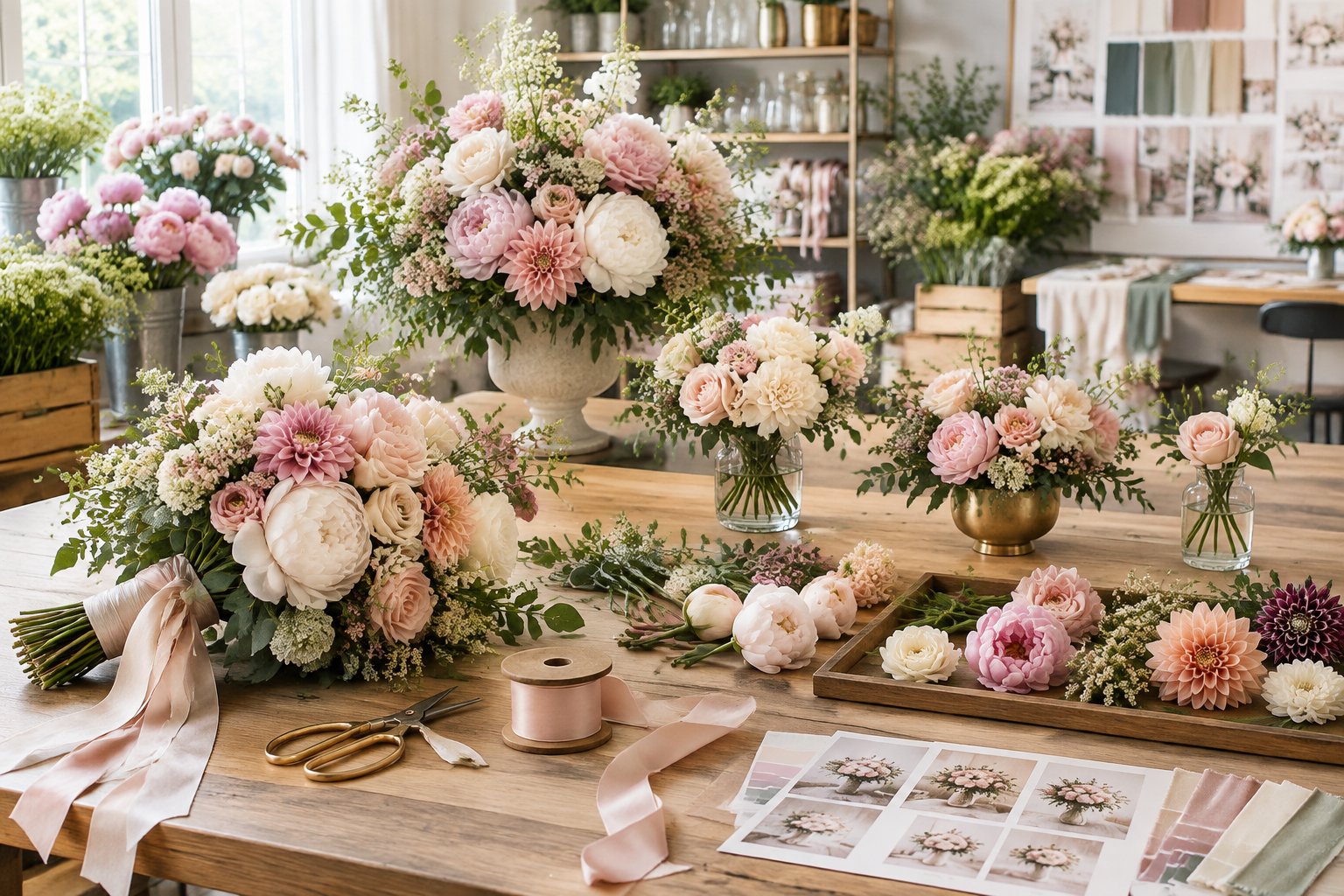
Flower Variety, Seasonality, and Availability
In-season flowers cost less to source and offer better availability for your wedding date. Out-of-season flowers may require imports, special ordering, or flexible substitutions.
Premium flowers such as peonies, garden roses, orchids, and lily of the valley can raise material costs quickly. Standard roses, hydrangeas, ranunculus, dahlias, and lisianthus offer a broad range of colors and textures at different price points.
Your wedding flowers by season may include:
-
Spring: tulips, ranunculus, sweet peas, peonies when available
-
Summer: dahlias, garden roses, lisianthus, hydrangeas
-
Fall: dahlias, chrysanthemums, roses, textured foliage
-
Winter: roses, orchids, evergreens, berries, dried accents
Ask your florist which in-season blooms match your color palette. You can keep the shape and mood of an inspiration bouquet while changing the exact flowers.
Design Complexity and Installation Labor
A florist prices time as well as fresh flowers. A compact hand-tied bouquet takes less work than a cascading design with wired stems, special mechanics, and trailing movement.
A floral installation requires preparation, transport, construction, placement, and removal. Large arches, hanging flowers, ceiling designs, and floral walls may need multiple team members and venue approval.
Labor also covers flower processing. Stems must be hydrated, cleaned, trimmed, sorted, stored, and checked before design begins. The quote reflects this preparation even though it happens before your wedding day.
Venue Logistics and Professional Services
Your venue affects the cost through travel, parking, elevator access, load-in rules, setup windows, and room changes. A ceremony and reception in separate spaces may require a second crew or a planned floral move.
A professional florist also manages ordering, substitutions, weather concerns, storage, packing, delivery, and on-site adjustments. Share your wedding date, venue address, timeline, floor plan, and color palette before the proposal is prepared so the estimate reflects the actual work.
How to Allocate Your Floral Budget
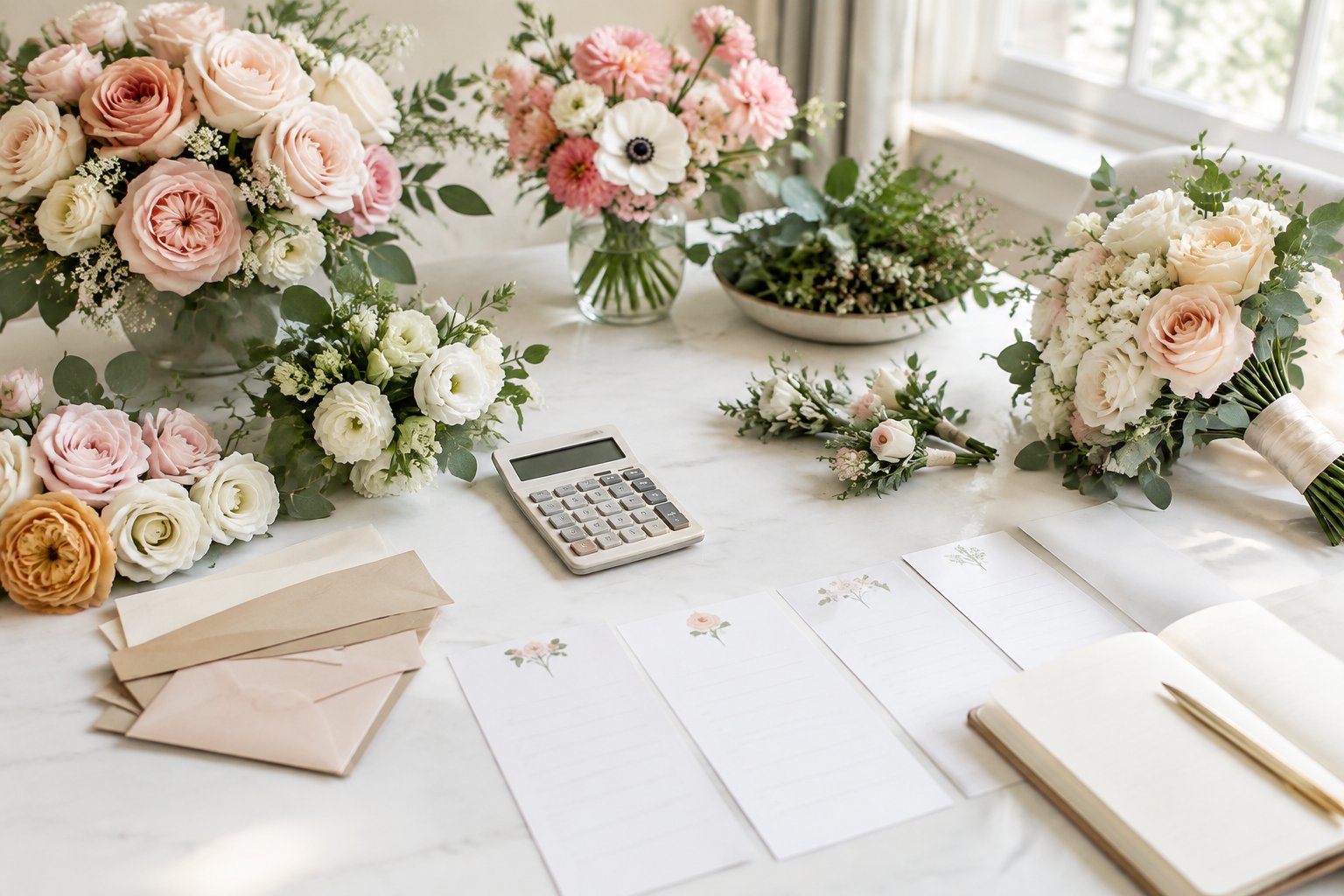
Put the largest share of your wedding flower budget into the pieces guests and cameras see for the longest time. A strong bridal bouquet, one ceremony focal point, and attractive reception tables create a complete look without decorating every surface.
Choose the Details That Matter Most in Photos
Your bridal bouquet appears in portraits, detail photos, and ceremony images, so give it room in the budget. A ceremony backdrop also creates a repeated visual setting for vows and group photographs.
Choose one or two high-impact wedding flower ideas, then keep supporting pieces lighter. A floral arch with concentrated flowers can anchor the ceremony while greenery fills the remaining structure.
Balance Statement Pieces With Table Decor
Reception tables occupy the space where guests spend much of the evening. Use one larger design at the sweetheart table or head table, then pair it with smaller guest-table arrangements.
Greenery such as eucalyptus, ruscus, ferns, and baby’s breath adds volume and texture. A greenery-forward design lets you reduce premium flower quantities while keeping tables full.
Create a Must-Have and Flexible-Bloom List
Write two lists before your florist meeting:
-
Must-have details: bridal bouquet, ceremony focal point, centerpieces, or a specific flower
-
Flexible details: flower varieties, aisle markers, cake flowers, hair flowers, or centerpiece vessels
Give your florist permission to replace a costly bloom with a similar option. You can protect the shape, color, and texture of the design while adjusting the stem list to fit your wedding flower budget.
Smart Ways to Reduce Spend Without a Sparse Look
The most effective savings come from seasonal flowers, planned reuse, fewer large arrangements, and added texture from candles or greenery. These choices reduce material and labor costs while keeping the room intentional.
Use Seasonal, Flexible, and Value-Friendly Blooms
Ask for flowers that are in season on your wedding date. Roses, carnations, chrysanthemums, daisies, and many types of greenery offer reliable color and volume. A florist can use a few premium stems as focal points and fill the rest with value-friendly blooms.
Carnations work well in dense arrangements, while chrysanthemums provide many shapes and colors. Daisies add a relaxed garden feel. A small amount of a specialty flower such as a poppy creates interest without filling every bouquet with expensive stems.
Repurpose Ceremony Flowers for the Reception
Design ceremony pieces so they can move to the reception. Aisle arrangements can decorate the welcome table, altar flowers can frame the sweetheart table, and arch flowers can be divided into smaller reception arrangements.
Ask about the labor and timing before approving this plan. Moving a large installation requires staff, access to both spaces, and a realistic transition window. A single-venue ceremony and reception make reuse easier.
Simplify Arrangement Counts and Add Non-Floral Texture
Reduce the number of large centerpieces by alternating them with bud vases, greenery clusters, or candles. Vases and candles add height, glow, and structure while using fewer fresh stems.
You can also remove low-priority pieces such as extra cocktail-hour arrangements, a large cake installation, or many aisle markers. Keep the designs that frame your ceremony, bridal portraits, and guest tables.
How to Compare Florist Proposals
Compare proposals by scope, flower quality, design scale, labor, and service details instead of comparing the final totals alone. A lower quote may include smaller arrangements or delivery-only service, while a higher quote may include installation, rentals, room flips, and breakdown.
What Should Be Included in an Itemized Quote?
Request line items for:
-
Bridal bouquet, bridesmaid bouquets, and personal flowers
-
Boutonnieres, corsages, toss bouquet, and hair flowers
-
Ceremony arch, backdrop, altar arrangements, and aisle markers
-
Reception centerpieces, sweetheart table flowers, and head table garland
-
Cake flowers, welcome flowers, and other accents
-
Vases, candles, stands, and floral rentals
-
Fresh flowers, greenery, mechanics, design labor, and service fees
-
Delivery, setup, repurposing, breakdown, tax, and travel charges
The proposal should state arrangement sizes or show examples of comparable work. Ask whether the quoted flowers are specific varieties or a color-and-texture plan.
Questions to Ask About Substitutions and Rentals
Ask your wedding florist:
-
What happens if a requested flower becomes unavailable?
-
Will you contact me before making a major substitution?
-
Which rentals belong to your inventory, and what happens if an item breaks?
-
Does setup include candles, aisle pieces, and reception tables?
-
Is repurposing included, and who moves the flowers?
-
Does the price include breakdown and rental collection?
-
How many team members will arrive at the venue?
A clear substitution policy protects your color palette and design style when fresh flowers change in quality or availability.
When DIY and Wholesale Flowers Make Sense
DIY flowers fit smaller, flexible designs such as bud vases, simple centerpieces, or greenery arrangements. You need time for pickup, hydration, trimming, arranging, storage, transport, and cleanup. A wholesale plan can reduce product costs, though it shifts the work and risk to you or your helpers.
Professional service suits arches, large installations, personal flowers, and weddings with tight setup windows. If you are comparing DIY with a florist, include cool storage, supplies, delivery, labor, waste, and the cost of your own time. For a deeper cost comparison, see is it cheaper to buy your own flowers for wedding.