
Free Wedding Venues Near the Beach: Low-Cost Ideas
You can find free wedding venues near the beach by choosing a public shoreline, city park, family backyard, or community space that allows small ceremonies. A free wedding ceremony usually works best with a short guest list, light décor, and careful attention to permits, access, and cleanup rules.
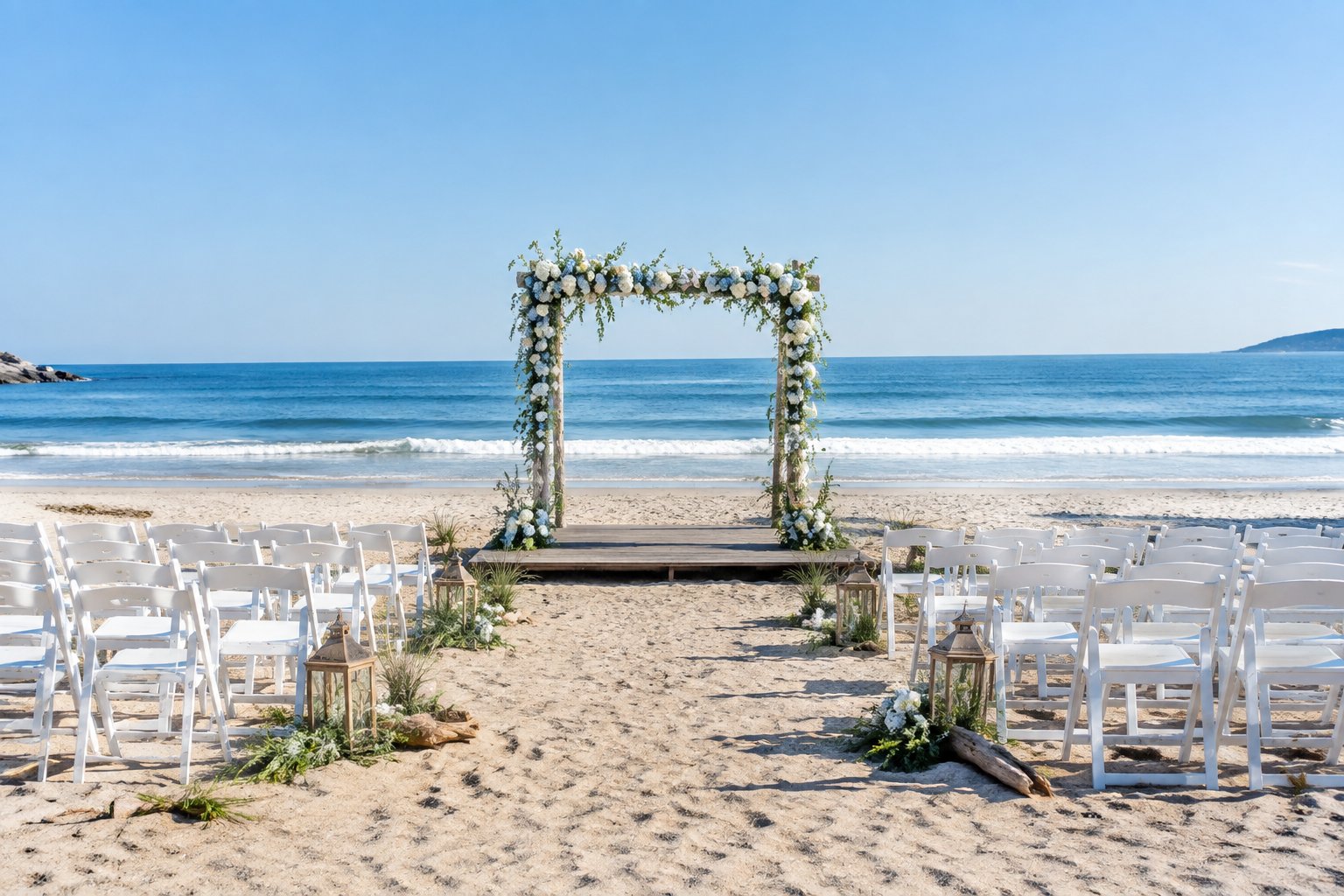
Public beaches and waterfront parks give you a beautiful setting without a traditional venue rental. A backyard wedding can offer more privacy and easier access to restrooms, power, and food. You still need to budget for items such as a marriage license, officiant, photography, transportation, permits, and guest comfort.
For more ways to keep your celebration affordable, explore these beach wedding ideas on a budget. Then contact the local parks department or property owner before setting your date so you can confirm the rules and reserve the space when required.
What Makes a Coastal Ceremony Truly Free?
A coastal ceremony is free when the location has no rental charge and your event follows its public-use rules. You may still pay for legal documents, an officiant, permits, transportation, rentals, or cleanup.
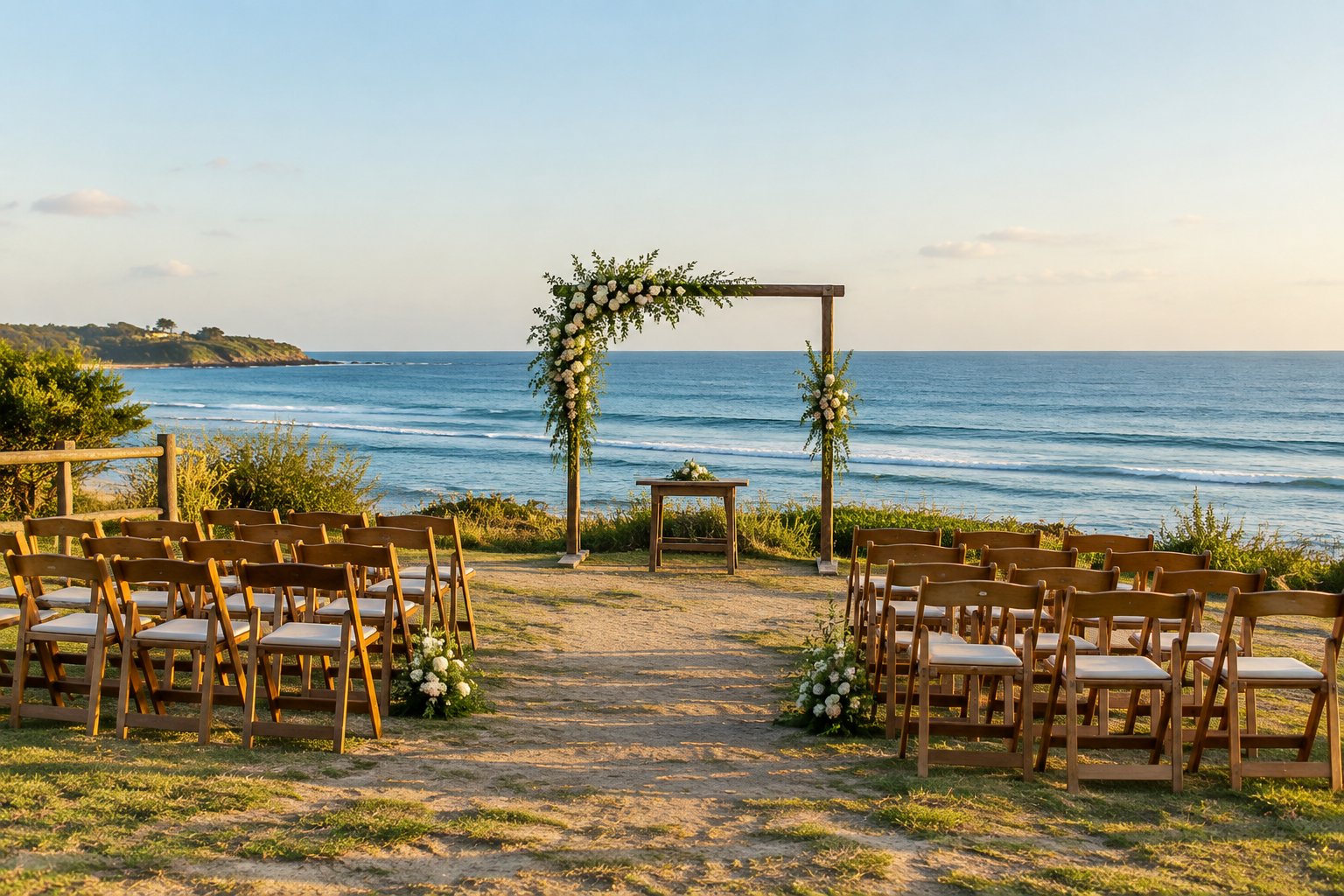
A free wedding venue works best for an intimate outdoor wedding with minimal equipment. Ask the land manager about the ceremony area, time limits, guest capacity, sound rules, and restrictions on décor. A local city hall can help direct you to the agency that manages a nearby beach or waterfront property.
When a Public Space Requires a Permit or Reservation
A public beach or park may require a permit when your ceremony includes a larger group, reserved seating, an arch, amplified sound, professional vendors, or a blocked-off area. Some locations also require reservations for specific dates or popular ceremony sites.
Check the official city, county, state, or federal land agency before sending invitations. Ask these questions:
-
Is a permit required for a wedding ceremony?
-
Does the permit have a fee?
-
How many guests are allowed?
-
Can you bring chairs, flowers, or an arch?
-
Are ceremonies limited to certain hours?
-
Does the beach have seasonal wildlife protections?
-
Who handles trash and cleanup?
Keep written confirmation with your wedding planning documents.
Costs That Can Still Apply Beyond the Venue
The venue fee is only one part of your budget. You may need a marriage license, an authorized officiant, witness arrangements, attire, transportation, photography, flowers, restroom access, and a backup location.
Public beaches often lack power, storage, lighting, and staff. A battery-powered speaker, water station, shade canopy, or portable restroom adds cost and may trigger another approval. A friend or family member might officiate after meeting your state’s legal requirements, though rules differ by location.
How Guest Count and Equipment Change the Rules
A two-person elopement receives different treatment from a ceremony with 75 guests and rented furniture. As your guest count grows, the site manager may classify the gathering as a special event.
Create a basic equipment list before asking for approval. Include chairs, an arbor, signs, speakers, coolers, umbrellas, tables, and photography gear. A small ceremony with guests standing on the sand has fewer planning demands than a full setup with rented equipment.
Best Public Places Near the Shore
Public beaches, coastal parks, open fields, waterfront lookouts, and selected gardens offer the strongest free venue possibilities near the shore. Each location gives you a different mix of scenery, privacy, access, and local rules.
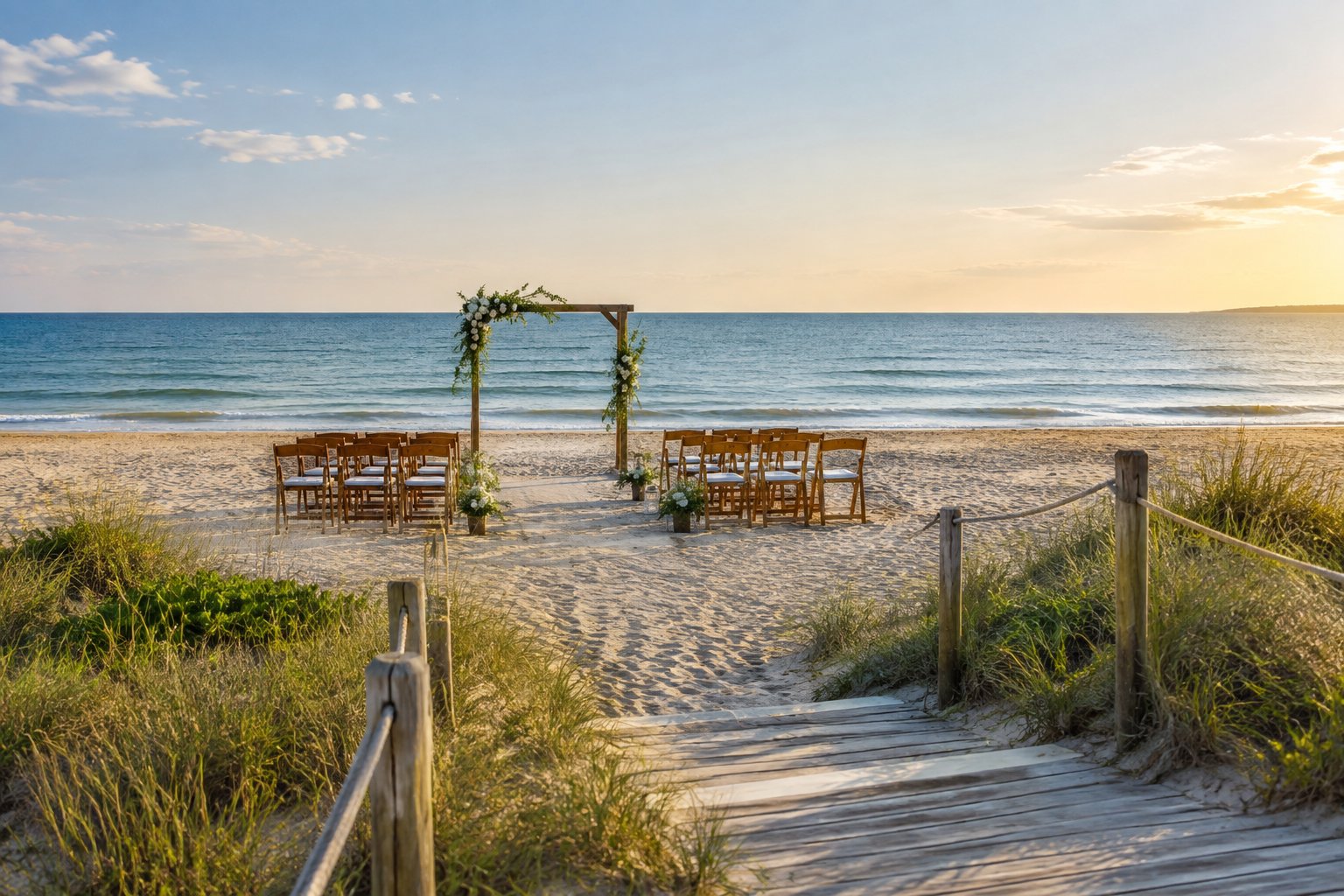
Search your city, county, state, and nearby coastal towns for public access points. Visit each site at the proposed ceremony time to check noise, shade, parking, walking surfaces, and crowd levels.
Public Beaches for Simple Beach Weddings
Public beaches are a natural choice for beach weddings because the shoreline provides the backdrop and needs little decoration. Choose a quieter access point with enough room for guests to gather without blocking other visitors.
Ask about parking fees, restrooms, beach closures, ceremony permits, alcohol rules, music, and cleanup. Plan for passersby because public beaches remain open to the community. A short ceremony with standing guests, handheld flowers, and no large structures keeps the setup light.
Schedule early morning or weekday beach weddings for quieter conditions. Tell guests to wear flat shoes or bring footwear that works in sand.
Parks, Fields, and Waterfront Lookouts
Coastal parks and fields give you firmer ground, trees for shade, and access to benches or picnic areas. A waterfront lookout can provide ocean views without placing every guest on the sand.
Look for:
-
Grass near a beach access point
-
A public pier or harbor overlook
-
A field beside a coastal trail
-
A park shelter with a water view
-
A lakefront or riverside public space
Review rules for reserved areas, vehicle access, decorations, amplified sound, and food. Fields may have uneven ground, while lookouts can expose guests to strong wind. Choose a site with a clear walking route for older guests and anyone using mobility equipment.
Botanical Gardens Near the Coast
Botanical gardens can provide flowers, paths, shade, and a polished setting near the coast. Some gardens allow small ceremonies in public areas or offer free access during specific hours. Others charge for reserved event spaces or require membership.
Contact the garden office with your guest count and ceremony plan. Ask whether you can bring flowers, photography equipment, chairs, or outside vendors. Stay on marked paths and protect planted areas. A garden ceremony followed by beach portraits gives you two coastal settings without building a large ceremony installation.
Private and Community Options That Save Money
Backyards, community buildings, educational campuses, libraries, vacation rentals, and welcoming restaurants can provide privacy and useful facilities at little or no venue cost. These options work well when you want a coastal setting with easier access to bathrooms, food, shade, or power.
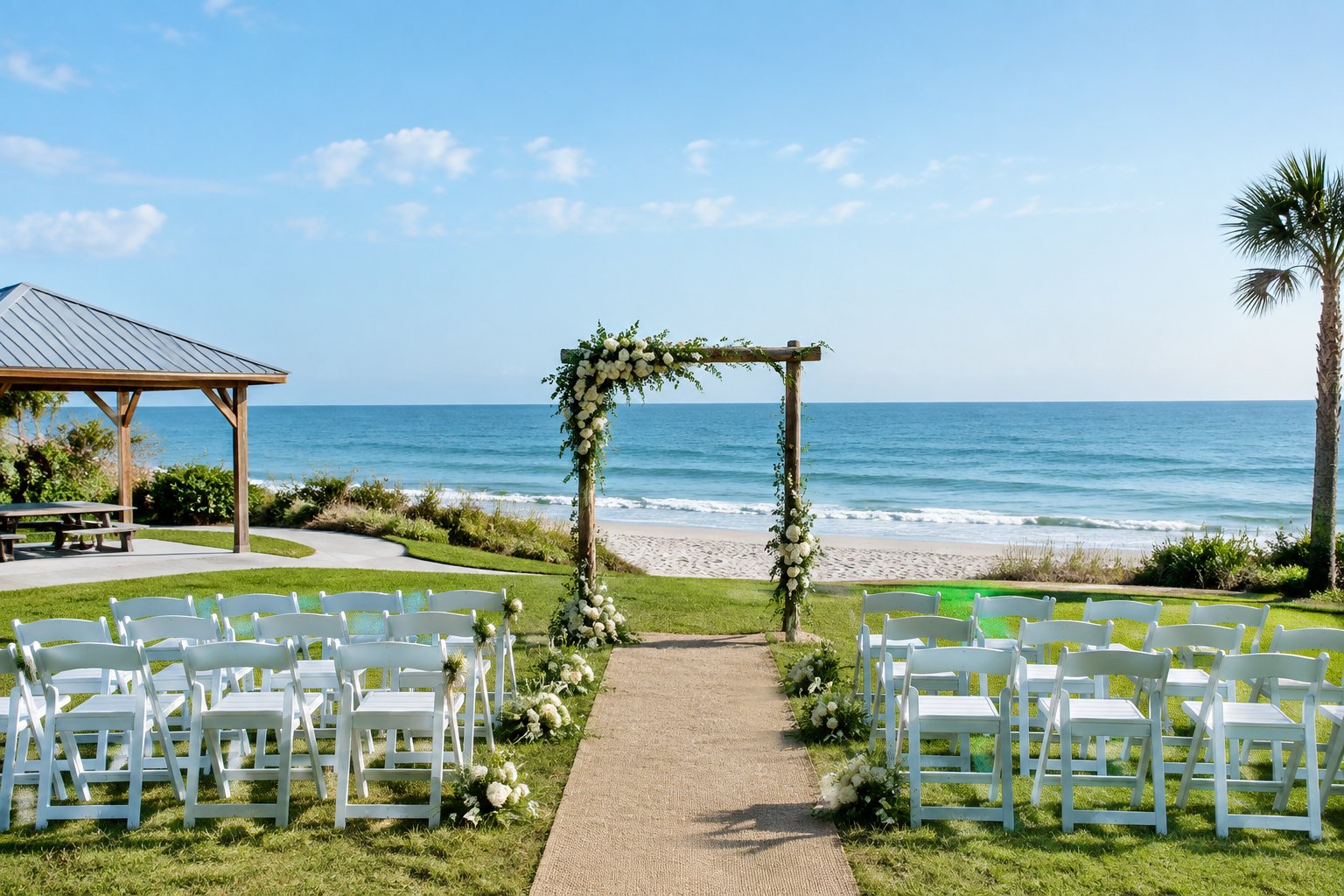
Start with people and places connected to your community. A property owner, school administrator, library director, or restaurant manager might approve a short ceremony when you explain the guest count, timing, cleanup plan, and insurance needs.
Backyard Weddings and Private Residences
A backyard wedding gives you control over the guest list, schedule, food, music, and restroom access. A home near the beach can create a coastal feel with a short walk to the shoreline for photos.
Confirm that the property has enough parking and space for guests to move safely. Check local noise rules, neighborhood restrictions, tent requirements, and any homeowners association policies. Use the home’s existing furniture, potted plants, string lights, and kitchen to reduce rentals.
If the backyard belongs to a friend or relative, write down the event plan and cleanup responsibilities. Clear expectations protect the relationship and help you plan confidently.
Community Centers With Coastal Access
A community center near the water may offer a free room or outdoor area to residents, members, nonprofit groups, or local families. Some include tables, chairs, restrooms, a kitchen, and indoor space for weather changes.
Ask about resident discounts, deposits, insurance, cleaning, key pickup, and closing times. A center within walking distance of a public beach lets you hold the ceremony outdoors and use the building for refreshments or shelter.
Schools, Colleges, and Libraries
Schools, colleges, and libraries sometimes approve small ceremonies for alumni, staff, faculty, students, or community members. A campus garden, courtyard, reading room, or historic building can add personal meaning to your day.
Contact the facilities or events office before planning around a specific space. Ask about campus access, security, photography, decorations, parking, and weekend availability. Libraries may have conference rooms or reading areas that suit a short ceremony, while colleges often have landscaped grounds near waterfront districts.
Vacation Rentals and Restaurants With a View
Vacation rentals and restaurants are rarely free for a full wedding, yet an owner or manager might approve a brief ceremony with a meal purchase or minimum spend. This approach can cost less than a traditional venue and gives you access to restrooms, seating, staff, and food.
Read rental agreements carefully. Many prohibit events, extra guests, amplified music, or decorations. Ask for written permission and confirm who handles cleanup. Restaurants may offer a private patio, garden, or terrace for a small ceremony when your group books a meal.
Creative Alternatives to a Sand-Front Ceremony
A courthouse, museum, art gallery, or affordable indoor space can handle the legal ceremony while the coast provides the scenery for portraits and a relaxed celebration. This format reduces exposure to wind, crowds, tides, and complicated beach equipment.
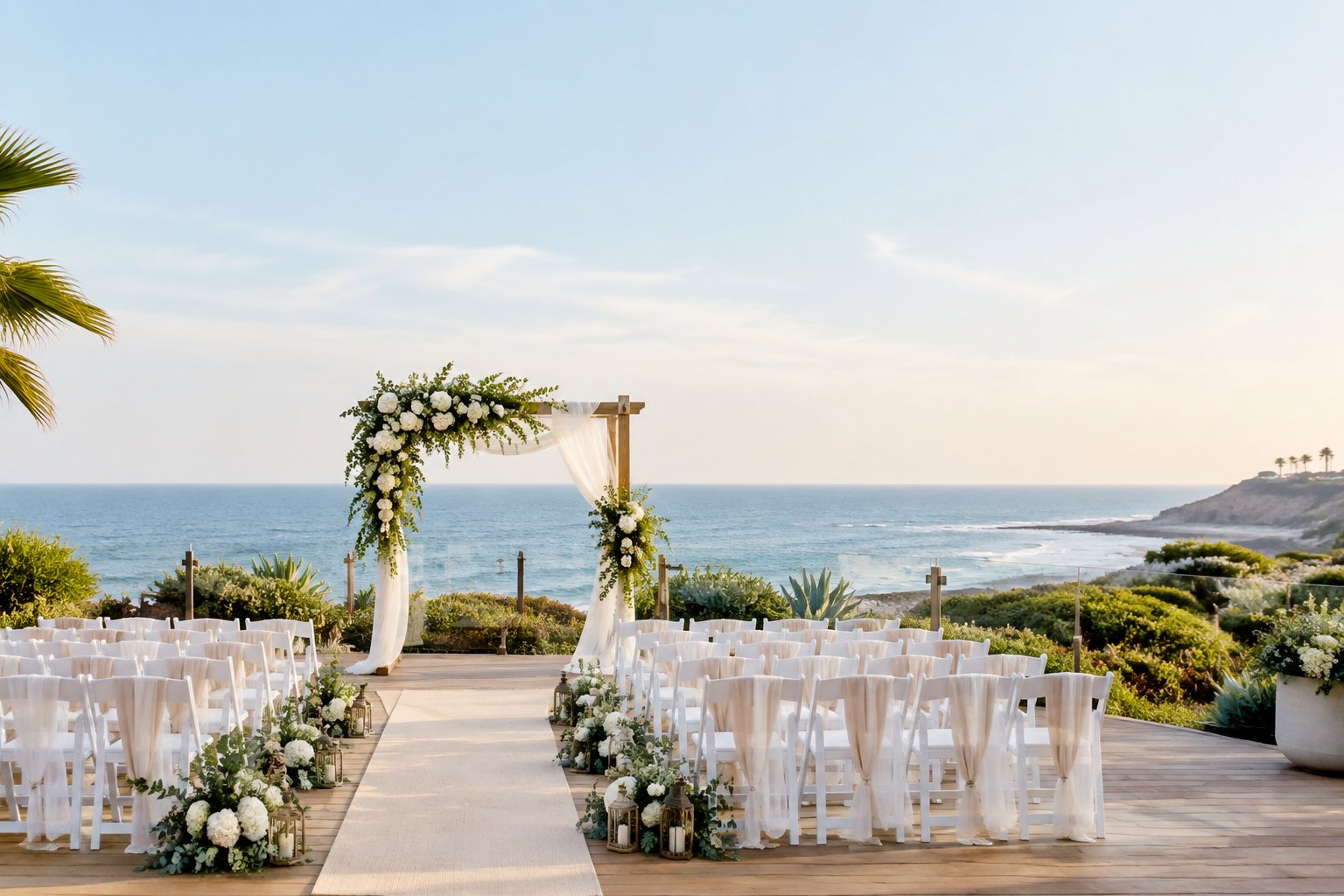
You can keep the ceremony short and use the savings for photography, a meal, or transportation. Review these civil wedding ideas if you want a simple legal format with personal touches.
Courthouse Weddings Followed by Beach Photos
A courthouse wedding provides a structured setting for signing documents and completing legal steps. Afterward, travel to a public beach for portraits, private vows, or a small picnic if local rules allow it.
Check courthouse appointment policies, identification requirements, witness rules, marriage license timing, and photography limits. Reserve a photographer for both locations and allow time for traffic, parking, changing clothes, and tides.
Museum Weddings and Art Gallery Spaces
Museums and art galleries offer character, shelter, and built-in décor through exhibits, architecture, and artwork. A small museum wedding might be free through a community program, membership, alumni connection, or short ceremony policy. Gallery managers may also offer reduced rates during quiet hours.
Ask about guest capacity, food, photography, flash use, decorations, accessibility, and event insurance. Choose a space with nearby waterfront access if you want coastal portraits after the vows.
How to Pair a Free Ceremony With an Affordable Reception
Hold the legal ceremony at a free public or civic location, then choose a low-cost meal format. Options include a family backyard, a public picnic area with approval, a restaurant lunch, or a reserved room at a community center.
Keep the transition easy by choosing locations within a short drive. Use digital invitations, grocery-store flowers, a playlist that follows sound rules, and a small dessert. A ceremony and reception do not need the same venue to feel connected, so use a shared color palette or meaningful coastal detail across both spaces.
How to Plan for Weather, Access, and Guest Comfort
Your coastal wedding plan needs a weather decision, an access plan, and a guest-comfort checklist before you confirm the venue. Wind, tides, heat, rain, crowds, parking, and uneven surfaces affect the ceremony even when the location has no rental fee.
Review the site in person and create a written plan for setup, ceremony length, photography, cleanup, and relocation. Share footwear, parking, and weather details with guests before the wedding day.
Choosing the Right Time Around Tides, Wind, and Crowds
Check tide charts when the ceremony area sits close to the waterline. Leave room for changing conditions and choose a higher, stable area when possible. Visit at the same time of day as your ceremony to observe sun, shade, wind, noise, and foot traffic.
Early mornings and weekdays often bring calmer conditions and fewer visitors. Sunset offers soft light, yet it can bring cooler temperatures, stronger wind, and limited visibility after the ceremony. Keep the vows brief and schedule portraits before the light fades.
Handling Parking, Restrooms, and Accessibility
Select a site with nearby parking, clear directions, restrooms, and a firm route from the arrival point to the ceremony. Sand, stairs, rocks, and long paths can create barriers for guests with mobility needs.
Tell guests where to park and whether fees apply. Arrange carpooling when spaces are limited. Provide water, shade, sunscreen, light layers, and seating for anyone who needs a break. Portable restrooms, beach wheelchairs, or accessible mats require early approval and may add fees.
Creating a Simple Setup That Follows Local Rules
Use lightweight décor that stays secure in wind and fits the site’s rules. Battery candles, weighted floral containers, handheld bouquets, and a small sign create atmosphere without a large installation.
Confirm rules for chairs, arches, tents, music, confetti, flowers, alcohol, pets, drones, and cleanup. Assign one person to carry the permit, monitor the setup, collect trash, and remove every item after the ceremony. Bring a backup plan that names the alternate location, decision time, transportation method, and guest communication channel.