
Garden Party Wedding Venues: How to Choose Yours
A garden party wedding gives you romance, fresh air, and a built-in backdrop of flowers and greenery. The best garden party wedding venues pair that beauty with practical features such as a weather backup, comfortable guest access, reliable restrooms, and enough space for every part of your celebration.
For most couples, a botanical garden or private estate with a covered backup space is the strongest choice because it offers established landscaping, photo-ready ceremony areas, and a clear plan for changing weather. A backyard, farm, conservatory, or historic property can suit you just as well when its layout, rules, and guest capacity match your plans.
Visit potential venues during the same season and time of day as your wedding. Ask to see the ceremony site, reception area, rain plan, vendor access, and guest routes before you sign. Browse these garden wedding ideas for design inspiration, then use your shortlist to schedule venue tours.
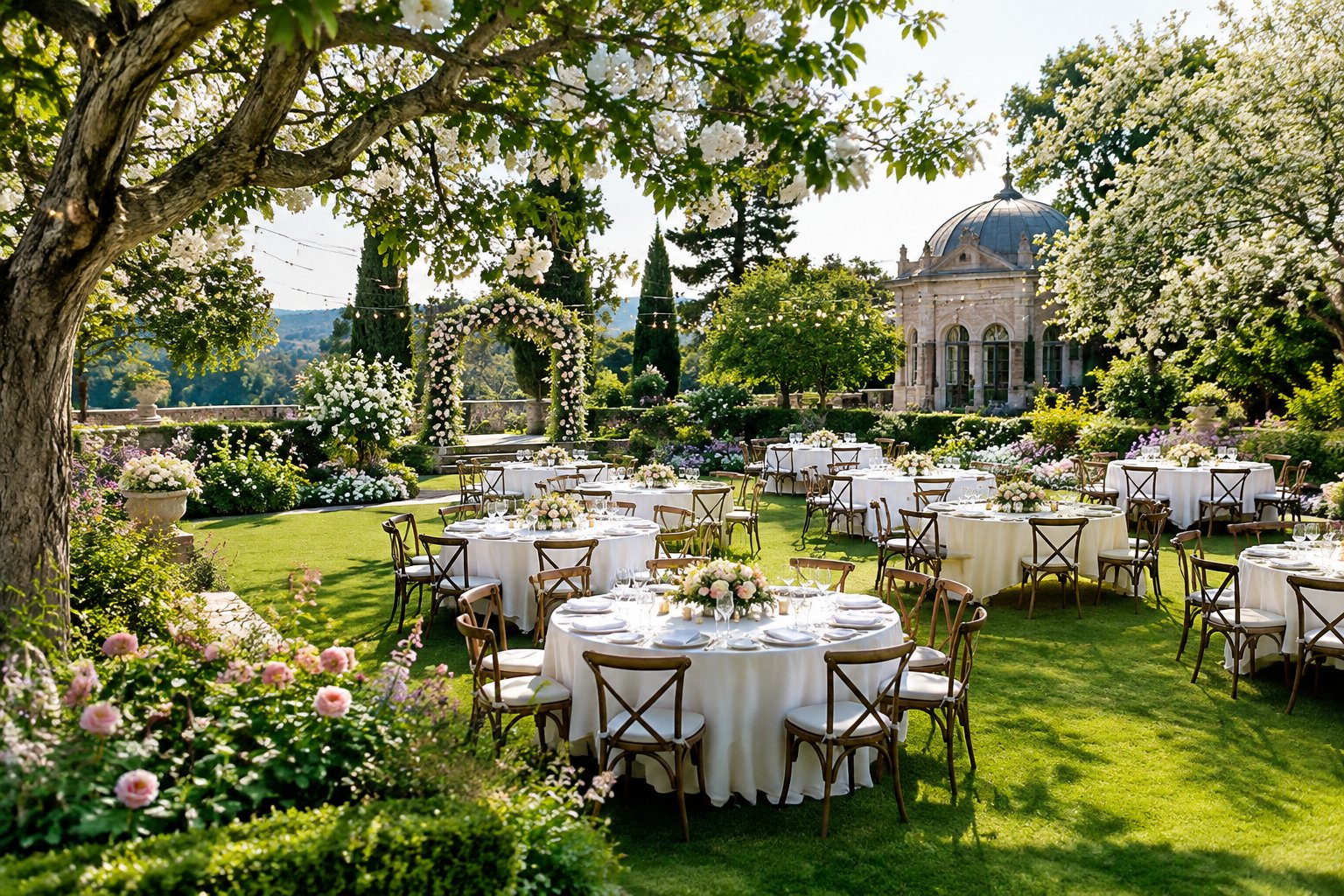
What Makes a Venue Right for a Garden Party Wedding?
A garden wedding venue should give you a beautiful natural setting, a workable event layout, and enough infrastructure to keep guests comfortable. Lush gardens create the mood, while clear plans for weather, seating, lighting, parking, and sound keep the day moving smoothly.
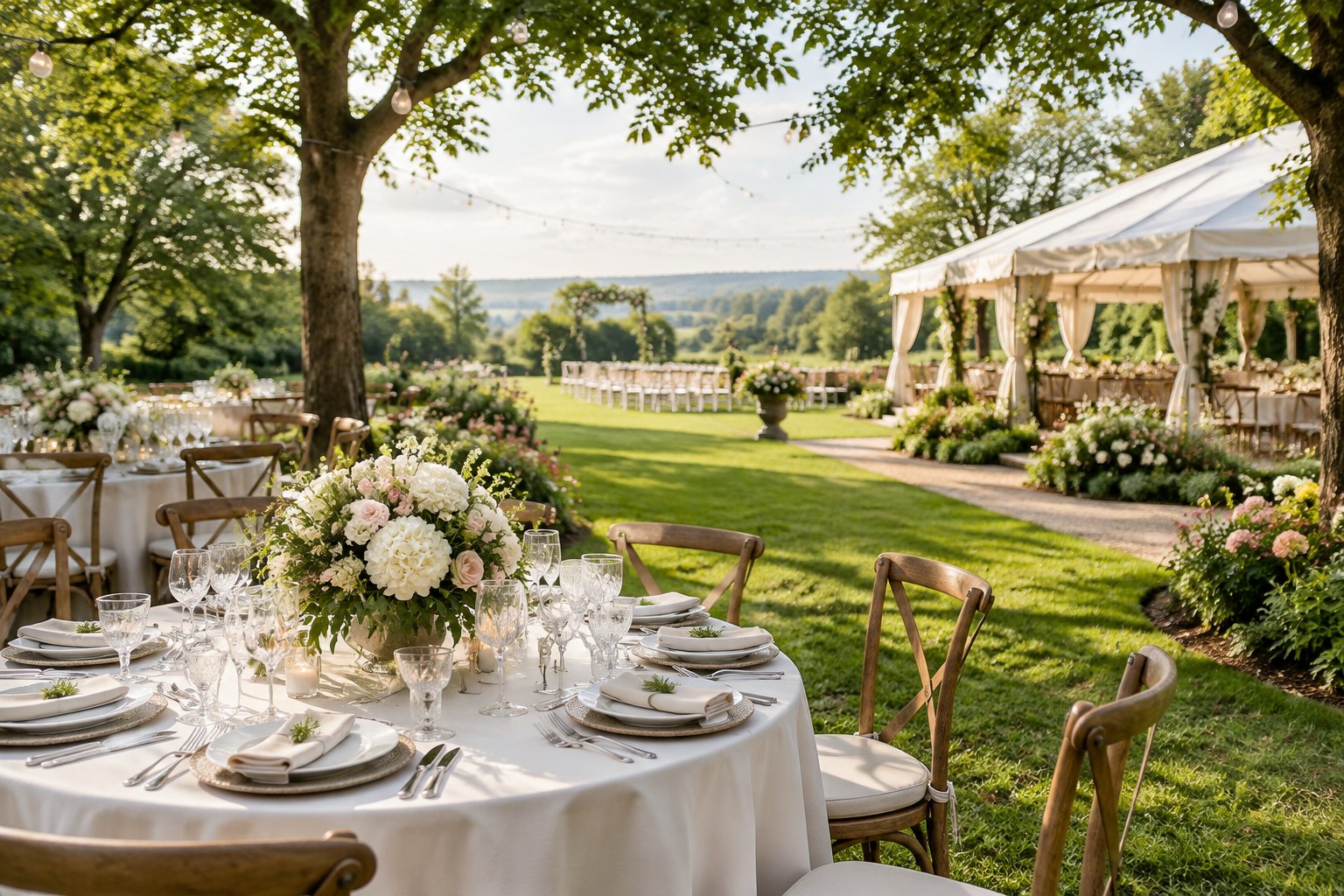
Natural Garden Settings vs. Styled Garden Looks
A venue with mature landscaping gives you living texture, seasonal color, and established focal points. Formal gardens, botanical gardens, and private estates might include stone paths, mature trees, wisteria-covered walls, or waterfalls that need little decoration.
A styled garden look works well when the property offers an open lawn, courtyard, or blank outdoor space. Your florist, rental team, and planner can add arches, potted plants, floral groupings, and lighting to create the desired mood.
During your tour, note what will be in bloom on your date. Ask which areas remain available for private events and whether the venue allows decorations on trees, fences, fountains, or historic structures.
Features That Create a Memorable Backdrop
Look for features that support both your ceremony and your photographs:
-
A flowering arbor, tree-lined lawn, or garden path for the ceremony
-
A level surface for tables, chairs, and dancing
-
Attractive views from the guest seating and head table
-
Covered areas for shade and light rain
-
Safe pathways between key event spaces
-
Power access for catering, music, and lighting
-
Restrooms close enough for guests to reach easily
Ask where the sun will sit during your ceremony and reception. A west-facing ceremony can create beautiful light, while direct afternoon sun can make guests uncomfortable without shade.
Matching the Setting to Your Guest Count
Your guest count should guide the size and layout of the venue from the first tour. A space that feels generous for 60 guests may feel crowded once you add dinner tables, a bar, buffet stations, a dance floor, a lounge area, and vendor paths.
Request a floor plan for your expected attendance. Confirm the maximum seated capacity for an outdoor dinner, then ask where the ceremony, cocktail hour, reception, and rain backup would take place. Measure walking distances for older guests and anyone using mobility aids.
Which Venue Types Fit Your Celebration?
The best venue type matches your desired level of formality, guest count, privacy, and planning support. A botanical garden offers built-in scenery, a historic property adds architectural character, and a private estate gives you more control over the guest experience.
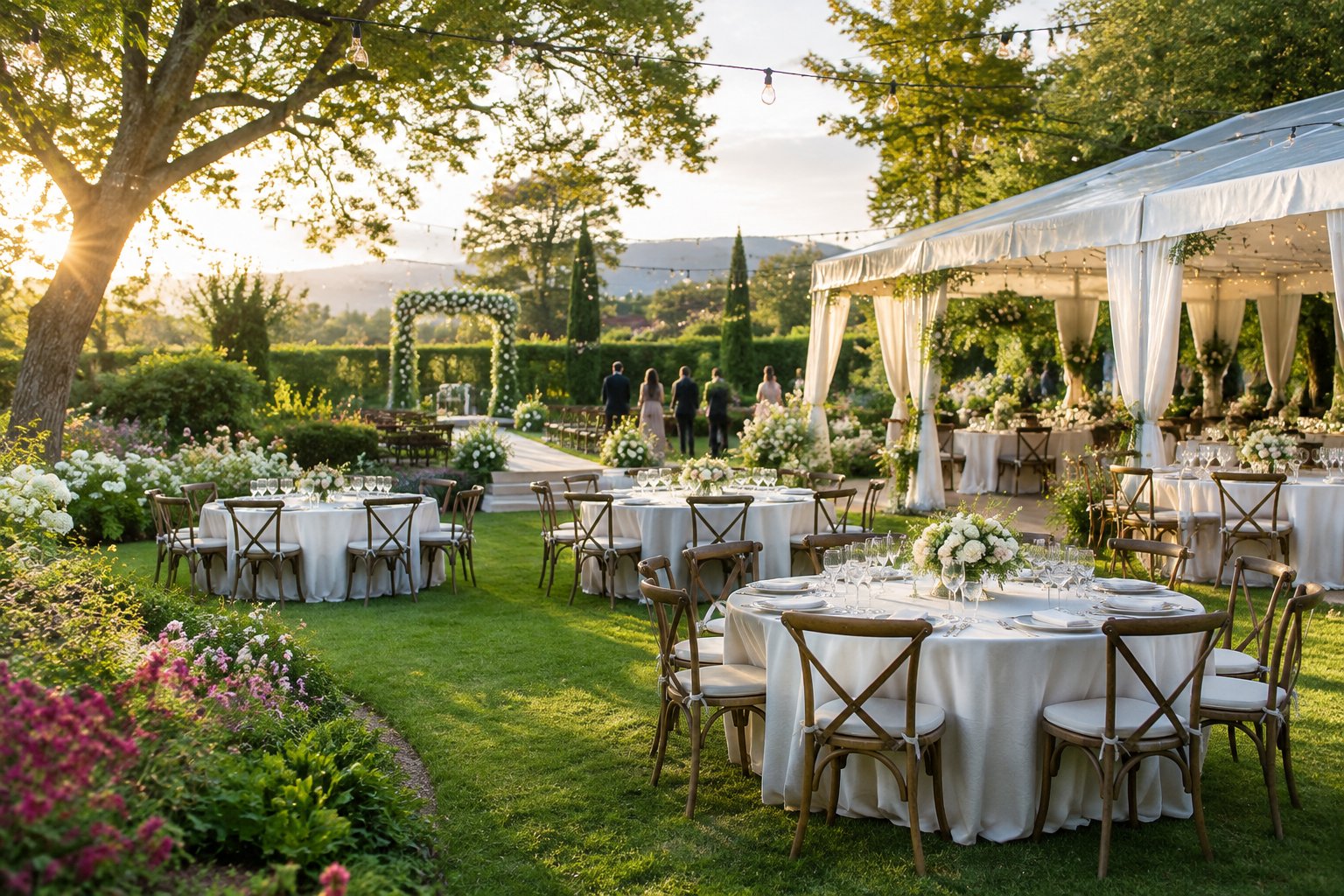
Botanical Gardens and Historic Properties
Botanical gardens offer carefully maintained plantings, defined ceremony sites, and strong photo locations. A venue such as Denver Botanic Gardens shows how a public garden can combine outdoor landscapes with event spaces designed for weddings.
A national historic landmark brings period architecture, established grounds, and a distinct sense of place. Ask about preservation rules, event permits, decoration limits, public access, and amplified sound before you book.
These venues suit couples who want a polished setting with professional event procedures. Their rules may shape your choices for candles, signage, catering, setup time, and guest movement.
Conservatories, Greenhouses, and Orangeries
A conservatory, greenhouse, or orangery gives you garden atmosphere with greater protection from wind and rain. Glass walls and ceilings provide natural light, while climate control helps keep the space comfortable across changing seasons.
Planterra Conservatory is an example of the greenhouse style, where plants and architecture work together as the main design feature. This venue type fits an elegant garden-inspired wedding, especially when you want greenery without relying on an entirely open lawn.
Check the temperature plan, ventilation, restroom access, lighting, and dance floor layout. Ask whether the glass structure has limits on hanging décor, open flames, amplified music, or late-night events.
Private Estates, Farms, and Courtyard Venues
Private estates offer privacy, lawns, mature trees, and room for a tented reception. Farms bring open fields, working-land character, and space for lawn games or relaxed cocktail hours.
Courtyard venues work well for intimate garden weddings in urban areas. Their enclosed layout can make guest movement easy and help reduce wind, while stone walls, climbing plants, and fountains create a strong backdrop.
Ask about parking, restroom capacity, power, vendor access, tent placement, and the distance between the ceremony and reception. A beautiful private property may require more rentals and coordination than a full-service wedding venue.
How to Plan the Ceremony and Reception Flow
A smooth garden wedding ceremony leads guests through each part of the day with short walking routes, clear signs, comfortable pauses, and a reception layout that is ready before guests arrive.
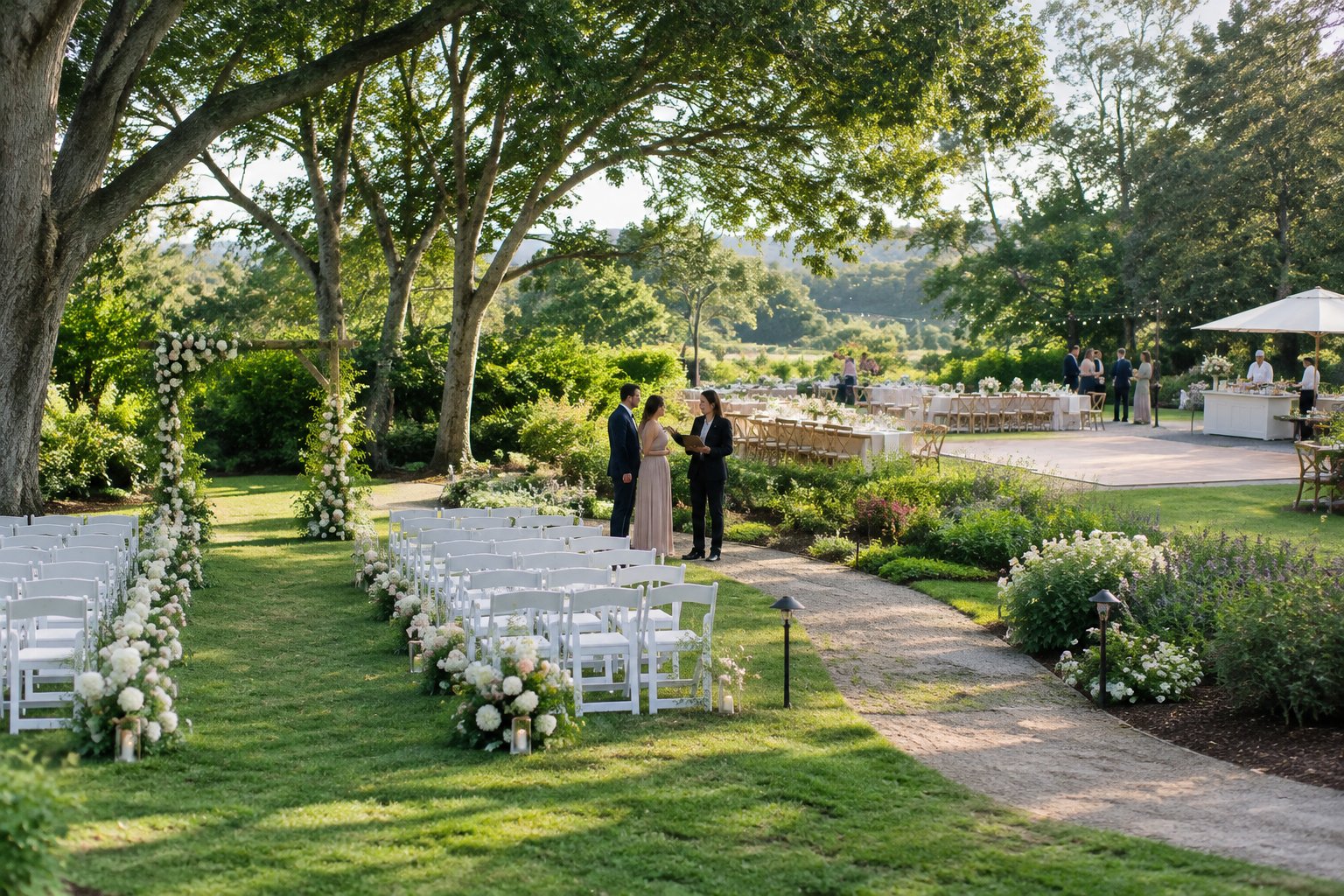
Choosing a Garden Wedding Ceremony Site
Choose a ceremony site that offers shade, a clear view, level ground, and enough room for the wedding party to enter comfortably. Place the couple and officiant where guests can see and hear them without facing harsh sunlight.
Walk the route from the getting-ready space to the ceremony area. Check the surface for gravel, roots, steep slopes, and narrow gates. Provide chairs for guests who need them, and reserve accessible seating near a smooth pathway.
A floral arch, pergola, mature tree, or garden wall can frame the vows. Keep the arrangement low enough to preserve the view of the garden and the couple.
Creating a Comfortable Cocktail Hour
Place cocktail hour close to the ceremony site so guests can move easily after the vows. Offer shade, seating, water, and light refreshments while the reception team resets any shared space.
A lounge area with sofas, chairs, and small tables gives guests a place to rest. Add lawn games only where they will not block catering staff, photographers, or routes to the restrooms.
Use a bar location that avoids long lines and keeps guests away from the kitchen or service entrance. Provide lighted paths if cocktail hour continues after sunset.
Moving Guests Seamlessly Into Dinner and Dancing
Use signs, escort cards, or a member of the venue team to direct guests from cocktails to dinner. Keep the route clear of catering equipment, cables, wet grass, and uneven ground.
Set the dinner tables before guests enter the reception area. Place the dance floor where it is visible from the tables, then position speakers so speeches and music reach the full guest area.
Give your planner and vendors a detailed timeline with setup access, guest arrival, meal service, speeches, sunset, dancing, and breakdown. A clear schedule helps each transition happen without a long pause.
What to Ask Before Booking an Outdoor Space
Before booking an outdoor wedding space, get written answers about weather protection, vendor rules, event hours, guest access, and the total cost of required rentals.
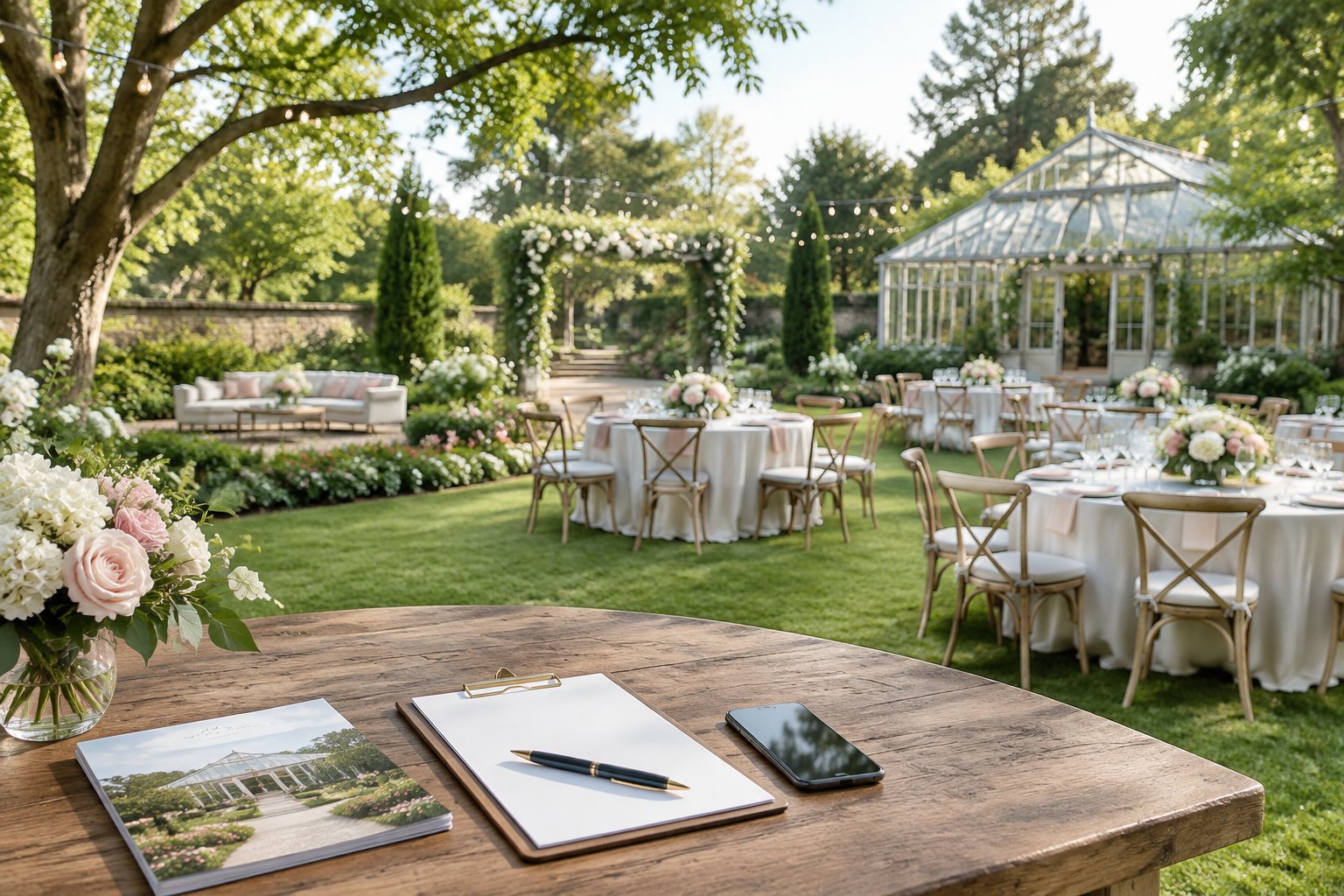
Weather Backup and Seasonal Timing
Ask what happens if rain, high wind, extreme heat, or cold affects your event. A strong plan names the backup location, decision deadline, tent rules, added fees, and who makes the final call.
Review the garden in the season of your wedding. Bloom timing, shade, sunset, humidity, pollen, and temperature affect the guest experience and the look of your photos.
Ask whether tents, heaters, fans, umbrellas, or covered walkways are available through the venue or must be rented. Confirm the ground conditions required for tent stakes and equipment.
Vendor Policies, Rentals, and Noise Limits
Ask whether you can choose your own caterer, florist, planner, photographer, DJ, and rental company. Confirm preferred vendor requirements, outside-vendor fees, insurance rules, alcohol policies, and catering access.
Request a detailed list of included items. Check whether tables, chairs, linens, lighting, power, trash removal, security, and setup time are part of the package.
Ask about music limits, amplified sound, quiet hours, candle rules, fireworks, confetti, and cleanup. A noise curfew can shape your dinner and dancing timeline, especially at residential or historic properties.
Accessibility, Parking, and Guest Comfort
Walk the full guest route from parking to the ceremony, restrooms, cocktail hour, and reception. Look for firm pathways, ramps, handrails, accessible restrooms, and seating options for guests who cannot stand for long periods.
Confirm the number of parking spaces, shuttle access, rideshare drop-off, and lighting after dark. Ask how far guests must walk and whether golf carts or staff assistance are available.
Plan for heat, insects, pollen, and uneven ground. Share footwear guidance on your wedding website, provide water and shade, and place comfort supplies where guests can find them.
How to Bring the Garden Party Look to Life
A garden-inspired wedding feels cohesive when your décor follows the venue’s existing colors, textures, and architecture. Start with what already grows there, then add focused details that define the ceremony, tables, and evening lighting.
Using Existing Blooms as Your Design Starting Point
Walk the property with your florist and identify the strongest visual features. A flowering tree, rose bed, stone wall, wisteria arbor, or hedge can guide your color palette and floral choices.
Ask the venue which plants will be in bloom on your date and whether you can cut or move any foliage. Use existing features as ceremony framing, photo backdrops, or visual anchors for the reception.
Keep large décor pieces away from fragile plantings and historic surfaces. Your venue contract should state where arches, signs, candles, and rental furniture may go.
Selecting Florals, Color Palettes, and Tablescapes
Seasonal flowers create a natural connection between your reception and the garden. Choose a base color from the landscape, then add two or three supporting shades through flowers, linens, stationery, and glassware.
Loose arrangements, bud vases, herbs, and varied greenery suit a relaxed garden party. Formal estates can support taller arrangements, refined linens, and polished tableware.
Keep centerpieces low enough for conversation. Add taper candles, lanterns, or string lights after confirming the venue’s safety rules. For more table inspiration, explore garden-inspired easy wedding centerpiece ideas.
Adding Personal Touches Without Overdecorating
Use details that serve a purpose, such as handwritten menus, family china, illustrated signs, parasols, or a signature drink station. A small lounge with vintage chairs can make an open lawn feel more inviting.
Repeat a few materials across the space, such as rattan, linen, ceramic, or natural wood. This creates connection without covering every surface with décor.
Reserve your largest floral and lighting investments for places guests spend the most time. A ceremony arch, dining tables, bar, and dance floor usually deserve more attention than distant garden corners.