
Garden Themed Wedding Venues: A Planning Guide
A garden wedding gives you a naturally romantic setting, built-in scenery, and space to shape the day around the landscape. Garden themed wedding venues suit couples who want an outdoor wedding with flowers, greenery, and a relaxed yet polished atmosphere. You can choose a formal estate, a botanical garden, a conservatory, or a private backyard based on your guest list, style, budget, and weather needs.
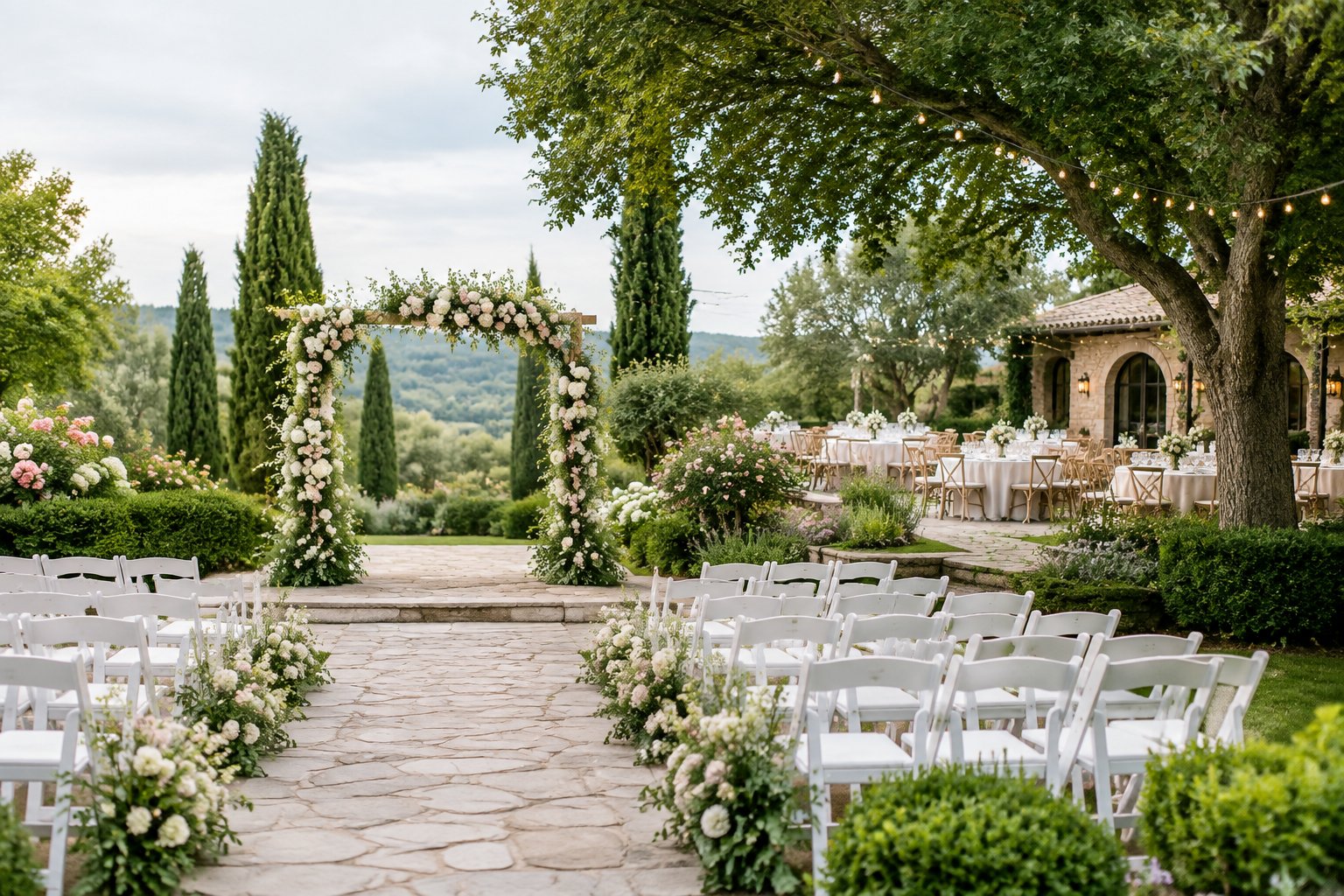
Your venue choice affects nearly every detail, from the ceremony layout and floral plan to guest comfort and wedding photos. As you compare locations, look for level ground, reliable restrooms, power access, an indoor backup, and a landscape that already fits your vision. Browse more wedding venue ideas as you narrow your search, then schedule tours with your favorite garden settings.
What Makes a Venue Feel Like a Garden Wedding Setting?
A garden wedding venue feels authentic when living plants, open-air spaces, and romantic architectural details shape the guest experience. The gardens should provide more than a few potted plants around a patio. Look for mature trees, flower beds, winding paths, lawns, and a ceremony backdrop that feels connected to the setting.
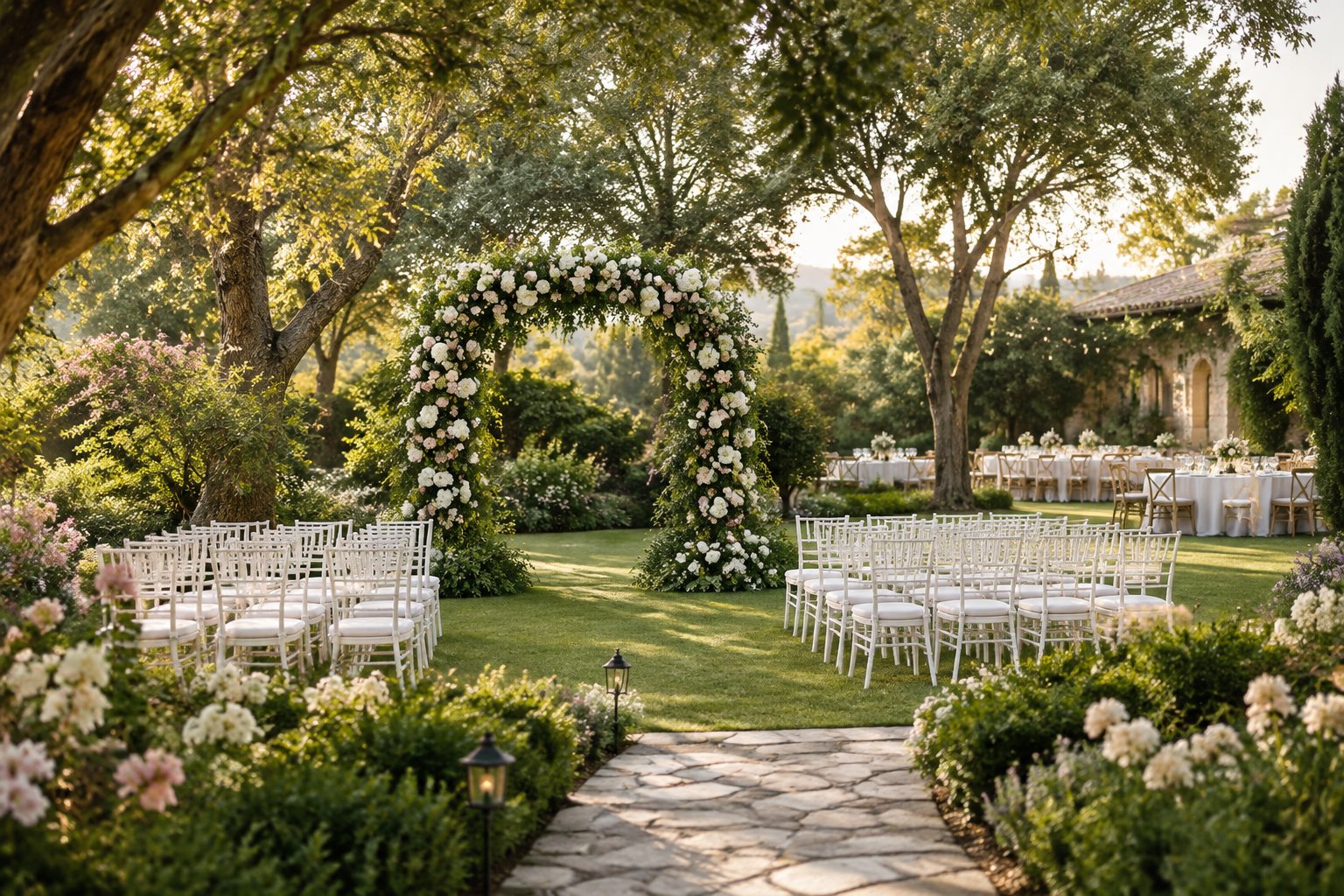
Garden Styles: English Gardens, Walled Gardens, and Botanical Gardens
English gardens create a soft, timeless mood with roses, layered borders, clipped hedges, and graceful paths. Walled gardens offer privacy and a defined space for an intimate celebration. Their brick or stone walls also add texture to ceremony and reception photos.
Botanical gardens bring plant variety and strong visual interest throughout the property. You might find tropical houses, native plant areas, water features, or seasonal displays. Ask which garden areas are available for private events and whether guest access is limited during setup.
Historic estates and manor properties can combine formal landscaping with open lawns. Their architecture supports a fairytale wedding style, especially when the property includes gazebos, ivy-covered walls, wisteria, or a terrace near the pavilion.
Outdoor Spaces, Conservatories, and Indoor Garden Alternatives
A strong venue gives you several ways to use the landscape. An outdoor ceremony can take place beneath a tree, beside a flower border, or near a fountain. A reception works well on a lawn, terrace, or covered patio with room for dining, dancing, and guest movement.
Conservatories provide a garden-inspired setting with glass walls, natural light, and climate control. They suit couples who want abundant greenery while keeping guests sheltered. Greenhouses, atriums, and indoor halls with large windows offer similar benefits during colder months or rainy seasons.
Check the distance between the ceremony, cocktail hour, reception, restrooms, and parking area. A beautiful space feels less practical when guests must cross uneven ground or walk a long route between events.
Features That Create a Fairytale Wedding Atmosphere
A fairytale atmosphere comes from layers of detail that support the garden’s natural character. Look for:
-
A tree-lined entrance or winding path
-
A gazebo, pergola, or flower-covered arbor
-
Ivy, wisteria, or climbing roses
-
Stone walls, fountains, bridges, or historic gates
-
Soft evening lighting around trees and walkways
-
A secluded corner for portraits
Use the venue’s existing features as focal points. A floral installation can frame a ceremony arch, while a few lanterns can guide guests along a garden path without covering the landscape.
How to Choose the Right Setting for Your Celebration
The right garden wedding venue matches your guest count, event format, access needs, and weather plan. Compare private estate gardens, public botanical spaces, backyard properties, and dedicated outdoor wedding venues by asking what is included and how the site works from ceremony through send-off.
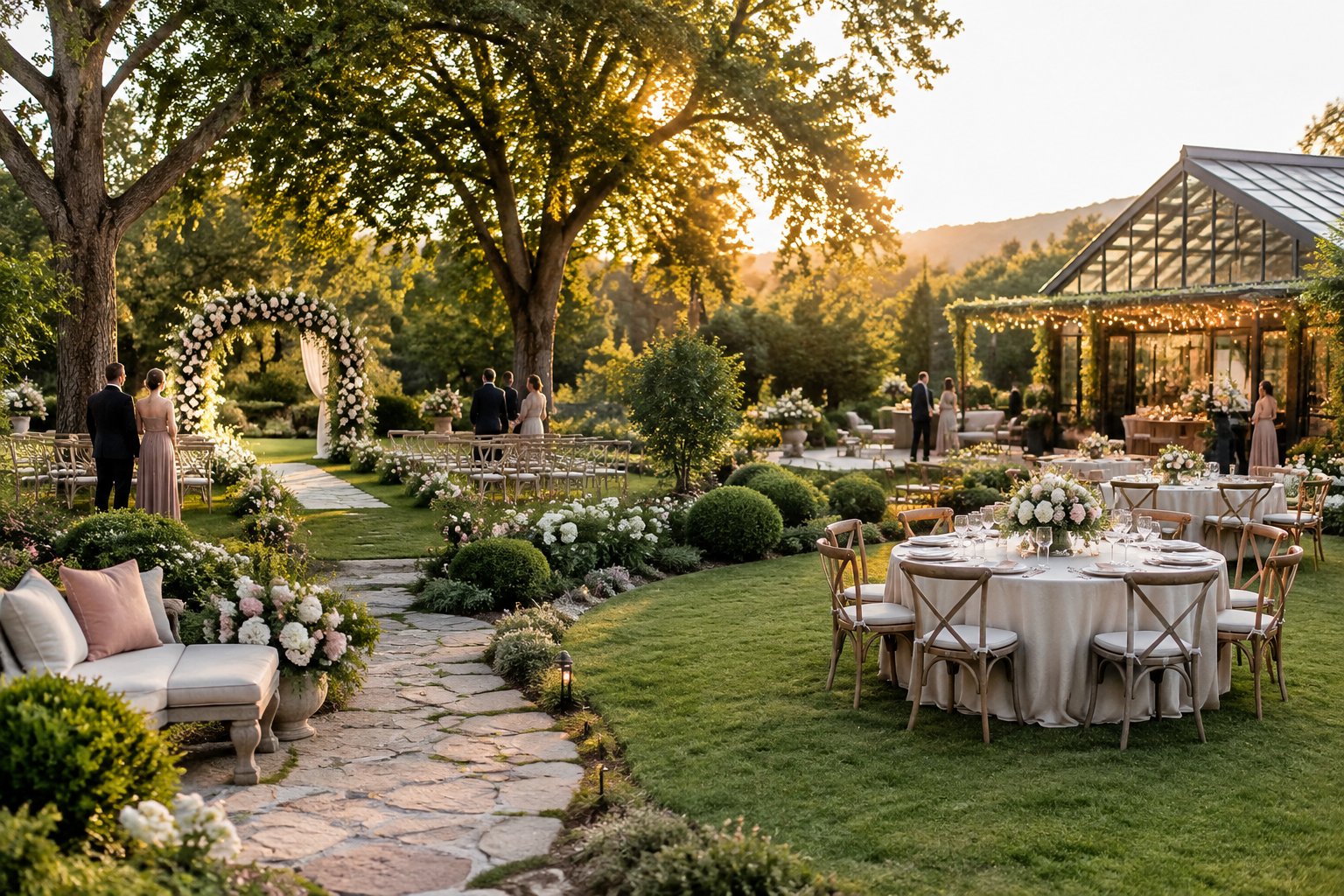
A useful starting point is your preferred guest experience. Decide whether you want a secluded celebration, a highly managed public site, a casual home gathering, or a flexible venue with several event zones. These choices affect privacy, vendor rules, parking, permits, and rental costs.
Private Estate Gardens for Exclusive Events
Private estate gardens offer privacy and a strong sense of place. Historic homes, vineyards, country properties, and landscaped residences often provide several ceremony locations along with getting-ready rooms and reception space.
Ask whether your rental includes exclusive use of the grounds. Confirm the event hours, noise rules, cleanup duties, catering policy, and rain plan. A private estate may include tables, chairs, lighting, or staff, while another property may require outside rentals for every service.
Review the terrain before booking. A sloped lawn can look beautiful but create problems for dining, mobility devices, strollers, and formal shoes. Request a site map that marks parking, restrooms, power outlets, vendor access, and emergency routes.
Public Botanical Gardens With Built-In Beauty
Public gardens give you established landscaping and memorable settings for a garden wedding ceremony or reception. Well-known examples include Chicago Botanic Garden, Planterra Conservatory, and Franklin Park Conservatory and Botanical Gardens. Each property has its own rules for guest capacity, photography, catering, music, and event timing.
Ask which areas are reserved for your group and whether other visitors will share nearby paths. Find out when vendors can load in, where guests will enter, and whether the garden closes during certain hours. A popular public venue might offer polished event support, while its schedule and restrictions require careful coordination.
Look at the reception plan in detail. Confirm whether the property supports outdoor dining, lounge areas, dancing, and a bar within the same event zone. If guests need to move between spaces, ask about lighting and accessible routes after sunset.
Backyard and Outdoor Wedding Venues
A backyard wedding offers personal meaning and control over the design. Your own property, a relative’s garden, or a rented private yard can create a warm setting for a small celebration. You can explore more backyard wedding ideas when planning the layout and guest experience.
Measure the usable space before setting a guest count. Include room for chairs, dining tables, food service, a dance area, restrooms, vendor vehicles, and a weather shelter. Rental companies can help you plan the footprint, though delivery access and ground conditions need review first.
Check local rules for parking, amplified music, alcohol, tents, and temporary restrooms. Talk with neighbors before sending invitations if the event will create traffic or evening noise.
Questions to Ask Before Booking
Use your venue tour to get clear answers in writing:
-
What areas are included in the rental?
-
How many guests fit for a seated reception?
-
What happens during rain, high heat, wind, or smoke?
-
Are tents, heaters, fans, or umbrellas allowed?
-
Which vendors must you use?
-
Is outside catering permitted?
-
Where can guests park or receive shuttles?
-
Are paths, restrooms, and seating accessible?
-
What lighting and power are available?
-
What permits, insurance, and deposits are required?
-
When can vendors arrive for setup and cleanup?
-
Are there restrictions on candles, petals, confetti, or amplified music?
Plan the Ceremony and Reception Around the Landscape
Your ceremony and reception should follow the garden’s natural flow, with clear guest routes, a strong focal point, and enough level space for dining and dancing. Use the landscape to guide the layout so décor supports the setting and guests move comfortably between each part of the celebration.
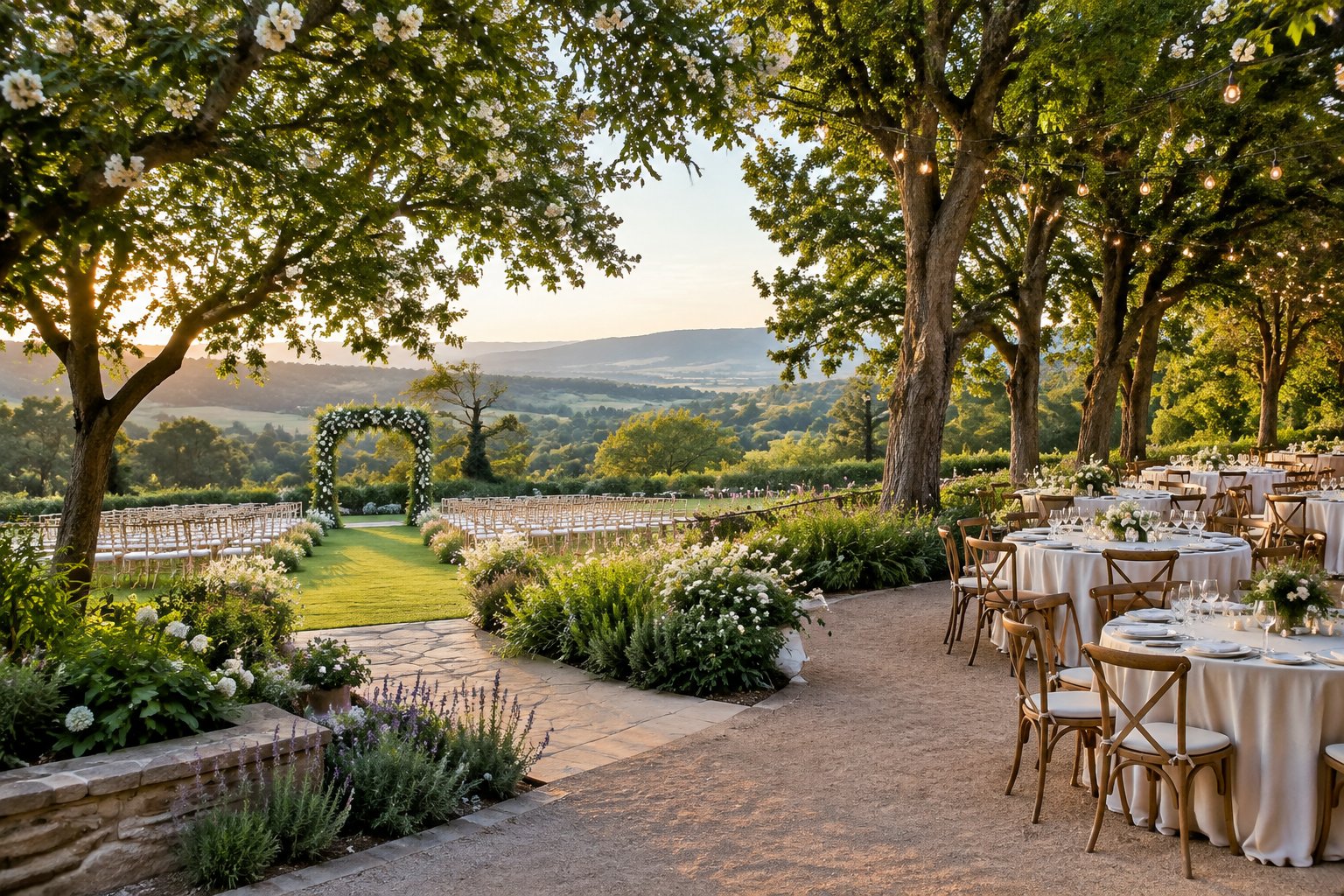
Creating an Aisle and Ceremony Focal Point
Choose the ceremony position based on guest sightlines, sunlight, sound, and the background. A mature tree, garden wall, fountain, or flowering border can provide a focal point with minimal added décor.
Build the aisle with details that suit the ground. Low arrangements, ribbon markers, or flower petals define the path without blocking views. A floral arch can frame the couple, while floral arches placed along a long aisle create a more formal effect.
Keep the aisle wide enough for mobility devices and wedding party movement. Confirm that chairs sit securely on the surface. If the ceremony area is on grass, provide a firm walkway or designate a stable route for guests who need it.
A flower petal toss works well after the ceremony when the venue permits loose petals. Ask about cleanup requirements and approved materials before adding this detail.
Designing an Al Fresco Reception Layout
Plan the reception around the most comfortable and level part of the property. Place dining tables near the kitchen or catering access, then position the dance floor where music will reach guests without overwhelming nearby homes or garden areas.
Create a clear path between tables, restrooms, the bar, and lounge areas. Leave space for servers to move safely and for guests to pull out chairs. A separate lounge gives older guests and anyone taking a break from dancing a comfortable place to sit.
Use wedding centerpieces that leave sightlines open across the table. Lanterns, small arrangements, and potted plants add garden character without taking up valuable space. Welcome guests with hors d’oeuvres and signature cocktails in a shaded area before dinner service begins.
Place wedding favors where guests can collect them easily, such as at each setting or beside the exit. Choose items that travel well and suit the outdoor setting.
Weather, Accessibility, and Evening Contingencies
A complete outdoor plan includes shade, shelter, cooling, heating, and a firm indoor or tented backup. Confirm the decision deadline for moving the event and who has authority to make the call.
Walk the property with your planner at the same time of day as the wedding. Check glare, shadows, heat, mud, insects, and noise. Provide water stations, fans, blankets, or umbrellas according to the forecast and season.
Review every route for guests using wheelchairs, walkers, or strollers. Include accessible restrooms, stable flooring, ramps where needed, and seating with generous spacing. Light paths, steps, parking areas, and restroom entrances before guests arrive.
Protect paper goods, electronics, florals, and food from wind or moisture. Secure signs and décor with venue-approved weights, and ask vendors how they will protect equipment during a weather change.
Build a Garden-Inspired Floral and Decor Scheme
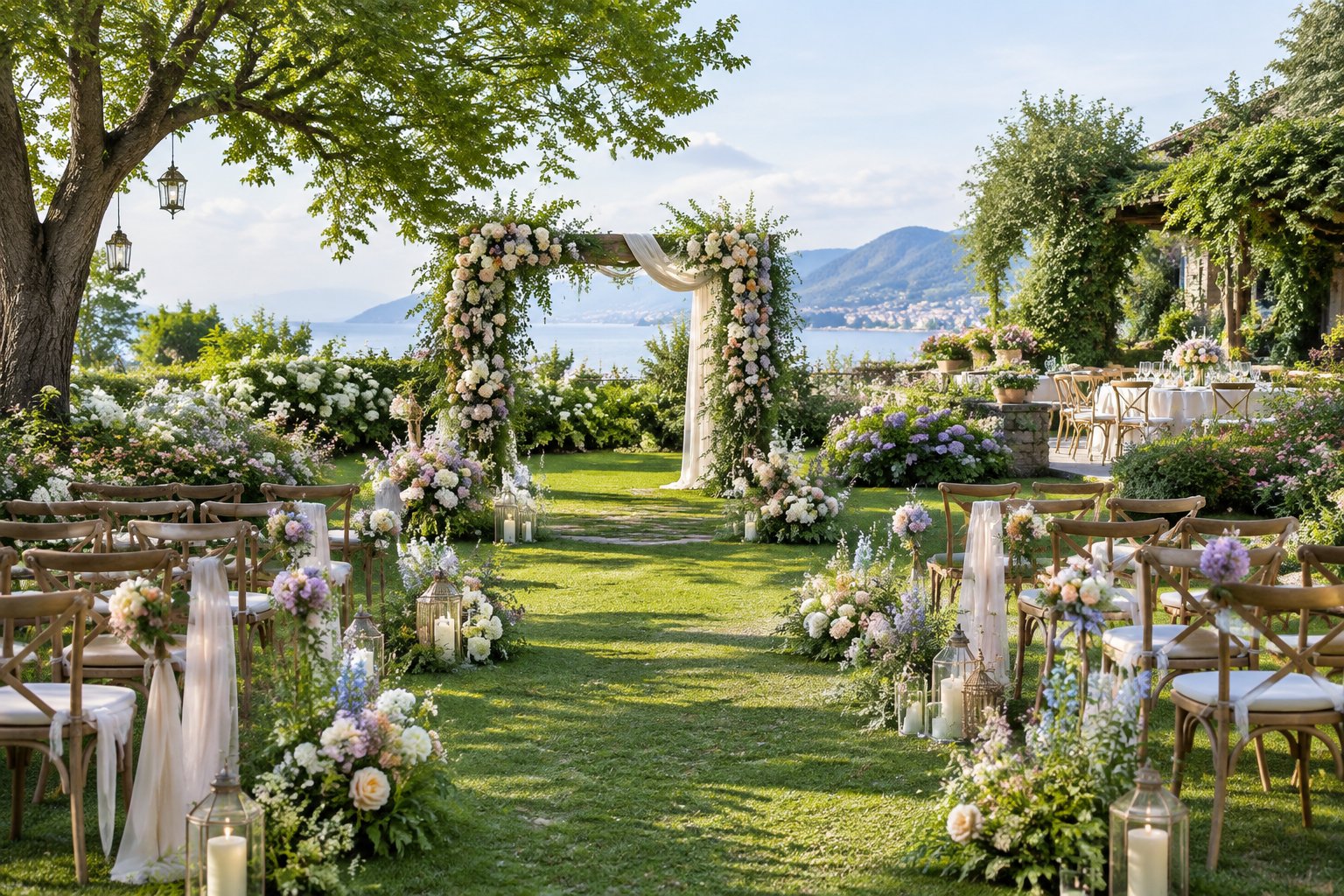
Garden wedding decor works best when it follows the venue’s existing colors, textures, and season. Choose a focused garden wedding color palette, repeat a few natural materials, and let selected floral moments stand out against the greenery.
Choosing a Garden Wedding Color Palette
Start with the colors already present at the venue. Sage green, cream, blush, terracotta, dusty blue, and soft yellow pair well with lawns, stone, wood, and flowering borders. Add one deeper accent, such as burgundy or plum, for place cards, napkins, or ribbon.
Use your palette across the ceremony flowers, table linens, stationery, attire, and lighting accents. A limited palette keeps the landscape visible and helps rented items feel connected.
For a formal garden wedding, pair soft blooms with white linens, glassware, and classic metal details. For a relaxed garden-inspired wedding, choose linen, rattan, wood, ceramic vessels, and hand-lettered paper goods.
Flowers That Suit Each Season
Seasonal blooms help your arrangements feel connected to the date and venue. Ask your wedding florist which flowers are locally available and how heat, cold, and sun will affect them.
-
Spring: tulips, sweet peas, ranunculus, lilac, and cherry blossoms
-
Summer: garden roses, peonies, lisianthus, hydrangeas, lavender, and dahlias
-
Fall: dahlias, amaranthus, garden roses, eucalyptus, and warm-toned foliage
-
Winter: evergreen foliage, dried textures, hardy roses, and seasonal branches
Use greenery garland along a head table or ceremony table when the venue has open space. Small clusters of blooms work well on cocktail tables and chairs. Pressed flowers suit menus, escort cards, vow books, and thank-you notes.
Flowers need protection from heat and wind. Ask your florist how arrangements will be transported, placed, watered, and stored during the event.
Layering Natural Textures Without Overdecorating
Let the garden provide the largest visual layer. Add texture through linen, wood, woven materials, stone, ceramic, and clear glass. These details bring warmth while keeping the landscape visible.
Repeat one or two materials across the ceremony and reception. Wooden signs, rattan lounge furniture, and woven chargers create a relaxed look. Glass vessels, metal candleholders, and crisp linens support a more refined style.
Use potted plants at entrances, beside the bar, or near the dance floor when you want décor that feels rooted in the setting. Protect tables from water marks and soil, and choose containers that staff can move safely.
Decorate areas that guests touch or notice closely, including the welcome table, escort display, bar, and dinner tables. Leave broad garden views open for movement and photography. More garden wedding ideas are available in this garden wedding ideas resource.
Make the Outdoor Experience Comfortable and Photogenic
Comfort and photography improve when you plan for the full day, from bright afternoon sun to the final dance after dark. Your lighting, attire, footwear, vendor timing, and guest amenities should suit the actual grounds and weather.
Wedding Lighting After Sunset
Wedding lighting should guide guests, support safe movement, and create a warm evening mood. String lights across a dining area or between sturdy trees. Fairy lights add a delicate glow to arches, hedges, and covered structures.
Use lanterns along approved pathways and solar lights in areas without convenient power. Candles work well on tables when the venue allows open flames, though enclosed holders protect the flame from wind.
Ask your lighting vendor to inspect power access and tree attachment rules. Set lights before guests arrive and test them after sunset. Include brighter fixtures near steps, restrooms, parking areas, and service routes.
Attire and Footwear for Garden Grounds
Choose a garden wedding dress with movement and fabric that suits the temperature. A lightweight gown, shorter hem, removable sleeves, or breathable lining can make outdoor time easier. Consider how grass, stone paths, humidity, and wind will affect the outfit.
Block heels provide more stability on lawns than narrow heels. Flats, wedges, or heel protectors also help with soft ground. Tell guests about the terrain on your wedding website so they can choose suitable shoes.
Bridesmaid dresses should allow comfortable movement and match the season. Provide wraps, fans, umbrellas, or shawls when the forecast calls for changing temperatures. Keep a small emergency kit with stain remover, pins, fashion tape, tissues, and spare hosiery.
Getting the Best Garden Wedding Photography
Schedule portraits around the venue’s best light and busiest areas. Early evening light can soften faces and highlight foliage, while shaded paths provide a cooler option during bright afternoon hours.
Walk the grounds with your photographer before the wedding. Mark portrait locations that include mature trees, garden walls, blooms, paths, water features, and architectural details. Confirm a dry indoor or covered location for family photos if rain changes the plan.
Keep the ceremony background free of visual clutter. Hide bins, cables, staff equipment, and unused rental items from key angles. Ask your wedding florist to place larger arrangements where they frame the couple without blocking guests.
Build travel time into the photography schedule if the property is large. A clear route helps you reach several locations without delaying dinner or the reception. Reliable coordination between your photographer, florist, and wedding planning team keeps each setting ready when you need it.