
Garden Venues for Weddings: How to Find the Right One
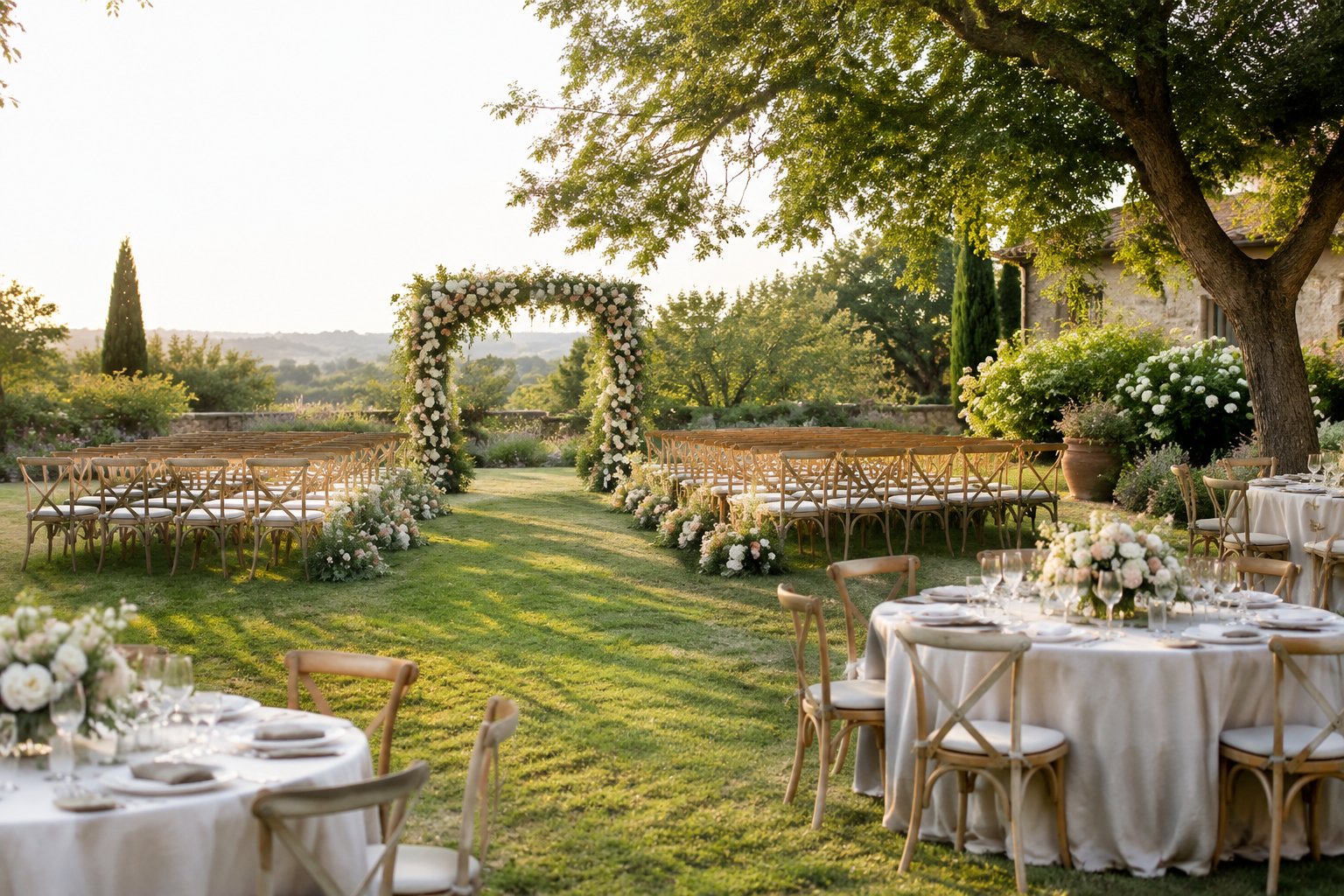
A garden wedding gives you natural scenery, soft light, and a romantic setting that needs less added décor. The right garden wedding venue for you will fit your guest count, provide a clear weather plan, and support both your ceremony and reception with comfortable guest access.
Start by deciding whether you want formal blooms, historic architecture, open farmland, or a waterfront view. Then visit each location during your wedding season and ask to see the exact spaces included in your rental. Pay attention to paths, restrooms, parking, shade, sound limits, and the distance between each part of the celebration.
A beautiful setting should also work well for your budget and schedule. Use these checks to narrow your choices, then explore garden wedding ideas that suit the landscape you choose. When you find a venue that feels right, request a tour and a complete written estimate before you reserve your date.
What to Look for in a Garden Wedding Setting
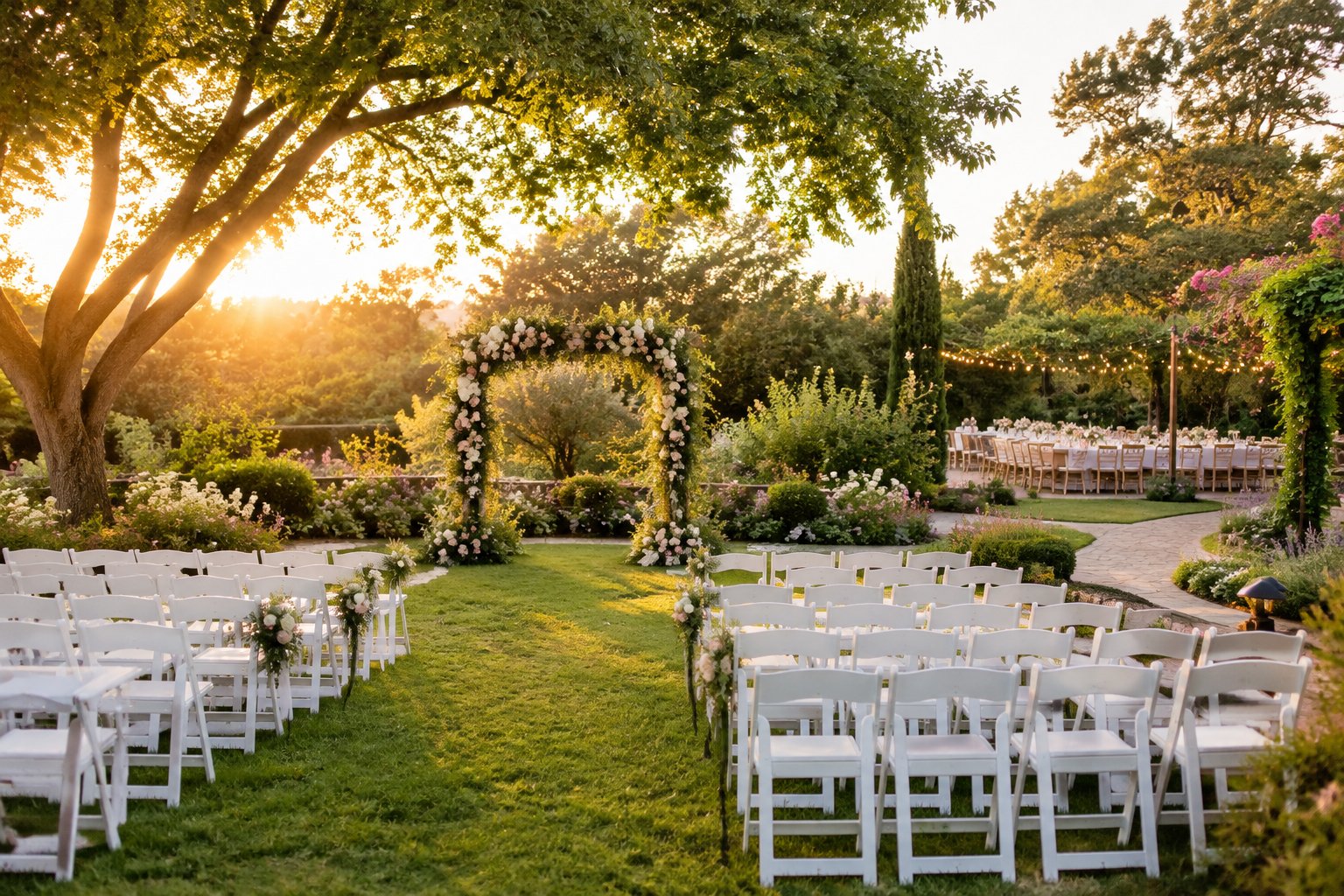
A strong garden wedding setting connects the wedding ceremony, cocktail hour, and wedding reception through an easy guest flow. Look for useful facilities, clear policies, and a backup space that keeps your plans moving when the weather changes.
Can the Space Host Both the Ceremony and Reception?
Choose a property with a ceremony site and reception area that work together. Guests should move between the outdoor ceremony, drinks, dinner, and dancing without long walks or confusing directions.
Ask whether the same rental includes:
-
A ceremony lawn, pergola, chapel, or courtyard
-
A cocktail area with shade and seating
-
Dinner tables and a dance floor
-
Restrooms near the main event spaces
-
A private room for getting ready
-
Space for rehearsal dinners or a next-day gathering
Some properties place the reception in a banquet hall, which gives you dependable climate control after an outdoor ceremony. Others use a tent, covered terrace, or greenhouse. Confirm the seated capacity for your planned table layout because a listed maximum may not include a dance floor, buffet, bar, or band.
What Is the Weather Backup Plan?
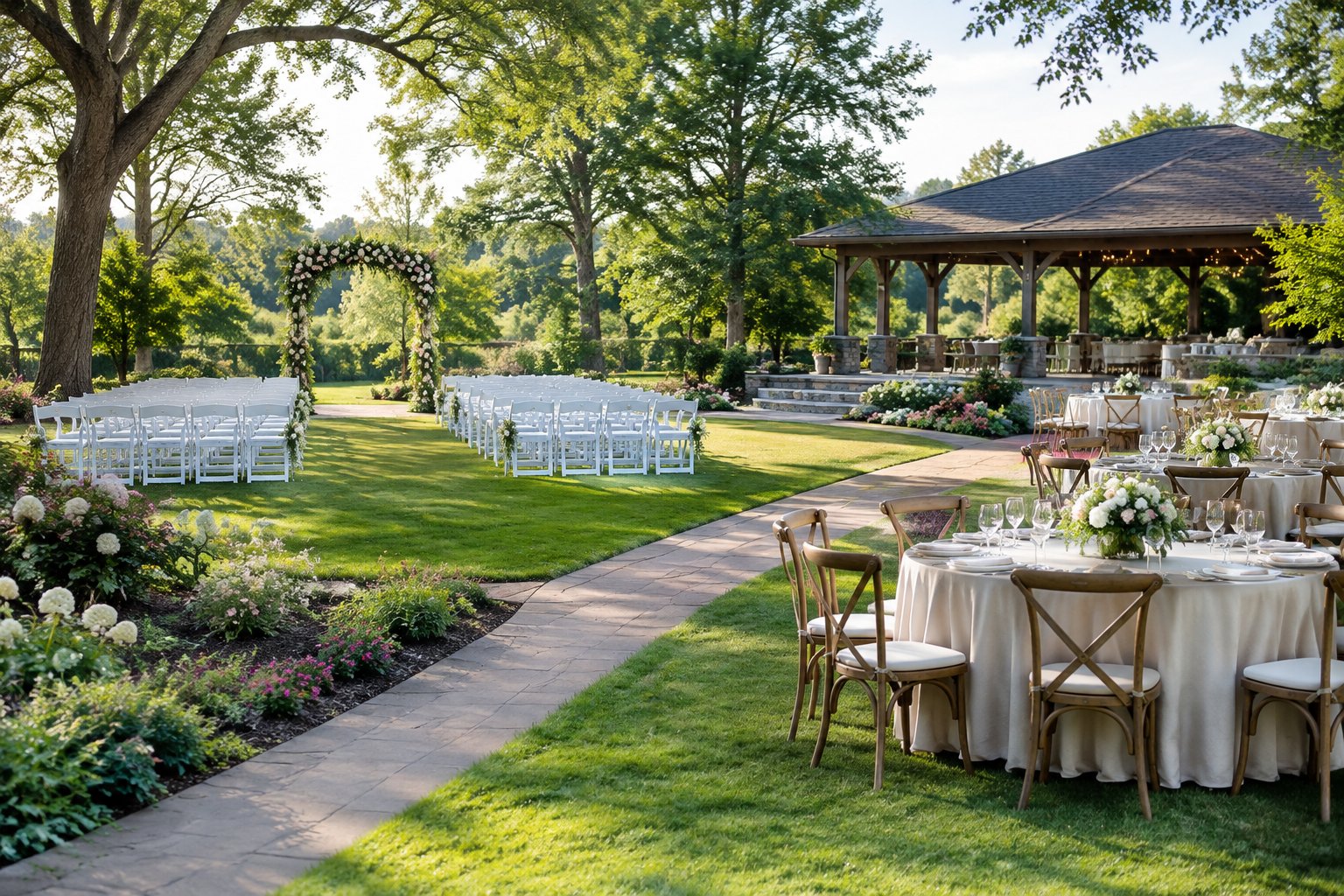
A written weather plan should name the alternate space, decision time, and person in charge. Ask whether the backup covers rain, high wind, extreme heat, cold, and lightning.
A tent with removable sides offers an outdoor feel with added shelter. An indoor room gives you firmer protection and may include restrooms, power, and climate control. Check whether moving inside changes the floor plan, décor allowance, guest capacity, or rental cost.
Ask how the venue handles:
-
Ground that becomes muddy
-
Strong sun and limited shade
-
Insects and evening temperature drops
-
Wind restrictions for arches and décor
-
Wet-weather parking and guest transport
-
A ceremony moved indoors on the wedding day
How Do Guest Count, Accessibility, and Noise Rules Affect the Choice?
Your guest count shapes every practical choice, from aisle width to restroom capacity. Walk the property with the people who will attend and check ramps, paved routes, seating access, parking, restroom doors, and paths between event areas.
Ask about noise limits and the required music end time before you book. A garden near homes, hotels, or public paths may have a firm curfew. Confirm whether amplified ceremony sound, live music, fireworks, candles, confetti, or generators require approval.
Include travel time in your plan. A venue with limited parking may need shuttles, rideshare access, or valet service. For a smaller celebration, use these tips for choosing the perfect venue for a small wedding to compare space, guest comfort, and cost.
Types of Settings That Create a Garden Feel
The strongest garden wedding venues build their mood through plants, paths, architecture, or water features. Your choice of setting shapes the ceremony backdrop, the guest experience, the décor budget, and the kind of photos you can create.
Botanical Gardens and Conservatories
Botanical gardens offer curated plant collections, mature trees, seasonal displays, and several ceremony backdrops. A botanical garden wedding works well when you want flowers and greenery to carry much of the design.
A conservatory adds protection from rain and temperature changes while keeping a strong connection to the landscape. Ask about public hours, private-event access, guest limits, approved caterers, floral rules, and restrictions on candles or hanging décor. Paths may include gravel, mulch, or uneven ground, so share footwear guidance with guests.
Historic Estates and Private Gardens
Historic estates pair formal lawns and rose gardens with terraces, courtyards, fountains, and grand rooms. These sites suit classic, romantic, and black-tie celebrations, with architecture that adds structure to the ceremony and reception.
Private gardens give you a more secluded setting and greater control over guest movement. Ask which rooms are included, whether the estate hosts one event at a time, and how much access your vendors receive for setup.
Farms, Country Clubs, and Waterfront Landscapes
A farm wedding venue brings open fields, orchards, wildflowers, and rustic buildings into the design. Country club weddings add manicured grounds, catering services, golf-course views, and indoor reception rooms.
Waterfront weddings create a garden feel through lawns, trees, waterfront paths, and open views. Beach weddings share the outdoor setting while bringing sand, wind, and salt air into the planning. Check the distance from parking to the ceremony and ask about wind protection for food, paper goods, and floral installations.
Venues With Ponds, Fountains, and Waterfalls
Water features add movement and sound to a garden setting. A koi pond works as a calm ceremony backdrop, while a fountain or waterfall creates a lively focal point for cocktail hour or portraits.
Ask about barriers, lighting, child safety, mosquito control, and photography access near the water. Keep dinner tables far enough away to protect guests and food from splashes or damp ground. Confirm whether the venue allows floral petals, floating candles, or other décor in the water.
Standout Garden Destinations Across the U.S.
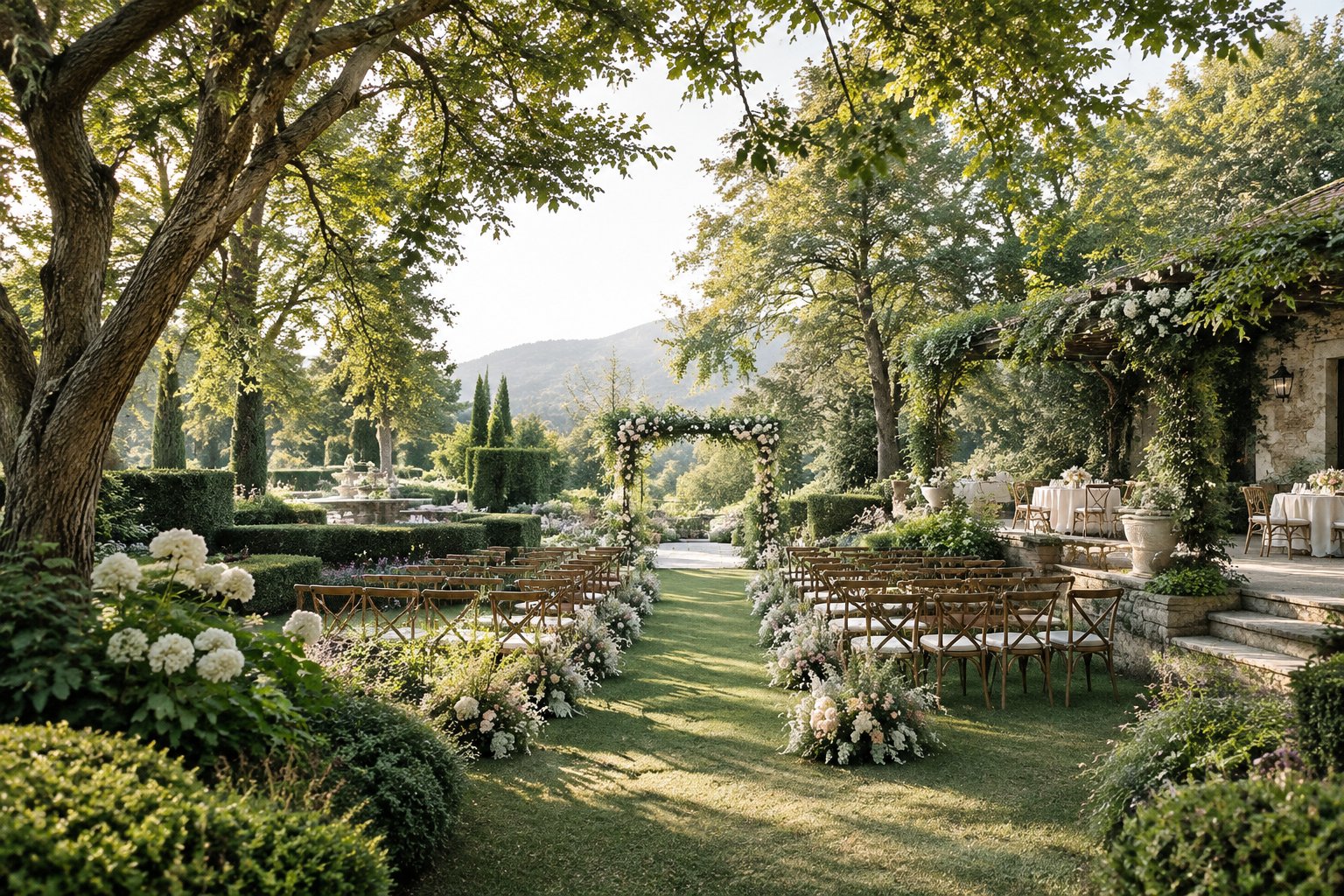
Several U.S. destinations show how much garden wedding venues can vary by region. Compare the landscape, climate, travel access, guest capacity, and indoor options before treating a famous name as the right choice for your celebration.
New York City and Brooklyn Botanical Landmarks
The Brooklyn Botanic Garden in Brooklyn, New York, offers an urban garden setting with planted paths, seasonal displays, and spaces suited to a city wedding. The New York Botanical Garden in the Bronx, New York, brings larger landscapes, formal gardens, and conservatory-style settings into the mix.
Both locations require close attention to event hours, guest routes, vendor rules, and weather plans. City access helps out-of-town guests reach the celebration, while traffic and hotel costs belong in your planning budget.
Illinois and Midwest Garden Escapes
Chicago Botanic Garden in Glencoe, Illinois, gives you a landscaped setting outside the city with lawns, plant collections, and spaces that suit both ceremonies and receptions. Denver Botanic Gardens offers a different regional look, with plantings shaped by Colorado’s climate and mountain-region light.
Check bloom timing, evening temperatures, transportation, and indoor event areas. Midwest venues also need clear plans for heat, rain, and sudden temperature changes during the warmer wedding months.
California Gardens From Malibu to San Francisco
For wedding venues in California, the landscape can range from coastal gardens to ranch grounds and city parks. Calamigos Ranch in Malibu, California, combines a relaxed ranch setting with landscaped event areas, while Golden Gate Park in San Francisco, California, offers expansive public gardens and urban access.
Garden wedding venues in California still need weather planning. Ask about cool evenings, fog, wind, parking, and any restrictions tied to a public park or protected landscape.
Southern Venues in Miami and Atlanta
The Town of Harmony: Chapel & Garden in Miami, Florida, suits couples seeking a dedicated chapel and garden setting in a warm climate. Atlanta Botanical Garden in Atlanta, Georgia, offers lush plantings and a city-based event setting.
Southern celebrations require careful attention to heat, humidity, storms, shade, and insect control. Schedule the ceremony at a comfortable time, provide water stations, and confirm that your reception space has suitable ventilation or air conditioning.
How to Match the Venue to Your Season and Style
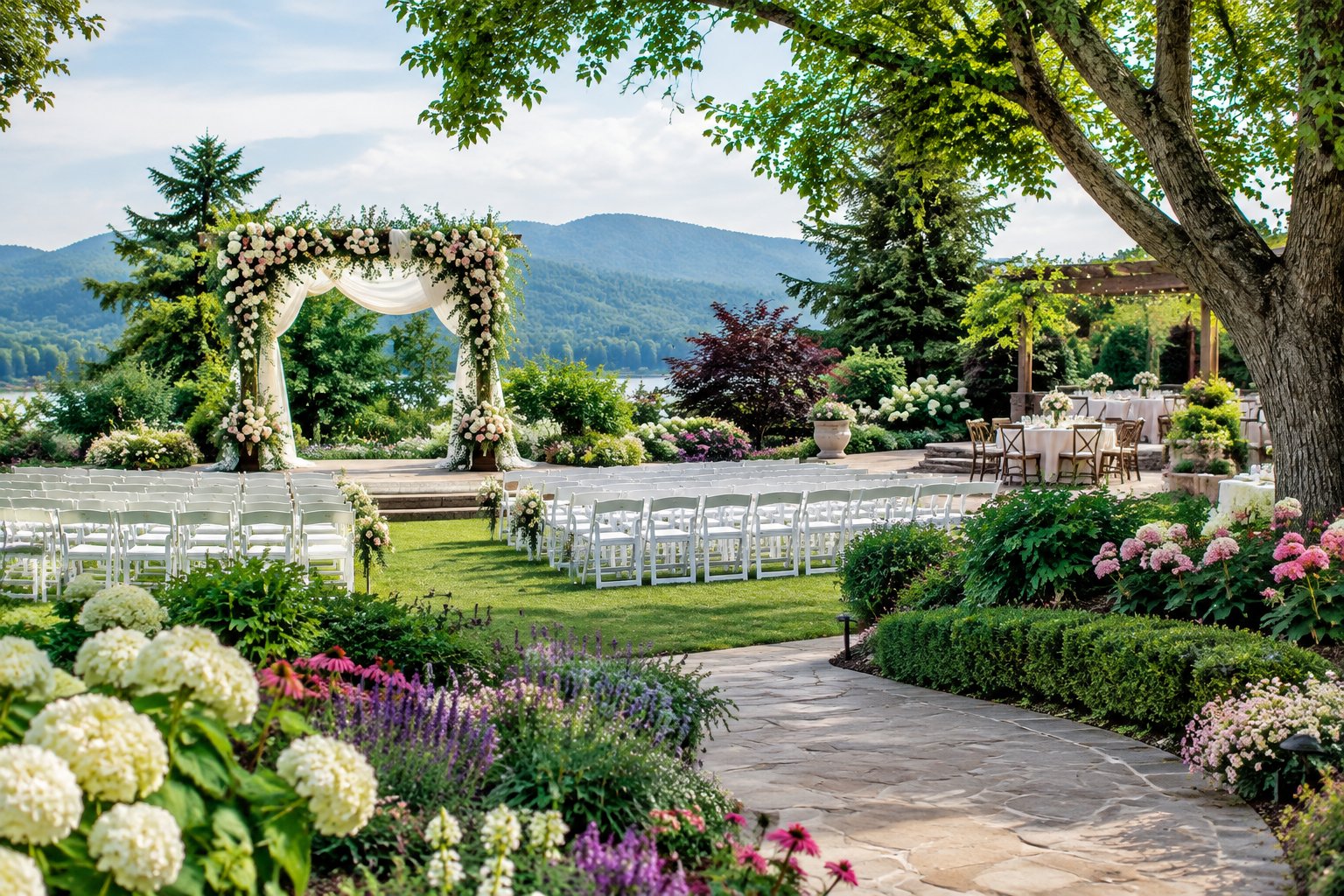
Your season and design style should guide the garden you choose, the time of day you schedule, and the amount of décor you rent. A venue that looks beautiful during peak bloom will support your plans with fewer added installations.
Planning Around Seasonal Flowers and Peak Bloom
Ask the garden manager which plants will be flowering on your date. Spring may bring tulips, peonies, ranunculus, and flowering trees. Summer supports roses, lavender, dahlias, and fuller greenery. Fall adds warm foliage, chrysanthemums, berries, and grasses.
Visit during the same month and time of day as your wedding when possible. Save photos of the areas you plan to use, then ask how the grounds looked during the previous year. Your florist can fill gaps with seasonal flowers, potted plants, branches, or foliage that suits the venue.
Choosing a Layout for an Intimate or Large Celebration
Small garden wedding venues feel warm when the ceremony, dining, and dancing remain close together. Use a short aisle, family-style tables, lounge seating, and one focused floral installation to keep the space connected.
A larger celebration needs wider paths, clear signs, guest transportation, and separate zones for each part of the day. Confirm that the property has room for a dance floor, bar, catering prep, band equipment, and rain coverage without crowding the tables.
Creating an Indoor-Outdoor Flow After Dark
Plan your evening around lighting, temperature, and guest movement. String lights across a dining area, lanterns along paths, and candles on tables create a welcoming transition after sunset.
Check the venue’s power supply and lighting rules before you book. Ask whether the property provides fixtures, requires a licensed electrician, or limits open flames. Give guests a clear route between the garden, restrooms, bar, and indoor lounge so the celebration remains easy to follow after dark. For table details, consider these garden-inspired easy wedding centerpiece ideas.
Questions to Ask Before You Sign the Contract
A venue contract should spell out the total cost, approved vendors, event hours, weather plan, and responsibilities for setup and cleanup. Ask for these details in writing so your wedding planning decisions match the property’s actual rules.
What Is Included in the Site Fee and Vendor Policy?
Request an itemized estimate at your expected guest count. Confirm whether the site fee includes tables, chairs, linens, restrooms, security, cleaning, parking, lighting, power, and an on-site coordinator.
Ask whether you must use the venue’s caterer, bar team, florist, rental company, or preferred vendor list. Check outside-vendor fees, insurance requirements, corkage charges, food and beverage minimums, service fees, taxes, deposit terms, cancellation rules, and overtime rates.
If a venue has a name that resembles another business, verify the legal entity and contract signer. This is especially important when comparing listings that use names such as Trademark Venues.
Are Tents, Lighting, and Rentals Allowed?
Ask whether you can install a tent, and confirm who pays for permits, flooring, power, heaters, fans, and weather walls. Check the approved tent size and the required setup period.
Review rules for:
-
String lights and uplighting
-
Candles, lanterns, and sparklers
-
Floral arches and hanging décor
-
Rental chairs, lounges, and bars
-
Generators and amplified sound
-
Signs, petals, confetti, and installations
A garden may have protected trees, fragile plantings, buried utilities, or historic structures that limit where vendors can work.
Who Manages Setup, Cleanup, and Weather Decisions?
Name the person who approves the weather change and record the decision deadline. Ask who contacts vendors, moves chairs, updates guests, protects décor, and changes the ceremony layout.
Confirm vendor arrival times, loading access, storage areas, cleanup duties, trash removal, and the required departure time. Ask whether your planner or coordinator stays through breakdown. These details help you compare garden wedding venues by the work they include, not only by the beauty of the grounds.