
Garden Wedding Venues on Long Island: How to Choose
Garden wedding venues on Long Island give you a romantic outdoor setting with built-in beauty, flexible photo locations, and access to elegant indoor reception spaces. For couples who want a polished garden ceremony with an easy rain plan, Larkfield in East Northport stands out because its private gardens, ceremony area, Orangerie, ballrooms, bridal suites, and event support share one property.
You can also choose from historic estates, waterfront gardens, North Fork vineyards, country clubs, and garden-forward catering halls across Nassau and Suffolk counties. As you compare wedding venues in Long Island, focus on guest comfort, weather protection, travel time, package details, and the way the grounds support your wedding celebration.
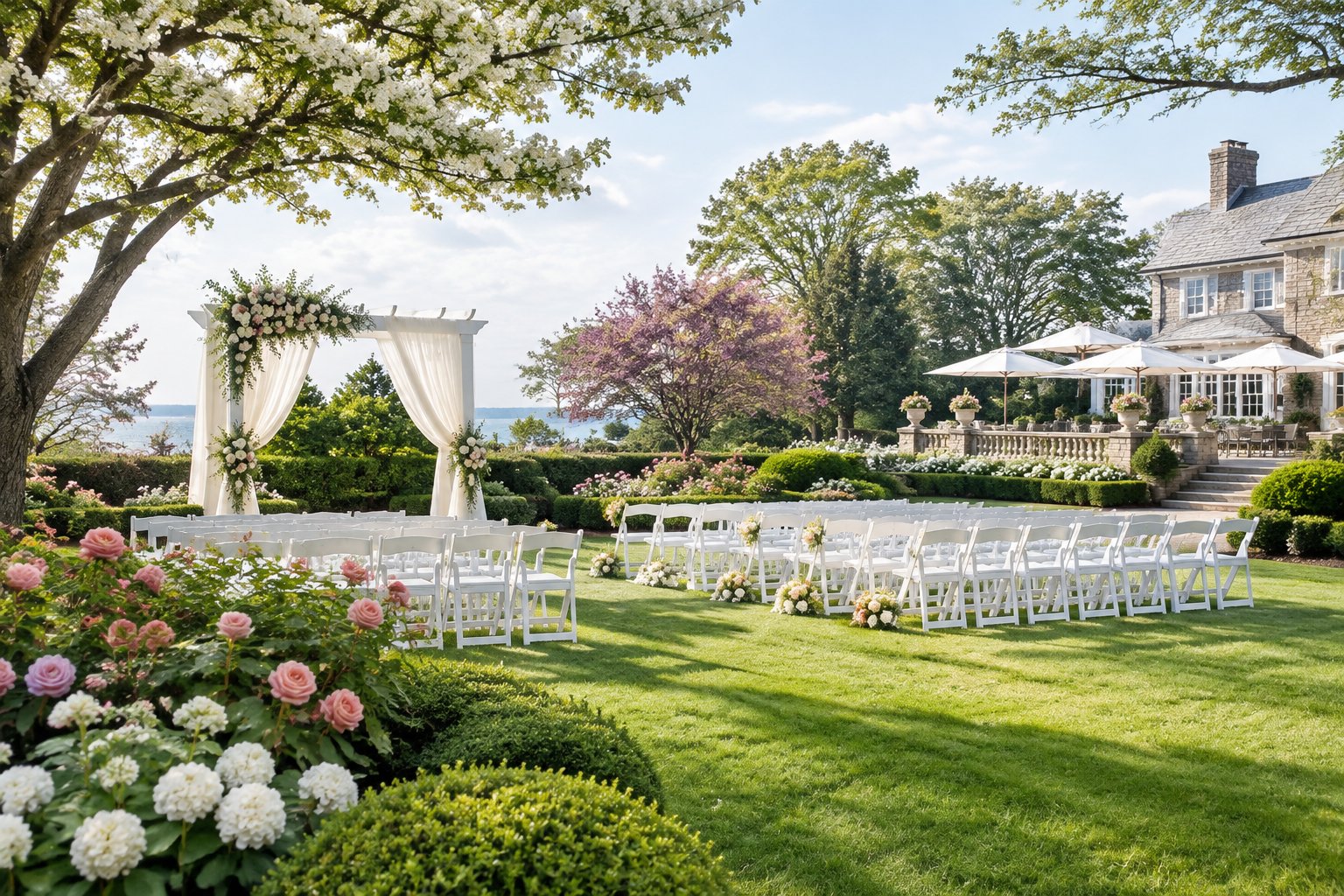
Start by choosing the setting that fits your guest list and wedding style, then schedule tours while your preferred dates are available. A property such as Larkfield can help you keep the ceremony, photos, cocktails, and reception connected from start to finish.
What Defines a Great Garden Setting for Your Wedding Day?
A great garden wedding venue combines attractive outdoor spaces with a practical indoor plan, comfortable guest access, and enough room for your ceremony, photos, cocktails, and reception. Look for healthy landscaping, useful shade, level paths, nearby restrooms, and event spaces that connect smoothly.
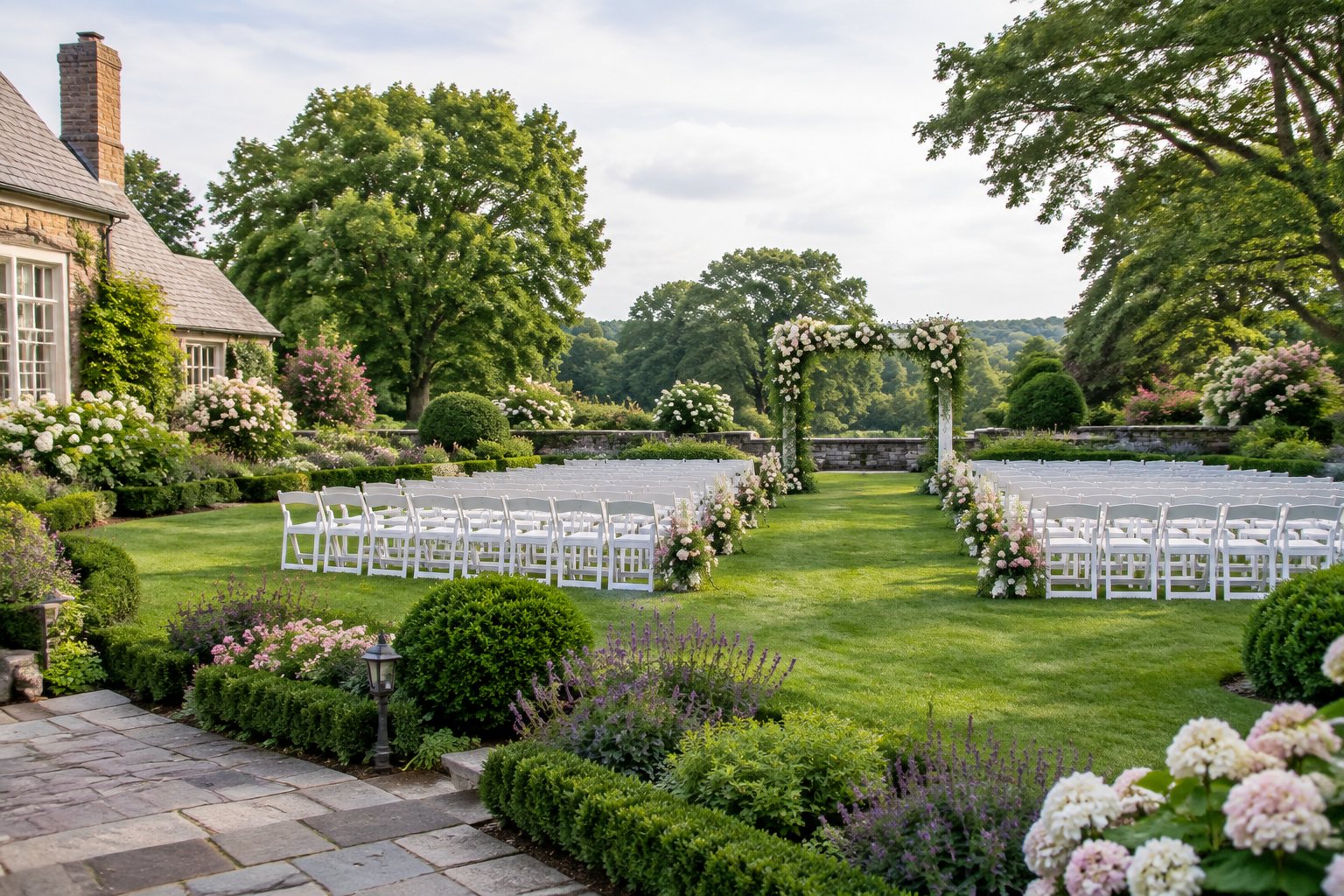
Your tour should answer four planning questions: where guests sit, where they go if weather changes, how vendors move through the property, and which areas produce the wedding photos you want. Ask wedding planners about seasonal blooms, noise rules, lighting, power access, and the timing of outdoor weddings.
Ceremony Gardens vs. Photo-Only Landscapes
A ceremony garden has space for guest seating, an aisle, an arbor, sound equipment, and a clear aisle for the processional. A photo-only landscape can still be beautiful, yet it may lack the access, privacy, or capacity needed for vows.
Ask whether the outdoor garden is private for your event and whether another wedding uses nearby grounds. Check the distance between the ceremony site, cocktail area, outdoor patio, restrooms, and reception room. A short, step-free route keeps the wedding celebration comfortable for older guests and anyone using mobility aids.
Indoor Backup Plans for Outdoor Weddings
Choose a venue with a defined indoor backup plan, not a vague promise to “move inside.” Ask which room holds your full guest count, where the ceremony setup goes, and how quickly staff can change the layout.
Review the rain plan with the venue coordinator before signing. Confirm whether your floral arrangements, chairs, musicians, bar, and ceremony décor transfer to the indoor space. A greenhouse-style room, conservatory, Orangerie, or bright ballroom can preserve the garden mood when rain or strong wind changes your plans.
Privacy, Accessibility, and Guest Comfort
Privacy gives your ceremony a calmer setting and keeps unrelated guests, traffic, and venue activity out of your wedding photos. Walk the full guest route and check ramps, elevators, restrooms, parking, shuttle access, and surfaces underfoot.
Also ask about shade, fans, heaters, insect control, lighting, and seating for guests who need breaks. A garden venue should provide clear directions for guests and a comfortable waiting area near the ceremony. Confirm whether bridal suites offer enough room for getting ready and whether vendors have a separate loading path.
Garden Venue Styles Across Long Island
Long Island gives you several garden wedding styles, from Gold Coast estates and waterfront lawns to vineyards, farms, country clubs, and polished catering halls. Your choice of region shapes the scenery, travel time, menu style, lodging options, and reception design.
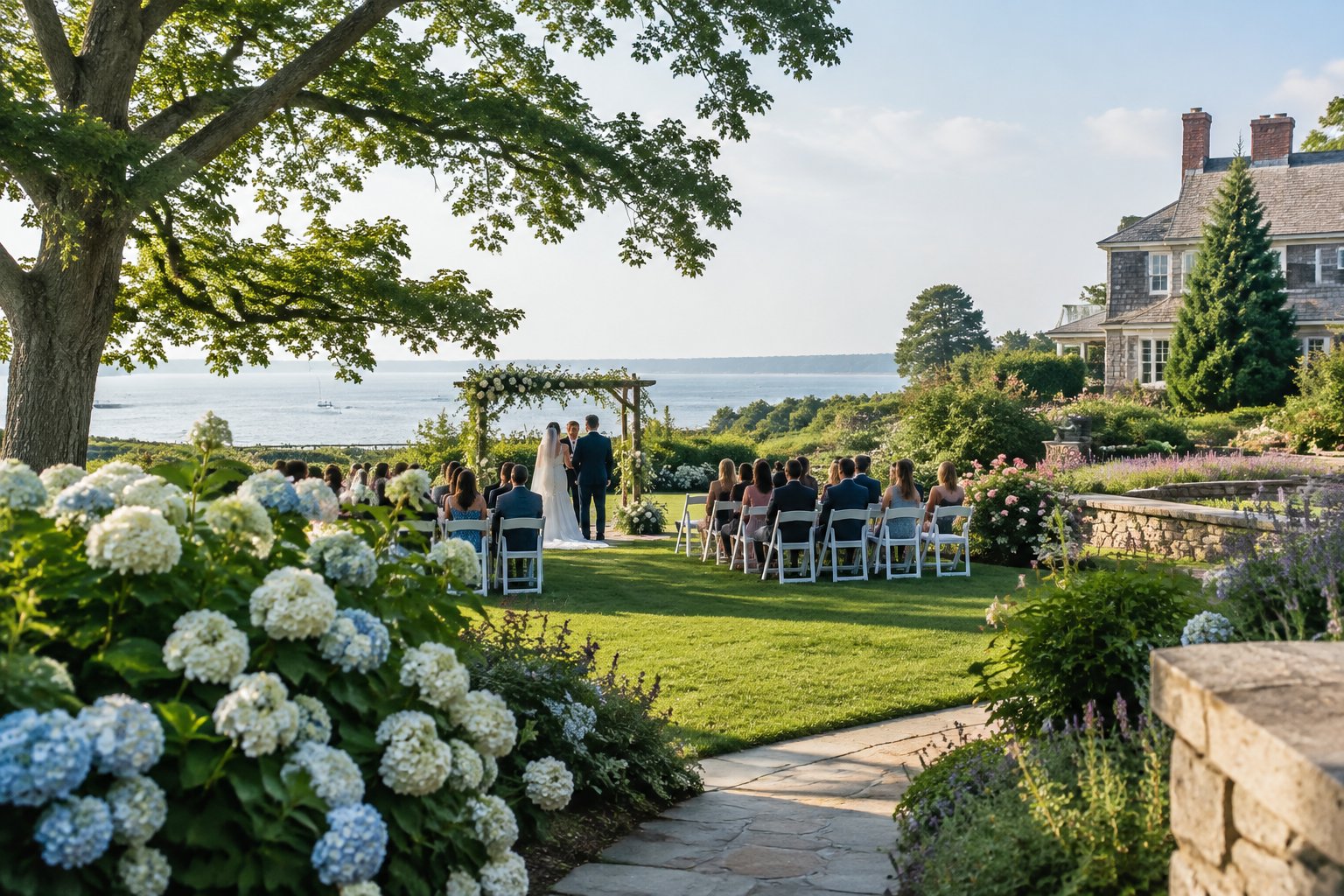
Nassau and the North Shore suit couples drawn to formal architecture and harbor views. Suffolk, the North Fork, and the East End offer vineyard rows, rustic landscapes, beaches, and coastal sunsets. Central Long Island gives you convenient access to large event spaces and full-service packages.
Gold Coast Estates and Mansion Grounds
Mansion wedding venues bring formal gardens, grand entrances, historic architecture, and strong photo backdrops. Properties connected with mansion weddings include OHEKA Castle, The Mansion at Glen Cove, de Seversky Mansion, Sands Point Preserve, and Bourne Mansion.
These settings fit black-tie celebrations, estate portraits, and ceremonies framed by mature trees or manicured lawns. Ask about guest capacity, exclusive use, ceremony fees, catering rules, parking, and indoor space. Historic weddings may also involve restrictions on candles, décor attachment, amplified sound, and lawn access.
Waterfront Gardens on the North Shore and South Shore
Waterfront weddings pair landscaped ceremony areas with views of Long Island Sound, harbors, bays, or the ocean. North Shore properties often emphasize rocky coastlines and harbor scenery, while South Shore venues feature broad water views, docks, sunsets, and beach-adjacent grounds.
Beach weddings create a relaxed setting, though sand, wind, sun, and uneven paths affect guest comfort. Ask where your ceremony sits relative to the water, whether tides affect access, and how the venue handles wind. Confirm whether your reception stays indoors and whether guests have a shaded cocktail area.
North Fork Vineyards and Rustic Landscapes
Winery weddings give you rows of vines, open fields, tasting-room details, and a relaxed East End feel. Barn & farm weddings add wood, orchards, gardens, and country textures that work well with seasonal floral arrangements.
The North Fork and other rural areas require careful transportation planning. Review nearby hotels, shuttle routes, cell service, parking, and end-of-night transportation. Ask whether the property hosts the ceremony and reception on site, and check which areas remain available for wedding photos during your event.
Garden-Forward Catering Halls and Country Clubs
Catering halls and country club weddings give you structured service, established menus, ballrooms, and landscaped ceremony areas. Many offer garden courtyards, fountains, outdoor patios, or lawns that lead directly into cocktail and reception spaces.
This model works well when you want a clear package and a dedicated banquet team. Ask about minimum guest counts, event timing, bar tiers, ceremony fees, service charges, and the number of weddings held on the same day. Banquet halls, hotel weddings, restaurant weddings, rooftop weddings, church & temple weddings, museum weddings, boat weddings, park & outdoor weddings, and historic weddings each create a different guest experience, so compare the full flow of the day.
Notable Properties to Consider by Wedding Vision
The best property shortlist starts with your design goal, guest count, and preferred region. Long Island includes formal estates, private gardens, waterfront rooms, beach clubs, vineyards, yacht clubs, and East End resorts.
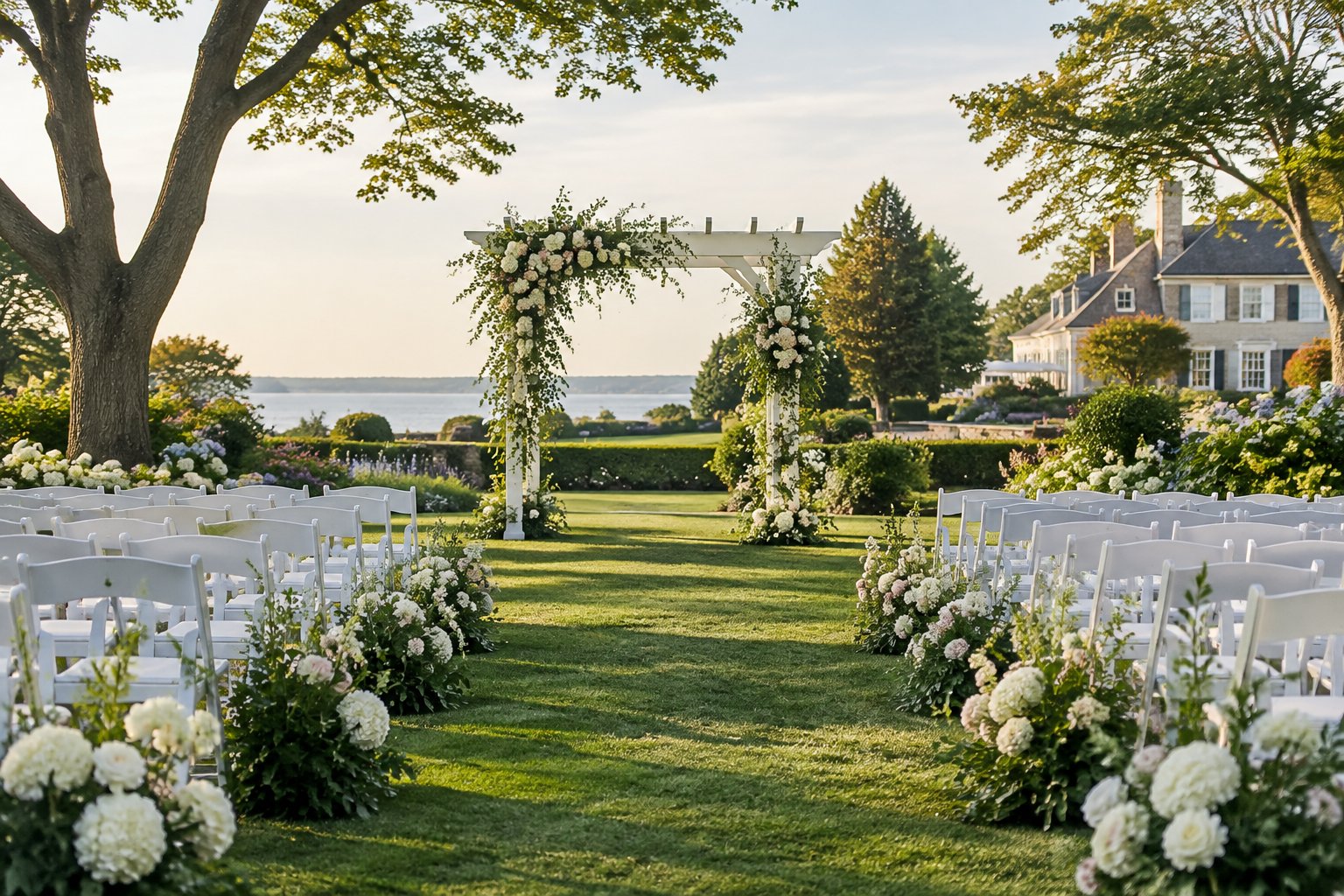
Use venue names as starting points for tours, then confirm current capacity, pricing, dates, and event policies directly with each property. Features and packages change, especially for seasonal outdoor spaces.
Classic Estate Gardens and Historic Backdrops
For grand architecture and formal grounds, consider Sea Cliff Manor, The Mansion at Glen Cove, Glen Cove Mansion, de Seversky Mansion, NYIT de Seversky Mansion, Sands Point Preserve, OHEKA Castle, Bourne Mansion, and Brecknock Hall.
These properties suit black-tie weddings, formal portraits, and ceremonies framed by historic buildings. Ask how much of the estate your event uses, whether the gardens host ceremonies or photos only, and which indoor rooms serve as the weather plan.
Westbury Manor, The Inn at New Hyde Park, and Jericho Terrace offer additional mansion-style settings with reception rooms and landscaped areas. Their layouts can work well when you want an elegant garden moment followed by a controlled indoor celebration.
Private Gardens With Ballroom Receptions
Private garden venues keep your outdoor ceremony and indoor reception on one property. Larkfield in East Northport combines private gardens with several indoor event spaces, including the Orangerie, plus bridal suites and on-site event support.
Flowerfield in St. James is known for estate landscaping, ponds, fountains, fruit trees, and greenhouse-style spaces. Watermill Caterers, Insignia, Crest Hollow Country Club, Majestic Gardens, The Meadow Club, Jericho Terrace, and The Village Club at Lake Success also give you options for landscaped ceremony areas paired with ballroom receptions.
Ask each property about garden privacy, guest capacity, ceremony timing, cocktail flow, and whether the indoor room keeps your preferred garden-inspired design.
Waterfront and Beach-Adjacent Garden Celebrations
For coastal scenery, consider Swan Lake Caterers, Swan Club on the Harbor, Harbor Links, Riviera Waterfront Mansion, The Crescent Beach Club, Land’s End Waterfront Catering, The Old Field Club, Stewart Manor Country Club, The Bayview, Atlantis Banquets & Events, and Oceanbleu.
These properties offer different combinations of lawns, patios, waterfront rooms, docks, and beach-adjacent views. Ask whether the water appears in the ceremony background, how wind affects the setup, and where guests go for shade or shelter.
Review parking, shuttle needs, restrooms, sound limits, and sunset timing. A waterfront garden can look different in bright midday light than it does during evening portraits, so tour at a time close to your planned ceremony.
Vineyard, Yacht Club, and East End Gardens
East End venues fit couples who want vines, coastal air, country landscapes, or resort amenities. Consider Peconic Bay Yacht Club, The Vineyards at Aquebogue, Giorgio’s Baiting Hollow, East Wind Long Island, and Gurney’s Montauk Resort.
The Vineyards at Aquebogue and Giorgio’s Baiting Hollow bring vineyard scenery and open-air photo locations. Peconic Bay Yacht Club adds a nautical setting, while East Wind Long Island offers multiple event spaces and lodging. Gurney’s Montauk Resort suits couples drawn to a coastal celebration near Montauk.
Rocky Point and other eastern Suffolk locations can offer more open space, though guest travel and hotel availability deserve early planning. Ask about shuttle service, ceremony noise, rain plans, and the distance between gardens and reception areas.
How Much Do Garden Weddings on Long Island Cost?
Garden weddings on Long Island commonly fall into two pricing models: per-person packages at catering halls and country clubs, or site fees with separate catering at estates and private properties. Published market ranges place many all-inclusive venues around $110 to $165 per person, while estate site fees can run from roughly $12,000 to $25,000 or more before food, rentals, staffing, tax, and gratuity.
Your final proposal depends on the date, guest count, location, menu, bar service, ceremony setup, rentals, floral arrangements, and planning support. Request an itemized quote so you can compare venues on the same terms.
What Venue Packages Commonly Include
A full-service package may include the event space, cocktail hour, dinner, cake, bar service, tables, chairs, linens, staffing, and a banquet manager. Some venues include ceremony seating, a ceremony arch, parking, coat check, bridal suites, or basic lighting.
Ask which services come from the venue and which come from outside vendors. A garden package might include the lawn and chairs while charging separately for an arbor, ceremony sound, upgraded linens, heaters, tenting, or a weather-related room change.
Review the menu carefully. Confirm hors d’oeuvres, entrée choices, dietary meals, children’s meals, dessert, late-night food, liquor brands, and service length.
Cost Factors That Change the Final Proposal
Saturday dates in June, September, and October command strong demand. Friday, Sunday, winter, and early-spring dates can reduce the base rate, depending on the property.
Guest count affects food, bar service, rentals, staffing, and minimums. Waterfront settings, exclusive use, premium liquor, extended hours, tenting, transportation, lighting, and elaborate floral installations also raise costs. Taxes and gratuity can add about 25% to 30% to food and beverage totals, so request those figures in writing.
A site-fee estate requires a broader budget review. Add licensed catering, rentals, staffing, restroom facilities, power, insurance, tenting, setup, cleanup, and a wedding planner when needed.
Questions to Ask Before Comparing Quotes
Use these questions during every venue call:
-
Is the price per person, a site fee, or a combination?
-
What guest minimum applies to our date?
-
Does the quote include the ceremony and outdoor setup?
-
Which tables, chairs, linens, lighting, and décor items are included?
-
Are tax, gratuity, service charges, and cake-cutting fees listed separately?
-
What happens if rain, wind, heat, or another weather issue changes the plan?
-
Can we bring our own florist, caterer, planner, band, or photographer?
-
Are bridal suites, parking, valet service, and security included?
-
What deposit, payment schedule, cancellation terms, and overtime charges apply?
For cost-saving ideas, compare package details with affordable wedding venues Long Island gardens and review all-inclusive wedding venues Long Island when bundled services fit your plans.
How to Tour and Book the Right Venue
Book the venue that fits your guest count, weather plan, travel needs, photography timeline, and service expectations in one workable layout. A beautiful garden loses value when guests face long walks, limited shelter, or a reception room that cannot hold your preferred design.
Bring your draft guest list, budget range, ceremony time, and vendor questions to every tour. Take notes on walking distances, room dimensions, restrooms, loading areas, noise, and parking.
Match Capacity and Layout to Your Guest List
Ask for the seated capacity of the garden, cocktail area, ballroom, and rain-plan room. Confirm whether the venue counts a dance floor, buffet, band, sweetheart table, and guest lounge within that capacity.
Walk the ceremony-to-reception route with the coordinator. Check whether elderly guests and guests using wheelchairs can move comfortably between spaces. Review where guests wait before the ceremony and whether the bridal party has a private entrance.
A room that fits 150 guests on paper might feel tight once you add a large band, dance floor, photo booth, lounge furniture, or wide floral arrangements. Request a sample floor plan for your expected guest count.
Plan for Weather, Seasonal Light, and Comfort
Choose a clear weather plan before you sign. Ask when the final outdoor decision is made, who makes it, and whether staff can move chairs, décor, music, and guests without disrupting the schedule.
Tour at the season and time of day you prefer when possible. Note direct sun, shade, heat, wind, mosquitoes, sunset direction, and evening lighting. Provide fans, heaters, umbrellas, water stations, or blankets when the forecast and venue layout call for them.
Review the garden’s condition across the wedding season. Spring flowers, summer greenery, early fall color, and late-season landscaping create different backdrops for your ceremony and portraits.
Evaluate Food, Service, and Getting-Ready Spaces
Taste the menu and ask how the kitchen handles allergies, vegetarian meals, vegan meals, children’s meals, and late-night snacks. Confirm bar brands, service length, cocktail-hour stations, cake storage, and vendor meal policies.
Inspect the bridal suites for lighting, seating, mirrors, outlets, restrooms, and privacy. Ask whether hair and makeup vendors have enough setup space and whether personal items can remain secure during the ceremony.
Meet the banquet manager who will oversee your day. Ask how the venue handles vendor arrivals, timeline changes, guest concerns, cleanup, and the transition from garden ceremony to indoor reception.
Coordinate Your Photographer and Garden Timeline
Share the property map with your Long Island wedding photographer before booking portrait times. Identify shaded portrait locations, backup indoor spaces, sunset areas, family-photo locations, and routes that keep you away from guests when you want privacy.
Plan family photos soon after the ceremony while key relatives are gathered. Schedule couple portraits around cocktail hour, golden light, and transportation needs. Ask whether the venue permits photography in every garden area and whether another event affects access.
Use the garden’s best light without delaying dinner or creating a long guest wait. Your wedding planner, photographer, and venue coordinator should confirm one timeline that covers setup, ceremony, portraits, cocktails, reception entrances, and the weather call.