
Garden Wedding Venues Orange County: How to Choose
Garden weddings give you a natural setting, soft light, and flexible design options across Orange County. For couples who want a romantic outdoor ceremony with a polished reception, Grand Gimeno stands out because its Mediterranean Olive Grove connects directly to the indoor reception hall, helping guests move smoothly between spaces. Its terracotta details, stone paths, mature olive trees, and live-fire culinary style create a setting with strong character.
You can also explore historic properties, country clubs, estates, vineyards, hotels, museums, restaurants, and waterfront event spaces. As you compare garden wedding venues Orange County couples consider, focus on guest comfort, weather planning, food service, parking, and the flow between ceremony and reception. Tour your favorite spaces and request current pricing and availability before choosing your date.
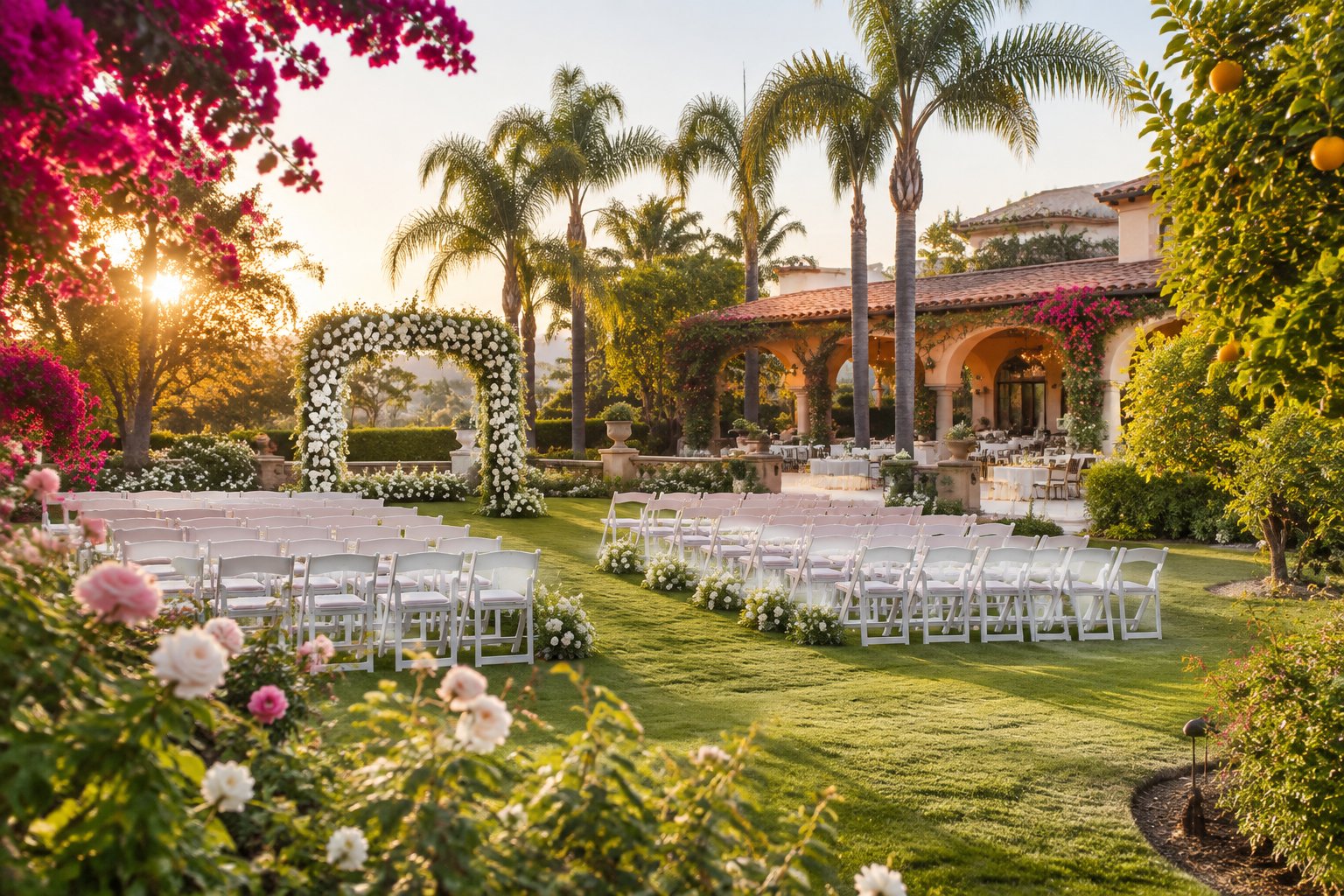
What Makes a Garden Setting Work for Your Wedding?
A successful garden wedding combines attractive scenery with practical guest support, reliable service, and a clear plan for changing conditions. Look for grounds that suit your ceremony style while giving your guests comfortable access to food, restrooms, shade, and seating.
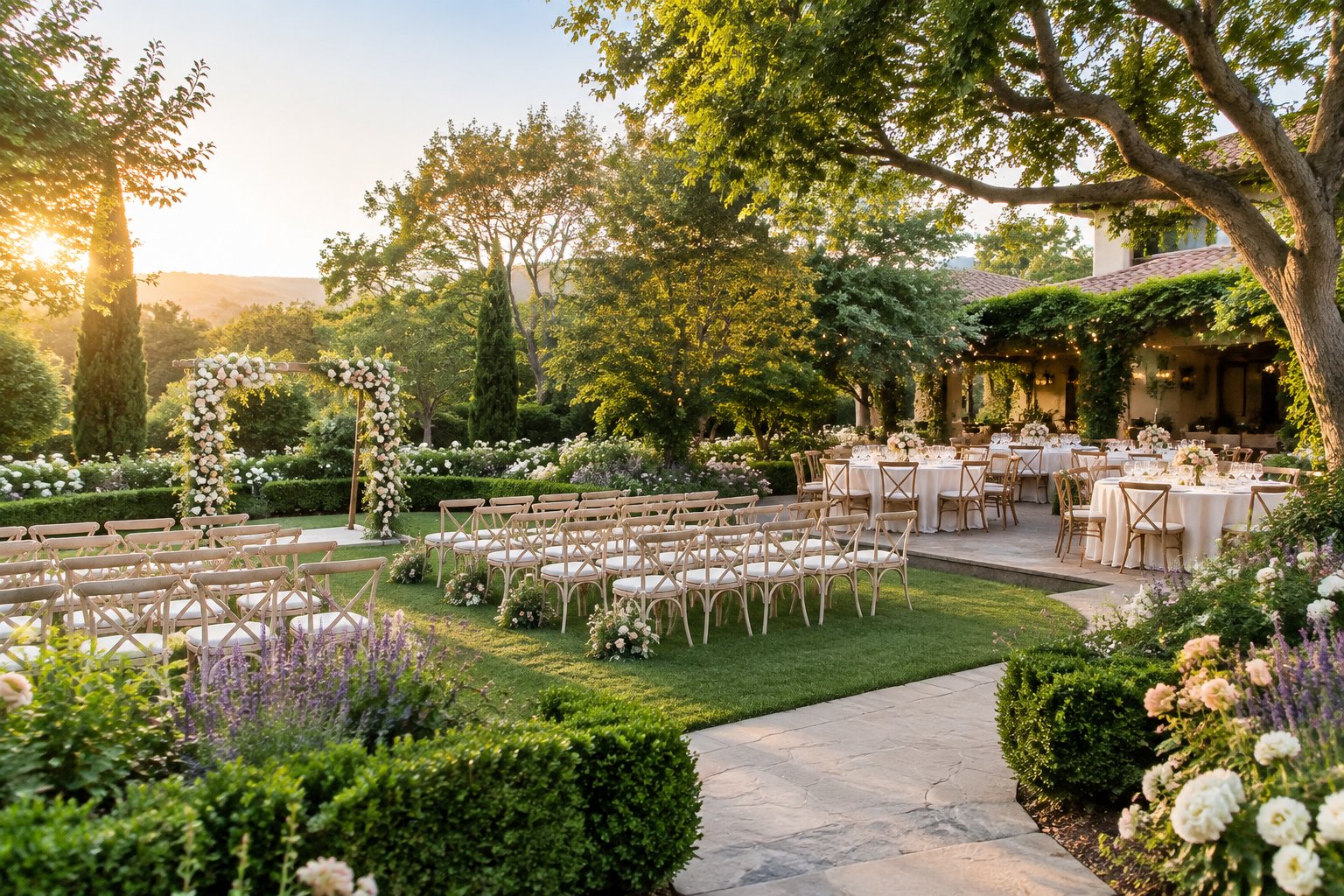
Ceremony Backdrops
A garden ceremony already provides texture through trees, flowers, stonework, fountains, pergolas, or views across landscaped lawns. Ask where the couple will stand, where guests will face, and how the sun will affect the ceremony at your planned time.
Check whether the venue includes chairs, an arbor, aisle décor, microphones, and power access. A simple floral arrangement can frame a mature tree or architectural feature, while a larger installation can define a wide lawn.
Photo Opportunities, and Guest Comfort
Walk the grounds with your photographer and identify shaded paths, open lawns, architectural details, and private areas for portraits. Confirm how much time you have for photos and whether other events share nearby spaces.
Guest comfort requires more than attractive landscaping. Ask about shade structures, fans, heaters, paved routes, restroom access, seating for older guests, and lighting after sunset. A garden with uneven paths needs a clear accessibility plan.
Why Indoor and Outdoor Event Spaces Matter
Indoor and outdoor event spaces give you room to respond to heat, wind, rain, or changing energy levels during the day. You might hold the ceremony outside, serve cocktails in a courtyard, and host dinner in a ballroom or banquet hall.
Ask how far guests must walk between each area and whether staff can move food, rentals, and décor without disrupting the celebration. A connected layout supports smoother catering service and reduces transportation needs.
How to Match a Garden Venue to Your Guest Count and Season
Your guest count should guide the size and layout of the garden. A space that feels intimate with 60 guests may feel crowded with 150 once you add tables, a dance floor, a bar, buffet stations, and photography areas.
Visit at the same time of day and season as your wedding when possible. Check the sun direction, shade coverage, wind exposure, parking, and backup room capacity. Request a sample floor plan at your expected guest count before booking.
Find the Right Venue Style for Your Celebration
Your preferred venue style shapes the atmosphere, guest experience, available services, and design budget. Orange County gives you options that range from historic gardens and cultural landmarks to country clubs, farms, hotels, museums, restaurants, rooftops, mansions, and waterfront properties.
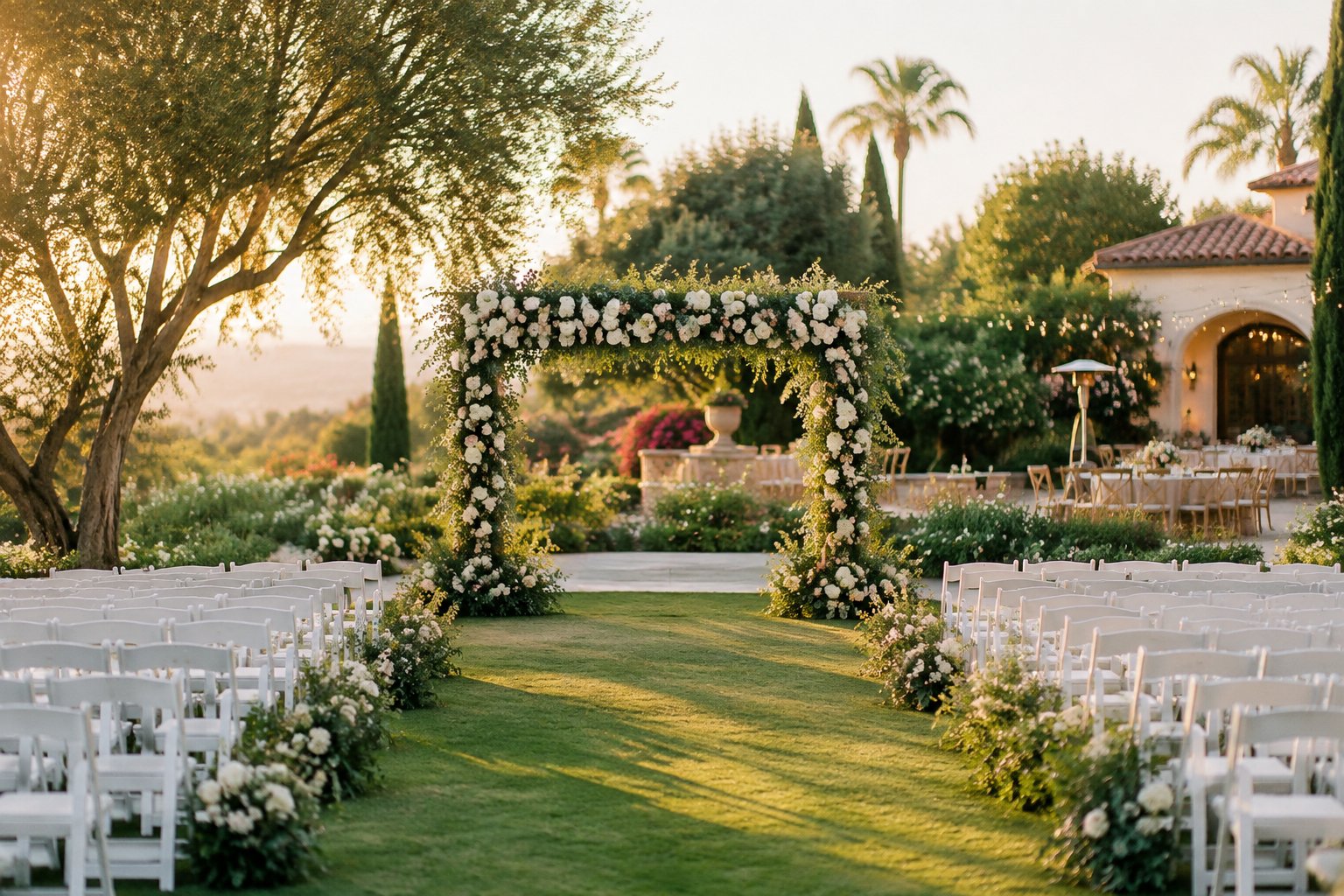
Historic Gardens and Cultural Landmarks
Historic weddings work well when you want architecture and story woven into the setting. The Richard Nixon Library, managed through The Richard Nixon Library Foundation, offers a formal landmark atmosphere in Yorba Linda. Heritage Museum of Orange County, Ebell of Santa Ana, The Chapel of Orange, The Hacienda, Bowers Museum, and The Bowers Museum provide additional cultural settings to tour.
The Muckenthaler Mansion offers historic character and landscaped grounds in Fullerton. Casa Romantica Cultural Center and Gardens brings together gardens, coastal surroundings, and cultural programming in San Clemente. Franciscan Gardens combines historic San Juan Capistrano character with an outdoor ceremony setting.
Golf Courses and Country Clubs With Green Views
Country club weddings suit couples who want maintained lawns, organized event service, and space for larger receptions. Turnip Rose Promenade & Gardens offers a garden-focused setting, while golf properties bring wide green views and structured reception areas.
Ask about golf-course access, ceremony locations, cart traffic, clubhouse use, parking, and photo permissions. Confirm which areas belong exclusively to your event and which remain open to members.
Estate, Vineyard, and Farm Settings
Estate wedding venues create a private, residential feel with gardens, courtyards, mature trees, and distinctive architecture. The Muckenthaler Mansion, Harmony Estate, The Swanner House, and Grand Tradition Estate & Gardens fit couples seeking an elevated estate atmosphere.
Winery weddings and farm settings offer a more relaxed connection to the land. Giracci Vineyards & Farms, The Barn at Aliso Viejo Ranch, and similar properties suit rustic décor, long-table dining, and outdoor cocktail hours. Ask about power, restrooms, catering access, lighting, and rental requirements.
Hotels, Museums, Restaurants, and Waterfront Options
Hotel weddings offer guest rooms, event staff, and convenient accommodations. Lido House, Autograph Collection, provides a coastal hotel setting, while museums and restaurants create a strong built-in identity through art, architecture, or cuisine.
Bowers Museum, Five Crowns, City Cruises – Newport Beach, and waterfront properties support distinct celebration styles. Ask about food and beverage minimums, private dining areas, noise rules, sunset timing, and guest transportation. A waterfront view can shape the ceremony schedule, photography plan, and seating layout.
Garden-Focused Places to Put on Your Tour List
Build your tour list by location, guest count, and setting so you can compare similar spaces in one outing. Golf clubs, museums, hotels, community spaces, courtyards, and coastal properties each offer different combinations of scenery and event support.
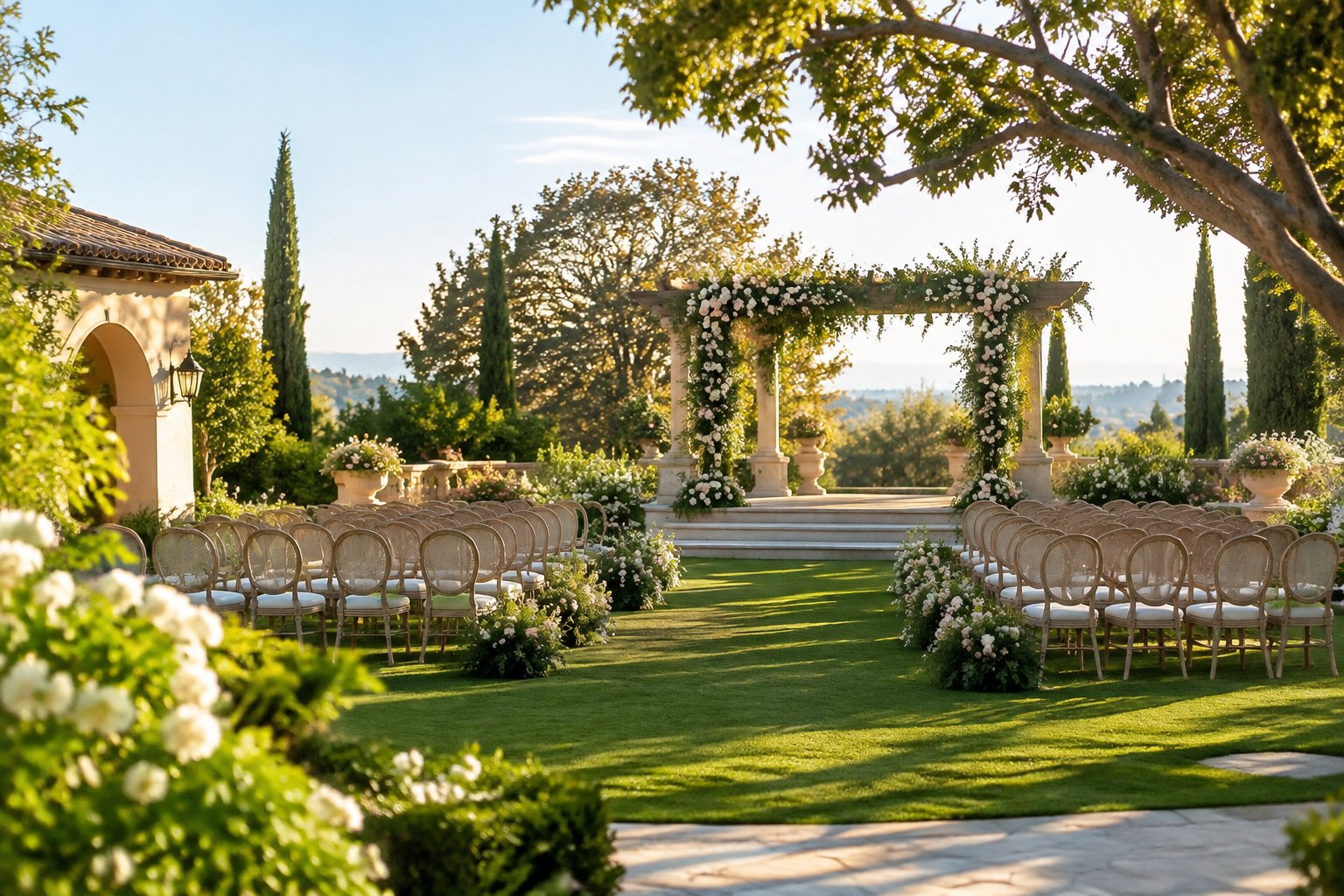
North County and Inland Garden Backdrops
North County and inland areas offer lawns, courtyards, mature trees, and elevated views. Tour Coyote Hills Golf Course, Anaheim Hills Golf Club, Anaheim Hills Golf Course, Tustin Ranch Golf Club, Los Coyotes Country Club, Alta Vista Country Club, Fairview Green River, and Summit House.
Brea Community Center and University Club by Wedgewood Weddings can suit couples seeking flexible event spaces. For a cultural setting, visit UC Irvine Langson Orange County Museum of Art and the Orange County Museum of Art. Avenue of the Arts Costa Mesa, Hilton Irvine Orange County Airport, The Westin Anaheim Resort, and JW Marriott Anaheim Resort add hotel-based options near major attractions.
Central Orange County Ceremony Lawns and Courtyards
Central Orange County gives you convenient access to reception spaces, hotels, and major roads. Ask about ceremony lawns, courtyard layouts, indoor dining rooms, and guest parking at each tour.
A venue with a defined ceremony area and nearby reception room keeps the schedule easy for guests. Check whether the ceremony space remains private during cocktail hour and whether the venue provides a rain-ready transition plan.
Coastal and South County Garden Escapes
South County properties combine gardens with hills, golf views, coastal air, or resort amenities. Consider Strawberry Farms Golf Club, Talega Golf Club, San Juan Hills Golf Club, Aliso Viejo by Wedgewood Weddings, The Harper by Wedgewood Weddings, and Dove Canyon Courtyard.
These locations suit outdoor weddings with landscaped ceremony areas and open-air portraits. Ask how wind, evening temperatures, hillside access, and transportation affect your event. Confirm whether your package includes ceremony chairs, lighting, heaters, and reception furniture.
How Much Should You Budget for the Celebration?
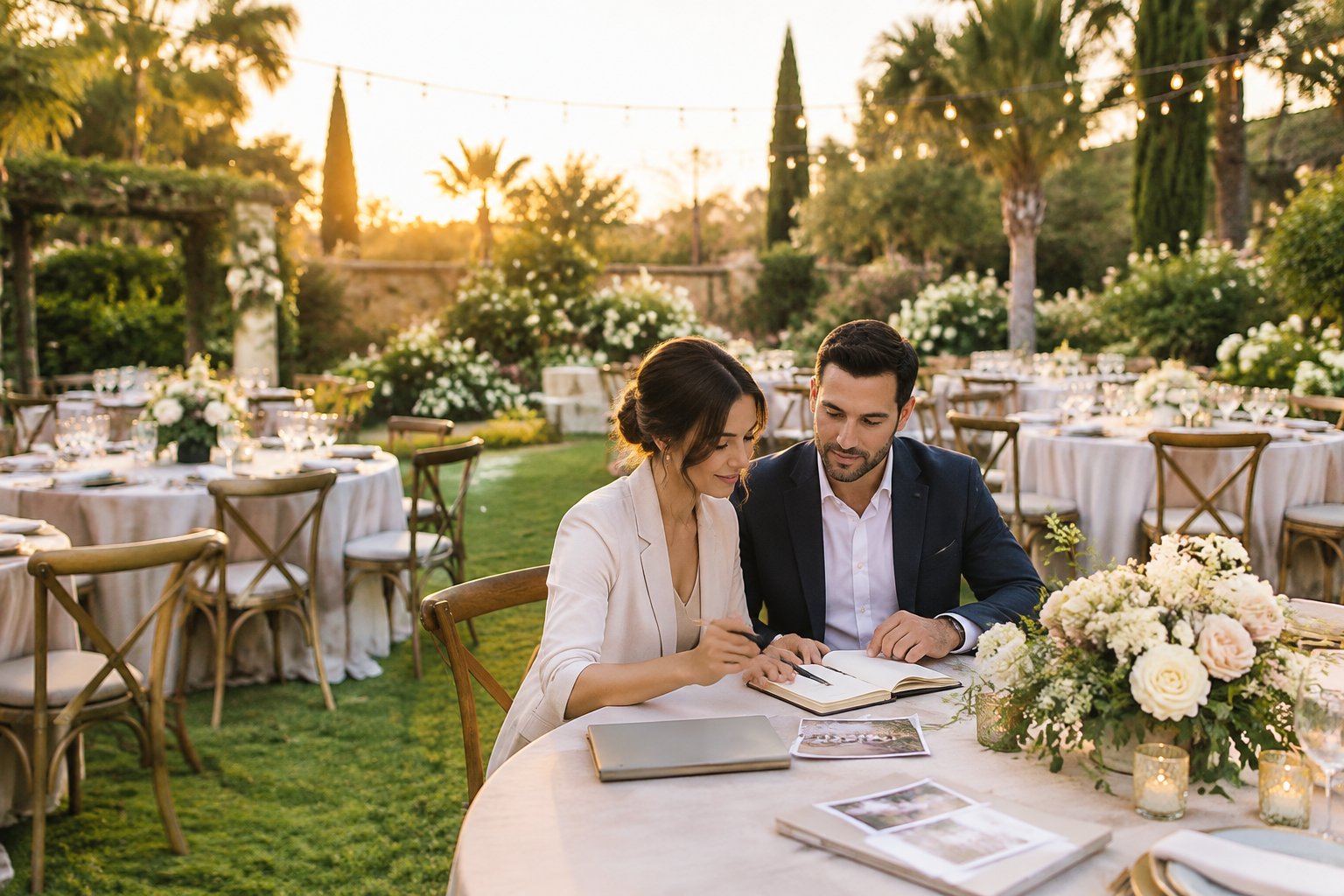
Your garden wedding budget should combine the site fee with catering, rentals, service charges, taxes, décor, staffing, and weather needs. A low rental price can rise after you add tables, chairs, restrooms, lighting, kitchen access, and outside vendor costs.
What Venue Fees, Food, and Service Charges Can Include
Venue fees can cover the ceremony area, reception room, tables, chairs, basic staffing, setup time, parking, and a getting-ready room. Each property defines its package differently, so request an itemized estimate.
Catering may include a plated meal, buffet, stations, appetizers, bar service, china, glassware, servers, and cleanup. Ask whether service charges, gratuity, taxes, cake cutting, corkage, security, and event insurance appear in the quoted price.
For planning help with meal costs, compare your estimate with guidance on how much you should budget per person for a wedding.
How Guest Count and Day of the Week Change the Total
Guest count affects nearly every cost because food, drinks, rentals, staffing, and restroom needs rise with attendance. A larger guest list also changes the amount of garden space required for tables, dance areas, bars, and pathways.
Saturday dates during peak wedding months often carry higher minimums. Ask about weekday, Sunday, winter, and off-season pricing. Request the same estimate for two guest counts so you can see which costs are fixed and which grow per person.
Questions to Ask About Preferred Vendors and Outside Catering
Ask whether the venue requires in-house catering, a preferred vendor list, or a minimum food and beverage spend. Confirm whether outside caterers can use the kitchen and whether they must pay access, cleaning, or staffing fees.
Review rules for alcohol, bartenders, cake delivery, food trucks, rentals, florists, DJs, and planners. If you already have a caterer in mind, obtain written approval before signing. You can also review how to choose the right wedding caterer before tasting menus.
What Should You Ask Before Signing a Contract?
Read the contract against your actual wedding plan, including the garden layout, backup location, vendor access, payment schedule, and end time. A beautiful property becomes a practical choice when its written terms support your guest count and celebration style.
What Is the Weather Backup Plan?
Ask where the ceremony, cocktail hour, and reception move if rain, heat, wind, or poor air quality affects the garden. Confirm whether the backup room holds your full guest count and whether the venue supplies tents, umbrellas, fans, heaters, flooring, or air conditioning.
Request the decision deadline for activating the backup plan. Ask whether moving indoors changes the layout, décor, catering service, photography schedule, or rental cost.
Can the Ceremony and Reception Flow Smoothly?
Walk the route from the ceremony site to cocktails, dinner, dancing, restrooms, and transportation. Confirm the distance, surface type, lighting, accessibility, and staff plan for each transition.
For hotel weddings, historic weddings, museum weddings, country club weddings, winery weddings, restaurant weddings, rooftop weddings, mansion weddings, and waterfront weddings, ask which spaces are private during your event. Your contract should name each reserved area and list the access times.
Which Restrictions, Timelines, and Fees Need Clarification?
Ask for written details about setup, breakdown, vendor arrival, music curfew, candles, open flames, confetti, décor attachment, alcohol service, parking, insurance, security, overtime, cleanup, and damage deposits. Confirm the payment schedule, cancellation terms, rescheduling policy, force majeure language, and refund rules.
Have the venue identify the day-of contact and the staff included in your package. Before you sign, request a complete cost estimate at your expected guest count with taxes, service charges, rentals, and required add-ons shown separately.