
Garden Wedding Venues: How to Choose the Right One
A garden wedding venue gives you built-in beauty, flexible ceremony settings, and a relaxed connection to nature. For couples who want a romantic outdoor celebration with memorable scenery and professional event support, a botanical garden or private estate is the strongest starting point because the grounds, ceremony areas, and reception spaces often work together in one property.
Your best choice should fit your guest count, wedding style, season, weather plan, and budget. A rose-filled estate creates a different mood from a modern rooftop garden, while a small botanical courtyard suits an intimate wedding better than a large formal lawn. Start with venues that match your vision and practical needs, then schedule tours during the season and time of day you prefer.
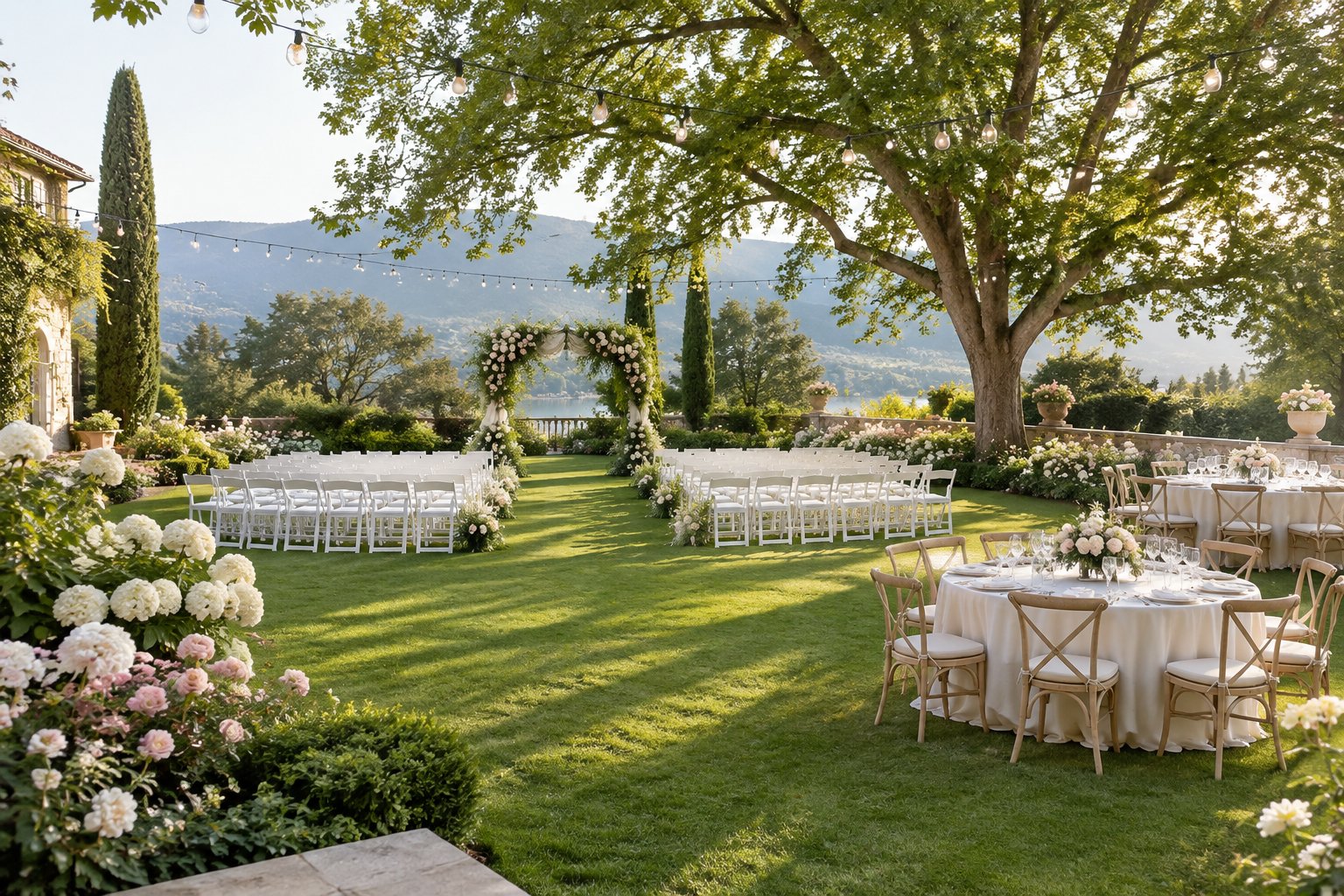
Use this guide to narrow your options with confidence, then explore garden wedding ideas for ways to style the setting you choose.
What Makes a Garden Setting Right for Your Day?
The right garden setting gives you a beautiful backdrop while supporting comfortable guest movement, a clear ceremony plan, and a workable reception layout. Focus on the garden’s style, scale, access, and backup spaces before you fall in love with its flowers.
Choose a Garden Style That Fits Your Vision
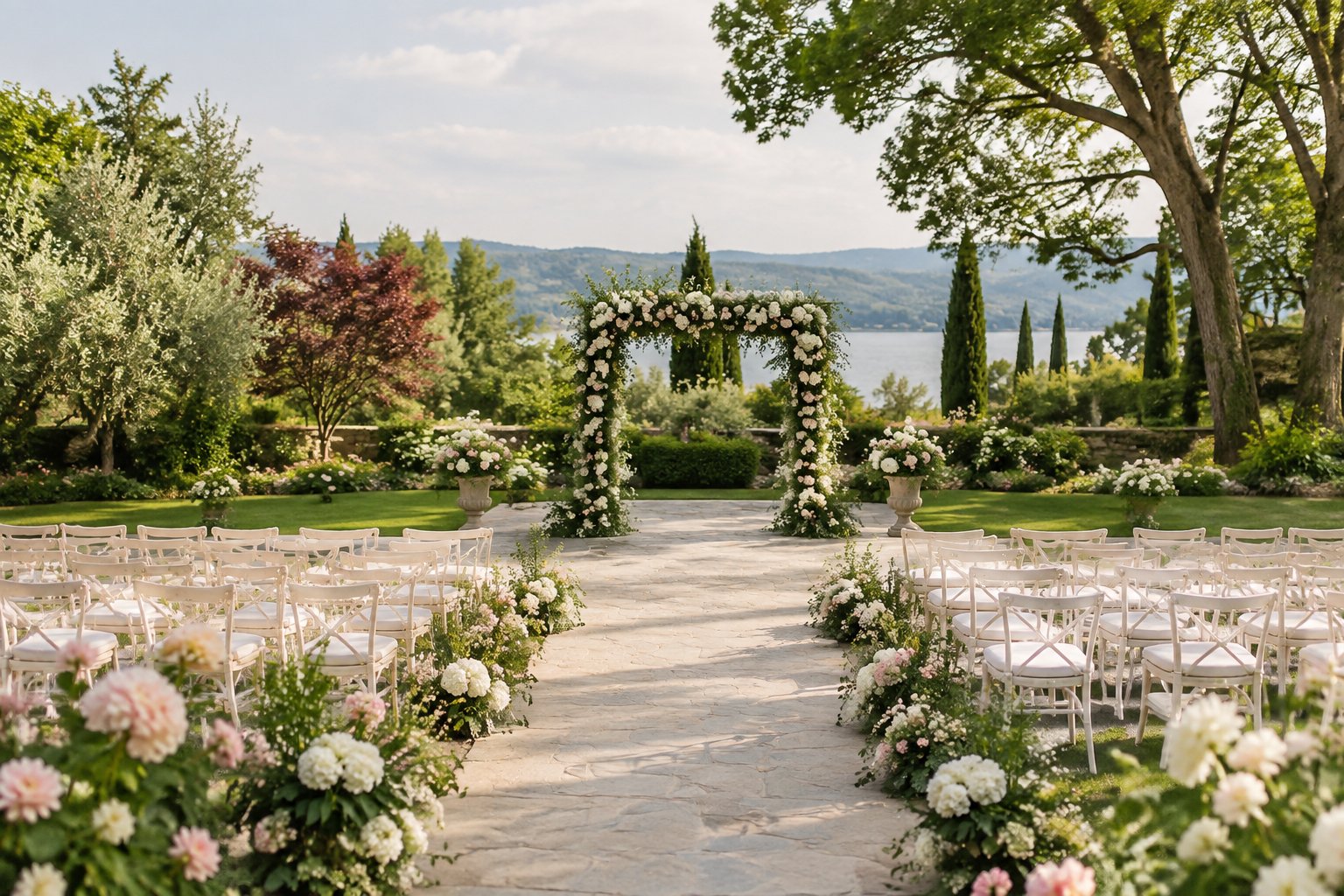
Begin with the mood you want your wedding ceremony and wedding reception to create. A formal garden suits classic décor, trimmed hedges, symmetrical paths, and elegant attire. A rose garden or English gardens provide a romantic setting filled with color and fragrance.
A Japanese garden brings calm water features, curved bridges, and sculpted greenery. A tropical garden feels lush and vibrant, while a desert garden offers sculptural cacti, warm colors, and a clean modern look. Some couples prefer the storybook character of the secret garden, while others choose a botanical garden wedding for varied plant collections and professional groundskeeping.
Ask how much décor the space needs. A strong garden ceremony backdrop can reduce floral costs, while a more open lawn may require an arbor, aisle arrangements, and lighting.
Match the Space to Your Guest Count and Event Flow
Measure the full guest experience, not just the ceremony lawn. Confirm seated dinner capacity, cocktail space, dance floor dimensions, restrooms, parking, accessibility, and paths between each area.
Walk the route from getting-ready rooms to the outdoor ceremony, then from the ceremony to cocktail hour and the outdoor reception. Check whether guests cross grass, gravel, steep paths, or narrow walkways. Ask where vendors unload and where catering staff move during service.
An intimate wedding or elopement can feel comfortable in a courtyard, conservatory, or small lawn. A larger wedding needs separate zones for dining, dancing, bars, buffet service, and guest seating.
Plan for an Outdoor Ceremony and Indoor Backup
Every outdoor wedding venue needs a clear weather plan. Ask whether the backup space holds your full wedding ceremony and reception setup, including the dance floor, bar, entertainment, and guest tables.
Confirm the decision deadline for moving indoors, who makes the call, and whether a tent is included. Review heating, fans, flooring, lighting, and power needs. A covered pavilion provides a useful middle option, while a conservatory or ballroom offers stronger protection during severe weather.
Which Venue Features Matter Most?
Prioritize features that improve the guest experience and reduce extra planning costs. Water features, portrait locations, covered reception areas, included rentals, catering rules, and sustainability policies deserve close attention during every tour.

Ceremony Backdrops and Wedding Portrait Locations
Look for a ceremony backdrop that feels complete before décor arrives. Waterfalls, koi ponds, wisteria arbors, mature trees, mountain views, and manicured gardens each create a different visual style.
Ask your photographer to identify portrait locations across the property. Check how much time your schedule allows for portraits and whether the venue permits access to all garden areas. A waterfront wedding may offer sunset views, while a pavilion or shaded path helps during bright midday light.
Review the venue’s rules about floral installations, candles, hanging décor, noise, and guest access. A beautiful setting becomes easier to style when its restrictions fit your plans.
Reception Spaces, Rentals, and Weather Protection
A reception space needs room for dinner service, dancing, entertainment, bars, and guest circulation. Ask whether the pavilion, tent area, greenhouse, or indoor room remains available if weather changes.
Review included event rentals line by line. Confirm the quantity and style of tables, chairs, linens, lighting, staging, heaters, fans, glassware, and restrooms. Ask about delivery windows, setup fees, cleanup charges, and rental restrictions.
Check the surface beneath guest tables and dance areas. Grass, gravel, pavers, and wood platforms affect chair stability, footwear, accessibility, and dance-floor installation.
Packages, Catering, and Vendor Flexibility
Compare wedding packages by total value, not the site fee alone. A package that includes coordination, security, cleanup, furniture, and basic lighting may reduce outside costs.
Ask whether the venue requires an exclusive caterer, uses a preferred list, or accepts outside vendors. Confirm catering access, kitchen space, bar service, cake storage, and staffing requirements. Review overtime, service charges, taxes, minimum guest counts, and cancellation terms.
Couples seeking a sustainable wedding venue should ask about recycling, composting, water use, local sourcing, energy systems, and floral disposal. Request written policies so your planner and vendors can follow them.
When Should You Book a Garden Celebration?
Book popular garden venues 12 to 24 months ahead for peak dates, especially May, June, September, and October. A flexible date, weekday celebration, or off-season wedding gives you more options and may lower the venue fee.
How Seasonality Changes Blooms, Comfort, and Photos
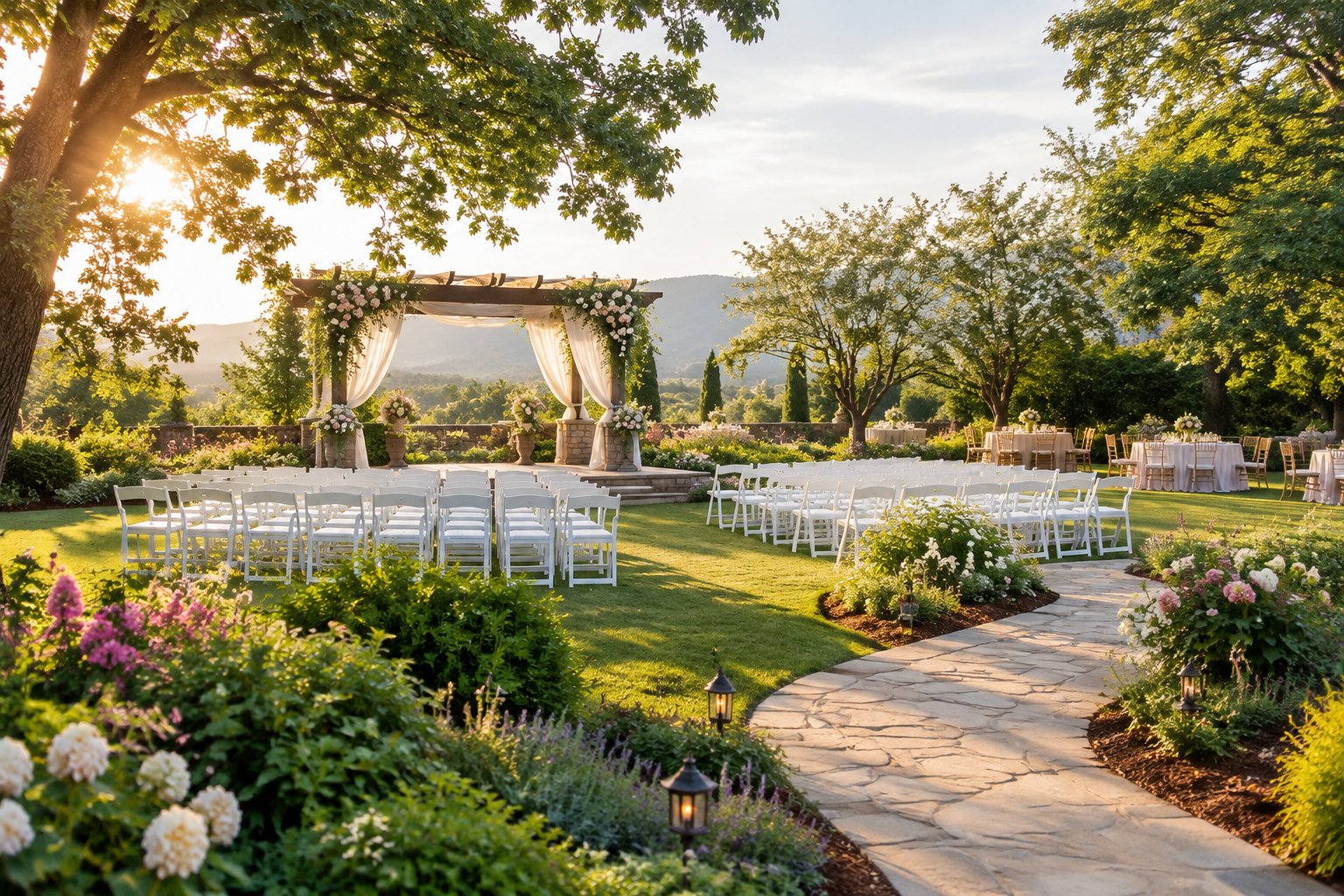
Ask the venue’s horticulture team which plants will be in bloom on your date. A rose garden can look completely different from early spring through late summer, and fall foliage can create a rich ceremony backdrop.
Season also affects guest comfort. Summer celebrations need shade, water stations, fans, and insect control. Cooler dates call for heaters, wraps, enclosed spaces, and an earlier sunset plan. Visit at the same month and time of day as your proposed wedding so you can assess light, temperature, traffic, and garden activity.
The Chicago Botanic Garden, New York Botanical Garden, Brooklyn Botanic Garden, Meadowlark Botanical Gardens, and the Atrium at Meadowlark illustrate how botanical venues can offer different combinations of outdoor gardens, conservatories, and indoor event spaces. Confirm each property’s current date availability and event rules directly.
How to Build a Rain and Heat Contingency Plan
Write your weather plan into the contract. Identify the backup location, tent size, flooring, sidewalls, fans, heaters, power supply, and setup schedule before you book.
Plan for heat with shaded seating, cold drinks, cooling towels, sunscreen, and shorter outdoor intervals. For rain, provide covered paths, umbrellas, guest transportation, and a dry place for musicians and photographers. Severe wind, lightning, wildfire smoke, and poor air quality also deserve clear decision rules.
How Much Do Garden Events Typically Cost?
Garden venue fees range from about $3,000 for smaller properties to $20,000 or more for major estates and high-demand botanical locations. Many full-day garden rentals fall between $5,000 and $12,000, while historic estates can carry higher site fees and added production costs.
Build your budget around the complete event. Include catering, bar service, tenting, flooring, rentals, restrooms, lighting, transportation, security, insurance, staffing, and weather equipment. Ask each venue for a sample all-in estimate based on your guest count so you can compare offers on the same terms.
Standout Botanical and Urban Garden Locations
Strong location choices pair memorable plantings with practical event access. Urban gardens offer transportation and city energy, while estate gardens and destination properties provide privacy, distinctive scenery, and a stronger sense of place.
New York City and Brooklyn Escapes
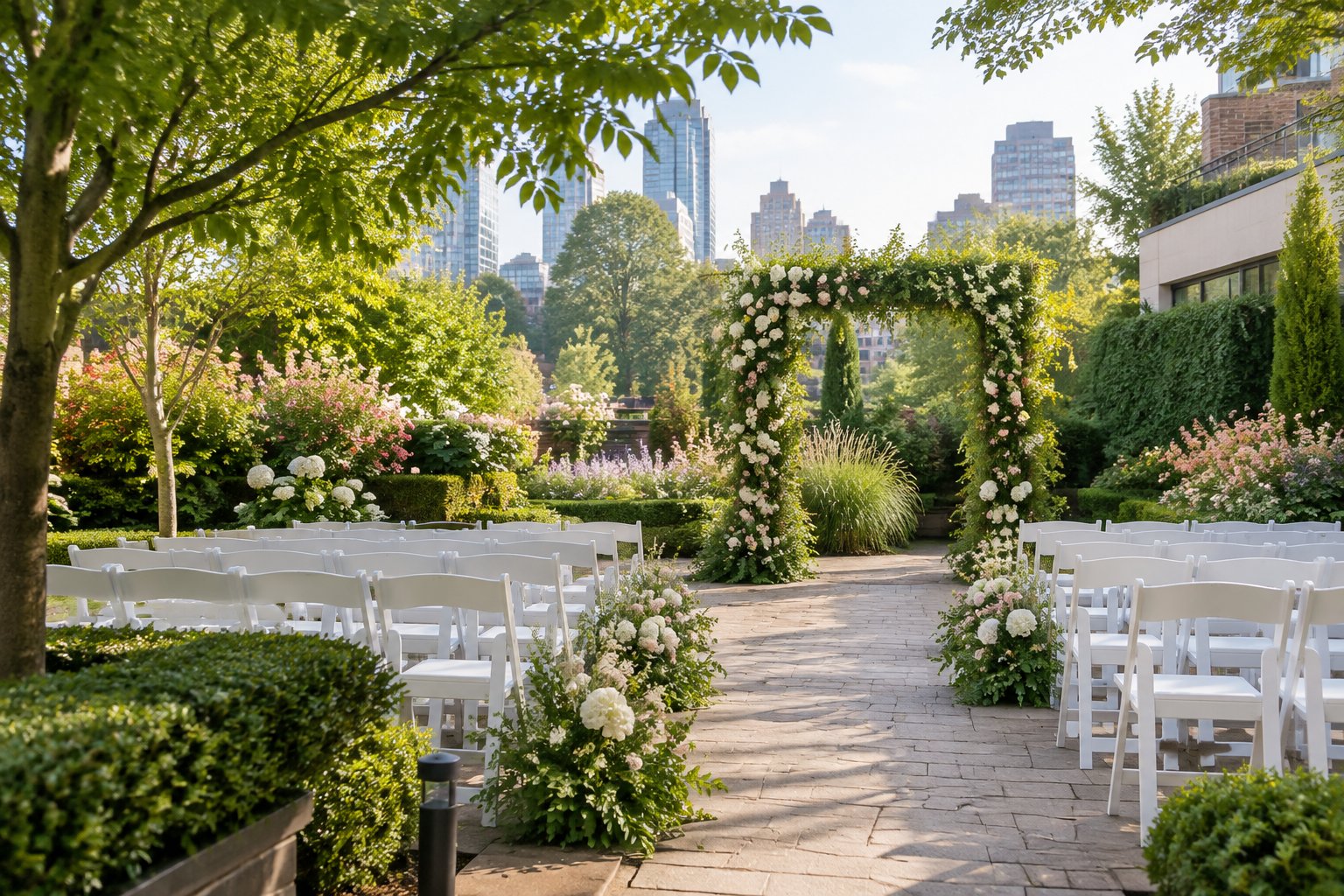
New York City and Brooklyn give you garden settings with easy access to hotels, restaurants, and transportation. Brooklyn offers intimate courtyards and botanical spaces, while the Bronx is home to large garden landscapes with room for formal ceremonies and receptions.
Ask about public hours, private-event access, loading zones, security, noise limits, and guest wayfinding. City properties may require careful timing so your celebration feels private during event hours.
A rooftop wedding adds skyline views and a modern atmosphere. Confirm wind limits, elevator access, weather protection, sound rules, and the exact sunset view before signing with a rooftop wedding venue.
Atlanta and Southern Garden Landmarks
Atlanta, Georgia, offers warm-season garden settings with long growing periods and varied foliage. The Atlanta Botanical Garden combines cultivated plant displays with an urban location, while the Atlanta History Center adds historic architecture and landscaped grounds.
Nashville, Tennessee, is known for estate-style venues such as Cheekwood Estate & Gardens, where formal plantings and historic character create an elegant setting. Southern dates require a detailed heat, humidity, rain, and insect plan.
Ask about shaded ceremony locations, indoor reception rooms, air conditioning, guest transportation, and evening temperature changes. These details shape comfort as much as the garden design.
California Gardens From Coast to Desert
California gives you broad choices, from coastal properties in Malibu to dry desert landscapes near Phoenix. Calamigos Ranch in Malibu offers a wooded, private setting, while San Diego’s Japanese Friendship Garden provides structured paths, water features, and tranquil planting design.
The Desert Botanical Garden in Phoenix creates a distinctive setting with cacti, desert flowers, and mountain views. Plan around intense sun, heat, wind, and limited shade. Early ceremony times and indoor or covered reception areas help protect guests.
Miami, Florida, brings tropical foliage and a destination wedding feel. Confirm hurricane-season policies, rain coverage, humidity control, transportation, and guest accommodations before you commit.
Notable Estate and Garden Options by Region
Regional finalists become easier to compare when you review privacy, guest capacity, weather protection, catering rules, and total cost in the same format. Tour each property with a written question list and request a full proposal after the visit.
New Jersey Estates and Historic Gardens
New Jersey offers a dense range of estate and garden settings. Crossed Keys Estate in Andover suits couples seeking a private property with outdoor character. Morven Museum & Garden in Princeton combines historic architecture with landscaped grounds, while The Skylands Manor in Ringwood places celebrations within the Skylands landscape.
Crystal Plaza in Livingston and Park Savoy Estate in Florham Park provide formal event environments with garden appeal. Pleasantdale Chateau in West Orange adds estate architecture and landscaped grounds for a polished celebration.
During tours, ask about ceremony locations, reception capacity, bridal suites, parking, shuttle needs, vendor access, curfew, and rain spaces. Confirm whether the quoted fee includes furniture, staffing, catering, and cleanup.
Midwest and Mid-Atlantic Alternatives
Midwest and Mid-Atlantic venues give you varied garden styles and seasonal pricing. East Brunswick and Hamilton, New Jersey, offer convenient alternatives for guests traveling through central New Jersey, while Hope and Middletown provide quieter settings with more open space.
For farther regional options, consider properties near Oshkosh, Wisconsin, or Chicago, Illinois. Compare bloom timing, travel distance, lodging, indoor capacity, and transportation before comparing the visual style alone.
Ask each venue for its wet-weather layout and a sample timeline. A large lawn does not indicate enough covered space for a seated reception.
How to Compare Tours and Finalist Venues
Use the same scorecard for every finalist:
-
Guest fit: seated capacity, cocktail capacity, accessibility, and restrooms
-
Event flow: ceremony route, cocktail hour, dinner service, dancing, and guest exits
-
Weather support: indoor capacity, tent options, heating, cooling, flooring, and power
-
Financial clarity: site fee, catering minimum, rentals, staffing, taxes, overtime, and deposits
-
Vendor rules: caterer list, planner requirement, décor limits, alcohol policy, and load-in times
-
Guest experience: parking, lodging, transportation, shade, seating, and wayfinding
Tour at your preferred season and ceremony hour when possible. Request the contract, floor plan, menu, rental list, insurance requirements, and full proposal before you place a deposit.