
German Castle Wedding Venues: How to Choose Yours
A castle wedding in Germany gives you historic architecture, dramatic scenery, and a destination experience your guests will remember. For most couples from the US, the best choice is a bookable castle or palace with an experienced local planner, because it combines a symbolic ceremony, clear event permissions, and practical support for international guests.
Your ideal venue should match your guest count, celebration style, travel plans, and desired level of privacy. Famous landmarks can provide stunning portraits, while private estates and castle hotels offer more control over your ceremony and reception.
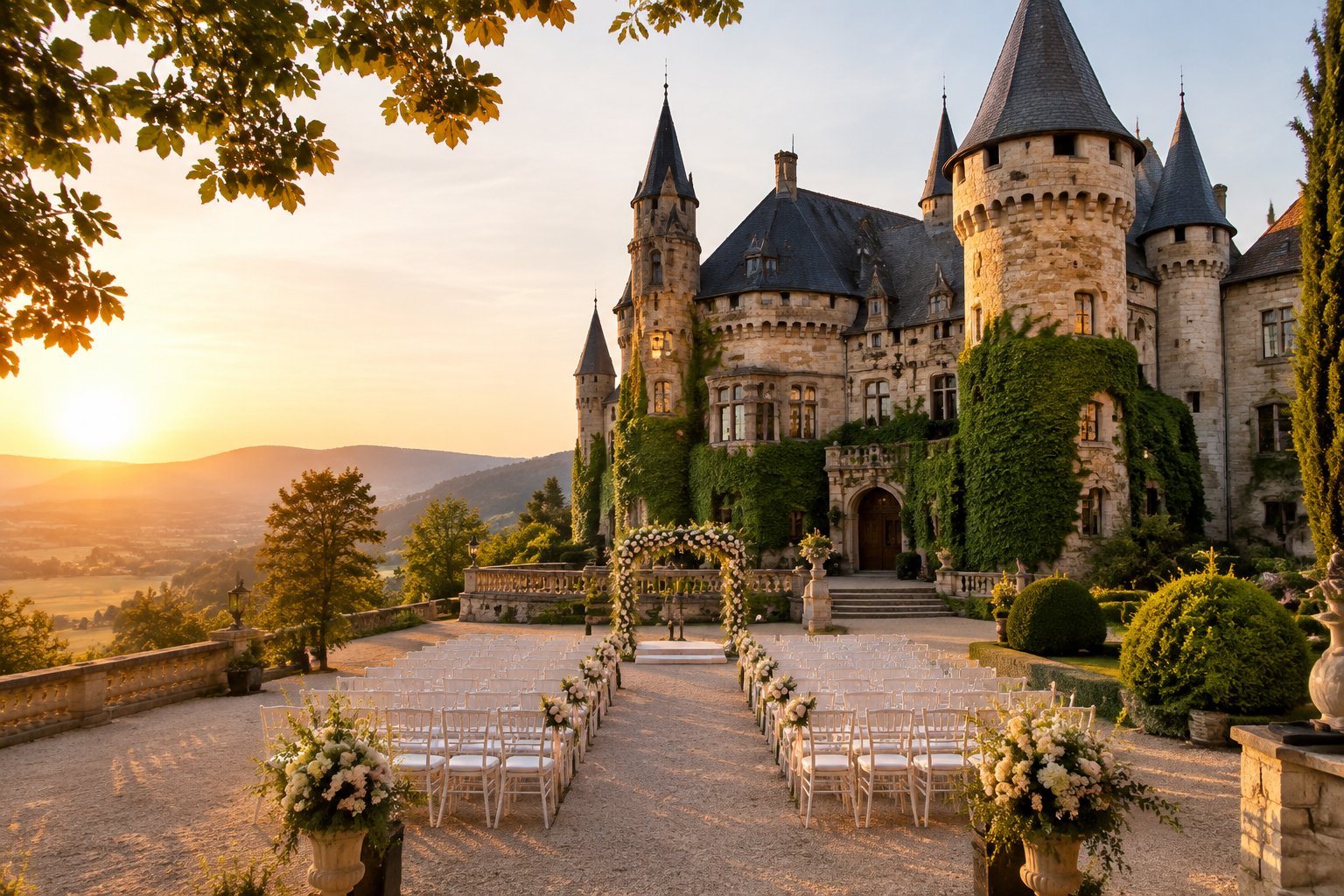
Germany offers castle weddings across mountain regions, river valleys, vineyard country, and historic cities. Start by deciding whether you want a full wedding weekend, an intimate ceremony, or an elopement with portraits and a private meal. Then contact venues early, since popular dates from May through September fill quickly. If you are ready to explore a destination wedding in Germany, begin with a shortlist of venues that fit your guest count and travel route.
How to Choose the Right Castle for Your Wedding
The right castle wedding venue gives you enough space, legal clarity, guest support, and freedom to create the celebration you want. Compare each property by capacity, ceremony access, exclusive-use rules, overnight options, and distance from major airports.
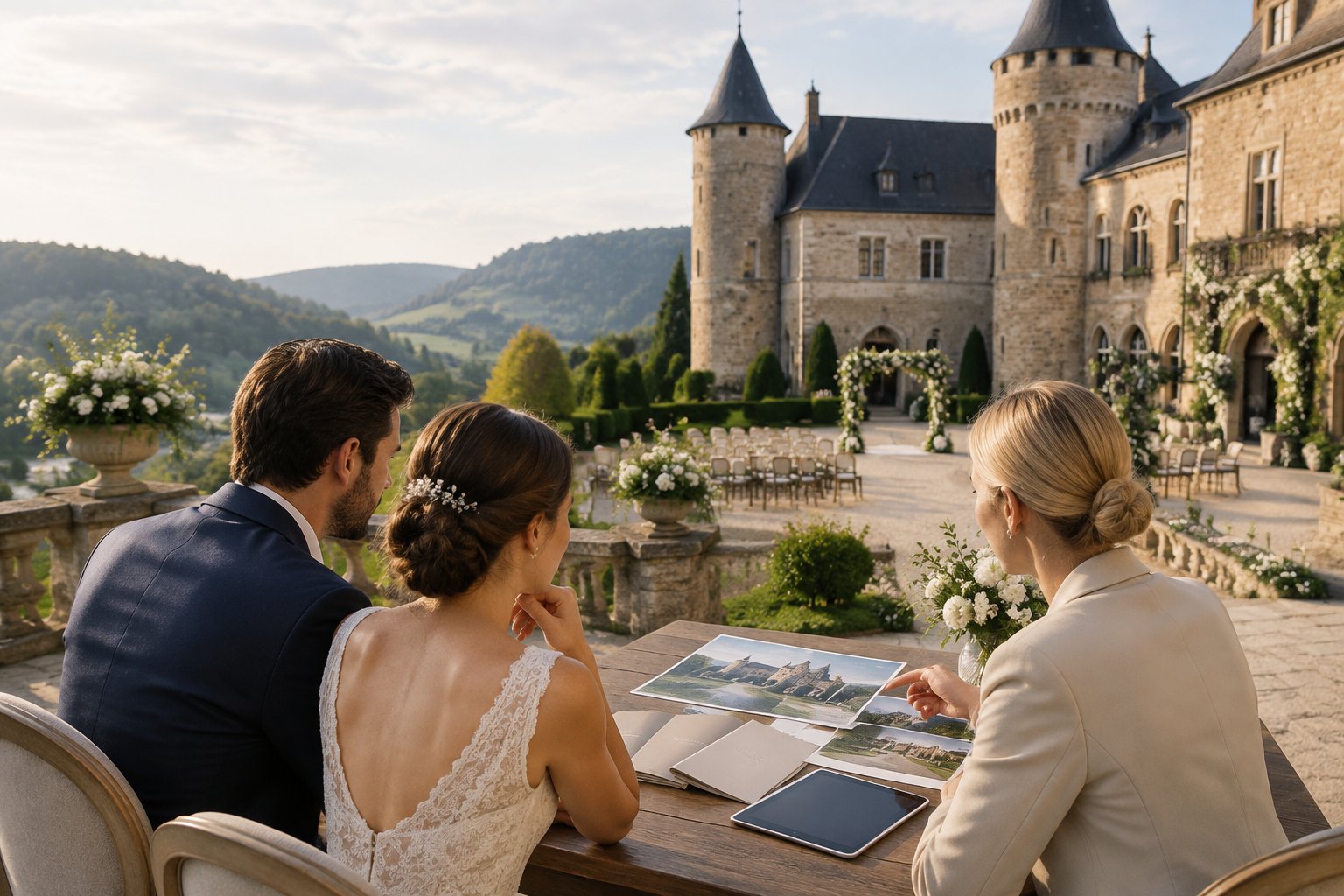
Match the Venue to Your Guest Count and Celebration Style
Begin with a realistic guest list. A small castle courtyard can feel intimate for 15 guests, while a grand ballroom suits a larger reception with dinner, dancing, and a DJ.
Think about the atmosphere you want:
-
Medieval towers and stone walls create a dramatic castle wedding.
-
Baroque gardens suit a polished outdoor ceremony.
-
A castle hotel supports a full weekend with rooms, meals, and shared guest activities.
-
A private estate gives you more control over décor, catering, and timing.
Ask for floor plans and capacity numbers for both seated meals and dancing. A venue that fits 100 guests for dinner may feel crowded once you add a band, dance floor, bar, buffet, and lounge seating.
For more planning help, review these tips for choosing the perfect venue for a small wedding when your celebration has fewer than 50 guests.
Check Ceremony, Reception, and Exclusive-Hire Permissions
A beautiful property may have different rules for ceremonies, receptions, photography, and music. Confirm whether you can hold your ceremony on the grounds, use an indoor room in poor weather, and host dinner and dancing on the same day.
Ask the venue these questions:
-
Is the ceremony symbolic, religious, or legally recognized?
-
Which rooms and gardens are included in the rental?
-
Does exclusive hire cover the full property or only an event room?
-
Can you bring your own celebrant, florist, caterer, or DJ?
-
What time must music end?
-
Which candles, flowers, signs, confetti, or wall decorations are allowed?
Historic castles follow preservation rules. Written permission protects your plans and helps your vendors design décor that suits the building.
Prioritize Overnight Stays, Accessibility, and Travel Logistics
Guest comfort shapes the wedding experience, especially when everyone travels from the US. Look for nearby hotels, room blocks, reliable transportation, and clear directions from an international airport.
Check the route from Frankfurt, Munich, Cologne, or Dresden based on your chosen region. Ask whether the venue has parking, shuttle access, elevators, accessible restrooms, and step-free routes to the ceremony and reception spaces.
A castle hotel keeps more of your weekend in one place. An estate without rooms can still work well if you arrange a hotel block and group transfers. Share travel details with guests early, including train connections, shuttle times, currency guidance, and a local emergency contact.
Top Regions for a Castle Celebration
Germany’s regions offer distinct wedding settings, from Alpine views in Bavaria to vineyard scenery along the Rhine and ornate palaces near Dresden. Choose the landscape that fits your photos, guest itinerary, and airport connections.
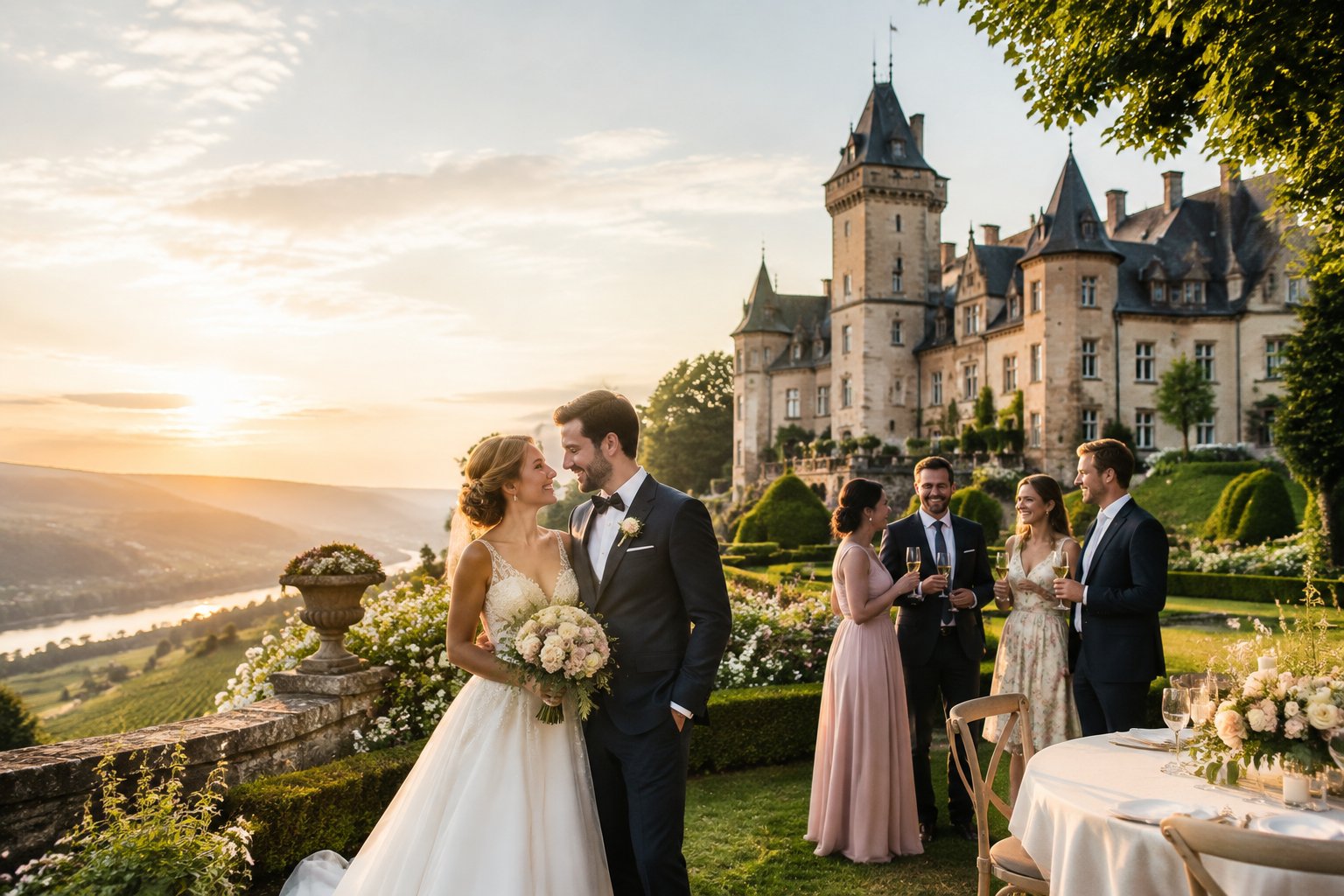
Bavaria and the Bavarian Alps for Alpine Scenery
Bavaria suits couples who want mountain views, lakes, forest paths, and storybook architecture. The area around Munich offers strong transport links, while the Bavarian Alps create a more secluded setting for portraits and guest activities.
You can pair a castle celebration with a lakeside welcome dinner, a mountain excursion, or a relaxed brunch. Summer provides long daylight hours for outdoor events, while autumn brings rich foliage across the foothills.
Popular landmarks such as Neuschwanstein create an iconic visual style, although access and private event permissions require careful checking. For a full reception, search for a nearby castle hotel, palace, or private estate with confirmed wedding facilities.
The Rhine Near Cologne for Vineyards and River Views
The Rhine region works well when you want castles, vineyards, river scenery, and easy access from Cologne or Frankfurt. Historic properties along the valley offer terraces, gardens, chapels, and dining rooms with views across the water.
A Rhine wedding weekend can include a vineyard welcome event, a river cruise, and a farewell meal in a nearby town. Ask about coach access because some hilltop castles have narrow roads and limited parking.
Schloss Arenfels is one option to investigate for a romantic Rhine setting. Review its current hire terms, ceremony spaces, catering rules, and guest accommodation before making plans.
Saxony and Dresden for Baroque Romance
Saxony and Dresden provide ornate architecture, formal gardens, Elbe scenery, and a strong concentration of historic venues suitable for destination weddings. The region fits couples who want a refined city-and-countryside itinerary.
You can host a welcome meal in Dresden, plan portraits beside the Elbe, and hold the main celebration at a palace, villa, or castle outside the city. Dresden also gives guests museums, historic squares, and vineyard areas to explore between wedding events.
Baroque estates suit elegant floral design, classical music, and formal dinner service. Confirm whether the property operates as a private venue, a public attraction, or a hotel because those models have different rules for privacy and event timing.
Baden-Württemberg, Stuttgart, and the Black Forest for Under-the-Radar Estates
Baden-Württemberg offers a mix of hilltop castles, manor houses, vineyards, and Black Forest landscapes. Stuttgart provides urban access, while smaller towns lead to quieter estates with gardens and wooded views.
This region suits couples who want a less expected setting with local food, wine, and scenic drives for guests. You can build a relaxed weekend around a castle dinner, forest excursion, and regional tasting.
Check the travel time between the airport, hotel, venue, and guest activities. A peaceful estate can feel far away when guests need several transfers, so request a detailed transport plan before signing.
Notable Venues and What Makes Each One Different
The most famous German castle landmarks offer different event possibilities, from landmark portraits at Neuschwanstein to private celebrations at properties such as Schloss Arenfels. Treat each venue as a distinct experience with its own access rules, capacity, and level of privacy.
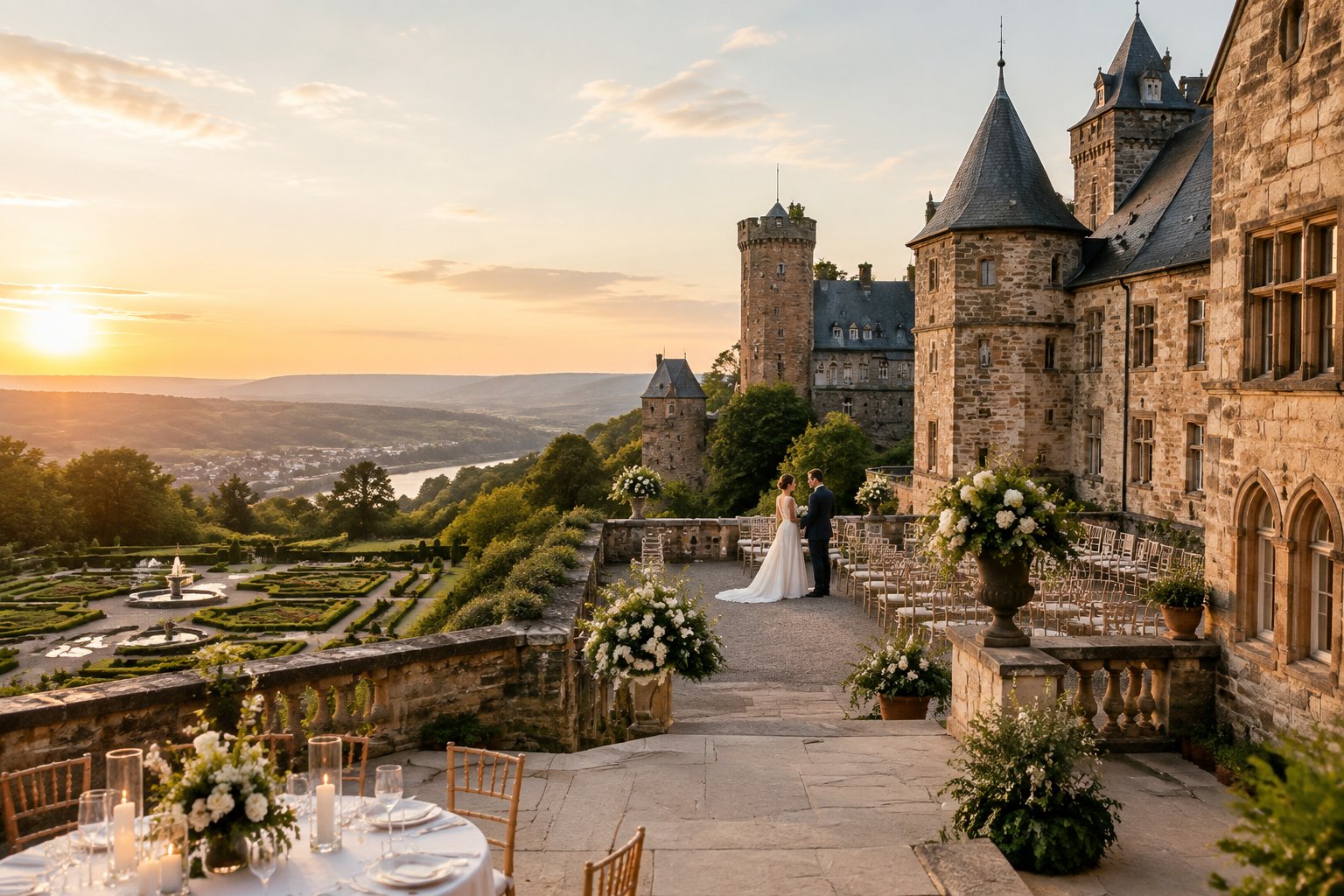
Neuschwanstein Castle: A Legendary Backdrop Rather Than a Private Venue
Neuschwanstein Castle is linked with King Ludwig II of Bavaria and remains one of Germany’s most recognizable landmarks. Its setting above the landscape creates powerful wedding portraits and a memorable sightseeing stop for guests.
Treat Neuschwanstein as a scenic destination unless the venue confirms a specific private ceremony or event arrangement. Visitor access, public hours, photography rules, and crowd levels shape what you can do on site.
A nearby castle, hotel, or restaurant can host your ceremony and reception, while Neuschwanstein serves as a portrait location or guest excursion. This approach gives you the landmark’s visual appeal with a more dependable event setup.
Lichtenstein Castle for Neo-Gothic Drama
Lichtenstein Castle sits above the Echaz Valley in Baden-Württemberg and is known for its neo-Gothic design and dramatic hilltop setting. Its towers, stone details, and valley views suit an elopement or intimate symbolic ceremony.
Ask about ceremony locations, guest limits, closing times, indoor access, weather plans, and photography permissions. Some arrangements focus on a short ceremony and portrait session, with meals and accommodation handled nearby.
Lichtenstein works well when your priorities are striking architecture and a small guest list. Plan transportation carefully because the elevated location affects arrival times and accessibility.
Schloss Arenfels for Flexible Rhine Valley Celebrations
Schloss Arenfels offers a historic castle setting near the Rhine, with vineyard scenery and access from the Cologne area. Its location suits couples who want a destination wedding with a castle atmosphere and a manageable travel route.
Request a full proposal that separates venue hire, catering, staffing, furniture, ceremony setup, music, and overnight arrangements. Ask whether you receive exclusive use and which vendors the property allows.
The venue’s Rhine Valley setting also supports a multi-day itinerary. Guests can combine the wedding with river walks, winery visits, and nearby historic towns.
Lake Constance Palaces for Waterside Elegance
Lake Constance offers palaces, historic estates, gardens, and views across the water toward the Alps. The setting suits couples who want an elegant celebration with a relaxed lake holiday for guests.
Look for a property with a clear rain plan because lakeside weather can change quickly. Confirm whether the ceremony faces the water, whether boats or docks are available for private events, and how guests move between the hotel and venue.
Lake Constance works especially well for a longer wedding weekend. Guests can explore the shoreline, take a boat trip, and enjoy regional dining before or after the reception.
Planning an Elopement or Intimate Castle Wedding
An elopement in Germany works best when you choose a property that allows short ceremonies, portraits, and a nearby meal. Small celebrations reduce guest logistics, though you still need written permission for vows, photography, décor, and access times.

When a Photo Session Is More Realistic Than a Private Ceremony
Some famous castles welcome photography while limiting private ceremonies or large events. A portrait session can give you the architecture and landscape you want, with your legal marriage completed at home or through the appropriate German authority.
Ask the property whether you may exchange vows, bring a celebrant, open champagne, use flowers, or invite guests. Confirm the session length and closing time before booking flights and hair and makeup services.
You can hold a private symbolic ceremony at a nearby estate, then visit the landmark for portraits. This plan keeps the meaningful ceremony personal while respecting the site’s visitor rules.
How to Build a Small-Guest Wedding Package
A wedding package should combine the services you need into a clear schedule and price. For 10 to 30 guests, consider:
-
Venue access and ceremony setup
-
Celebrant and translation support
-
Photography and optional video
-
Bouquet, boutonniere, and simple floral décor
-
Cake, champagne, or a private meal
-
Guest transportation
-
Hair and makeup
-
Planner or day-of coordination
Ask whether the package includes taxes, entrance fees, service charges, rental furniture, and weather backup space. Confirm the maximum guest count, since even a small increase can affect seating and catering.
You can find more ideas through wedding ideas for small weddings when you want a personal celebration without a full-size reception.
Working With Local Planners and German-Speaking Vendors
A local planner helps you communicate with venues, check contracts, arrange transport, and manage timing across time zones. This support is valuable when your vendors speak German and your wedding documents use local terms.
Choose a planner who can explain ceremony options, payment schedules, insurance needs, cancellation rules, and heritage restrictions in clear English. Ask who will be present on the wedding day and which services the planner coordinates directly.
Share your guest list, preferred region, date range, budget, and ceremony style at the first consultation. Those details help your planner build a package that fits the property and your travel plans.
Budget, Booking, and Guest-Experience Essentials
Your total cost will come from venue access, food and drinks, guest accommodation, vendors, transportation, and planning support. Set a working budget before requesting proposals, then keep a reserve for currency changes, extra transfers, weather plans, and guest needs.
What Usually Drives the Total Venue Cost
Venue price changes with the season, day of the week, guest count, exclusivity, and services included. A private castle hire can cost from a few thousand euros to well into five figures, while catering may run from about €80 to €200 per person depending on menu and service.
Build your estimate around these categories:
-
Venue hire and ceremony fees
-
Dinner, drinks, cake, and late-night food
-
Planner, celebrant, photographer, florist, and DJ
-
Furniture, lighting, sound, and décor
-
Hotel rooms and guest transportation
-
Translation, stationery, permits, and insurance
Ask for prices in euros and confirm how deposits, installment dates, taxes, and refunds work. Weekday weddings, smaller guest lists, and flexible dates can reduce the total.
Questions to Ask Before Signing a Contract
Request written answers about every service that affects your wedding day. Include these points in your venue checklist:
-
What spaces and hours does the rental include?
-
Is the property private during your event?
-
Who provides catering, bar service, furniture, and staff?
-
Can you hire your own DJ or bring outside vendors?
-
What noise limits and end times apply?
-
What happens if rain affects the ceremony?
-
Which décor materials are restricted?
-
How does cancellation work?
-
What insurance does the venue require?
-
When are payments due?
Read the contract with a planner or attorney who understands German event agreements if any clause is unclear. Keep the signed contract, proposal, floor plan, and vendor list in one shared folder.
Creating a Seamless Weekend for International Guests
A smooth wedding weekend begins with one clear travel plan. Choose a central hotel block, arrange group transportation, and give guests a schedule with pickup points, walking distances, dress guidance, and emergency contacts.
Plan a welcome gathering that helps guests recover from travel without adding pressure. A vineyard meal, casual beer garden visit, museum outing, or short river cruise gives everyone time to connect.
Provide key information in English and include local details such as train tickets, euros, weather expectations, and tipping customs. Schedule buffer time for traffic and transfers, especially when your venue sits on a hill or outside a major city.