
Gold Wedding Band Cost: What Determines the Price
A plain gold wedding band in the United States usually costs $300 to $1,100 per ring, with a 14K style priced around $500 to $1,000 offering a practical balance of durability, color, and value. Diamond accents, heavier construction, custom design, and luxury branding can raise the price to $2,000 or more.
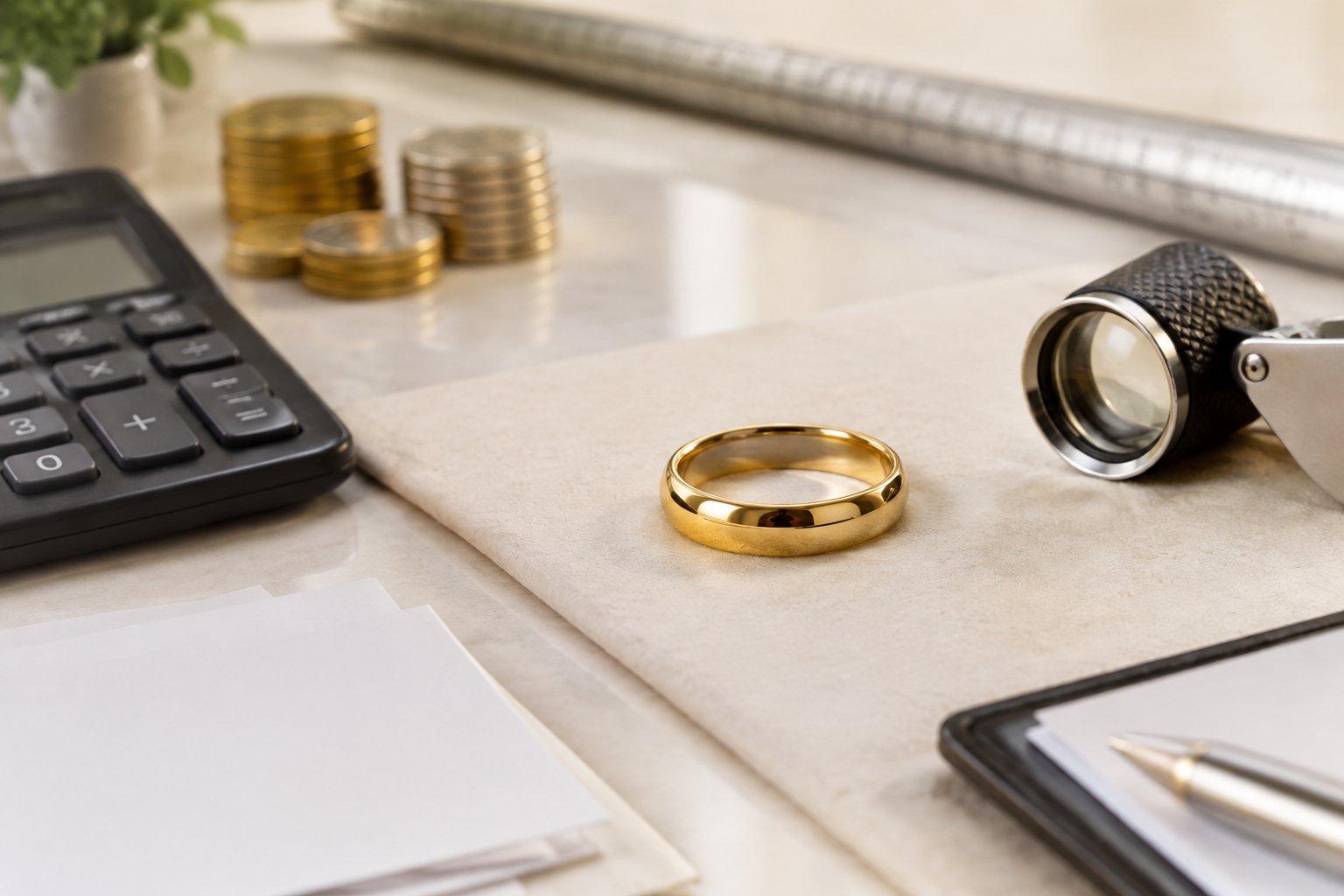
Your final wedding band price reflects more than the metal. Gold karat, gram weight, width, finish, craftsmanship, gemstones, and retailer services all shape the quote. Ask for those details before you compare gold wedding bands, since two rings with the same color and karat can have very different prices.
When you are ready to shop, compare a few written quotes from trusted jewelers and ask which services are included. You can also review how much are wedding rings on average to place your ring budget alongside broader wedding costs.
What Is a Realistic Budget for a Gold Band?
A realistic budget for a plain gold wedding ring is $300 to $1,100, while a 14K band around $500 to $1,000 suits many couples seeking everyday value. A pair of simple wedding rings can cost about $800 to $2,500, depending on each ring’s size, width, karat, and weight.
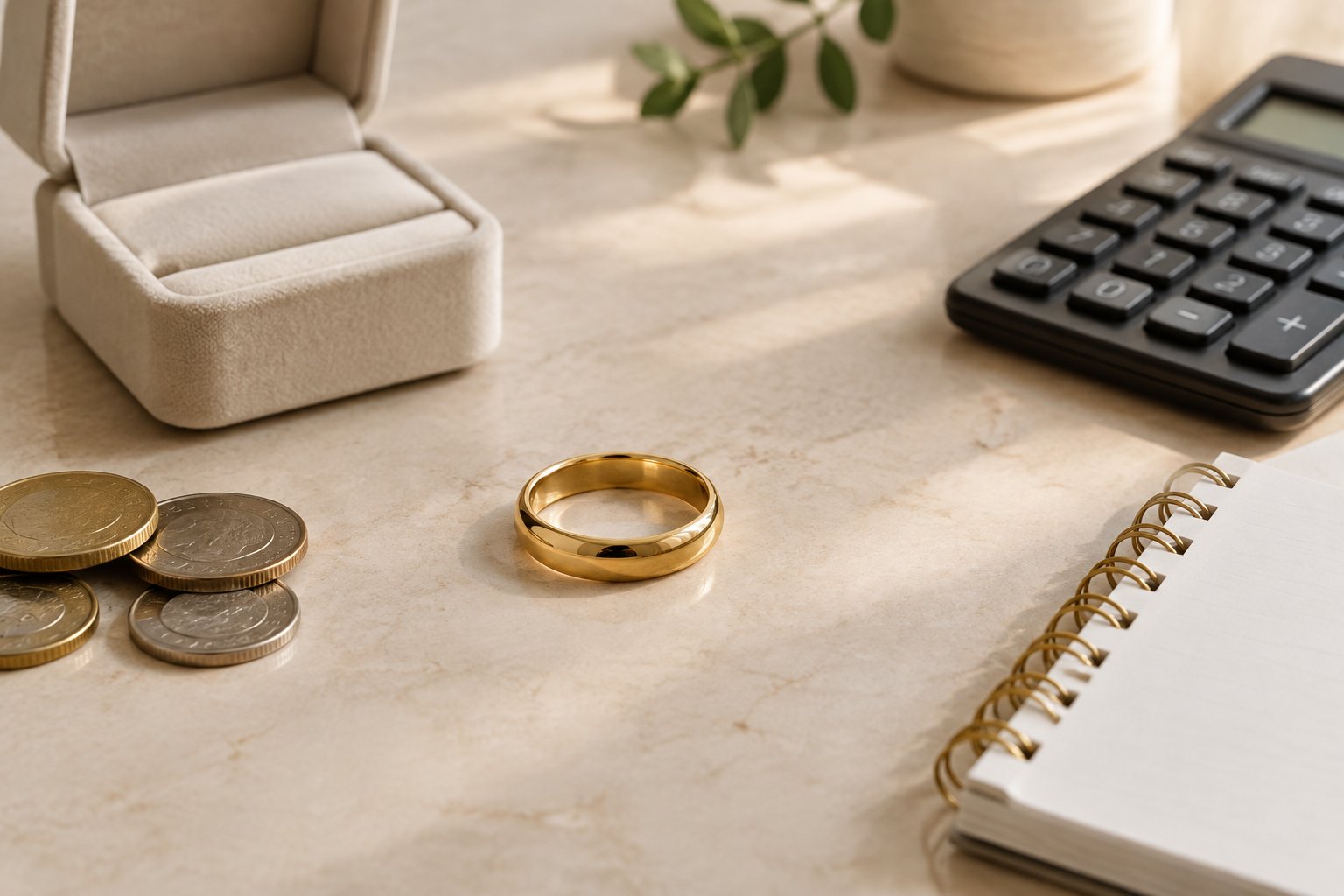
The ranges below give you a useful starting point. Your quote also includes labor, retailer costs, and any services added before or after purchase.
Typical Prices for Plain Gold Bands
A basic 10K band often falls between $300 and $600. A polished 14K gold band commonly costs $400 to $900, while an 18K band may reach $700 to $1,500 because it contains more gold.
Width and construction create major price changes. A narrow, lightweight band sits near the lower end of the range. A wide comfort-fit ring in a larger size uses more metal and requires more shaping, which pushes the wedding band price higher.
Check whether a listing covers one ring or a pair. Matching wedding bands can use different widths and sizes, so the two prices may not be identical.
When Diamond Accents and Custom Work Raise the Total
Diamond accents add cost through the stones, setting style, total carat weight, and labor. A few small stones on the front of a band cost less than a full-eternity design with diamonds around the entire ring.
A custom design can add design time, model approval, casting, fitting, finishing, and revision fees. Made-to-order work often starts near $700 to $1,000 for simple designs and can reach $1,200 to $4,500 for more detailed fine jewelry. Bespoke bands with extensive stone setting can exceed $5,000.
Ask for a quote that separates the metal, stones, setting labor, and custom work. You will see which feature is driving the increase.
Extra Costs for Engraving, Resizing, and Insurance
Machine engraving usually adds a modest service fee, while hand engraving and unusual textures cost more. Resizing prices depend on the metal, the amount of adjustment, and the design. A ring with stones or a detailed pattern may require more careful bench work.
Insurance adds a continuing cost based on the ring’s value and your policy. Keep the appraisal, receipt, metal details, and photos together so you can document the purchase. Ask whether cleaning, inspections, repairs, and future sizing are included with your purchase.
How Karat and Gold Content Affect Value?
Gold karat directly affects a band’s gold content, color, durability, and purchase price. 10K gold contains 41.7% pure gold, 14K contains 58.3%, and 18K contains 75% pure gold.
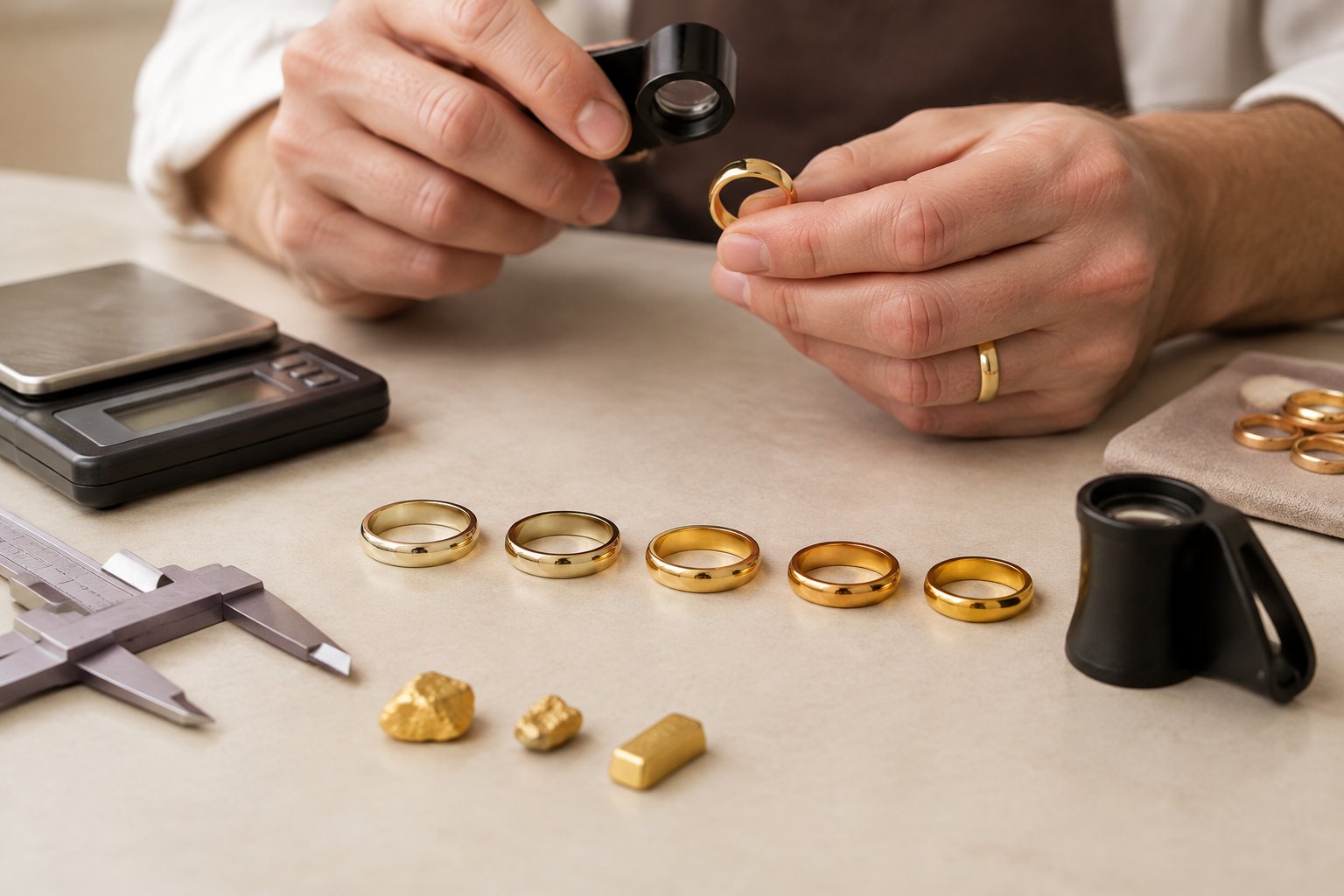
The karat stamp tells you the share of pure gold in the alloy. Weight also matters because a heavier ring contains more total material. A higher-karat ring with a wide profile can cost much more than a lightweight ring in the same color.
10K Gold: The Lowest-Cost Durable Option
10K gold provides the lowest entry price among common U.S. gold wedding rings. Its 41.7% gold content leaves more room for alloy metals, giving the band useful resistance to scratches and bending.
The color looks lighter and less saturated than 14K or 18K gold. Choose 10K when you want a durable ring at a lower price and prefer to put more of your budget toward width, engraving, or another feature.
14K Gold: The Everyday Balance
14K gold contains 58.3% pure gold and remains the most common choice for daily wedding bands in the United States. It gives you a recognizable gold color, strong everyday wear, and a mid-range price.
You can find 14K gold in yellow, white, and rose gold. That range makes it easier to match your engagement ring, personal jewelry, and lifestyle without moving into the higher price of 18K.
18K Gold: Is 75% Pure Gold Worth More?
18K gold is 75% pure gold, so an 18K gold wedding ring has more gold content than a ring of the same weight in 14K. That added content produces a richer color and a higher material value.
The extra purity raises the purchase price, especially in a heavier band. 18K gold also feels softer and can show surface scratches sooner during hard daily use. Pick an 18K gold wedding ring when richer color and purity rank above the lowest cost.
Why Higher Gold Purity Changes Wear and Price
Higher gold purity raises the amount of precious metal in each gram, which increases the metal portion of your quote. Retail prices also include labor, design, overhead, and retailer markup, so they do not move in an exact step with the daily gold market.
10K and 14K gold include more alloy metal and provide greater hardness for active routines. 18K offers a warmer appearance with a softer feel. For most daily wedding bands, 14K provides a useful middle point between gold content, durability, and cost.
Which Gold Color Fits Your Style and Lifestyle?
Yellow gold suits a classic look, white gold creates a bright modern finish, and rose gold delivers a warm blush tone with a copper-based alloy. The karat still affects each color’s price, while white gold also brings a future rhodium plating cost.
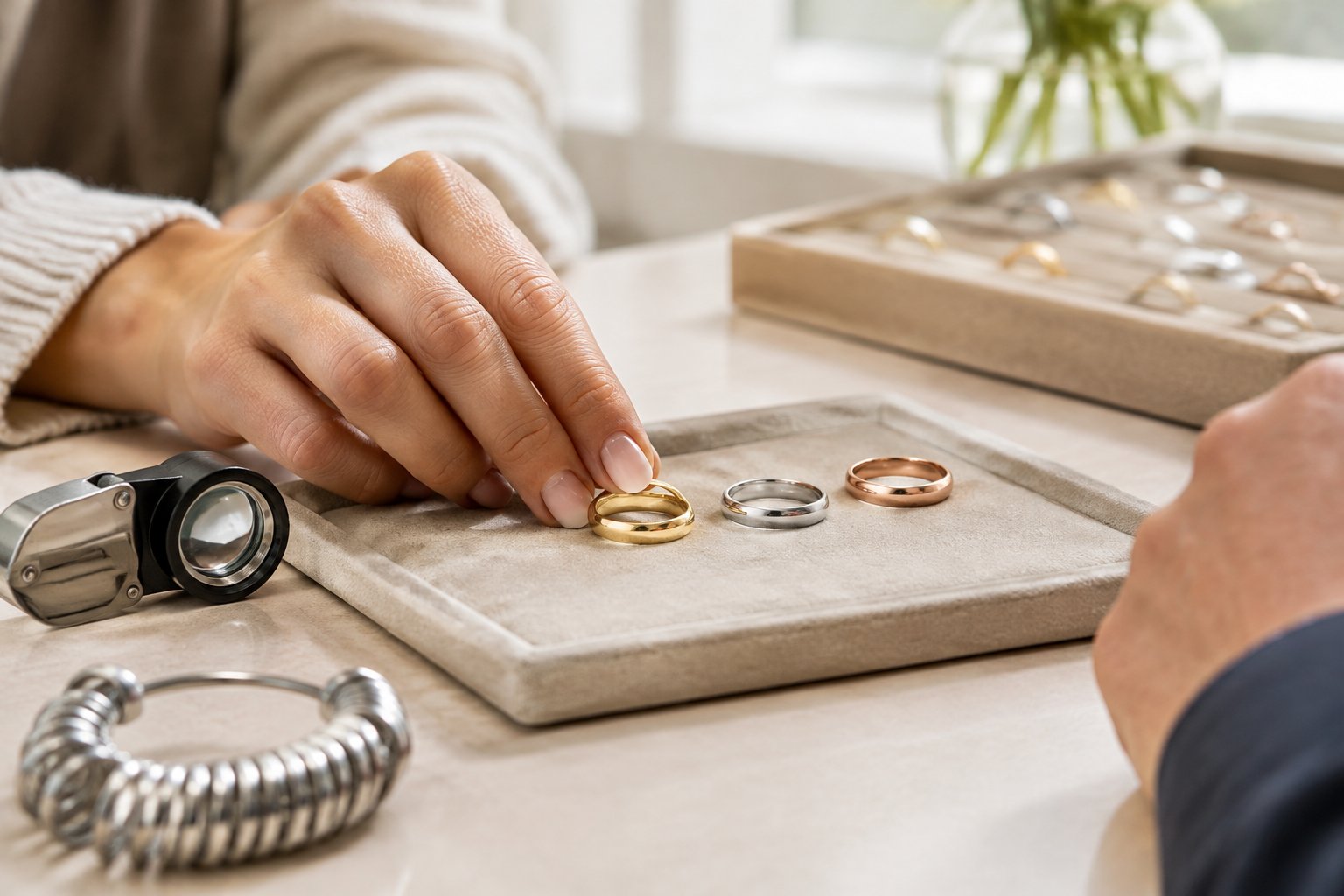
Try each color in the lighting where you expect to wear it. Consider your other jewelry, work routine, cleaning habits, and any known metal sensitivity before you choose.
Yellow Gold’s Classic Look
Yellow gold keeps its warm tone through the alloy itself. It pairs well with classic wedding bands, vintage details, and simple polished designs.
The color becomes richer as the karat rises. 14K yellow gold offers a balanced tone and strong daily performance, while 18K yellow gold looks deeper and more saturated. Yellow gold needs no surface coating to preserve its color, so routine care involves cleaning and occasional professional polishing.
White Gold and the Cost of Rhodium Plating
White gold combines gold with white alloy metals such as palladium or nickel. Rhodium plating gives the surface its bright, reflective appearance and helps it resemble platinum.
Daily friction wears the plating, so many owners refresh it every one to three years. Replating commonly costs about $50 to $100, depending on the jeweler and service package. Include that recurring expense when you compare wedding band prices.
Rose Gold’s Warm Color and Alloy Mix
Rose gold gets its pink tone from copper in the alloy. The color works well with romantic, vintage-inspired, and modern minimalist designs.
14K rose gold offers a visible blush tone with useful strength for daily wear. Rose gold does not need rhodium plating because its color runs through the alloy. A soft patina can develop over time, and a jeweler can polish the band if you prefer a brighter finish.
Allergy Considerations for Sensitive Skin
Gold itself is a precious metal that rarely causes contact reactions. Nickel in some white gold alloys is a more common concern for sensitive skin.
Ask whether the band uses nickel, palladium, or another alloy before you buy. Nickel-free white gold or yellow and rose gold may suit you better when you know you react to nickel. A ring that traps soap and moisture under a tight fit can also cause irritation, so request a careful sizing check.
What Makes One Band More Expensive Than Another?
A band costs more when it uses more gold, requires more labor, includes detailed finishing, or carries a strong brand premium. Two rings with the same karat can have different wedding band prices because their weight, construction, craftsmanship, and seller costs differ.
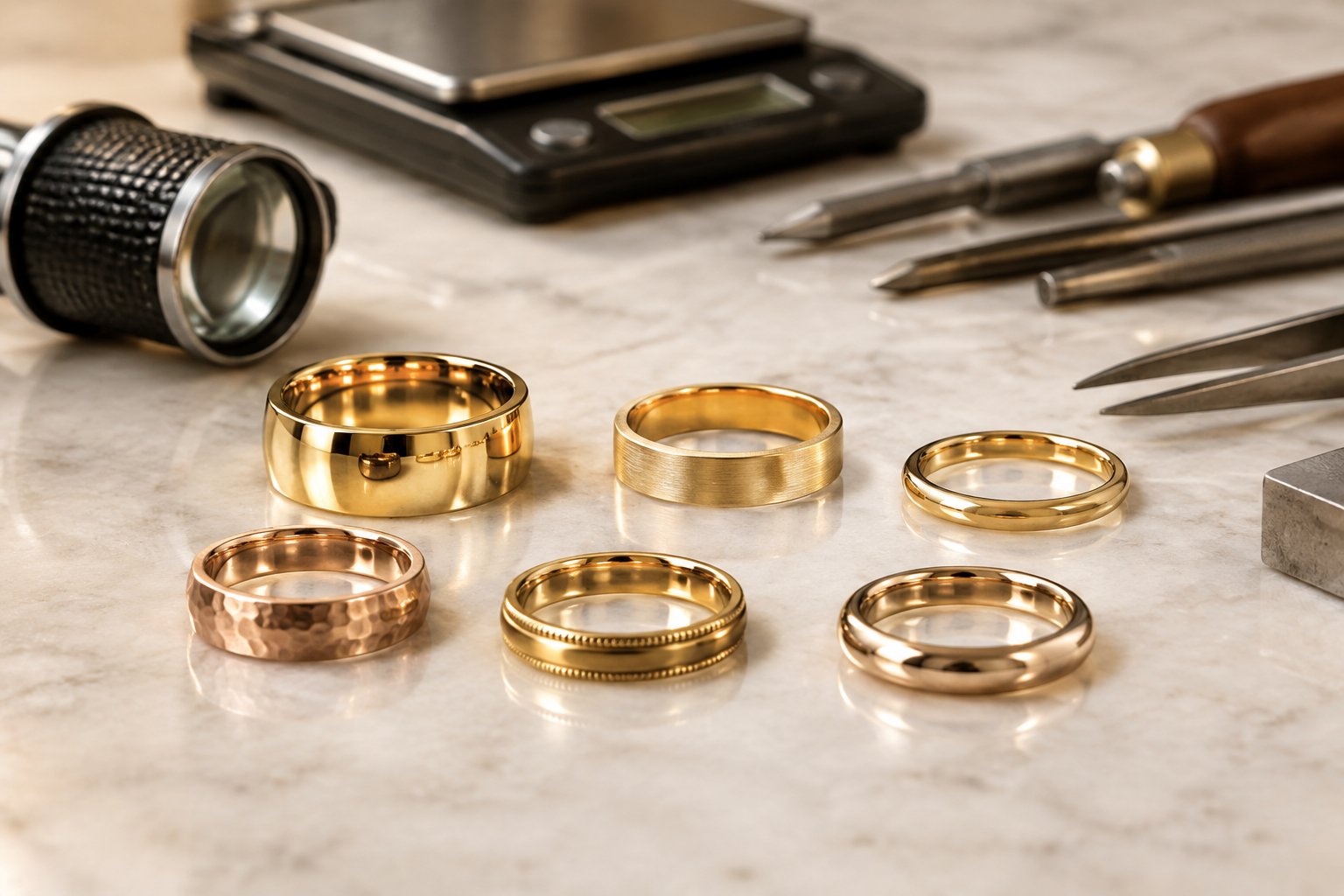
Ask for the approximate gram weight and the ring’s construction details. These facts make price comparisons clearer than appearance alone.
Band Width, Thickness, and Metal Weight
A 6mm band uses more gold than a 2mm band when the profiles are comparable. Thickness adds even more material, while a rounded comfort-fit interior adds shaping and finishing work.
Ring size also affects circumference and weight. A larger size can require more metal, and a thick profile can cost more even when two rings share the same width. Request the approximate gram weight for each quote so you can compare similar designs.
Solid construction, a raised profile, and a substantial interior all contribute to a higher wedding band price. Check the measurements and materials before you compare a lightweight ring with a heavier design.
Finish, Texture, and Handcrafting
A polished finish is among the most accessible options. Brushed, hammered, milgrain, hand-engraved, and mixed-metal finishes require additional bench work and inspection.
Handcrafted wedding bands include more time for shaping, surface work, fitting, and quality checks. A custom design adds design labor and may include model revisions before production. Ask which parts are handmade and which services continue after delivery.
How Brand Reputation Affects Pricing
Brand reputation adds a premium through design identity, quality control, customer service, warranty coverage, and presentation. A designer band can cost more than a similar unbranded ring with matching karat and weight.
Review the value included with the brand price. Compare the warranty, inspection policy, resizing terms, return window, and repair support alongside the ring’s appearance. A higher price makes more sense when the included service matches what you plan to use.
How to Shop for Better Value
You get better value by comparing the same karat, approximate weight, width, finish, and included services across several sellers. Local jewelers provide hands-on fitting and personal service, while online listings make it easier to scan many wedding band prices.
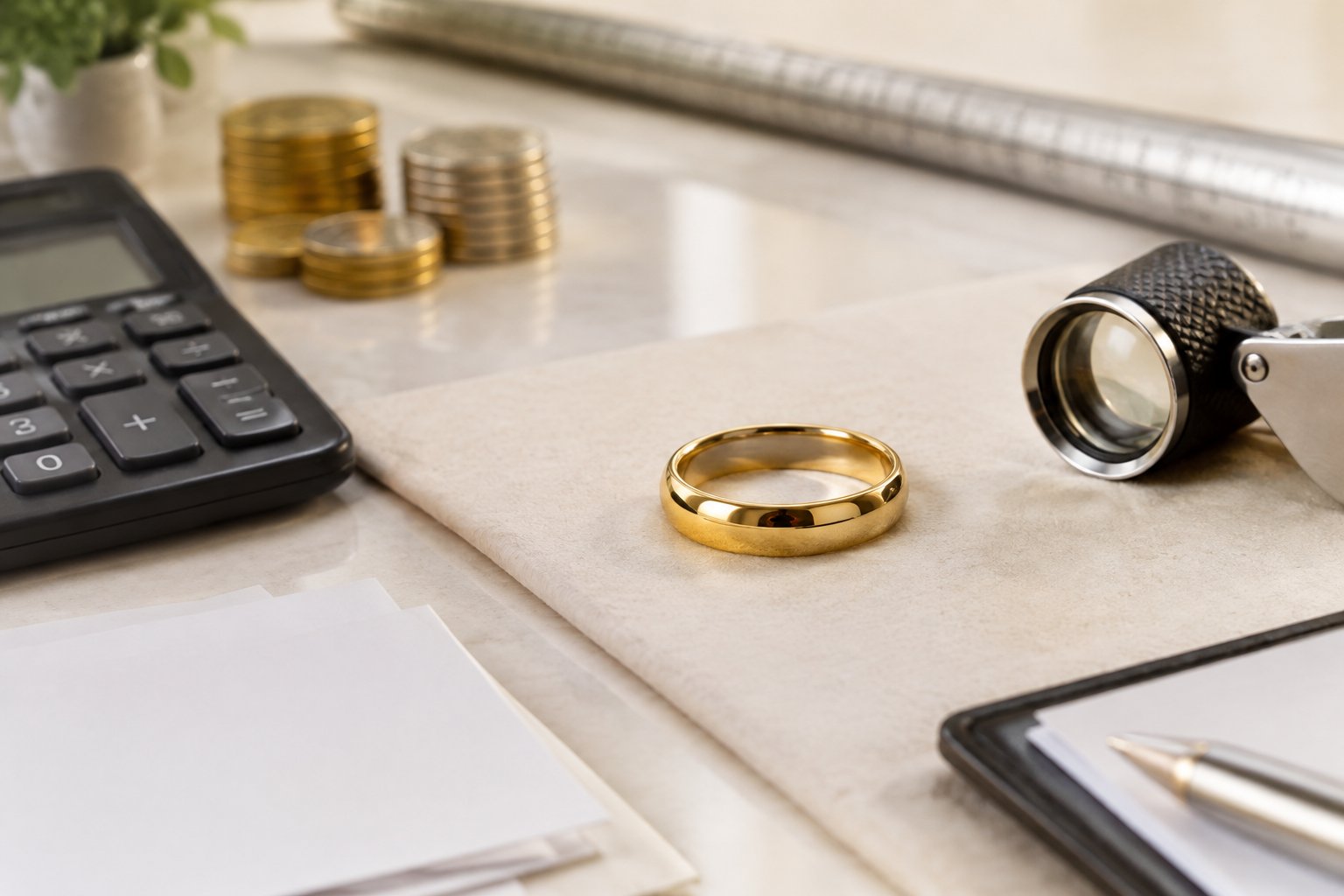
A low sticker price can change after shipping, engraving, resizing, insurance, or maintenance. Build those items into your comparison before you choose.
Comparing Online Retailers and Local Jewelers
Local jewelers let you try on different widths, profiles, colors, and karats. You can ask questions in person and confirm how the ring feels before placing an order. Many also provide fitting, cleaning, inspection, and repair services.
Online retailers give you a broad selection and make side-by-side price checks convenient. Review the listed gram weight, dimensions, metal stamp, return policy, warranty, and shipping terms. Confirm whether the price covers one ring or a pair.
Use the same checklist for every seller. A $600 ring with included sizing and inspections may offer more value than a $550 ring with separate service fees.
Evaluating Blue Nile and Other Online Listings
Blue Nile and other online retailers list gold wedding rings with specifications that help you compare designs. Check the karat, color, width, thickness, profile, ring size, and whether the listing shows an approximate weight.
Read the details for diamonds or other stones, including total carat weight, stone type, setting, and grading information. Review the return period, warranty, resizing options, shipping coverage, and engraving terms before you order.
Save a copy of the listing and its specifications. If the ring is made to order, confirm the expected production time and whether personalized work changes your return rights.
Questions to Ask Before You Buy
Ask these questions before you approve a purchase:
-
What karat and gold color is the band?
-
What is the approximate gram weight?
-
What are the width and thickness?
-
Is the ring solid, hollow, or constructed with another profile?
-
Does the price include engraving, sizing, shipping, and sales tax?
-
What alloy metals are included, especially in white gold?
-
What warranty, inspection, cleaning, or repair services come with it?
-
How much will resizing or rhodium plating cost later?
Request the answers in writing. A detailed quote lets you compare wedding bands on matching terms.
Choosing a Band That Will Be Easy to Maintain
Choose a band whose finish and metal suit your daily routine. A polished 14K yellow gold band offers straightforward care, while white gold requires periodic rhodium plating to maintain its bright surface. Rose gold keeps its color through the alloy and needs no plating.
Remove your ring for heavy work, harsh chemicals, swimming, and activities that expose it to hard impact. Clean it with mild soap and warm water, then dry it with a soft cloth. Schedule a professional inspection when you notice looseness, deep scratches, bent areas, or changes in fit.