
Greece Honeymoon Packages: Islands, Costs, and Itineraries
Greece honeymoon packages give you a memorable way to combine bright beaches, historic cities, local food, and romantic island stays in one Europe escape. For most couples, a custom-planned package that combines Athens, one lively island, and one scenic island offers the best balance of romance, logistics, and personal choice. A ready-made plan works well when you want clear pricing and simple booking, while a custom Greece honeymoon suits couples with specific hotel, activity, or pacing preferences.
You can build your honeymoon in Greece around caldera views in Santorini, beach clubs in Mykonos, quiet coves in Milos, or the food and history of Crete. Package prices from Unforgettable Honeymoons® begin at published rates from $2,299 per person, with luxury options reaching beyond $4,000 per person. If you want help matching your dates, budget, and travel style, request an exact quote or book a consultation with their US-based Greece specialists.
How to Choose the Right Package for Your Travel Style
Choose a Greece honeymoon itinerary that gives you enough time to settle into each island, includes planned transfers, and leaves room for unstructured days. Your ideal plan might focus on a luxury honeymoon with private pools and spa time, or it might favor boutique hotels, local dining, and a slower island-hopping route.
A good package connects hotel locations, ferry schedules, airport transfers, and experiences into one workable plan. Look for clear inclusions, realistic travel times, and room to adjust the itinerary before you pay.
Ready-Made Packages vs. Custom Itineraries
Ready-made honeymoon packages offer a tested route, preset hotels, and faster decisions. They fit couples who want a polished trip with fewer planning tasks. A package might pair Athens with Mykonos and Santorini, or combine Mykonos, Paros, and Santorini for a mix of energy, quiet time, and famous views.
Custom itineraries suit couples with special priorities. You can request a private pool, adults-only setting, spa access, fewer ferry rides, or extra nights in a favorite destination. Custom planning also helps when you want to add Milos, Naxos, Crete, or a mainland visit.
Before booking, ask whether the quoted price includes:
-
International or domestic flights
-
Ferry tickets and upgraded seats
-
Private airport and port transfers
-
Breakfasts and resort fees
-
Guided tours and boat excursions
-
Travel support if flights or ferries change
How Many Stops Fit a Relaxed Honeymoon Itinerary?
A relaxed honeymoon itinerary works best with two or three bases over seven to ten nights. Seven nights might include Athens plus two islands. Ten nights gives you space for three islands if the ferry route is direct and the hotels are well placed.
Fourteen nights allows four stops, though you should still avoid changing hotels every other day. A useful pattern is two nights in Athens, three or four nights on a lively island, and the rest on a quieter or scenic island. End in Santorini when you want your final days to include caldera views and romantic sunsets.
Build a buffer around ferry travel. A late sailing or rough sea can affect dinner plans, excursions, and check-in times, so avoid scheduling a flight immediately after an inter-island transfer.
Luxury, Boutique, and Value-Focused Stays
Luxury resorts offer private pools, full-service spas, sea views, and dedicated service. In Santorini, cliffside suites in Oia or Imerovigli focus on caldera scenery. In Mykonos, properties such as Myconian Kyma combine a stylish setting with access to Mykonos Town.
Boutique hotels create a smaller, more personal atmosphere. They work well for couples who value design, local character, and walkable villages. Paros and Naxos offer boutique options with a quieter feel than the most famous islands.
Value-focused stays can preserve the romance through good locations and thoughtful experiences. Choose a sea-view room without a private pool, travel in May or September, and spend on one private cruise or special dinner instead of premium features every night.
Which Greek Islands Belong in Your Trip?
Santorini belongs in your route for caldera views, while Mykonos, Milos, Paros, Naxos, Crete, and the Ionian Islands serve different priorities. Pick islands that match your preferred pace and activities, then check ferry or flight links before adding another stop.
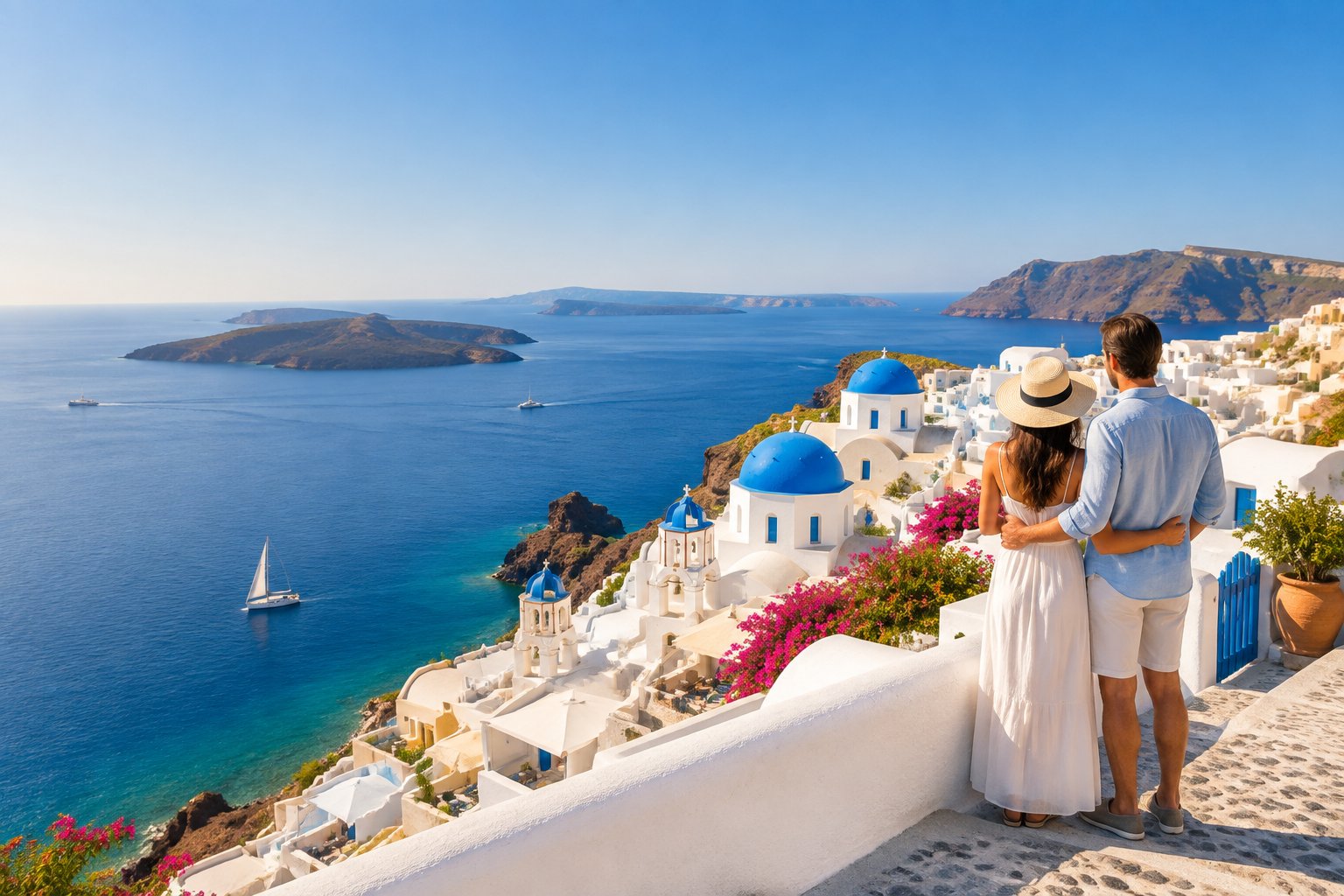
The Greek islands span the Aegean Sea and Ionian Sea, with major differences in landscape, nightlife, food, history, and transport. A focused route often feels more romantic than collecting destinations.
Santorini for Caldera Views and Romantic Sunsets
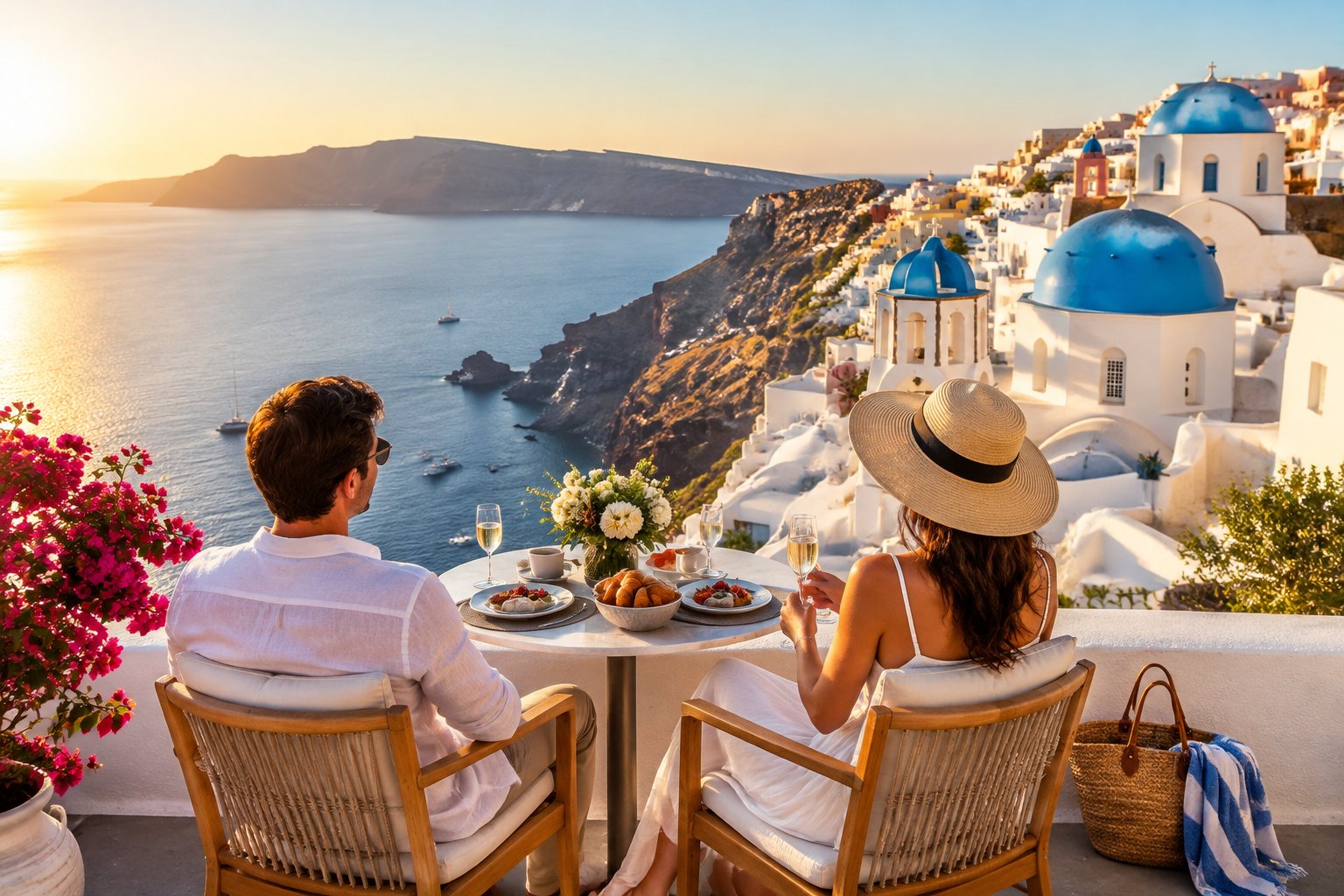
Santorini is the classic choice for dramatic scenery. The caldera, formed by a volcanic eruption, frames whitewashed villages and deep blue water. Oia has the most famous sunset setting, while Imerovigli offers a quieter cliffside base with wide caldera views. Fira adds more restaurants, shops, and evening activity.
Plan at least three nights if you want time for a sunset cruise, winery visit, village walk, and relaxed hotel mornings. A private pool or terrace adds privacy, though the best-view rooms carry premium rates during peak season.
Mykonos for Beaches, Dining, and Nightlife
Mykonos suits couples who want beach days, polished dining, shopping, and nightlife. Mykonos Town, also called Chora, places you near Little Venice, winding lanes, restaurants, and bars. Beach areas such as Ornos and Agios Ioannis offer a calmer base with easy access to the water.
The island also has luxury properties associated with the Myconian Kyma collection and other high-end resorts. Add Mykonos when you want a social atmosphere and stylish hotels. Couples seeking quiet evenings should choose a beach area away from the busiest clubs.
Milos, Paros, and Naxos for a Quieter Cyclades Escape
Milos offers unusual coastlines, secluded beaches, and boat trips to places such as Kleftiko and the Sikia sea cave. It suits couples who enjoy swimming, exploring, and seafood dinners.
Paros combines attractive villages, polished hotels, and beaches. Naoussa works well for restaurants and evening walks, while Kolymbithres and Golden Beach offer time by the sea. Paros resort options include Parilio, a design-focused property suited to a stylish island stay.
Naxos gives you long beaches, mountain villages, farm-to-table food, and historic sites. Choose it when you want more space and a slower rhythm. Tinos offers another quieter Cyclades option, with traditional villages, churches, local food, and fewer international crowds. Ios brings beautiful sea views and a livelier summer scene.
Crete for Beaches, Food, and History
Crete is large enough to support a full honeymoon by itself. Chania offers a Venetian harbor, old streets, restaurants, and access to western beaches. Agios Nikolaos and nearby Elounda provide luxury resorts, calm bays, and easy access to eastern Crete.
Make time for the Palace of Knossos near Heraklion if ancient history interests you. Crete also rewards couples who enjoy road trips, local food, gorge walks, and long beach days. Plan at least five nights if you want to connect multiple parts of the island without rushing.
The Ionian Islands for Lush Scenery and Secluded Beaches
Corfu offers green hills, elegant architecture, and a historic old town. Zakynthos is known for bright blue water, boat excursions, and striking coastal scenery. These Ionian destinations feel greener and more lush than many Cyclades islands.
Choose the Ionian Sea when you want secluded beaches, boat days, and a softer landscape. Rhodes adds medieval history, beach resorts, and the village of Lindos. Hydra and Aegina work well as short additions from Athens when you want island scenery without a longer ferry route.
What Should a Greece Honeymoon Package Include?
A complete Greece honeymoon package should connect hotels, transport, breakfasts, activities, and support into one clear plan. The strongest packages show exactly what you receive, how long each transfer takes, and which costs remain separate.
Your package should also match the way you want to spend your days. A couple who loves Greek culture may prioritize walking tours and cooking classes, while a beach-focused couple may choose a private boat and longer hotel stays.
Flights, Ferries, Transfers, and Inter-Island Timing
Ask whether international flights are included or priced separately. Some plans begin after you arrive in Athens, while others coordinate flights from the United States through Athens or a major European hub.
Ferries need careful planning. Check the departure port, luggage rules, seat class, travel time, and transfer from the port to your hotel. High-speed ferries save time, while slower services may offer a lower fare and more outdoor space.
Private transfers reduce confusion after a long flight or ferry ride. Confirm whether the driver meets you at the airport, port, or hotel entrance. Keep a flexible schedule on travel days because weather and ferry operations can change.
Hotels, Breakfasts, and Honeymoon Perks
Review each hotel by room category and location. A standard room, caldera-view suite, and private-pool villa create very different experiences even at the same property.
Ask whether breakfast, welcome wine, room upgrades, flowers, or a late checkout are included. Tell the hotel that you are celebrating your honeymoon before arrival. Some properties provide a small welcome amenity or special arrangement based on availability.
Check cancellation terms for every hotel. Island properties may have stricter policies during July and August, and some reservations require full payment well before arrival.
Private Tours, Cruises, and Romantic Add-Ons
A sunset catamaran cruise adds swimming stops, food, wine, and views from the water. Santorini cruises often include the caldera, volcanic areas, and a sunset stop. Private charters provide more control over departure time and route.
Other useful add-ons include:
-
Wine tasting at a Santorini vineyard
-
A private cooking class
-
A guided Athens history tour
-
A romantic dinner on a terrace
-
A private beach or seafood dinner
-
A photography session in Oia or Mykonos Town
Reserve popular experiences early during peak season. Ask whether meals, drinks, towels, hotel pickup, and entrance fees are part of the listed price.
Questions to Ask Before You Book
Use these questions to compare packages:
-
Which hotels and room categories are included?
-
Are flights, ferries, transfers, and luggage fees included?
-
How many hours of travel occur between each destination?
-
What happens if a ferry is delayed or canceled?
-
Which tours are private, and which are shared?
-
Are breakfasts, dinners, resort fees, and taxes included?
-
What payment, cancellation, and change terms apply?
-
Who supports you during the trip?
A clear written answer helps you compare the true value of two packages with similar headline prices.
How Much Does a Greece Honeymoon Cost?
Greece honeymoon packages range from about $2,299 per person for a multi-island plan to more than $4,000 per person for premium hotels and private-pool suites, before package details and travel dates change the total. Your final honeymoon packages cost depends on length, season, flights, room type, islands, and private experiences.
A seven-night trip with comfortable hotels and a few planned activities can fit a moderate budget. A luxury honeymoon with private transfers, suites, boat charters, and high-end dining requires a larger allowance.
The Biggest Factors That Change Package Prices
Season has a major effect on hotel and flight rates. July and August bring strong demand, while May, June, September, and early October can offer attractive weather with more manageable rates.
Island choice also changes the budget. Santorini and Mykonos have many premium hotels, while Milos, Paros, Naxos, and parts of Crete offer a wider range of room prices. A private pool, caldera view, butler service, and beachfront setting each raise the nightly rate.
Include these cost categories in your planning:
-
Round-trip airfare from the United States
-
Domestic flights or ferry tickets
-
Hotel rooms and taxes
-
Airport and port transfers
-
Meals and drinks
-
Excursions and entrance fees
-
Car rental or local transportation
-
Travel insurance and spending money
Unforgettable Honeymoons® lists Greece packages from $2,299 to more than $4,000 per person, depending on the route and hotel level.
When a Luxury Upgrade Is Worth It
A luxury upgrade makes sense when the hotel itself is a major part of your honeymoon. A private pool, caldera terrace, spa access, or butler service gives you more time to relax at the property.
Spend more on the nights that define the trip. You might choose a private-pool suite in Santorini and comfortable boutique hotels on Paros or Naxos. A private sunset cruise can also create a strong memory without upgrading every room.
Review the room view before paying more. A sea-view room and a direct caldera-view suite can have very different positions, privacy levels, and sunset access.
How to Save Without Sacrificing the Experience
Travel during May, early June, September, or early October for a balance of warm weather and lower demand. Book early for popular islands, since a lower seasonal rate does not guarantee availability.
Choose two or three islands with direct ferry connections. Fewer transfers reduce port costs, lost time, and the chance of a missed connection. Stay in a walkable town so you spend less on taxis.
You can also:
-
Book breakfast-included rooms
-
Mix one luxury resort with boutique hotels
-
Select a shared catamaran cruise
-
Eat lunch at local tavernas
-
Schedule one special dinner instead of several
-
Compare package pricing with separate airfare terms
-
Ask about honeymoon amenities and room upgrades
For broader planning, compare your expected trip with guidance on how much does a honeymoon cost.
When Is the Best Time to Visit Greece for a Honeymoon?
The best time to visit Greece for a honeymoon is May, June, September, or early October, when you can combine warm days, open island businesses, and lighter crowds with a more comfortable pace. July and August suit couples who want the full summer beach and nightlife season and accept higher demand.
Greece has a Mediterranean climate, with hot, dry summers and mild winters in many areas. Conditions vary between Athens, the mainland, and the islands, so match the month to your plans.
Why May, June, September, and Early October Work Best
May brings spring color, pleasant sightseeing weather, and improving sea temperatures. June offers warmer water and long sunny days before the busiest part of summer.
September keeps the sea warm after the peak season, with easier restaurant reservations and a calmer feel in popular villages. Early October works well for Athens, Crete, and mainland travel, though some seasonal island businesses reduce their hours as the month progresses.
These months are especially useful if you want beach time plus cultural visits. You can explore the Acropolis and Parthenon in Athens, walk through Thessaloniki, visit the Peloponnese, or tour the Palace of Knossos near Heraklion without planning every outdoor activity around extreme heat.
What to Expect During Peak Summer
July and August bring dependable beach weather, long evenings, and full activity schedules. Beach clubs, restaurants, ferries, and island hotels operate at their busiest levels.
Expect higher prices and more people at Oia viewpoints, Mykonos beaches, archaeological sites, and major ferry ports. Reserve hotels, popular restaurants, sunset cruises, and private guides months ahead.
Early starts help with sightseeing. Plan outdoor walks in the morning, rest during the hottest afternoon hours, and reserve sunset activities in advance.
Should You Plan an Athens or Mainland Escape in Winter?
Winter works best for a city and culture-focused trip. Athens offers museums, neighborhood dining, the Acropolis, and the Parthenon with fewer summer visitors. Thessaloniki provides strong food culture, waterfront walks, and historic sites.
The Peloponnese also supports winter travel through archaeological sites, coastal towns, and mountain villages. Crete, especially Chania and Heraklion, has a milder winter climate than many northern destinations.
Many seasonal island hotels, restaurants, and boat operators reduce their schedules during winter. Check operating dates before building an island-hopping honeymoon for December through February.
Sample Routes for 7, 10, and 14 Nights
A seven-night Greece honeymoon works best with Athens and two islands, while ten or fourteen nights give you room for a slower Cyclades route, Crete, or a nearby international pairing. Keep travel days limited and group destinations by ferry connections or direct flights.
Your route should also reflect the time of year. Peak summer supports a lively island experience, while shoulder season creates more flexibility for mainland sightseeing and longer road trips.
A Classic Athens, Mykonos, and Santorini Route
For seven nights: Spend two nights in Athens, two nights in Mykonos, and three nights in Santorini. Visit the Acropolis early, enjoy Mykonos beaches and Little Venice, then finish with a Santorini sunset cruise and caldera-view hotel.
For ten nights: Add one night to Athens or Mykonos and make Santorini four nights. This gives you time for a wine tasting, village walk, boat day, and a relaxed final morning.
For fourteen nights: Add two or three nights in Paros or Naxos before Santorini. The route then becomes Athens, Mykonos, Paros or Naxos, and Santorini, with enough time to avoid daily packing.
End in Santorini when you want the final part of the honeymoon to focus on views, private dining, and quiet hotel time.
A Slow-Paced Cyclades Itinerary
For seven nights, choose Athens, Milos, and Paros, with two nights in Athens and the rest divided between the islands. Milos provides boat-access beaches and striking rock formations. Paros adds village restaurants, beach time, and a polished boutique setting.
For ten nights, use Athens, Milos, Paros, and Naxos, staying two or three nights in each place. Confirm ferry schedules before booking because seasonal routes change.
For fourteen nights, spend three nights in Athens, four in Milos, four in Paros, and three in Naxos. This route suits couples who want local food, swimming, relaxed mornings, and fewer famous-island crowds.
Tinos can replace one Cyclades stop if you want churches, traditional villages, and a quieter atmosphere. Ios fits couples who prefer a livelier summer setting.
A Culture-and-Coast Journey Through Crete and the Mainland
For seven nights, spend two nights in Athens and five nights in Crete. Base yourself in Chania for western beaches and old-town dining, or choose Agios Nikolaos for eastern resorts and coastal relaxation.
For ten nights, divide the trip between Athens, Chania, and Agios Nikolaos. Use a rental car or private transfers for longer island journeys, and leave time for the Palace of Knossos near Heraklion.
For fourteen nights, add the Peloponnese before flying to Crete. You can visit coastal towns, ancient sites, and local food areas before enjoying a longer stay in Chania and eastern Crete.
This route works well when you want history, beaches, road trips, and regional cuisine in one honeymoon. Crete has enough variety to support a full trip without requiring multiple island transfers.
How to Pair Greece With Italy, Turkey, or Egypt
Greece pairs best with one nearby country when you have at least ten or fourteen nights. A ten-night Greece and Italy trip might include Athens, Santorini, and Rome. Fourteen nights allows Athens, Santorini, Rome, Florence or Venice, and Lake Como, though each added stop increases travel time.
A Greece and Italy route can also focus on the Amalfi Coast, with Athens and Santorini followed by Sorrento or another coastal base. Keep the route compact and use direct flights where schedules allow.
Turkey works well with Athens and the eastern Aegean or with a route through Kusadasi, where you can visit Ephesus. Egypt adds ancient history and a major change of scenery, though Cairo and the Red Sea require careful flight planning.
For a two-country honeymoon, limit the Greek portion to two destinations. You will enjoy the trip more when international travel days do not take over the itinerary.