
How Do I Write My Marriage Status? A Simple Guide for Clear Communication
When writing your marriage status, be clear and accurate. Your marital status can be single, married, divorced, or widowed, and you should state it correctly to avoid confusion. This simple statement often serves important purposes, whether for legal documents, job applications, or personal records.

If you’re currently married, indicate that clearly along with the date and place of your marriage. If you’re single, divorced, or widowed, make sure to include that information as well. Each of these statuses comes with its own significance, so providing the right details matters.
Understanding how to express your marital status can also help you navigate various life situations. Having clear and correct information allows others to understand your personal situation better and ensures that any legal or administrative processes go smoothly.
Understanding Marital Status
Your marital status is a key part of your identity and can affect many areas of your life. Knowing the different types and their meanings helps you fill out forms correctly and communicate your situation clearly.
Legal Definitions and Concepts
Marital status refers to your legal relationship with another person. Common categories include:
- Single: You are not currently married or in a relationship recognized by law.
- Married: You have entered into a legal marriage with another person.
- Divorced: Your marriage was legally ended, and you are no longer married.
- Widowed: Your spouse has passed away, and you have not remarried.
- Domestic Partnership: A legal or personal relationship between two individuals who live together and share a domestic life but are not married.
These definitions are important for legal documents, marriage licenses, and various applications. Each status has legal implications that may affect your rights and responsibilities.
The Importance of Accurate Reporting
Accurate reporting of your marital status is crucial for a few reasons. First, many official forms require clear information about your relationship. This is true for job applications, tax forms, and insurance documents.
Misreporting could lead to legal issues, such as penalties or complications with benefits.
Additionally, understanding your status can help you navigate social situations more easily. Being clear about whether you are single, married, or in a partnership can prevent misunderstandings with others. It also allows for a better understanding of relationship dynamics in various contexts.
Marriage Documentation
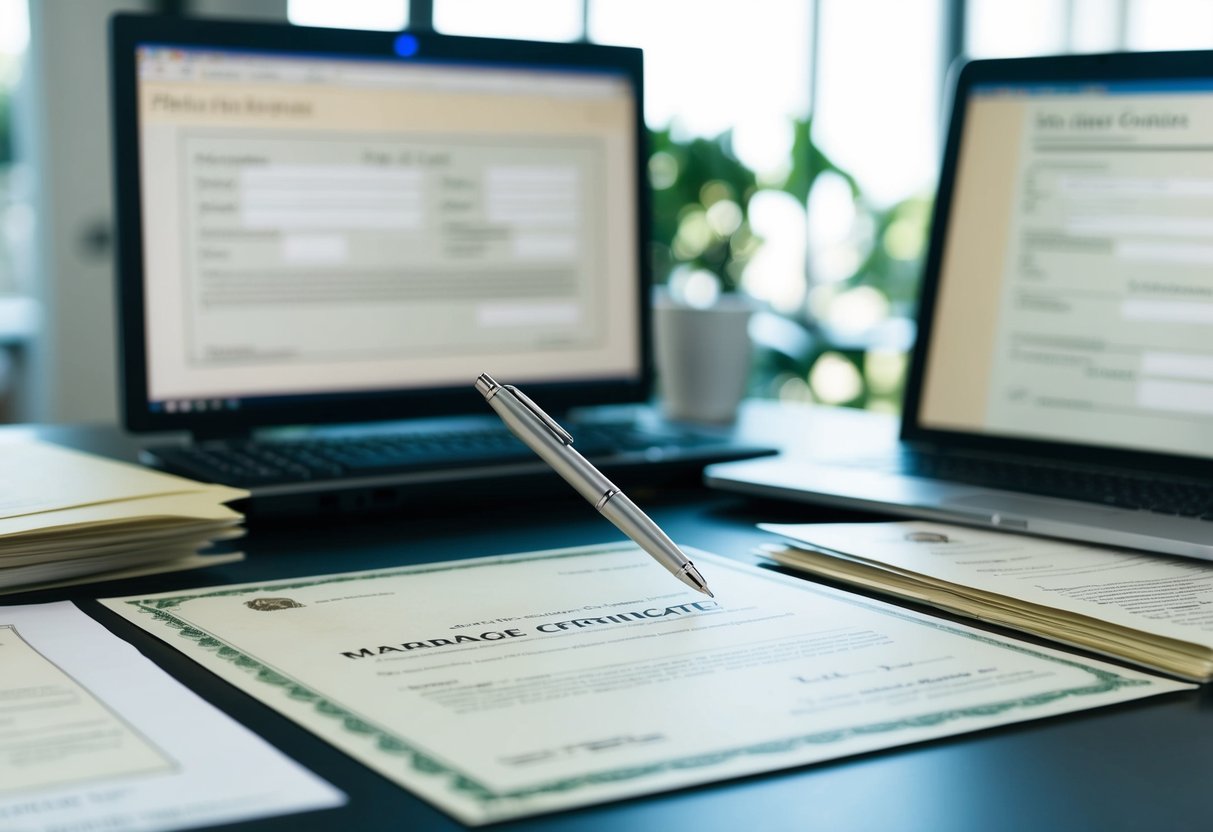
When you’re preparing to document your marital status, it’s important to know the types of documents you will need and any specific steps to obtain them. Understanding the differences between a marriage license and a marriage certificate is key, as well as knowing the requirements for international matters and the verification process.
Obtaining Marriage Documentation
To get your marriage documentation, start with obtaining a marriage license from your local county clerk’s office. This document allows you to legally wed and usually needs to be applied for before your ceremony. Be prepared to provide identification and pay a small fee.
After your marriage ceremony, ensure you receive a marriage certificate. This official document proves that you are married. It’s typically issued by the county clerk’s office after your wedding is registered. If you need a copy later, you can request it from the office where you obtained your license.
International and Immigration Considerations
If you are applying for a marriage-based green card or dealing with immigration, make sure your marriage certificate is acceptable for the process. U.S. Citizenship and Immigration Services (USCIS) often requires a certified copy of your marriage certificate.
If you were married abroad, you might need to get your marriage documentation recognized in the U.S. This could involve contacting the U.S. embassy in the country where you were married. They can guide you on the specific requirements for documentation.
Verification and Apostilles
To verify your marriage documentation for international use, you may require notarization and an apostille. An apostille is an official certification under the Hague Apostille Convention, which simplifies the recognition of documents between countries.
Check whether your marriage certificate needs an apostille. If you’re using it for immigration purposes or other international matters, verify the requirements with the appropriate authority. Getting an apostille usually involves submitting your marriage certificate to a designated office in your state. This process adds an extra layer of authenticity to your documents when they cross borders.
Addressing Changes in Marital Status
When your marital status changes, it’s important to take the right steps to update all necessary records. This can include anything from getting a divorce to changing your name. Keeping your information current helps you avoid legal complications or issues with benefits.
From Marriage to Divorce
If you go from being married to divorced, you’ll need to address this change properly. You should obtain your divorce decree, which is an official document that confirms the end of your marriage. This decree may be necessary for various legal processes and helps update your status on official forms.
To change your marital status, you may also need to draft a marital status letter. This letter communicates your change to relevant organizations, such as the IRS or USCIS. If you are a conditional permanent resident, ensure that you file Form I-751 along with supporting documents, like the affidavit, to remove your conditional status. Doing so promptly helps keep your residency secure.
Legal Implications of Status Changes
Changing your marital status can have serious legal implications. For instance, if you’ve had prior marriages, you may need to provide documentation for those too. This includes any applicable divorce decrees that can prove you are legally free to remarry.
If you do not report your divorce or name change, it could lead to problems with government agencies like USCIS. They may question your legal marriage and residency status. It’s essential to file the required forms and notify agencies promptly. This ensures you maintain your legal rights and privileges as a resident.
Supporting Your Marital Status Claim

When you need to support your marital status claim, there are several important steps to take. This includes providing affidavits, preventing fraudulent claims, and demonstrating that your marriage is genuine. Each step helps verify your status and strengthens your case.
Affidavits of Marital Status
To prove your marital status, you may need affidavits. An affidavit is a written statement made under oath. It can be beneficial to have multiple affidavits from friends and family who know your relationship well.
These letters of support can highlight your relationship history, living arrangements, and shared experiences. Make sure each affidavit includes the affiant’s name, signature, and a notary public’s seal. This adds credibility to your claim.
You might consider an affidavit form used specifically for marital claims. This ensures the necessary details are included.
Preventing Fraudulent Claims
It’s important to protect yourself from fraudulent claims, especially if you are applying for a marriage-based green card. Be aware of signs of fraudulent marriages, such as very short or unusual courtship periods.
Gather clear evidence of your relationship, like photographs, travel itineraries, and joint accounts. Having a marriage certificate is crucial, but additional proof strengthens your case.
Always ask for documentation when meeting with your partner’s family. This helps show your relationship is genuine.
Demonstrating a Bona Fide Marriage
To support your claim of a bona fide marriage, you need to show that your relationship is real and ongoing. This can include joint financial documents, like bank statements or leases.
You can also provide evidence of shared life experiences. For example, you can introduce details such as celebrating holidays together or attending family events.
Make sure to have both spouses involved in the process of compiling documents. This partnership shows commitment. When you apply for U.S. citizenship or file an I-751 petition, thorough documentation will help reassure authorities about your marriage’s authenticity.