
How Do You Hang a Stage Backdrop? Easy Tips for a Flawless Setup!
Hanging a stage backdrop can set the perfect mood for your performance. Whether you’re preparing for a play, concert, or any event that needs visual flair, knowing how to hang a backdrop properly is essential.
To hang a stage backdrop effectively, various methods like clamps, ties, or a piping system can be used, depending on your setup.
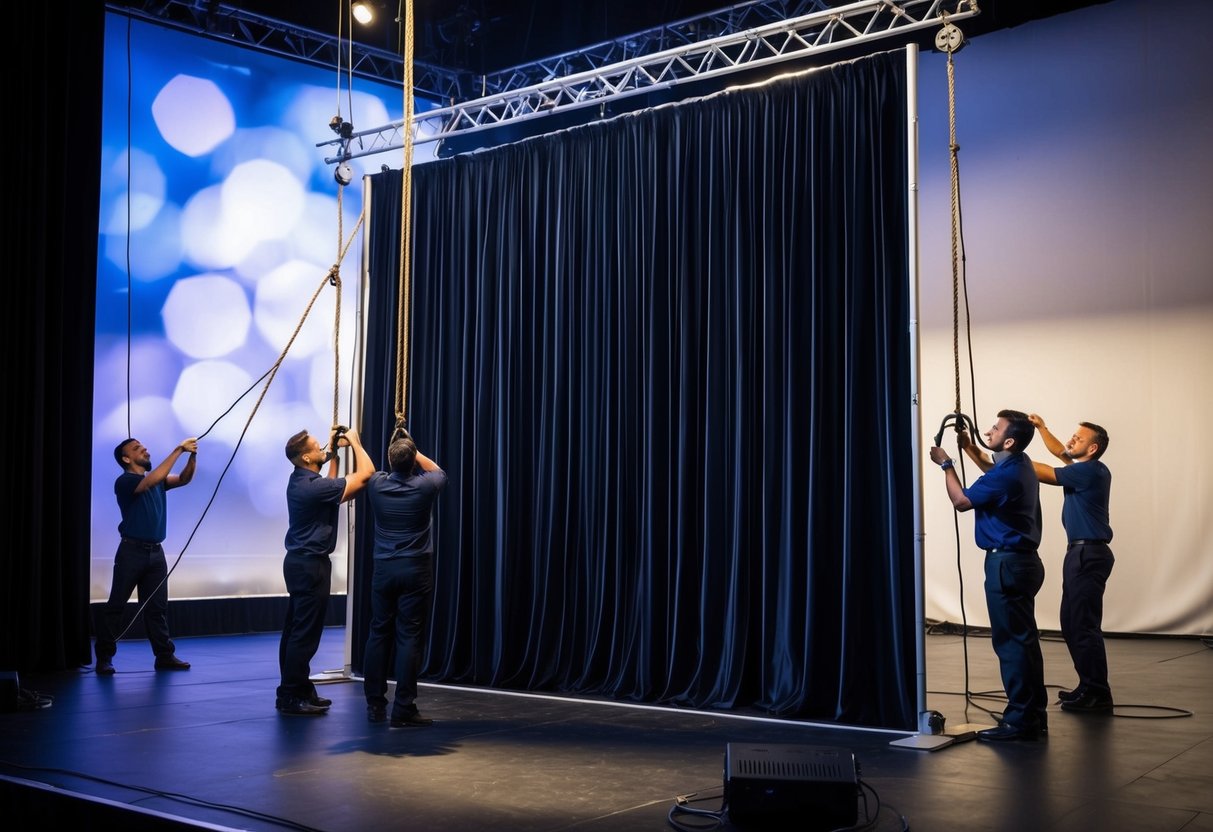
Choosing the right technique depends on the size and type of your backdrop. You may want to secure the bottom with weights to prevent swaying and create a polished look. This not only enhances the overall presentation but also ensures your backdrop stays in place throughout the show.
As you get ready to hang your backdrop, keep in mind the equipment you have on hand. This includes clamps, pipes, or even simple tape. With the right approach, you’ll create a beautiful backdrop that captivates your audience.
Essential Equipment for Hanging a Backdrop
When preparing to hang a stage backdrop, choosing the right equipment is key. You’ll need reliable clamps and suitable fabric drapes to ensure a smooth setup.
Choosing the Right Clamps
Using the right clamps is crucial for a secure backdrop. Rubber tip clamps are a popular choice. They grip fabric without damaging it, making them safe for any type of backdrop.
You should consider the weight of your backdrop when choosing clamps. If your fabric is heavy, opt for stronger clamps that can support the extra weight. Clamps should be spaced evenly—about every foot will usually do the trick.
Be sure to inspect your clamps regularly. Cracked or weakened clamps can lead to a backdrop falling, which might disrupt your event. Always have a few extra clamps on hand just in case.
Types of Fabric Drapes
The type of fabric drape you choose affects the look of your stage. Fabric backdrops come in various materials like muslin, velvet, and polyester. Each material offers a different texture and weight.
Muslin is lightweight and easy to work with, while velvet adds a rich, luxurious feel but can be heavier. Polyester is durable and often comes in different colors and patterns, making it versatile.
Think about how you want the backdrop to interact with lighting. Some fabrics absorb light, while others reflect it. Choosing the right material can enhance the overall effect of your stage production.
Preparation Steps Before Hanging
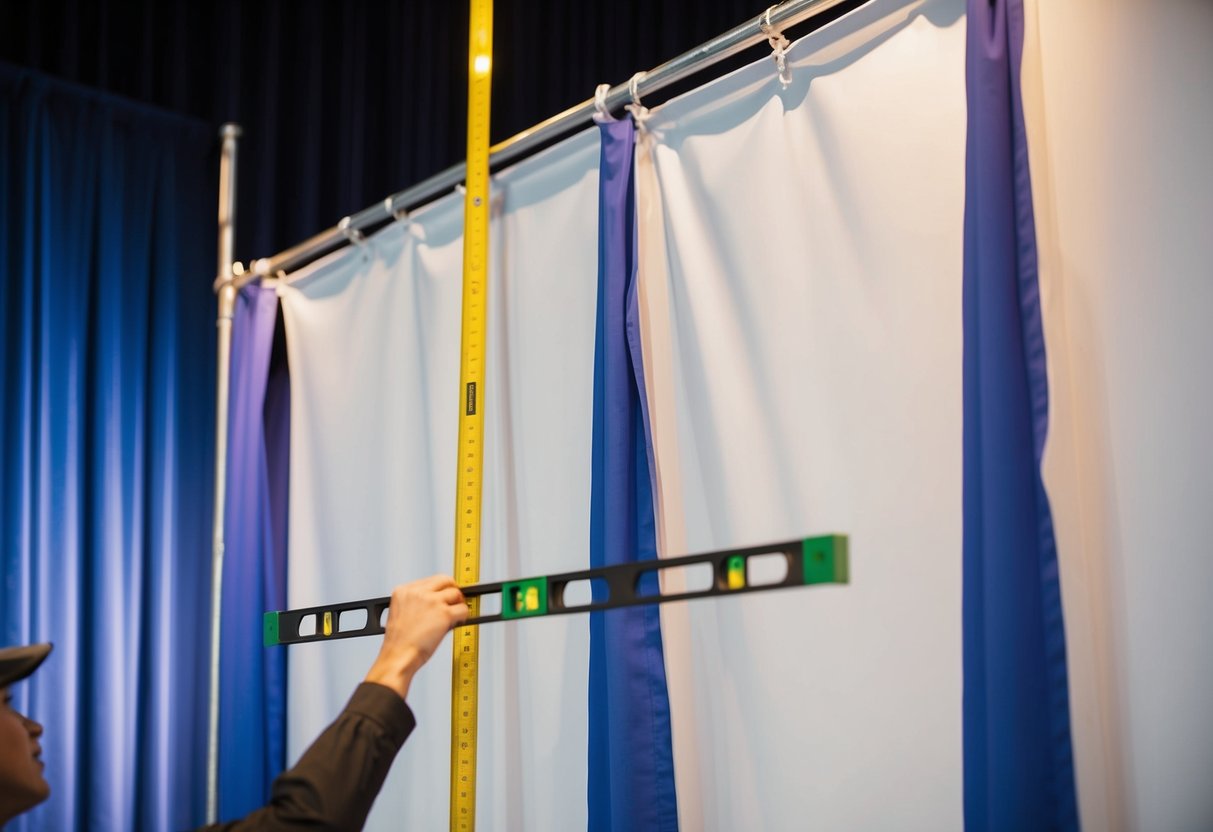
Before you start hanging a stage backdrop, you need to take a few important preparation steps. These will ensure everything goes smoothly when you set up your backdrop for the show. Proper preparation helps avoid mistakes and potential issues later.
Measuring the Stage Area
First, you should measure the stage area where you plan to hang the backdrop. Use a tape measure to get the width and height of the space. It’s crucial to know these measurements to avoid selecting a backdrop that’s too large or too small.
Take note of any obstacles like lights, speakers, or curtains that might interfere with the hanging process. This information will help you decide how to position the backdrop effectively.
Consider the type of backdrop you are using. For instance, if it’s a larger theatrical backdrop, you may need additional support. This could mean securing it higher or ensuring it has enough width to reach both sides of the stage.
Inspecting the Backdrop
Next, inspect the backdrop itself before hanging it. Make sure it is clean and free from any tears or damage. Look for any creases or folds that could affect its appearance when displayed.
Also, check the hanging mechanisms. Confirm that any loops, grommets, or clips are in good condition. This ensures the backdrop will hang securely and look its best.
If your backdrop is made from fabric, consider how it may react under stage lights. Some materials can fade or change colors with heat, so be aware of this as you choose your backdrop.
Hanging the Backdrop
Hanging a stage backdrop properly is essential for creating the right atmosphere. You’ll want to secure it tightly and make final checks to ensure everything looks perfect.
Securing the Backdrop to the Support
To start, lay the backdrop flat on a clean surface. If you are using rubber tip clamps, position them along the top edge of the backdrop. Clamp the fabric at intervals of about one foot to create an even hold across the entire width.
Attach the clamps to your support system, making sure they are evenly spaced. If the backdrop has tie lines, you can tie it directly to batten pipes or a frame. Make sure to pull the fabric taut, avoiding any wrinkles or sagging.
It’s important to double-check the stability of the clamps. They should hold securely without sliding. Test the backdrop gently to ensure it remains in place. Proper security helps avoid any disruptions during your show.
Final Adjustments and Safety Checks
After securing the backdrop, stand back and visually inspect it. Adjust any areas that may still appear wrinkled.
You can adjust the height by raising or lowering the support at either end, ensuring even tension. Check that all clamps are tight and that the backdrop is not in danger of falling.
It can help to have a partner observe as you make adjustments, ensuring everything looks just right. Lastly, perform a safety check.
Ensure that your support system is stable and that no loose ropes or ties could pose a hazard. A secure backdrop not only enhances the visual aesthetics but also ensures a safe performance for everyone involved.