
How Do You Seat Everyone at a Wedding? Tips for a Smooth and Memorable Celebration
Seating everyone at a wedding can feel overwhelming, but it doesn’t have to be. The key is to create a thoughtful seating chart that considers relationships, personalities, and comfort levels. By carefully grouping guests, you can ensure that everyone feels included and enjoys the celebration.
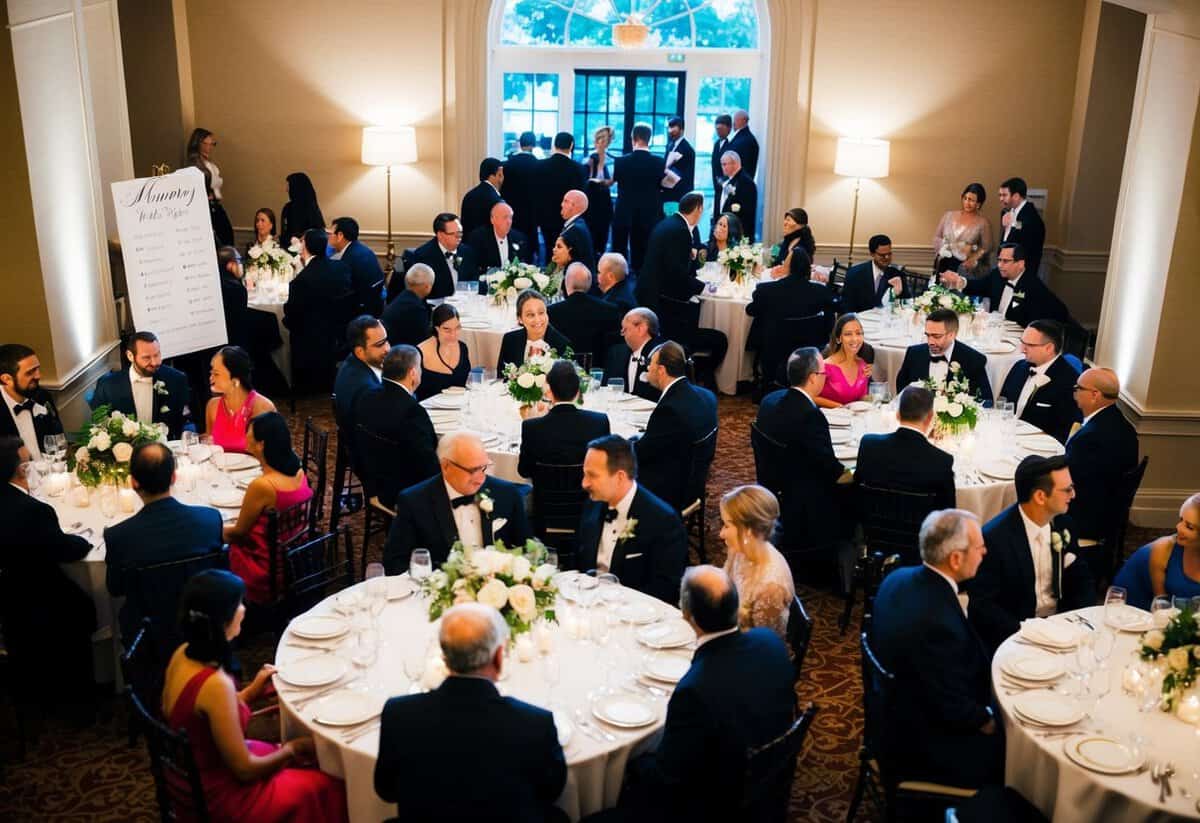
Start by making a list of your guests and their connections to each other. Consider setting up tables grouped by family or friends.
For children, a separate kids’ table with activities can keep them entertained throughout the event.
Remember, communication is essential. Use place cards to guide guests to their seats and reserve spots for VIPs like parents and grandparents. A well-planned seating arrangement makes your big day smoother and more enjoyable for everyone.
Planning Your Wedding Seating Chart
Creating a wedding seating chart can seem daunting, but it’s manageable with a few steps. You’ll want to start by mastering the basics, organizing your guest list, and choosing the right table shapes. This will help make your planning smoother.
Understanding Seating Chart Basics
A seating chart helps organize guests in a way that encourages interaction and minimizes potential conflicts. Start by deciding if you want a traditional assigned seating arrangement or a more casual open seating setup.
Understanding social dynamics is crucial. Group friends or families who know each other well. Be mindful of relationships, as some guests might not prefer sitting together. A well-planned seating chart ensures everyone feels comfortable and included, making the day more enjoyable for all.
Creating a Guest List
Begin with an accurate guest list. List everyone you want to invite and mark those who have RSVP’d. This list is essential for knowing how many tables you’ll need.
Consider creating a digital document for easy editing. You can include additional notes about guests’ relationships and preferences. This will help you make decisions about seating arrangements later.
Categorize guests into smaller groups, such as family, friends, and coworkers. This way, placing them at tables will be simpler and will help maintain balance and harmony during the celebration.
Determining Table Shapes and Sizes
Choosing the right table shapes can greatly impact your layout. Common options include round and rectangular tables.
Round tables promote conversation, while rectangular tables can fit more guests in a smaller space.
For example, round tables can typically seat 8-10 guests. Rectangular tables can accommodate more people in a line, which is ideal for larger gatherings. Consider your venue’s space when determining how many tables you can fit comfortably.
A mix of table shapes can also add an interesting visual element to your setup. Make sure to measure your space and plan accordingly to allow room for guests to move around.
Arranging the Reception
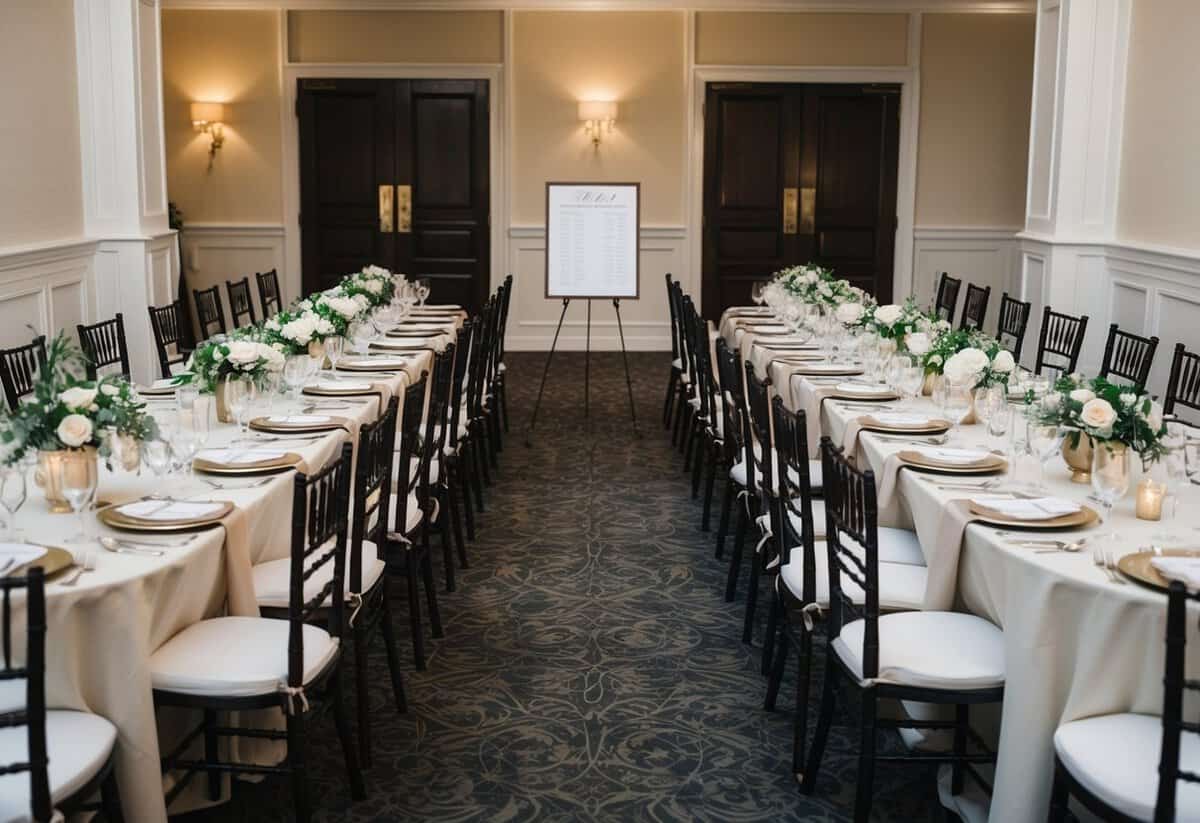
Creating a comfortable and welcoming seating arrangement at your wedding reception is essential. You’ll need to carefully plan the head table, organize family tables, and ensure special requirements are met for guests.
Setting Up the Head Table
The head table is often the focal point of your reception. It typically features the bride and groom, but you can include the wedding party as well. You might prefer a sweetheart table for an intimate setting. This table can be placed in a prime spot to allow guests to see you easily.
When arranging the head table, consider the size and shape. Rectangular tables can accommodate more guests, while round tables create a cozy atmosphere. Make sure your table décor stands out, using flowers or decorative linens that match your theme.
Organizing Family Tables
Family tables are important for keeping relatives together. Split your guests into groups based on family connections. This helps maintain relationships and keeps conversations flowing.
You can create a list of families and their members, allowing you to visualize table arrangements. If you have larger families, consider multiple tables close together. Plus-ones should sit with their partners if possible. This ensures no one feels left out and promotes a friendly atmosphere.
Accommodating Special Requirements
Some guests may require special arrangements. Elderly guests might need seats closer to the dance floor or buffet for easy access. Be mindful of their comfort and mobility.
If kids are invited, consider a kids’ table. This keeps the little ones entertained and allows parents to enjoy the celebration. You can provide fun activities or coloring books to keep them engaged.
Overall, think about individual needs when planning seating. This thoughtful approach will help create an enjoyable experience for everyone.
Finalizing Seating Details
Getting the seating right at your wedding is important for ensuring your guests feel comfortable and enjoy the event. You will want to think about assigned seating, seating etiquette, and the best way to prepare cards for your guests to find their places.
Deciding on Assigned Seating
Assigned seating can bring a sense of order to your reception. You can create a detailed seating chart that indicates where each guest should sit. Consider grouping guests by families or friends to make them feel more at ease.
Designate specific tables for important guests, such as family members and close friends, as these tables can be special. Use reserved seating signs to ensure VIP guests have their spots saved.
If you opt for assigned seating, communicate this clearly so guests know what to expect.
Incorporating Wedding Seating Etiquette
Following basic wedding seating etiquette can make your event run smoothly. Place guests who know each other at the same table to encourage conversation.
Avoid sitting guests with known conflicts together; this will help maintain a peaceful atmosphere. For mixed groups, try to create a balance between older and younger guests to create a lively mood.
If you have special meal requests, like vegetarian options, take these into account when arranging your tables. Lastly, always provide easy access for older guests at the front or sides of the venue.
Preparing Escort and Place Cards
Providing escort cards and place cards is a great way to guide your guests. Escort cards show guests their assigned table, while place cards tell them where to sit at that table.
Design your cards to match your wedding theme. This adds a touch of elegance and helps guests feel welcomed.
Arrange the escort cards on a display table where guests can easily find them. You can use decorative stands or a charming board for this.
Make sure to assign seats at tables to avoid confusion later. This thoughtfulness will leave a positive impression and help everyone enjoy your celebration.
Coordinating with Wedding Professionals
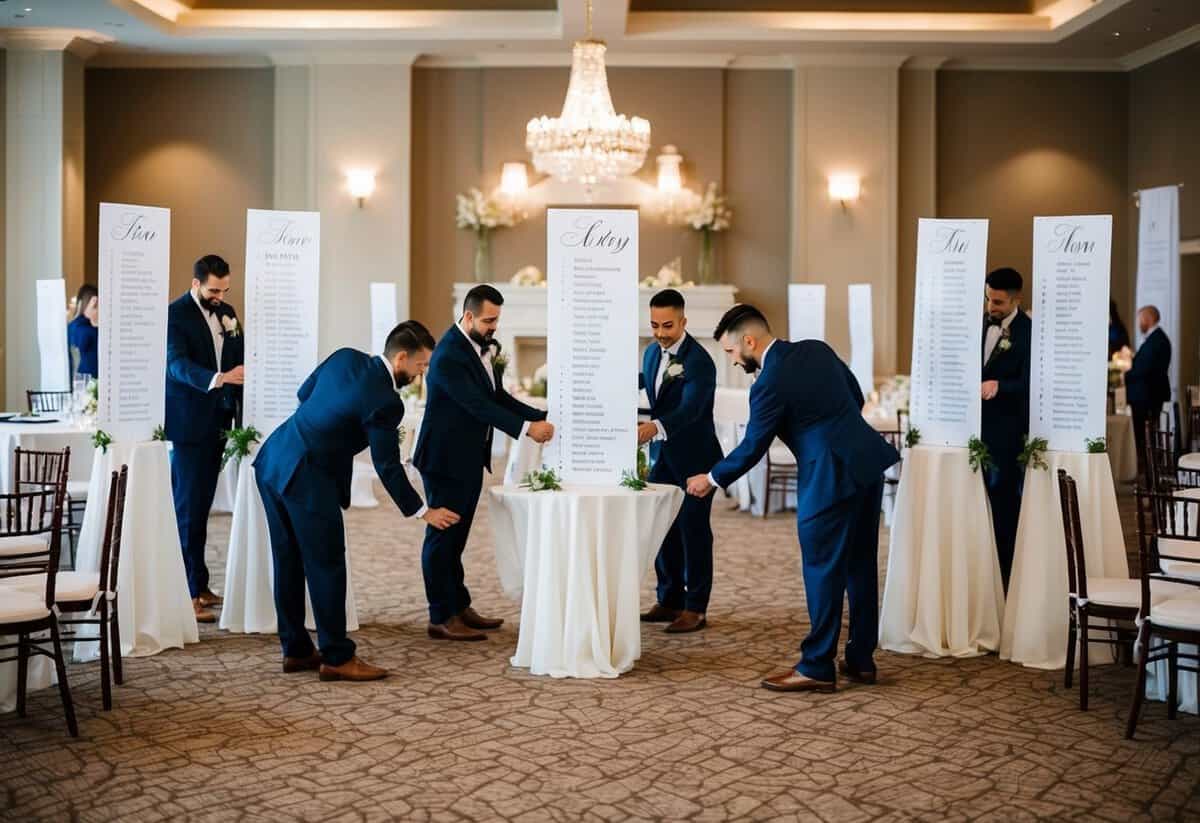
When planning your wedding seating, working with professionals can make a big difference. They help you navigate the details and ensure everything runs smoothly on the big day.
Working with a Wedding Planner
Your wedding planner is your best ally in seating guests. They help manage the RSVP list and understand how many chairs you need for the ceremony.
They can suggest different seating options based on your venue. For example, they may recommend a traditional setup or something unique, like a circular arrangement. This gives everyone a good view.
A planner also knows how to handle single guests. They can create a singles table to ensure everyone feels included. Clear communication with your planner about family dynamics and relationships is essential to avoid awkwardness.
Liaising with Event Staff and Ushers
Communication with event staff and ushers is crucial for implementing your seating plan.
Share the seating chart with them well in advance. This helps everyone understand where guests should sit.
Ushers play a vital role in helping guests find their seats. So, brief them about any special arrangements, like reserved seating for family or specific rows for close friends.
Make sure ushers know how to manage the flow, especially if you have a larger wedding. They should be friendly and helpful, guiding guests with ease. This ensures that the ceremony starts on time and all guests feel welcomed.