
How Do You Write a Couple’s Name on a Seating Chart? Tips for a Perfectly Organized Celebration
When you’re planning your wedding, creating a seating chart can feel overwhelming, but it’s a key part of the process.
To write a couple’s name on a seating chart, list them together as a unit, using the format that feels most comfortable for them, like “Andrew and Kari Bland” or “Mr. and Mrs. Andrew Bland.” This helps guests recognize couples easily and fosters a sense of togetherness.
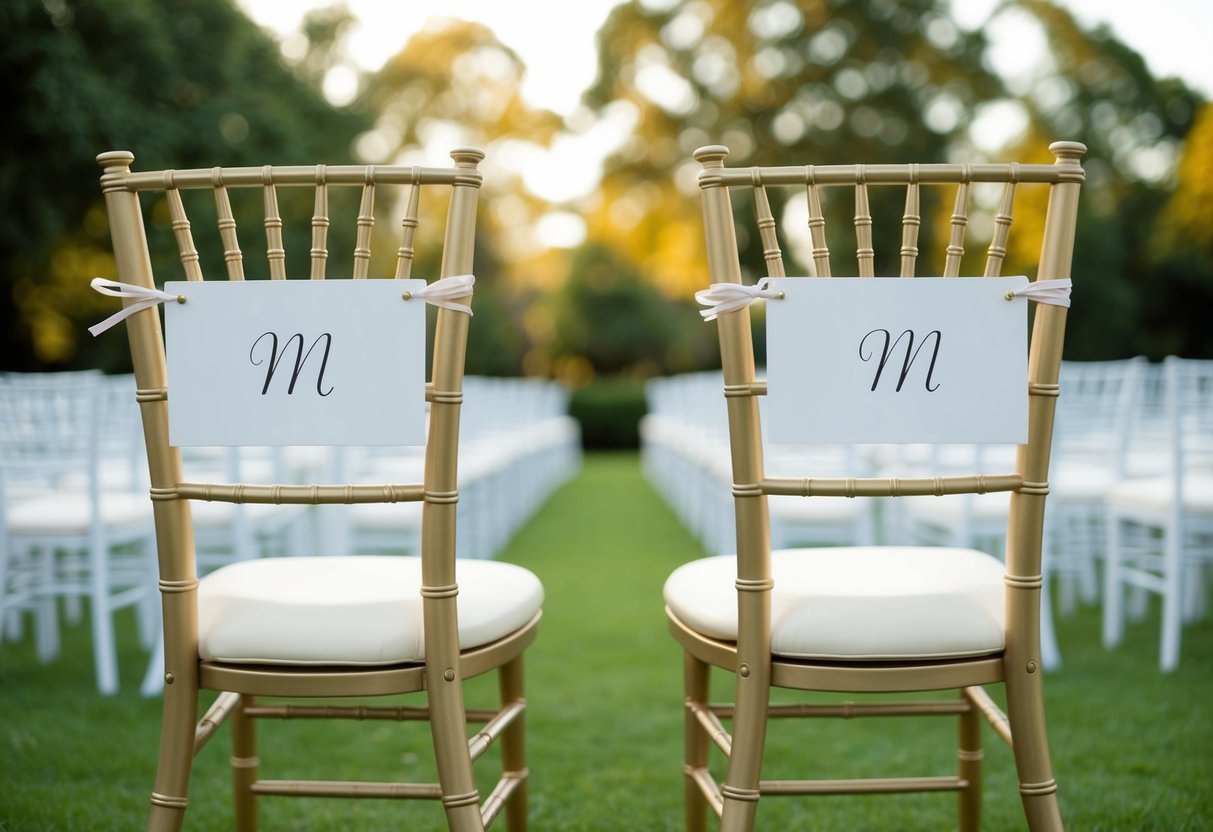
As you look at your seating chart, think about how guests will find their places. An alphabetical layout can make it easier for everyone to navigate.
Placing the couple’s name clearly ensures that there’s no confusion on the big day, allowing your guests to settle in and enjoy the celebration.
The planning process is all about details, and the seating chart is one that can enhance your wedding’s flow. By thoughtfully considering how you present couple names, you set a welcoming tone for your guests, making them feel at home.
Understanding Seating Chart Basics
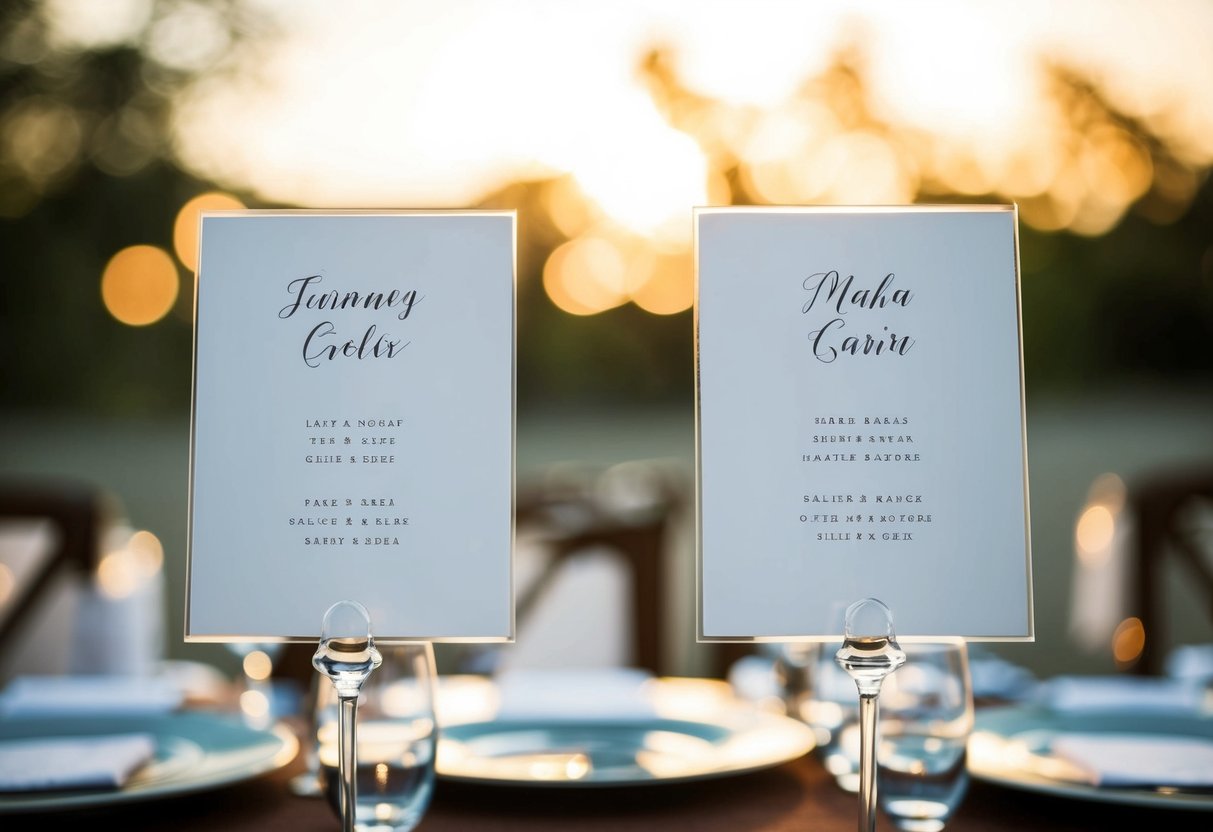
Creating a seating chart can seem challenging, but it helps guests feel comfortable and included. Knowing how to arrange seating and the types of charts you can create will make the process easier.
Deciding on Seating Arrangements
Start by considering your venue’s layout. Understand which tables work best for your guests.
Common options include assigned seating and open seating. Assigned seating can help prevent disputes over who sits where.
You might have a head table for the wedding party, a sweetheart table for just the couple, and a family table for immediate relatives.
List guests’ names and create a plan that ensures everyone sits where they feel comfortable. Don’t forget to communicate your seating arrangements clearly so guests know where to find their spots.
Types of Seating Charts
There are various types of seating charts to consider. An alphabetical seating chart organizes names in order, making it easy for guests to locate their seats.
You could also opt for a themed chart, which adds a personal touch—like a map of your wedding venue or a photo collage. Ensure each chart shows table numbers clearly, as this helps guests understand where to go.
For married couples, list their names together, such as “Smith, John and Johnson, Jane.” For couples with different last names, you can create a separate entry for each to avoid confusion. This structure keeps everything organized and welcoming for your guests.
Etiquette for Couple’s Names on Seating Charts
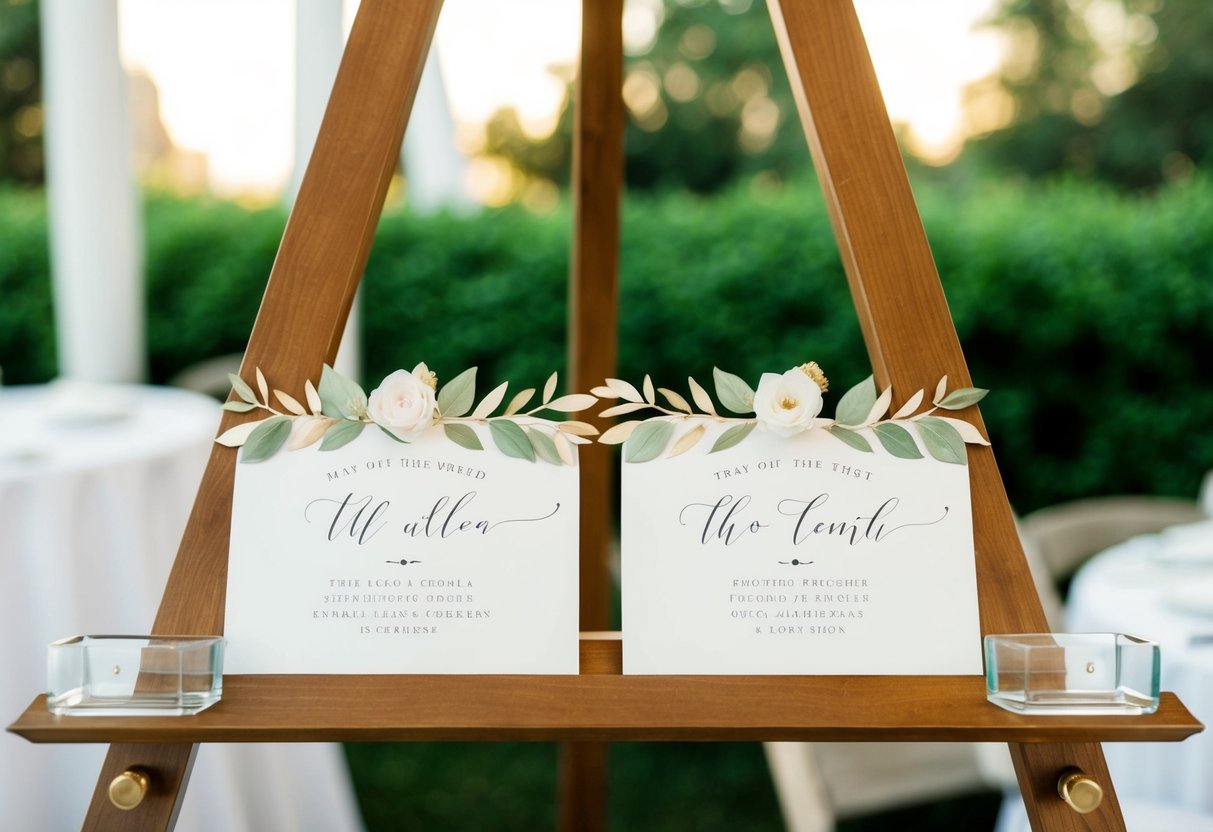
When listing a couple’s names on a seating chart, it’s important to follow proper etiquette. This ensures clarity and respect for each couple’s identity. Here are some key practices to consider.
Formatting Full Names Correctly
Start by using full names for each guest. This makes it easier for everyone to find their seats.
For a traditional format, list names such as “Andrew Smith and Kari Johnson.” Use an “and” to connect the names. If including last names, make sure to place them in alphabetical order. This helps guests locate their names with ease.
In more casual settings, you might choose to only use first names. For example, “Kari and Andrew” can work well. Just make sure the names are clearly visible and legible on the seating chart.
Addressing Married and Same-Sex Couples
For married couples, you can follow their preferred naming style. Use “Mr. and Mrs. Last Name” for traditional couples. For same-sex couples, it’s often preferred to list names alphabetically, such as “Ella Brown and Jamie Taylor.”
Ensure that the couple’s preference is respected. Some couples may prefer just first names, while others may want formal recognition. Listening to their choices is an important part of the etiquette.
If you’re unsure, asking them how they would like their names displayed can show your thoughtfulness.
Incorporating Family Dynamics
When listing names for couples with children or blended families, it’s essential to represent everyone appropriately.
Consider using a more inclusive format that acknowledges family dynamics. You can add the children’s names under the couple’s, like this: “Emily Smith and Alex Johnson (with Oliver and Mia).” This format ensures that families feel recognized and included.
If only some family members are invited, confirm with the couple about how to present their family on the seating chart. Clear communication is key in respecting everyone’s preferences.
Creating Your Seating Chart
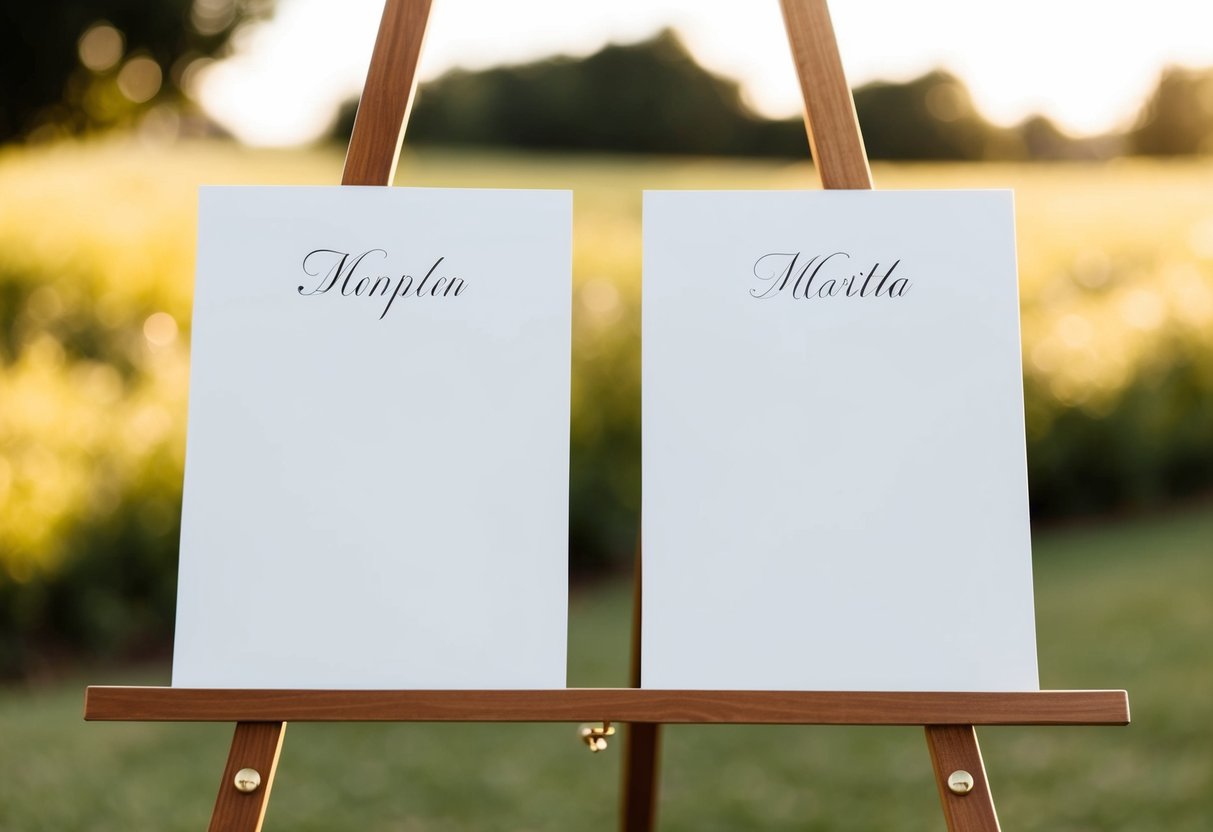
Creating a seating chart is an important part of wedding planning. It helps guests find their seats easily and ensures a smooth flow during the reception. Here’s how to organize your guest list, design for clarity, and finalize your chart.
Organizing Guest List and Tables
Start by compiling your guest list based on RSVPs. Group guests by their connections. This might mean placing family members together or friends from the same phase of life, like college or work.
Once you know who’s coming, begin organizing tables. You can assign each guest a table number. If it helps you visualize, consider using tools like Excel for an alphabetical seating chart. This way, you can see who fits well with whom.
Think about the size of your tables. Ensure you don’t overcrowd them. Leave space for food service and for guests to move comfortably. A general rule is to allocate around eight to ten guests per table.
Designing for Clarity and Accessibility
Your seating chart should be easy to read at a glance. This means using larger letters—especially for the names of elderly guests who may need extra help.
Make sure the layout is clear. Use table groupings so guests can find their seats quickly. For example, you could list guests by table number on a larger display for everyone to see.
Consider using escort cards or place cards at tables to further guide your guests. Each card can have the guest’s name and table number for added clarity. Always ensure that the font is legible from a distance.
Finalizing and Displaying Your Chart
Once you’ve organized and designed your seating plan, double-check that all names are correctly spelled and that each guest is assigned to the right table.
After finalizing, decide on how to display your seating chart. You could use a large board at the entrance or print individual escort cards for guests.
Make sure your display is prominent but not overcrowded. Keep your chart in a well-lit area, so guests can easily read it. Also, think about aesthetics—decorating your chart can add a nice touch to your wedding theme.
Coordinating with Stationery and Signage
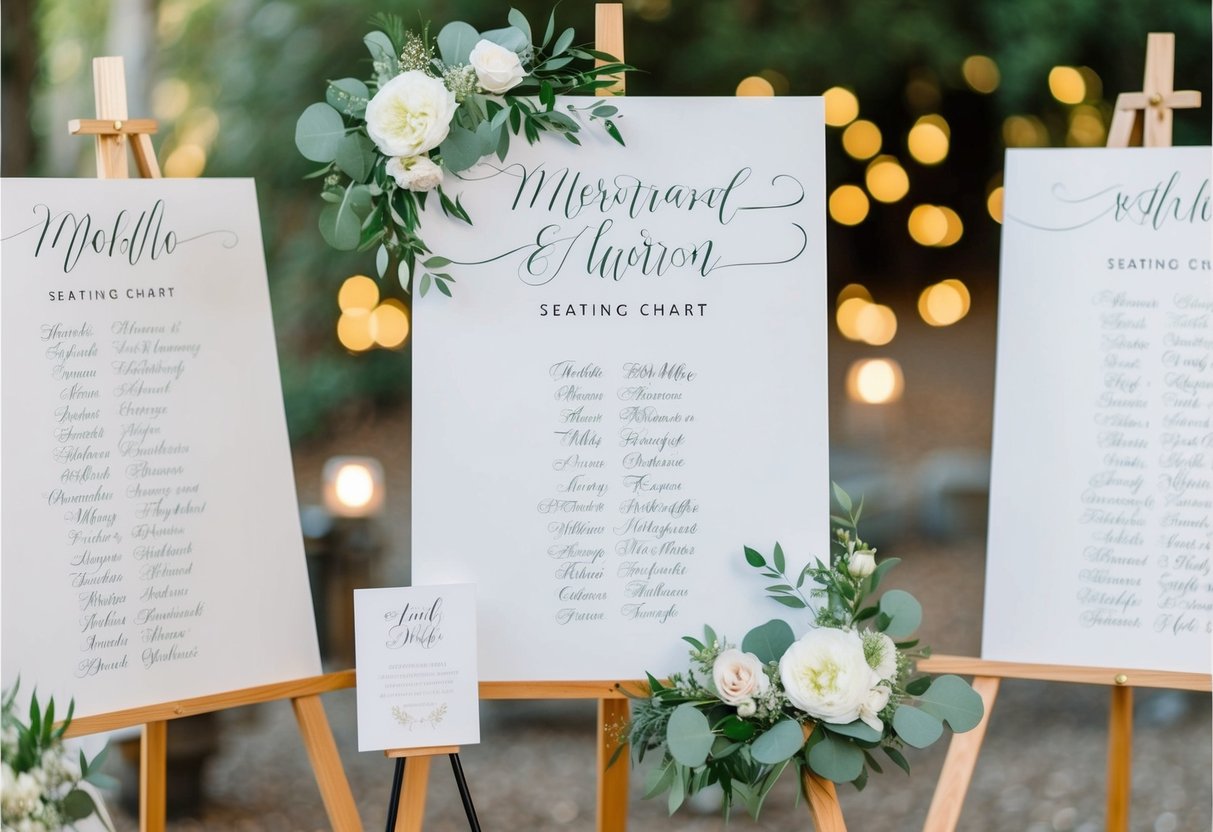
When planning your wedding seating chart, it’s important to coordinate it with your stationery and signage. This ensures a cohesive look and feel throughout your event. Attention to detail will make a positive impression on your guests.
Consistency with Wedding Invitations
Your wedding invitations set the tone for your big day. The design, colors, and fonts you choose here should match your seating chart. If your invitations have elegant calligraphy, consider using the same style for your seating chart.
When addressing envelopes, keep the names formatted similarly to how they appear on the seating chart. For example, if you write “Mr. and Mrs. Smith” on the invitation, use the same naming convention on the chart. This will avoid confusion and help guests find their seats easily.
Selecting Name Cards and Escort Cards
Choosing the right name and escort cards is key to a smooth seating experience. Make sure the cards align with the wedding theme.
If your style is rustic, consider using natural materials like wood or kraft paper for the name cards.
Think about guest etiquette when placing cards. Name cards should have the guest’s name clearly printed, with plus ones noted if applicable.
Escort cards guide guests to their tables, so make sure that they are easy to read and well organized.
For the parents of the bride and groom, it’s lovely to highlight their names by placing them at the top of the chart, ensuring recognition for their role in the celebration.
Using a wedding planner can help in selecting and arranging these items, ensuring everything flows beautifully.