
How Early Is Too Early to Get to a Wedding? Navigating Arrival Times for Guests
As a guest at a wedding, you want to be respectful and punctual, but it can be tricky to know just how early is too early to arrive. The general rule is to aim for no more than 10 minutes early. Arriving too early can lead to awkward moments, especially if the wedding party is still getting ready or if guests are not yet seated.

You might feel the urge to leave your house super early to avoid traffic or to find good parking. While it’s great to plan ahead, hanging out in your car for a bit can be a better option if you find yourself arriving too soon. Understanding proper wedding etiquette can help ensure that everyone enjoys the day without added stress.
When you do arrive, a calm and cheerful demeanor will help set a positive tone for the celebration. Remember, weddings are joyous occasions, and being considerate of timing is part of the fun!
Understanding Wedding Invitations And Etiquette
Wedding invitations are an essential part of your planning process. They help set the tone for your big day and ensure your guests know when and where to celebrate with you. Understanding the nuances of invitations, RSVPs, and save-the-dates can make this part easier.
Decoding Formal Invitations
A wedding invitation is more than just a piece of paper. It’s a key signal to your guests about the style and formality of your event. Formal invitations usually include specific elements:
- Names of the couple
- Date and time
- Venue location
- Dress code (if applicable)
You might also see details like a reception to follow. Make sure your guest list is accurate before sending them out to avoid confusion later. When your invites land in the mail, it’s time to get excited!
The Importance of RSVPs
RSVPs are crucial for your wedding planning. They help you determine how many guests will attend, which affects seating plans and catering. When you send out your invitations, clearly state the RSVP deadline.
Here are some helpful tips:
- Use a simple method for RSVPs, like a postcard or your wedding website.
- Remind guests politely about the RSVP date as it approaches.
- Consider following up with guests who haven’t responded by the deadline.
Every RSVP received helps you make informed choices for your celebration.
Navigating Save-the-Dates and Wedding Websites
Save-the-dates are fantastic for informing guests about your wedding ahead of time. They typically go out 6 to 12 months before the big day, especially if you’re planning a destination wedding. These notices help your loved ones set aside the date on their calendars.
A wedding website can be another useful tool. You can share important details like:
- Venue directions
- Accommodation options
- Registry information
Having a website means you can easily update your guests as plans evolve. This creates a central hub for your wedding, making communication straightforward and effective.
Arriving Early: Timing It Right
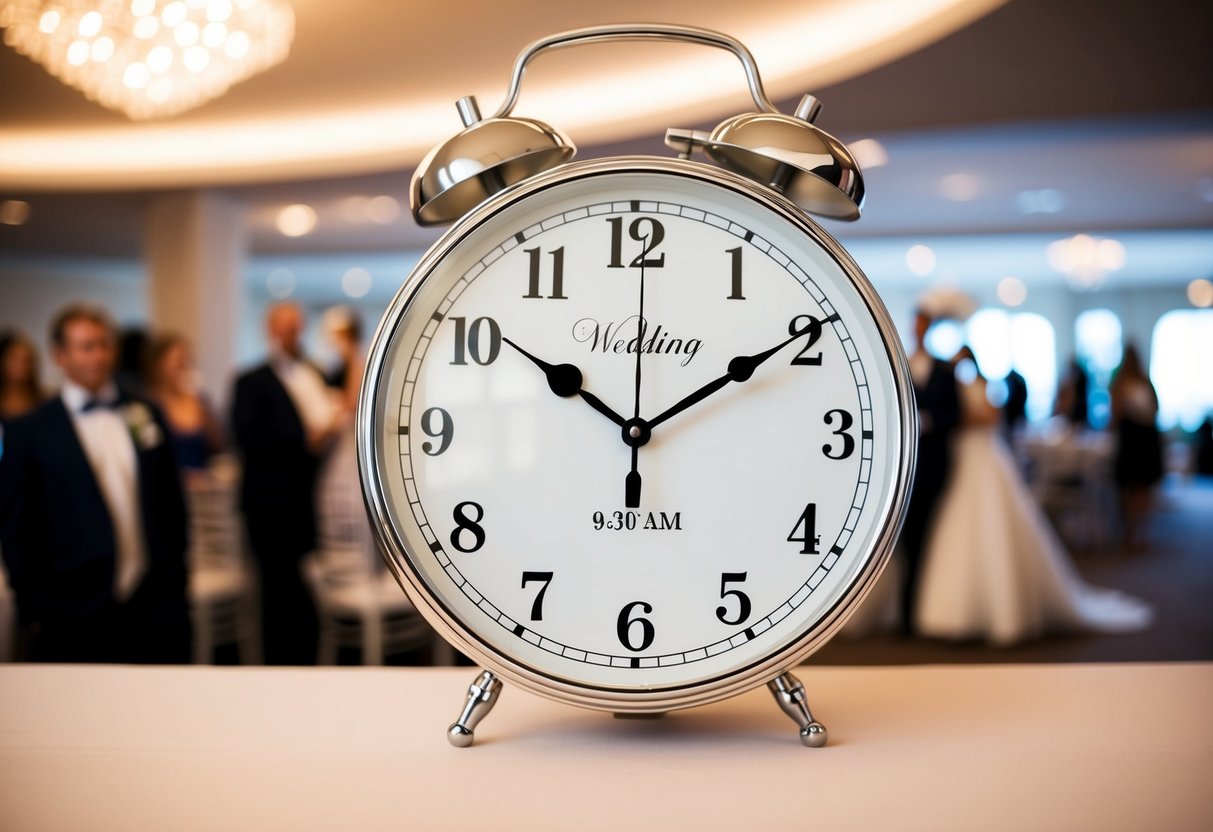
Getting the timing right for your arrival at a wedding can enhance the experience for you and the couple. Understanding how early to arrive can help avoid awkward moments and ensure you respect the couple’s timeline.
Adhering to the 30/5 Rule
A good guideline to follow is the 30/5 rule. This means you should aim to arrive 30 minutes before the wedding starts. By doing this, you allow yourself extra time for any last-minute delays, like traffic or finding parking.
If the invitation states that the ceremony begins at 4 p.m., try to arrive by 3:30 p.m. You should also keep in mind the five-minute rule. This rule suggests not arriving more than five minutes early to avoid interrupting any pre-ceremony activities. This balance shows respect for the couple’s time while ensuring you’re not left waiting too long.
Handling Destination Weddings
Destination weddings require a bit more planning. Travel times and accommodations play a big role in how early you should arrive. Since these weddings might be in a different city or country, it’s essential to factor in your journey.
Aim to arrive at least one to two days before the event. This gives you the chance to settle in and enjoy some local sights. Don’t forget to check if the couple has set up any welcome activities or gatherings. Participating in these can help you feel more connected to the celebration and other guests.
Accommodating International Guests
When attending a wedding that involves international guests, it’s respectful to consider their travel experiences. Flights, jet lag, and unfamiliar locations can impact their arrival times.
If you attend such a wedding, try to arrive a bit earlier, around two days before the event. This allows ample time for rest and adjustment. You might also notice that some guests take advantage of this time to explore the local area. Interacting with fellow guests during this period can enhance your overall celebration experience.
Preparing for the Wedding Day
Getting ready for your wedding day is exciting but requires careful planning. You want to make sure everything goes smoothly from last-minute preparations to understanding the timeline and dressing appropriately. Here’s how to set yourself up for a joyful day.
Last-Minute Preparations
As the wedding day approaches, having a checklist for last-minute preparations will help keep stress at bay. Confirm with vendors like florists and caterers to ensure everything is on track.
Make sure your wedding attire is ready. This includes your dress or suit, shoes, and any accessories. Check that everything is clean and fits well.
Consider packing an emergency kit with items like safety pins, makeup for touch-ups, and pain relief medicine. Having these on hand can save you from small hiccups on your special day.
Understanding the Wedding Day Timeline
A solid wedding day timeline is essential for a smooth experience. Aim to wake up early, especially if your wedding is in the afternoon or evening. Setting your alarm for around 7 a.m. will give you ample time to get ready without feeling rushed.
Schedule key activities like hair and makeup, allowing enough time for everyone involved. Don’t forget to include travel time to your ceremony venue and build in some buffer time. Unexpected delays can happen, so it’s better to be prepared.
Communicate the timeline with your wedding party, so everyone knows where they need to be and when. This helps keep the day on track and everyone stress-free.
Dressing Appropriately for the Occasion
Dress code is an important part of your wedding. Make sure your outfit reflects the theme of your wedding. Whether it’s formal, semi-formal, or casual, your attire should match the tone of the event.
Ensure that your outfit is comfortable, especially if you’ll be wearing it for hours. You want to enjoy your day without constantly adjusting your clothes.
Don’t forget about your shoes. Since you’ll be moving around, choose a pair that’s stylish yet comfortable. Consider breaking them in before the wedding, so you’re not caught off guard on the big day.
At the Venue: Parking and Reception

Arriving at the venue can bring excitement but also some logistics. Knowing about parking options and how to navigate the wedding reception will help make your experience smooth and enjoyable.
Parking Logistics for Guests
Finding parking can be tricky on wedding day. Most venues provide a designated area for guests. Check your invitation or the wedding website for specific details.
-
Arrive Early: Aim to reach the venue at least 30 minutes before the ceremony. This gives you time to park and find your way.
-
Parking Signs: Look for signs that guide you to guest parking. Following these can save you time and ensure you don’t miss the ceremony.
-
Handicapped Spaces: If needed, look for designated spots for guests with disabilities. These are typically closer to the entrance.
Plan ahead, and if possible, consider carpooling with others to reduce congestion in the parking area.
Navigating the Wedding Reception
After the ceremony, the reception is where the fun begins. Knowing how to move through the event will keep you comfortable and enjoying the day.
-
Find Your Table: Check for seating charts at the entrance. This helps you locate your assigned table easily.
-
Food and Drinks: Familiarize yourself with the layout of food and drink stations. Whether there’s a buffet or served dinner, knowing where to go saves time.
-
Activities: Pay attention to announcements about special activities like speeches or dances. These moments are often highlights of the reception.
Being aware of your surroundings can enhance your experience. It allows you to enjoy every moment with other guests.