
How Early to Set Up a Wedding Cake? Tips for a Stress-Free Celebration
When planning your wedding, timing is key, especially for something as important as your cake. For popular wedding months like May, June, and October, aim to order your wedding cake at least six months in advance. This gives your baker enough time to create the perfect cake that matches your vision and needs.
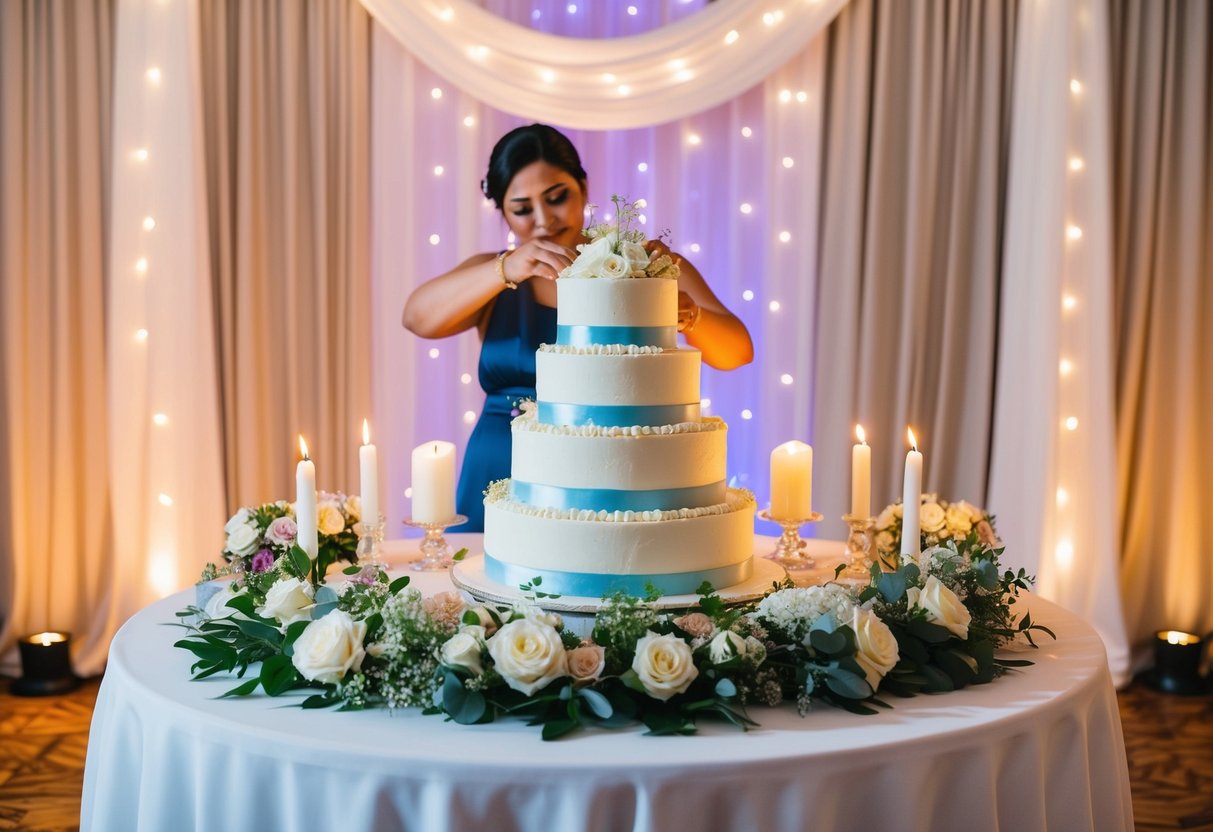
Not only do you want to ensure availability, but early planning also allows you to figure out flavors, designs, and any special dietary requirements your guests might have. Plus, it’s one less thing to stress about as your big day approaches. Getting this part sorted early means you can focus on enjoying the rest of your wedding planning.
As you dive into the details of cake design and flavors, remember that your wedding cake is more than just dessert; it’s a centerpiece for your celebration. So, take your time, make it special, and get that cake ordered well in advance!
Choosing Your Wedding Cake
Picking the right wedding cake is an exciting part of your planning. You need to consider the type of cake, the design, and schedule tastings to find the perfect fit for your big day.
Understanding Cake Types
When choosing your wedding cake, start by understanding the different types available. Sponge cakes are light and fluffy, making them a popular choice. They can be layered with delicious fillings, like fruit or cream.
Fondant-covered cakes create a smooth and elegant look. They can be shaped into intricate designs, perfect for themed weddings. If you love chocolate, consider a rich chocolate cake. Each type has its own flavor, texture, and appearance, so think about what you and your partner enjoy.
Selecting the Right Cake Design
Your cake design should match your wedding theme and colors. If you’re having a beach wedding, a simple cake adorned with seashells might be perfect. A classic venue might call for a multi-tiered cake decorated with fresh flowers.
Discuss your ideas with a local bakery. They can help you create a budget-friendly design that fits your vision. Consider elements like cake toppers and edible decorations. This makes your cake unique and adds to your wedding’s overall charm.
Cake Tastings and Selection
Cake tastings are essential for finding the right flavor and style. Schedule appointments with local bakeries to sample various options. It’s a fun way to bond with your partner and get excited about your cake.
When you taste, pay attention to texture and sweetness. Make notes about what you like and dislike. This helps when making your final decision. Once you select your cake, confirm the details with your baker, including size, design, and delivery time. This ensures everything is set for your special day.
Logistics and Timing
Setting up a wedding cake requires careful planning to ensure everything runs smoothly on your big day. Key factors include knowing the best time for setup, coordinating delivery, and creating a clear wedding schedule. Here’s what you need to consider.
Determining the Best Time to Set Up
Choosing the right time to set up your wedding cake is crucial. Typically, you want the cake to look fresh when guests arrive. If your ceremony is early, consider having the cake set up at least two hours before the reception starts.
Some wedding venues have specific rules about when you can access the space. Check this with your venue and talk to your wedding planner. They can help you figure out the best timing and avoid last-minute surprises.
It’s also wise to consider the complexity of your cake design. Intricate decorations might need more time, so plan accordingly. If the cake is being made off-site, allow extra time for transport.
Delivery and Setup Coordination
Delivery is another key aspect of your wedding cake logistics. Make sure to communicate closely with your baker about your wedding date and venue. A well-timed delivery ensures your cake arrives when you need it.
When planning delivery, factor in travel time. If your venue is far from the bakery, schedule delivery earlier to avoid delays. You can also ask your baker for tips on where to place the cake to maintain its stability.
In some cases, you may need to assemble the cake on-site. Talk to your wedding planner about how much time you’ll need for this setup. They can assist with arranging everything to help the delivery go smoothly.
Creating a Wedding Schedule
Creating a detailed wedding schedule helps keep your day organized. Include all significant events, like the ceremony, photo sessions, and when the cake will be revealed. Share this schedule with your wedding planner and vendors.
Be specific about times for cake delivery and setup. This way, everyone knows what to expect. Having a clear timeline reduces stress and keeps everything running on schedule.
Also, consider your cake cutting time. It’s often best to do this after the meal, so coordinate this with your planner to ensure everyone is ready. Don’t forget to allow time for unexpected issues, which can always arise.
Budgeting for Your Cake
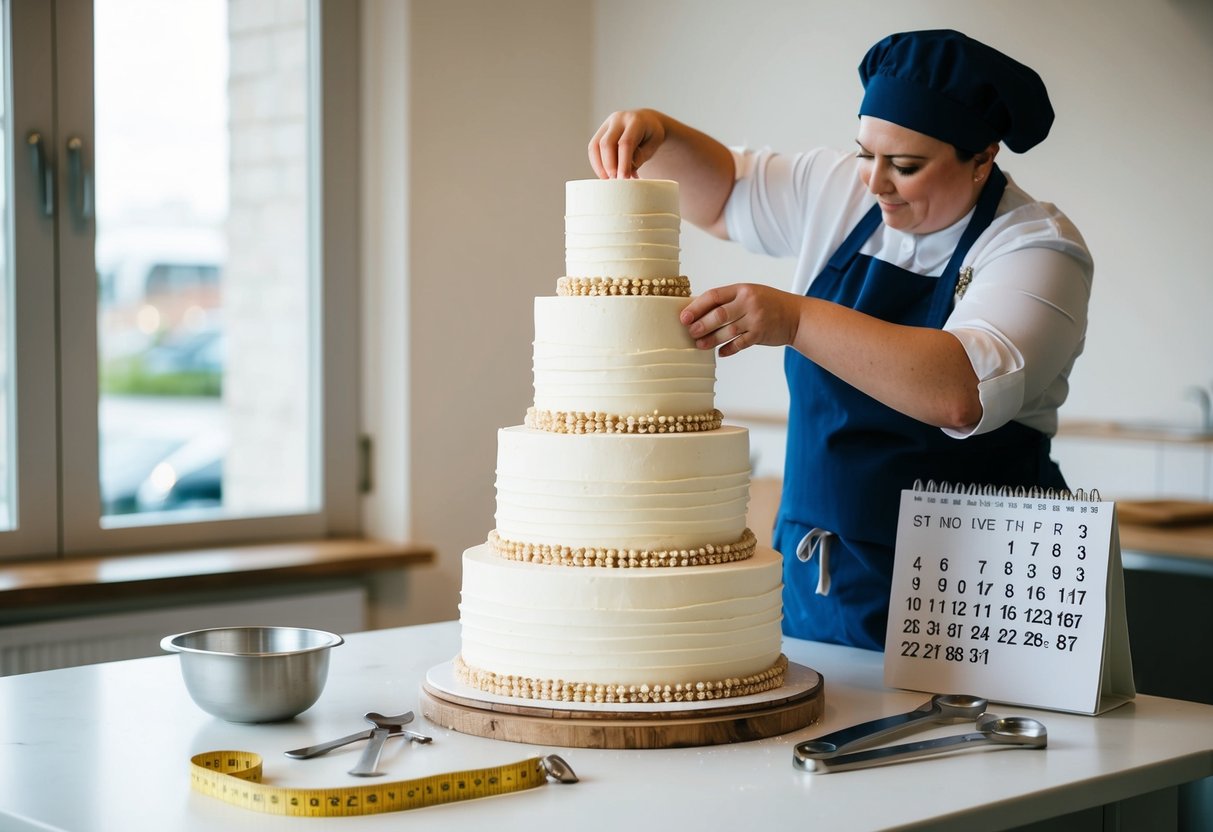
Planning your wedding cake budget is essential. Understanding the costs involved and exploring ways to save can help you enjoy a beautiful cake without breaking the bank. Here’s what you need to consider.
Calculating Wedding Cake Costs
When budgeting for your wedding cake, start by looking at the cake types. Custom cakes with intricate designs will usually cost more than basic options. Cakes are often priced per slice, which can range from $2 to $10, depending on the bakery.
- Basic cake: $2 – $4 per slice
- Mid-range cake: $4 – $7 per slice
- High-end custom cake: $7 – $10+ per slice
You should also factor in delivery costs, setup fees, and any additional decorations. Dummy cakes can be a great way to save; they provide an elegant look at a lower cost. You can use a dummy cake for display while serving a less expensive sheet cake to guests.
Finding Exclusive Discounts
Many bakeries offer exclusive discounts for weddings, especially during off-peak seasons. Don’t hesitate to ask about specials when you contact them. Some bakeries give discounts if you order multiple desserts for your event.
- Bundled services: Cakes and cupcakes or cookies might come with a discount.
- Referral programs: Ask if they have deals for referrals from past clients.
Checking social media or signing up for newsletters can also help you find promotions. Many bakers announce sales or coupon codes through these channels, allowing you to save money.
Working with Venue Partnerships
Sometimes, your venue may have partnerships with specific bakeries. These relationships can lead to cost savings for you.
- Preferred vendors: Venues often have a list of recommended bakeries that might offer you a discount if you use their services.
- Package deals: Ask if the venue provides package deals that include the cake, catering, and decor.
By communicating with your venue about their partnerships, you could secure a beautiful cake while possibly saving on additional costs. Be sure to discuss your budget openly to get the best options.
Final Touches
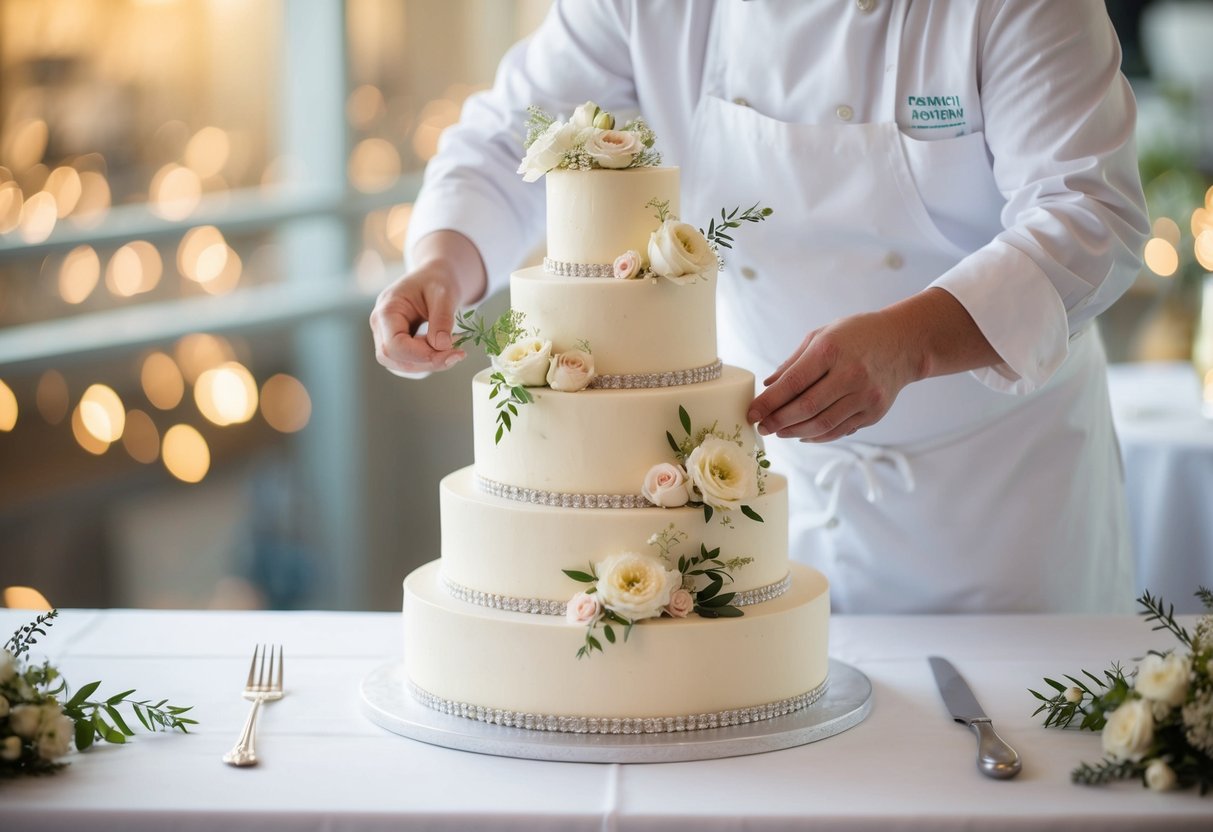
The final touches are essential for ensuring that your wedding cake looks perfect on your big day. Two key areas to focus on are the consultation with your cake decorator and confirming the design.
Final Consultation with Cake Decorator
Before the wedding, it’s crucial to have a final consultation with your cake decorator. This is your opportunity to discuss any last-minute details and confirm the flavors and cake layers.
Prepare a list of questions to address during this meeting. Ask about the texture of your icing and any special requests.
Make sure to mention any dietary restrictions or allergies of your guests. Your decorator can provide guidance on suitable alternatives. This step ensures there are no surprises on your wedding day.
Design Confirmation
Confirming the design of your wedding cake is another important touch. During your final consultation, review the cake’s structure closely.
Discuss the placement of decorations, floral arrangements, and layers. It’s helpful to bring reference photos that inspire you.
Ask your decorator about the durability of the icing and how it will hold up in your venue’s climate. This information is especially vital if you’re getting married in warm weather.
A clear understanding of the design will help your decorator execute your vision perfectly. Being involved in these final touches creates a cake that is both beautiful and delicious for your celebration.