
How Far in Advance Should You Ask for RSVP for a Wedding? A Helpful Guide for Couples
Planning a wedding is exciting, but it comes with a lot of details to manage. One key part is handling RSVPs effectively. A good rule of thumb is to ask for RSVPs about six to eight weeks before the wedding. This timing helps ensure you get most responses without the stress of chasing people down in the final weeks.

Make sure your wedding invitations clearly state the RSVP date. If you’ve sent out save-the-dates, your guests know to expect an invitation soon.
Consider setting up a wedding website where guests can easily respond and find important details. This can help streamline the process and make it convenient for everyone involved.
You also want to think about your planning timeline. Having your RSVPs in early allows you to finalize seating arrangements, catering orders, and other crucial details. The sooner you know how many guests will be there, the smoother everything will go on the big day.
Setting Your RSVP Deadline
Choosing the right RSVP deadline is essential for effective wedding planning. You want to ensure that you receive responses in a timely manner for your final headcount while giving guests enough time to reply. Here’s how to navigate this process.
Determining the RSVP Date
To set your RSVP date, work backward from your wedding date. Aim for guests to respond 2 to 3 weeks before the big day. This timeframe allows you to finalize details like seating and catering.
If your wedding is on Saturday, plan to have your RSVPs in by the previous Sunday or Monday. Make sure your guests have received the invitation at least 6 to 8 weeks earlier. This way, they can save the date and plan accordingly.
Early RSVP Deadline Benefits
Having an early RSVP deadline can bring several advantages. It offers you more time to manage the final headcount for vendors, which is critical for catering and seating.
When guests respond early, you can adjust your plans as necessary, reducing last-minute stress. It also helps avoid potential embarrassment for guests who may need to explain late responses. Plus, it can make communication smoother, allowing you to follow up politely if needed.
RSVP Timeline Recommendations
Here’s a simple timeline to guide you on setting your RSVP deadlines:
- Send Save-the-Dates: About 1 year before your wedding.
- Mail Invitations: 6 to 8 weeks prior to the wedding.
- RSVP Deadline: 2 to 3 weeks before the wedding date.
Following this timeline can help keep your planning on track. Clear communication about the RSVP timeline in your invitations will encourage timely responses. You might consider adding a note explaining why their response matters, which often encourages guests to reply on time.
Designing Your RSVP Cards
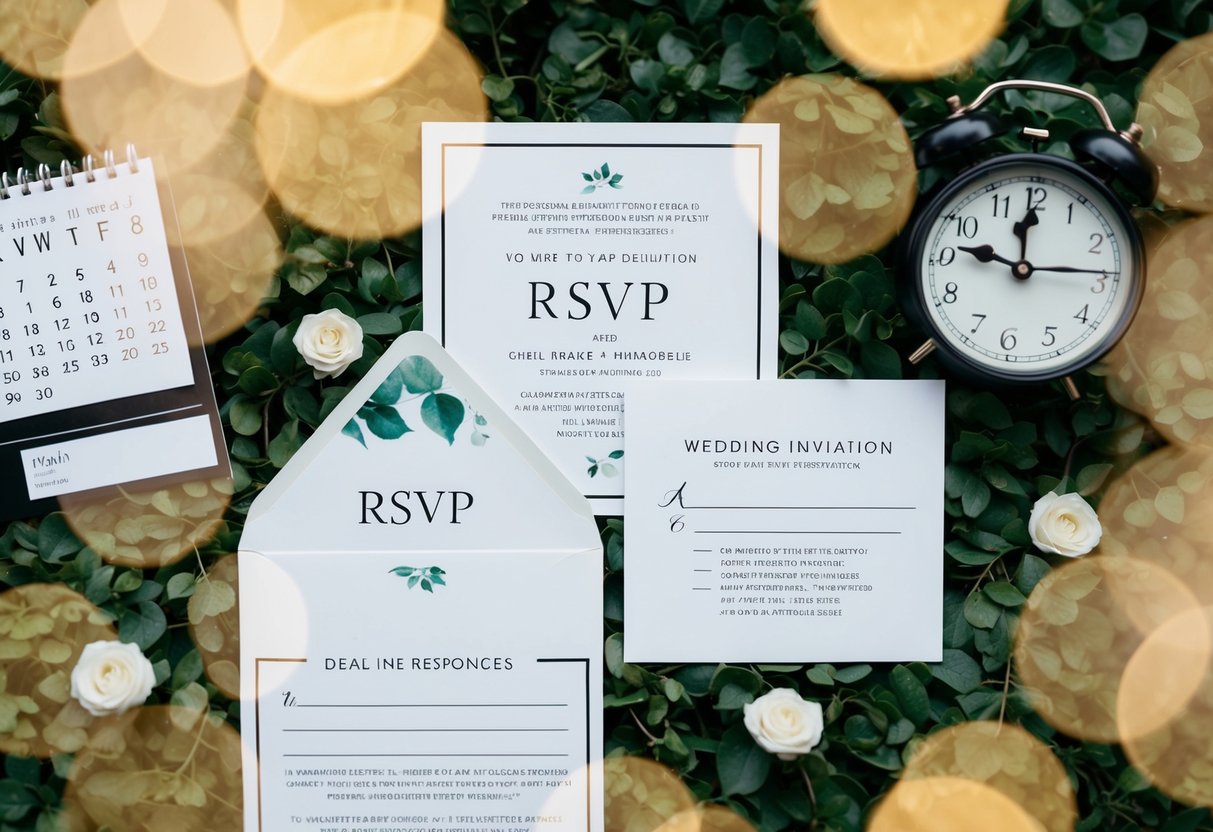
Creating your RSVP cards is a fun part of wedding planning. It allows you to set the tone for your celebration while ensuring you get the responses you need. Keep the details clear and visually appealing.
Choosing the Right Wording
The wording on your RSVP card is crucial. You want it to be clear and friendly. Start with a simple question like, “Will you be attending our wedding?”
Follow this with response options. You can include “Yes, I wouldn’t miss it!” and “No, I’m sorry to miss it.” Consider adding a space for guests to write their names. This helps you keep track of who is coming.
Be sure to mention the RSVP deadline. For example, “Please respond by [date].” This encourages guests to reply promptly.
If you’re using a more playful theme, feel free to tweak the wording. Just keep it understandable. Remember, your RSVP cards reflect your wedding style and help set expectations.
Online vs Paper RSVPs
When deciding between online and paper RSVPs, think about convenience and your wedding theme.
Online RSVPs can be efficient. You might use digital invitations or services like Paperless Post. This option allows guests to respond quickly and you can easily manage responses in one place. It’s eco-friendly, too!
Paper RSVPs, on the other hand, can feel more traditional. These wedding response cards add a personal touch to your wedding stationery. Include a stamped return envelope for ease. Many guests appreciate the tactile experience of sending a physical card.
Consider your guest list. If most guests are tech-savvy, online might work better. If many enjoy traditional methods, paper could be best.
Managing Your Guest List
Keeping your guest list organized is crucial for a smooth wedding experience. You can use various tools and methods to make tracking RSVPs easier and ensure no one is left out. Below are some helpful strategies for managing your guest list effectively.
Utilizing Online Event Management
An event management platform can simplify your planning process. These tools allow you to create and manage your guest list in one place.
With an online system, you can easily send out invitations and track RSVPs in real-time. Many platforms also offer reminder features to encourage timely responses from your guests.
Using an event management tool lets you categorize guests, plan seating arrangements, and even track meal choices. This ensures every detail is accounted for without overwhelming you.
Tracking RSVPs and Follow-ups
Tracking RSVPs is essential to finalize your wedding details. Start by creating a spreadsheet to log each response.
Include columns for guest names, RSVP status, contact information, and any notes, such as dietary restrictions. This will help you stay organized and keep track of who still needs to respond.
Don’t hesitate to follow up with guests who haven’t replied by your deadline. A friendly reminder can often encourage a quick response. You can do this through text, email, or a phone call, keeping your communication light and welcoming.
Having accurate numbers helps you confirm arrangements with vendors and make any necessary changes to your plans. Effective tracking will ensure your wedding day goes smoothly.
Handling Special RSVP Scenarios

Navigating special RSVP scenarios can be challenging. Understanding how to deal with late responses, accommodating destination wedding guests, and incorporating unique features can help you manage your wedding plans effectively.
Dealing with Late RSVPs
Late RSVPs can be frustrating, especially as your wedding day approaches. To minimize issues, set an RSVP deadline three to four weeks before your wedding. This gives you enough time to finalize your guest list and make necessary arrangements.
If guests reply late, kindly follow up with a quick text or call. Let them know you need their response soon. You can say something like, “Hi! Just checking in about the wedding. We’d love to know if you can make it!” This friendly nudge often encourages a quick reply.
Catering to Destination Wedding Guests
Destination weddings often require extra planning for guests. Be sure to send out save-the-date cards well in advance—ideally, six to eight months before the wedding. This allows guests to make travel plans and book accommodations.
Consider providing them with local information, such as nearby hotels, attractions, and transport options. Creating a wedding website can be helpful. You can include details about engagement photos, local events, and even song requests to personalize their experience.
Incorporating Unique Request Features
Many couples enjoy personalizing their invitations. Unique request features, like song selections or meal choices, add a fun touch.
On the RSVP card, you could ask guests for a song they’d love to hear at the reception. This not only engages them but helps create a lively atmosphere.
Another idea is to let guests indicate if they need special accommodations, such as dietary restrictions. This information helps you plan your catering effectively and ensures everyone feels included on your special day.