
How Long Between Dinner and Cake at a Wedding? Timing Tips for a Perfect Celebration
Timing is everything at a wedding, and one of the key moments that guests look forward to is the cake. After dinner, there’s typically a brief period before the cake cutting begins. On average, you can expect about 30 minutes to an hour between the end of dinner and the cake cutting. This allows for toasts, a little mingling, and perhaps even some special dances.
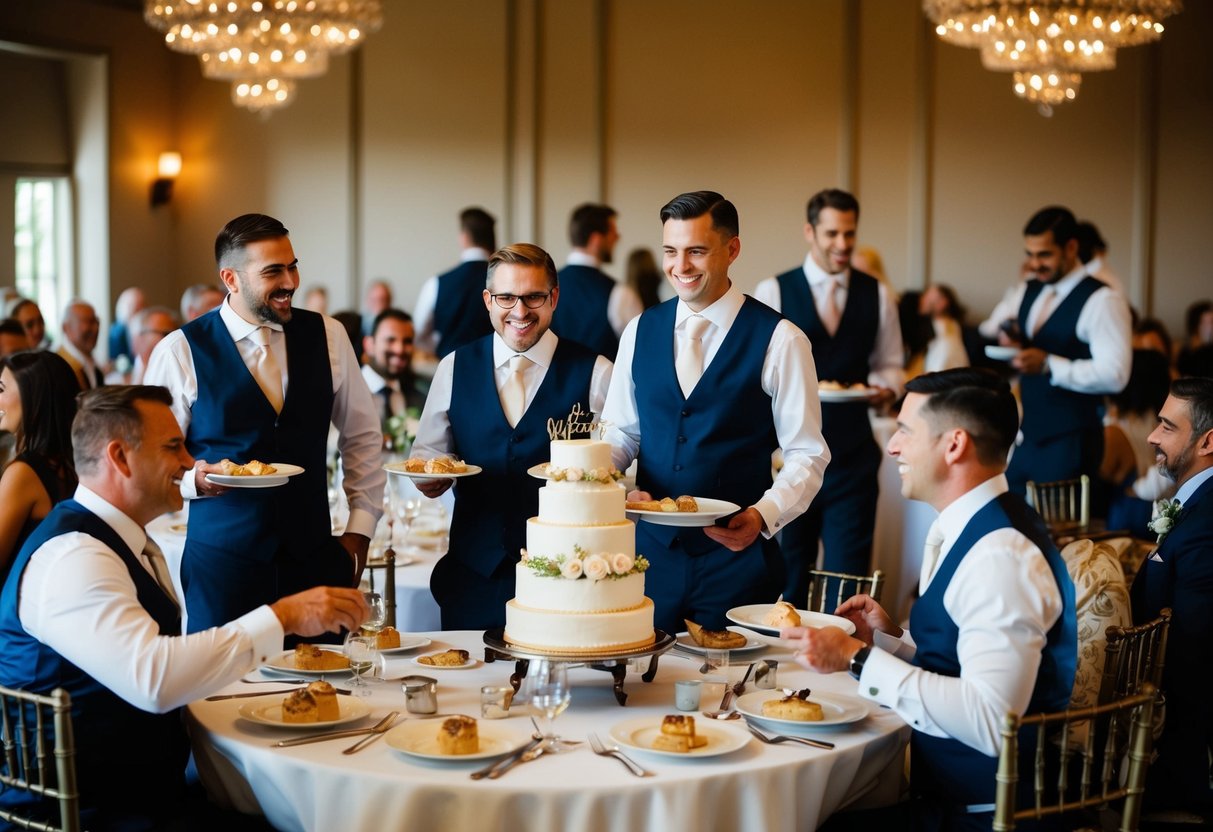
Understanding this timeline can help you create a smooth flow for your reception. Guests will appreciate knowing when to expect the sweet treat, and it keeps the energy up on the dance floor. Keep reading to find out how to plan this part of your big day and make it memorable for everyone involved!
Planning Your Wedding Reception Timeline
Creating a timeline for your wedding reception is important for ensuring everything runs smoothly. Key elements to consider include when to serve dinner and when to cut the cake.
Proper planning will help you enjoy your special day without feeling rushed.
Determining the Schedule for Dinner and Cake Cutting
Start by deciding how long your reception will be. A typical wedding reception lasts about five hours. This includes an hour for cocktails and roughly four hours for dinner and dancing.
Once you have your reception length, determine when to serve dinner. It’s common to serve dinner about an hour after guests arrive. This leaves time for opening remarks and mingling. The cake cutting usually happens 30 minutes to an hour after dinner.
This timing allows guests to relax and enjoy their meal while also building anticipation for the cake. Be sure to communicate this timeline clearly to your wedding planner and venue coordinator.
Coordinating With Your Wedding Planner
Your wedding planner plays a vital role in managing the reception timeline. They will help ensure your dinner service and cake cutting fit seamlessly into the event.
When you meet with your planner, share your ideas about the order of events. Discuss any special announcements or speeches to include. Your planner will also help set the timing for the cake cutting. This often involves coordinating with your caterer and DJ or band to keep the flow of the evening smooth.
Together, you can create a timeline that reflects your style and keeps guests engaged.
Understanding the Role of the Venue Coordinator
The venue coordinator is essential for helping your wedding run smoothly. They understand the flow of events and can guide you on timing.
Discuss your reception timeline with the venue coordinator ahead of the wedding. They can provide insights about the dinner service and the best time for cake cutting.
For example, the coordinator can help schedule any necessary transitions, such as moving from dinner to dancing. They also assist with logistics, ensuring that the cake is ready when it’s time to cut it. Having clear communication with them will help avoid any last-minute surprises.
Wining and Dining Your Guests
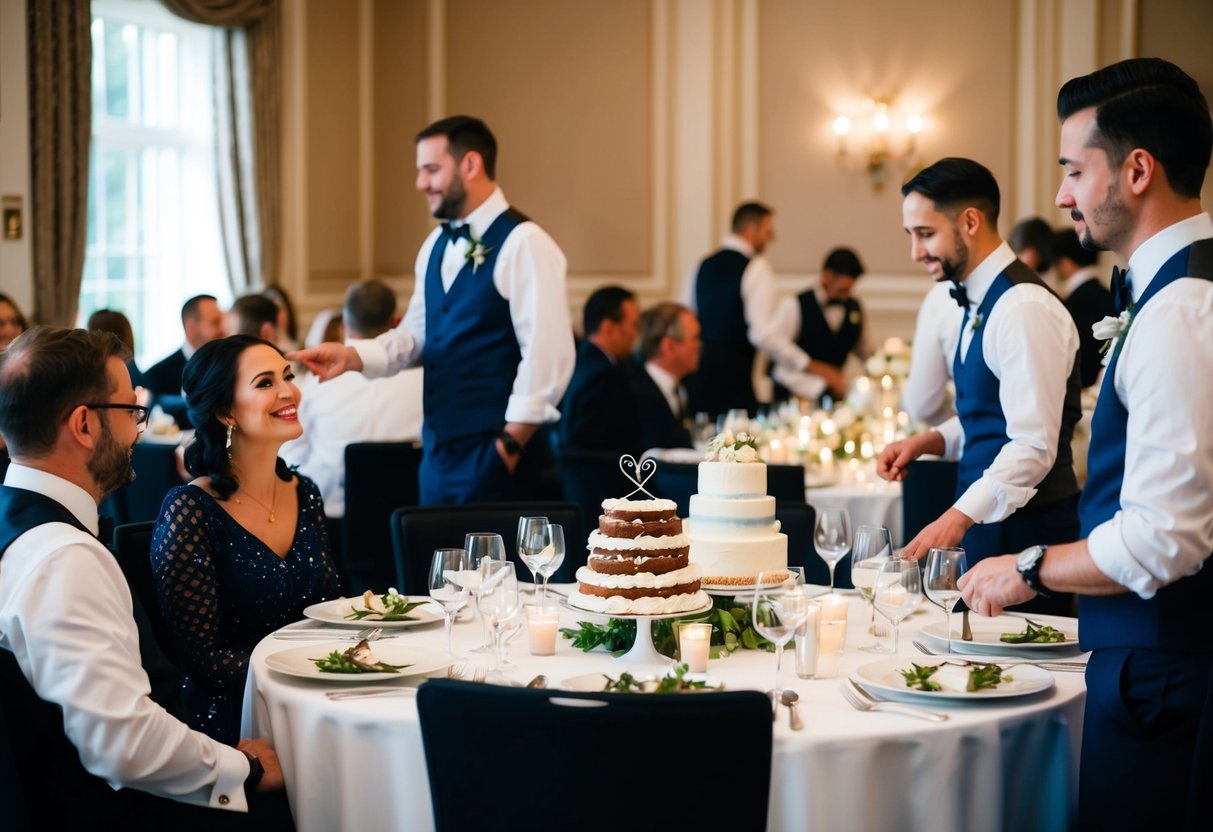
Your wedding reception food experience is key to keeping your guests happy. The food service you choose and how you plan the timing can make your night memorable. Here’s a look at different aspects of your reception that focus on satisfying your guests.
The Cocktail Hour and Hors D’oeuvres
The cocktail hour is a great way to kick off the festivities. It typically lasts around one hour, giving guests time to mingle and relax. During this time, you should offer a variety of hors d’oeuvres.
Consider serving bite-sized options like sliders, shrimp cocktails, or stuffed mushrooms. These appetizers not only keep guests satisfied but also allow you to showcase your chosen cuisine.
Pairing the food with signature cocktails can add a special touch to this part of the evening.
Ensure you have enough food for all your guests. If your guest count is high, consider having stations where guests can grab food easily. This helps keep the atmosphere lively and flowing.
Options for Dinner Service Style
When it comes to dinner, you have multiple service styles to choose from. Each style has its own charm and can cater to the vibe you want for your wedding. Here are some popular options:
-
Seated Meal: This formal style allows guests to enjoy their meals while seated. A plated meal can range from two to four courses.
-
Buffet: A buffet gives guests a chance to choose what they like. This style can also accommodate dietary restrictions more easily.
-
Food Stations: Setting up various food stations lets guests mingle and try unique dishes. Each station could feature different cuisines, making the meal experience fun and interactive.
Choose a style that matches your vision and fits the guest count. This decision plays a key role in the dining experience.
Transitioning to Dessert and the Wedding Cake
Once dinner wraps up, timing the transition to dessert is important. It’s good to plan for about 30 minutes between the last course and serving the wedding cake. This gives guests a moment to chat and enjoy each other’s company.
For dessert, you can present a stunning wedding cake, complemented by additional sweet options like cupcakes or a dessert table.
Make sure the cake matches your theme and serves enough for your guests.
Don’t forget to capture the cake-cutting moment! This adds an enjoyable element to the reception while transitioning to dancing and celebration. Your dessert choices will round out a delightful dining experience for everyone.
Key Wedding Reception Events
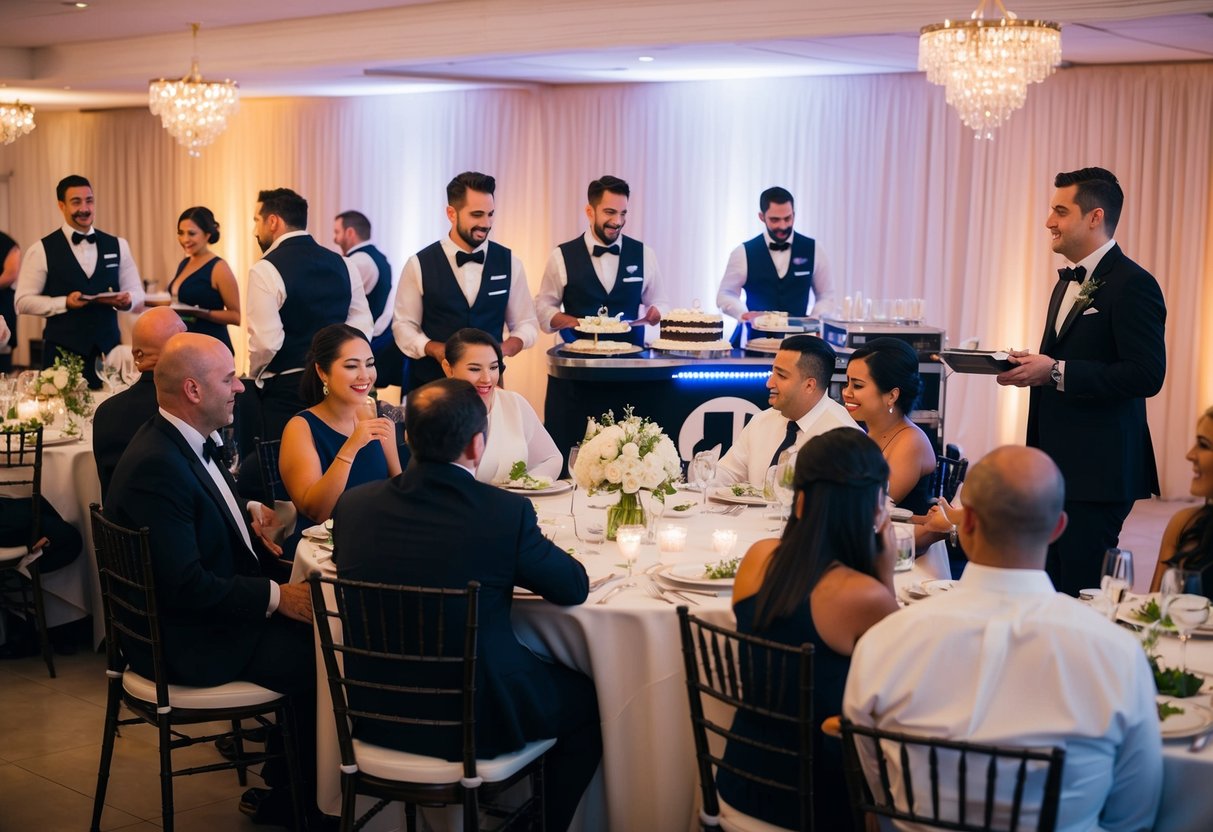
At a wedding reception, several key events help create a memorable atmosphere for you and your guests. These moments not only celebrate your love but also encourage socializing and enjoyment among everyone present. Here’s a look at some of the most important reception events.
Grand Entrance and Welcome Speech
The grand entrance is a fun and exciting part of the reception. It typically happens after the cocktail hour. As the newlyweds walk into the reception area, music plays to highlight this moment.
You might choose a special song that means something to both of you. Once you enter, a welcome speech is often given by the wedding couple or the host. This speech thanks everyone for being there and sets a warm tone for the celebration.
Make sure to keep it light and heartfelt. You can also mention special guests or family members to make them feel appreciated. A good entrance and welcome sets the stage for the entire evening.
Toasts and Speeches Timeline
Toasts and speeches come after the meal begins or shortly after the grand entrance. These moments are significant as they allow loved ones to share kind words about you as a couple.
Typically, the best man, maid of honor, and parents will speak.
You should decide on a smooth timeline for these speeches. Limit speeches to about 2-5 minutes each to keep guests engaged.
It’s advisable to let speakers know in advance when they’ll be called to speak. This way, each person can prepare without feeling rushed. You might even want to provide them with a schedule so everyone knows when to expect their moment in the spotlight.
The Significance of the First Dance
The first dance is one of the most anticipated moments during the reception. This tradition marks your first dance as a married couple and is often viewed as a romantic highlight.
Choose a song that holds meaning for both of you, whether it’s slow and sentimental or upbeat and fun.
It is essential to practice ahead of time to feel confident and comfortable.
You can also keep a separate dance floor area for guests to join in after your dance. This allows everyone to continue the celebration and keeps the energy high as the dance floor fills up.
Incorporating Parent, Family, and Bridal Party Dances
Parent dances are another cherished wedding tradition. You’re likely to have a special dance with each of your parents.
The father-daughter dance is particularly emotional and allows you to share a moment that celebrates your bond.
Afterward, a mother-son dance can follow, allowing the groom to share a touching moment with his mother. These dances pave the way for the rest of the bridal party to join in.
Consider including dances that involve siblings or other family members. This can enhance the feeling of connection and joy among families. You might also want to include a bouquet toss and a garter toss later in the evening for added fun.
Planning Interactive Activities and Entertainment
Adding interactive activities can elevate your reception. Consider including a photo booth where guests can take fun pictures. This creates lasting memories and gives everyone a chance to be silly.
You could hire a DJ or band to keep the energy up. Encourage guests to request songs. This involvement makes the night feel personal and lively.
Consider planning games or activities that engage your guests. Activities can range from trivia about your relationship to dance-off competitions. These moments can bring everyone together and create a fun, entertaining atmosphere.