
How Long Do You Need for Wedding Getting Ready Photos? Timing
For wedding getting ready photos, plan 60 to 90 minutes of photographer coverage, with closer to 90 minutes giving you room for details, finishing touches, and getting dressed. Your beauty appointments need their own schedule, since hair and makeup can take several hours across a wedding party.
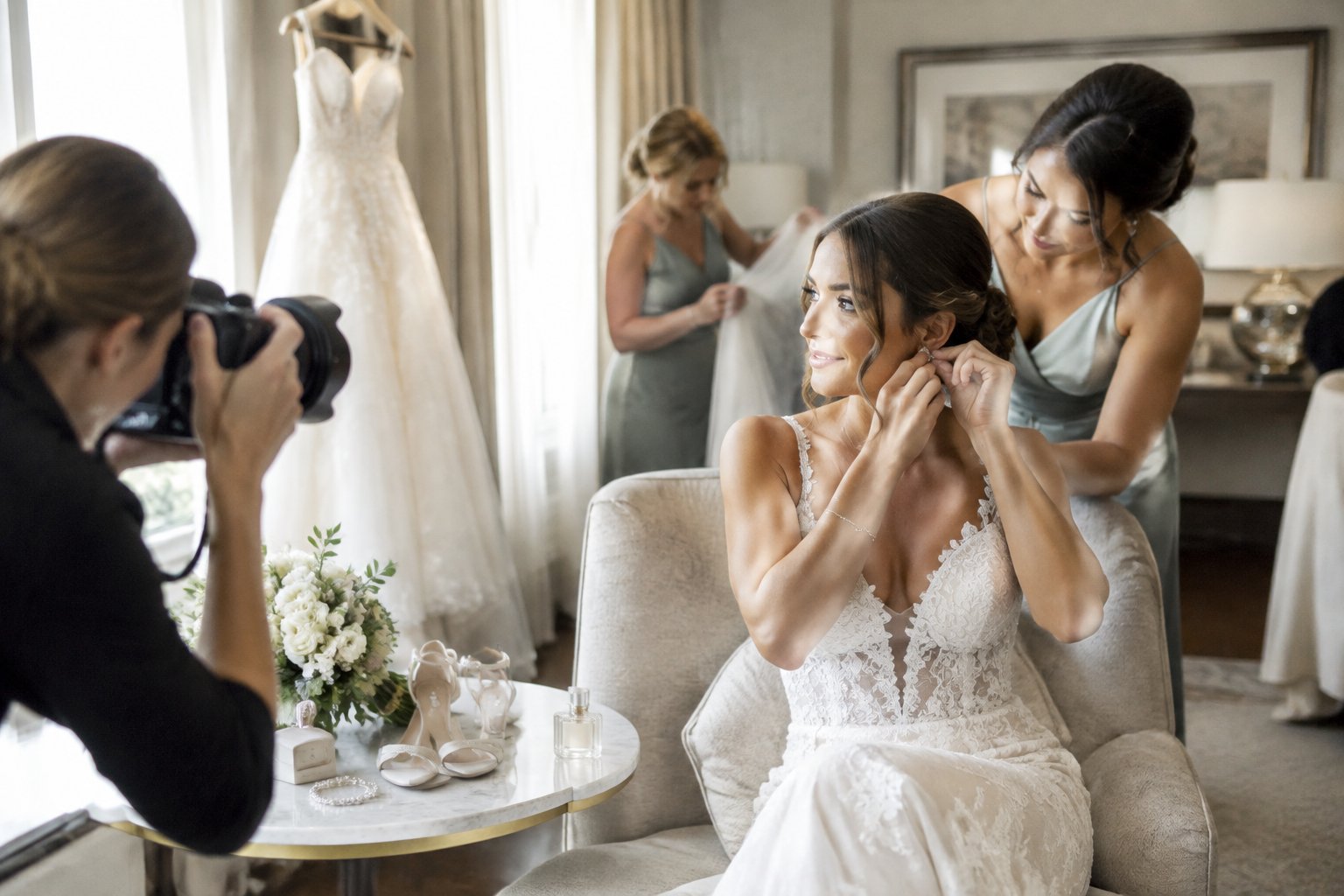
Share your ceremony time and photo priorities with your wedding photographer before you lock in the morning schedule. That gives you a timeline shaped around the moments you want to remember.
Time Allowances for Key Moments
A 60- to 90-minute photo window gives your wedding photographer time to capture the key parts of getting ready without crowding the morning. Your guest count, room setup, and must-have moments can shift the timing.
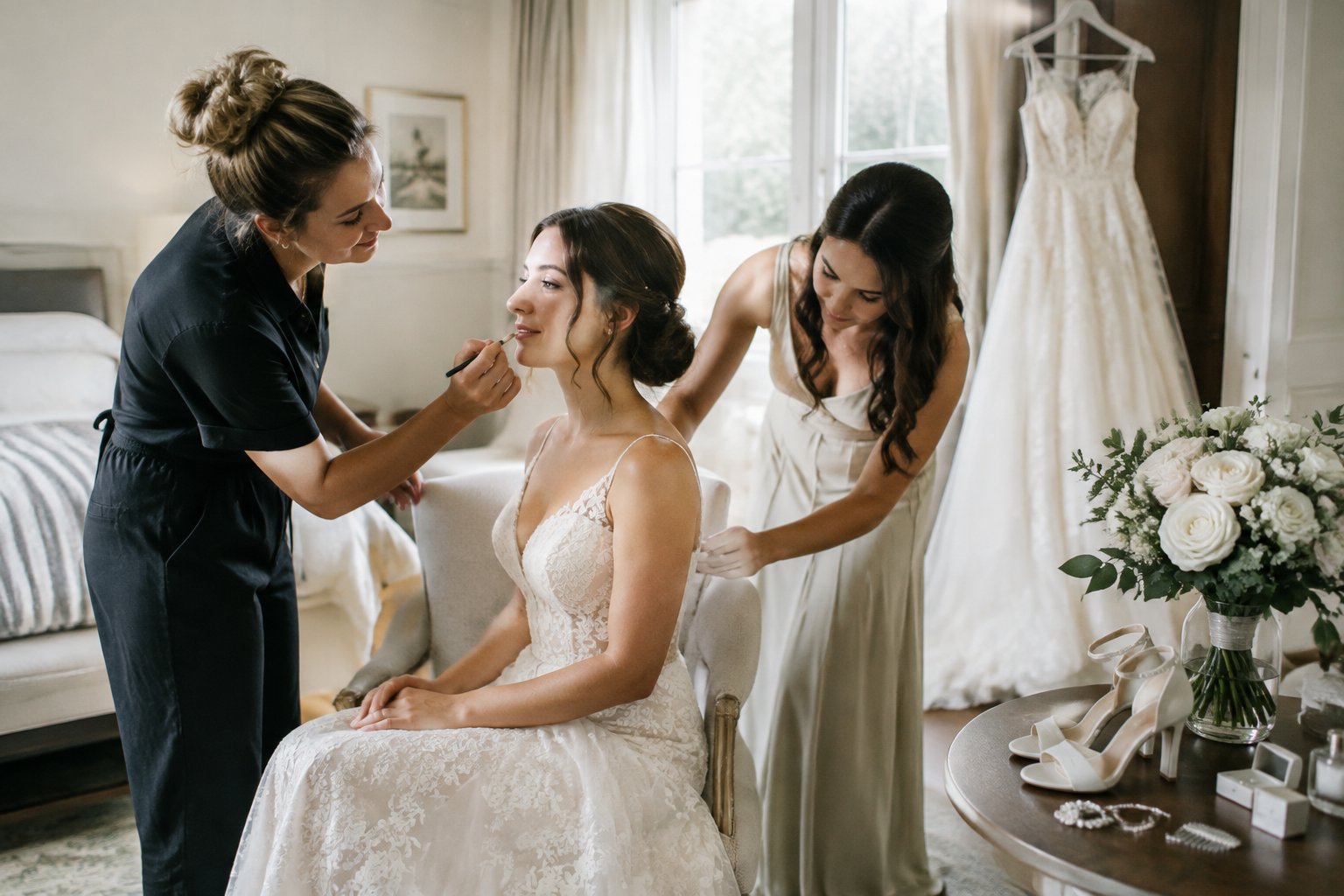
How Long Should the Photographer Be There?
For a compact session, set aside about an hour. That gives your photographer time for details, a few finishing touches, and the main getting-dressed moments. If you want more candid photos with family and your bridal party, allow 90 minutes or more.
Ask your photographer when they want to arrive and what they can cover in that window. Some prefer to start when your hair and makeup are nearly complete, while others need more time for details and photographs of the room. If you want the photographer to document the beauty process from the start, coordinate that coverage separately from the final hour of getting ready.
Your plan for how long it takes a bride to get ready can help you work backward from the ceremony.
Which Moments Take the Most Time?
Detail photos take time when you want your photographer to arrange items or photograph them in several settings. Getting into your dress can also take longer than expected, especially if it has a lace-up back, many buttons, or a detailed bustle. Leave about 15 to 20 minutes for dressing, then allow extra time for your veil, jewelry, and shoes.
Your photographer also needs room to catch moments as they unfold. A parent helping with a dress or a friend fastening a bracelet may take only a few minutes, yet the photographer needs to be ready before the moment begins. Keep the room clear enough for everyone to move around comfortably.
How Much Buffer Should You Add?
Add 15 to 30 minutes of open time around the photography block. That cushion helps absorb late beauty appointments, a missing accessory, or a slow drive to the venue.
Build your schedule around the time you need to leave, not only the ceremony start. If you are still in the chair when the photographer is meant to capture your dress, the photo schedule gets squeezed. For a bigger wedding party, give hair and makeup a longer window; this guide to wedding-day hair and makeup timing can help you estimate those appointments.
What the Morning Photos Can Capture
Your morning photos can tell the story through personal details, getting-dressed moments, and relaxed time with your bridal party. Set aside important items before the photographer arrives, then leave space for the unscripted moments that make the morning feel like yours.
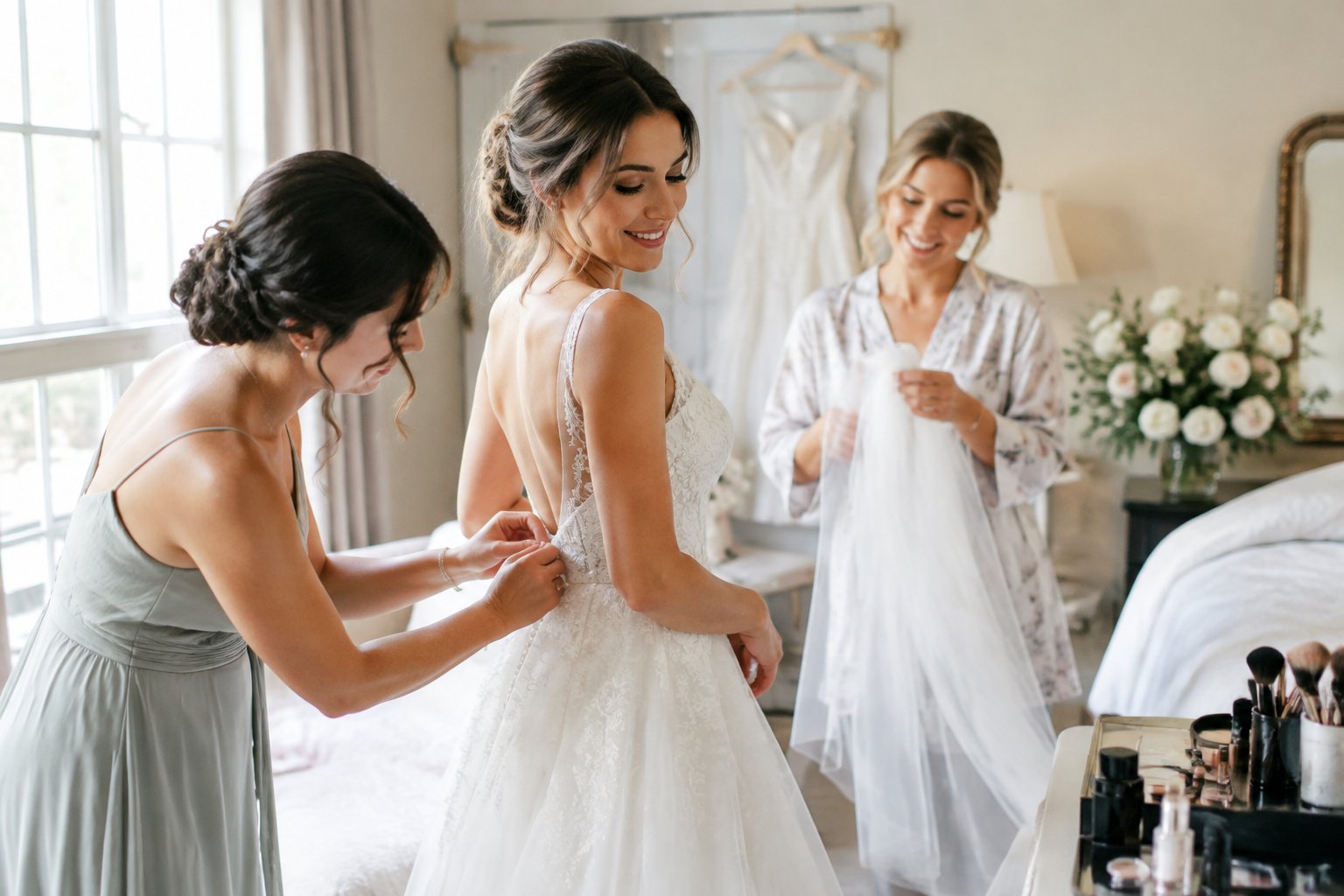
Which Bridal Details Should You Set Aside?
Gather your dress, shoes, rings, jewelry, invitation, and any keepsake you want photographed in one easy-to-find place. Add your perfume or a small floral piece if either has meaning to you. Place the items together before the photographer arrives so they can begin without searching through bags and boxes.
Choose a spot with natural window light and clear surfaces. A tidy corner or bed gives your photographer room to arrange the details, while a crowded room can slow that process. Ask your florist to bring the bouquet or a few loose flowers early if you want them included.
What Getting-Dressed Moments Are Worth Photographing?
The most meaningful moments often happen as you get into your outfit. Your parent or attendant might fasten a button, help with your shoes, or place your veil. Leave enough time for these steps to happen at a calm pace, with the people you want nearby.
You can also ask for photos of the final makeup touch-up, putting on jewelry, and a quiet portrait once you are dressed. Tell your photographer which people or items have a special meaning to you, so they can keep those priorities in mind.
How Can You Include Candid Moments with Your Wedding Party?
Give your bridal party time to settle in before the camera focuses on group photos. A toast, a shared laugh, or a quick check of each other’s outfits creates natural moments without a long list of poses. If matching robes or button-front shirts suit your style, have them ready before hair and makeup begins.
Keep the room calm by limiting extra visitors and moving bags or food out of the main photo area. Your photographer can capture more candid interactions when the group has space to talk and move around.
How to Build a Getting-Ready Timeline
Build your getting-ready timeline backward from the ceremony, including beauty appointments, dressing, photos, and travel. A clear schedule gives your photographer a defined window and leaves breathing room before you need to depart.
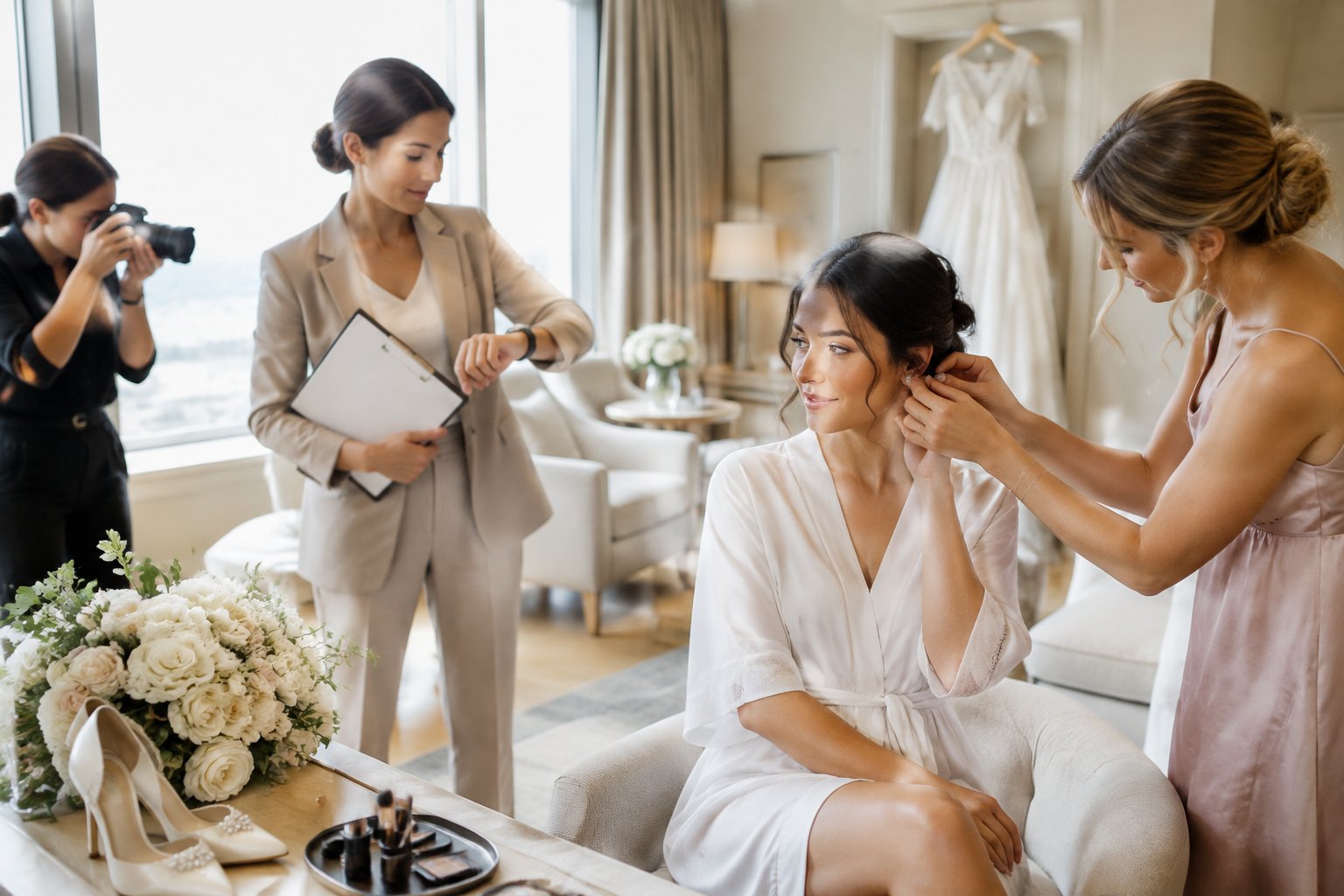
When Should the Photographer Arrive?
Set the arrival time according to the moments you want covered. For details and final preparations, have your photographer arrive about 60 to 90 minutes before you need to leave. If you want photos during hair and makeup, schedule an earlier arrival and confirm that extra coverage with your photographer.
Work backward from the moment you need to be dressed and ready to travel. A wedding timeline built around your ceremony time can help you place the photography block without cutting into travel or the ceremony lineup.
How Should Hair, Makeup, and Dressing Fit Together?
Schedule hair and makeup so your final beauty appointment ends before the main getting-dressed photos. Bridesmaids can begin earlier, with your appointment timed so your look is fresh for portraits and the ceremony. Allow time for each person’s service, plus a break for touch-ups.
Once beauty services are complete, leave a short transition before dressing. That gives you time to change into a button-front outfit, gather your accessories, and have your room ready for the photographer. For a detailed plan, use this guide to when you should be ready on your wedding day.
What Can Keep the Morning on Schedule?
Give one person, such as your planner or maid of honor, the job of keeping everyone aware of the next step. Share appointment times and the departure deadline with your wedding party in advance. Ask your photographer and beauty team to work from the same schedule.
Prepare your outfit and photo details the night before. Keep snacks and water close by, and include time to pack up and travel. If your ceremony and getting-ready locations differ, add time for traffic, parking, and getting from the car to the room.
Deciding Whether to Have a First Look
A first look gives you time together before the ceremony and lets you complete some portraits earlier in the day. Your choice also affects when you schedule couple and wedding party photos, so discuss it before setting the final timeline.
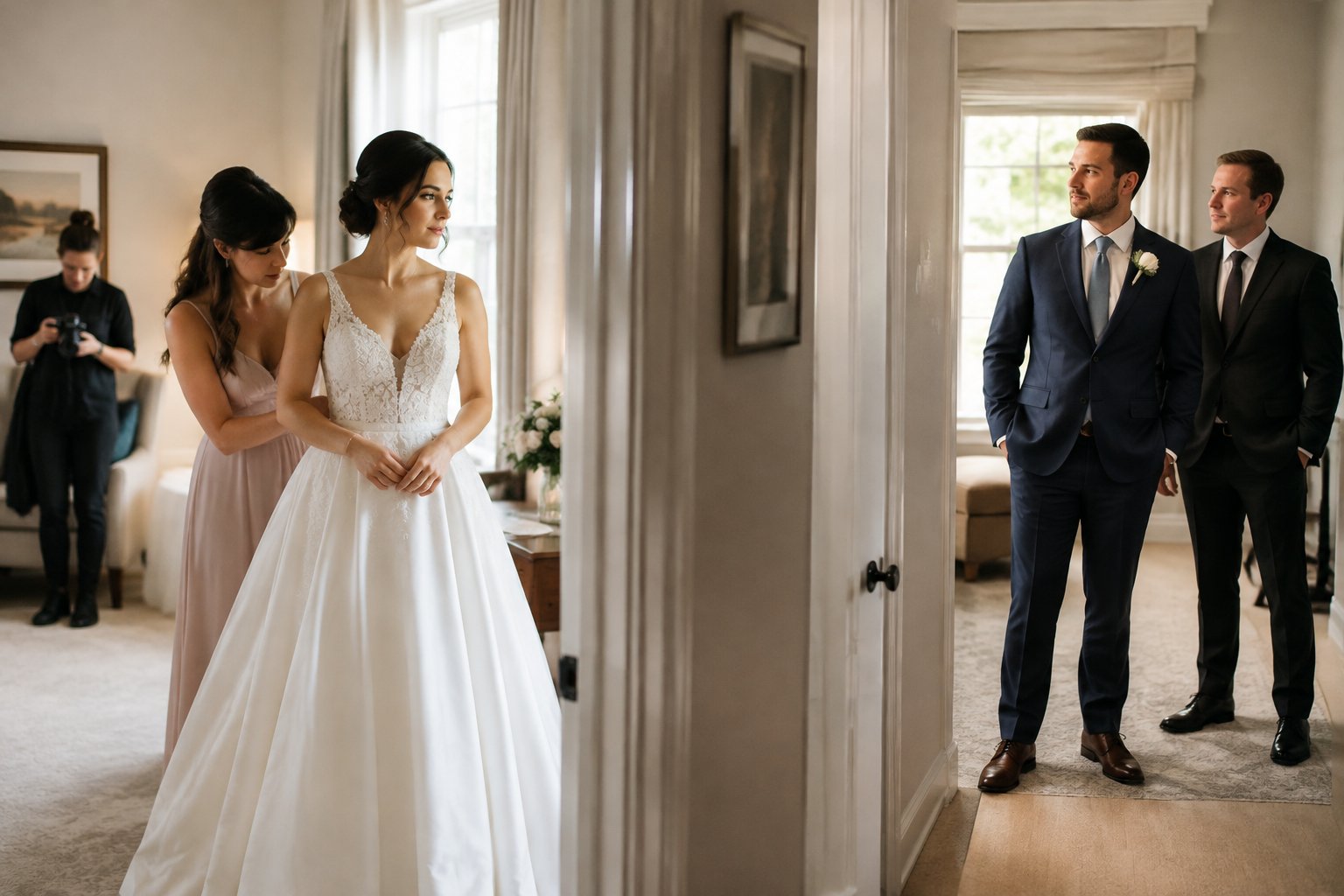
How Much Time Should You Reserve for a First Look?
Set aside about 10 to 15 minutes for the first look itself, then schedule more time for couple portraits. A 30- to 45-minute portrait block gives your photographer room to make a range of images without rushing you through the moment.
Choose a location close to where you are getting ready or taking portraits. A long walk or drive adds logistics to the schedule. If you are weighing the timing, this guide to when to do your first look can help you plan the reveal around your ceremony.
Can You Plan a First Look with Dad?
Yes. You can schedule a first look with your dad or another close family member before the ceremony. Reserve about 10 to 15 minutes so your photographer can capture the reveal and give you a few moments together afterward.
Tell your photographer who you want to include and whether you want the moment kept private. If you are still deciding, review ideas about who the bride can have a first look with and choose the option that feels right for you.
How Does This Choice Change Couple Portrait Timing?
A first look lets you take couple portraits before the ceremony, which can free up more time after you say your vows. You may still want a few portraits later, especially if you are hoping for warm evening light.
If you skip the first look, plan couple portraits after the ceremony. That may place portraits during cocktail hour, so decide how much time you want with guests and share that preference with your photographer.
How Pre-Ceremony Portraits Fit Together
Pre-ceremony portraits work best when you group people efficiently and give each photo block a clear start time. Your wedding party size, family list, and first-look choice determine how much time to reserve.
When Should You Take Wedding Party Photos?
Schedule wedding party photos after everyone is dressed and before people need to be in position for the ceremony. Set aside about 20 to 30 minutes for a standard group, with more time for a large party or several combinations.
Write down the groupings you want, such as each side on its own and everyone together. Ask a member of the wedding party to gather people when it is time. That keeps your photographer from having to search for someone during the portrait window.
How Much Time Do Family Group Photos Need?
Reserve about 20 to 30 minutes for immediate-family group photos when you have a short, prepared list. Add time for extended family or a larger number of groupings. Each change takes a moment as people move in and out of position.
Share the list with your photographer and choose someone who knows both families to help gather people. Keep the groupings focused on the people you most want photographed, and let everyone know where to meet.
What Changes If You Skip the First Look?
Without a first look, you can save the couple’s first meeting for the ceremony, then schedule portraits afterward. Family photos and wedding party photos may also move to after the ceremony, often during cocktail hour.
Plan the post-ceremony order with your photographer before the wedding. If you want time with guests, keep the group list focused and decide which portraits can happen before the ceremony without seeing each other.
How Photo Coverage Continues at the Reception
Reception photography can cover your entrance, formal dances, and a chosen stretch of open dancing. Tell your photographer which events matter most and when they are scheduled so those moments fit within your coverage.
When Do First Dance and Parent Dances Usually Happen?
Your first dance and parent dances often take place early in the reception, after your entrance or around dinner. Ask your DJ or coordinator to confirm the order and timing, then share it with your photographer.
If you want photos of the room before guests enter, set aside a few minutes for reception details before the doors open. You can also review what happens at a wedding reception as you decide which moments belong in your photo plan.
How Much Open Dancing Should Your Photographer Capture?
Set aside 30 to 60 minutes of open dancing coverage if you want a lively record of the party. Your photographer can capture the dance floor, guest interactions, and the energy of the reception during that time.
If you have a planned send-off or a late-night tradition, include it in your coverage schedule. Confirm the photographer’s end time and place the events you most want photographed before that point.