
How Long Does a 3 Course Meal Take at a Wedding? Timing Tips for a Perfect Reception
As you plan your wedding, one important detail to consider is the timing of your meal service. A three-course meal typically takes about 1.5 to 2 hours to serve and enjoy. This time allows for your guests to settle in, savor the first course, and chat between the next courses, creating a relaxed atmosphere on your special day.
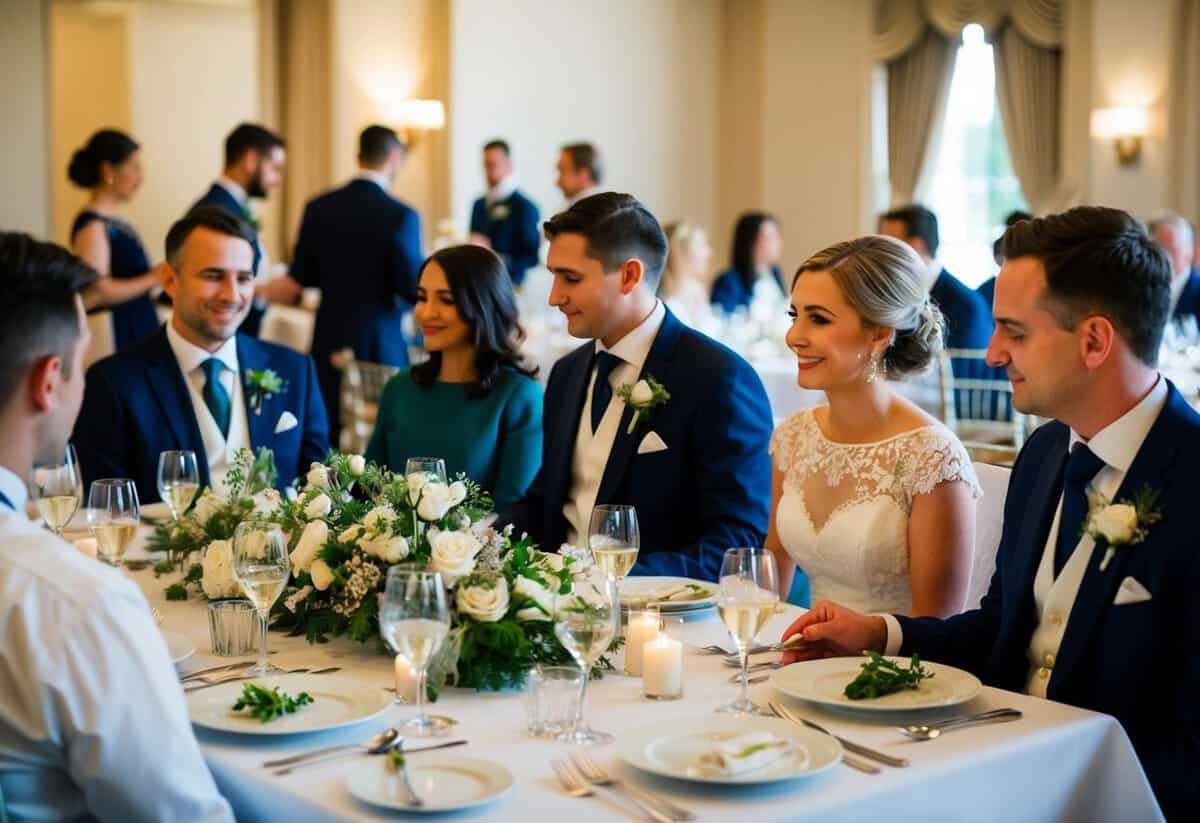
Understanding the timing is crucial for your overall wedding day timeline. You’ll want to ensure that your meal fits smoothly into the events like speeches and dancing. Guests appreciate having ample time to enjoy each course without feeling rushed, making the dining experience a memorable part of your celebration.
With a bit of planning, you can ensure your wedding meal flows perfectly within your schedule, allowing everyone to fully enjoy the delicious dishes you’ve chosen. When you know how long the meal will take, you can keep everything else running smoothly, letting you focus on what really matters: celebrating your big day with loved ones.
Planning Your Wedding Meal
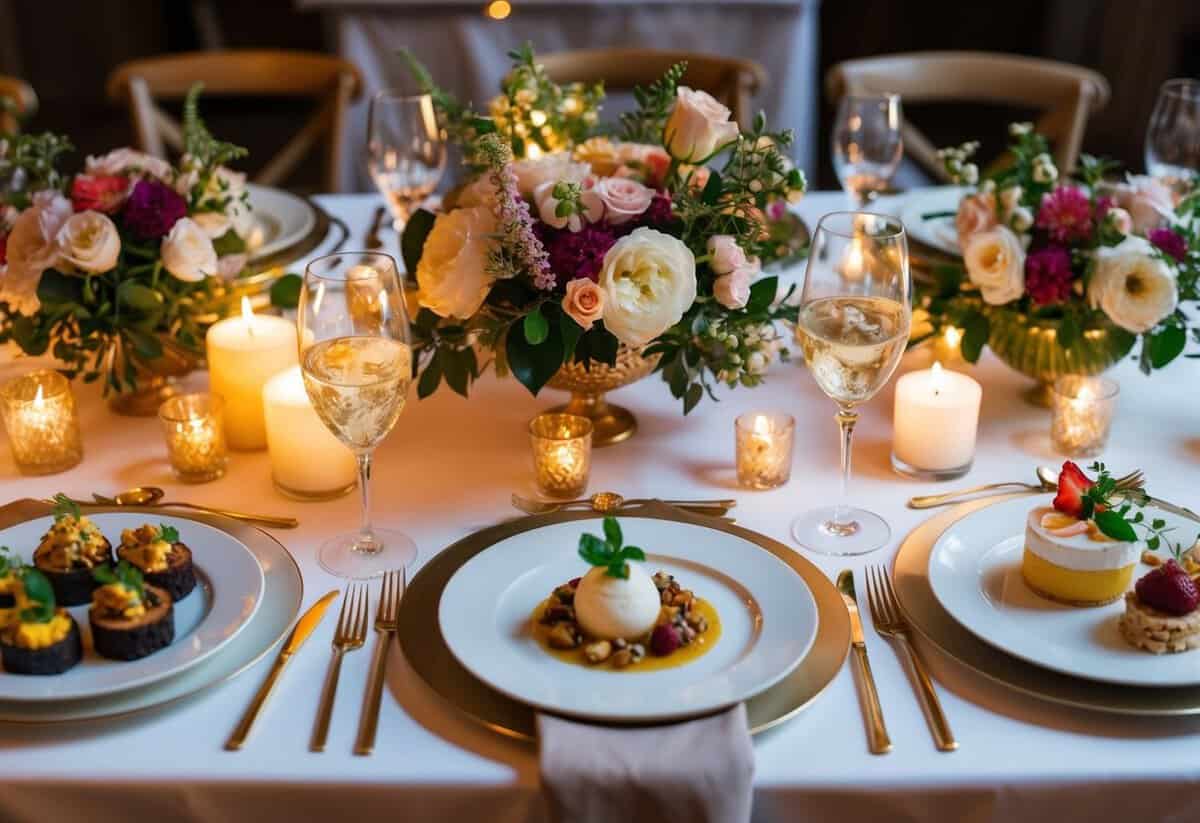
When planning your wedding meal, consider several key factors. You want to ensure that your guests enjoy a delicious dining experience that fits your vision and accommodates individual needs.
Determining the Number of Courses
Choosing the number of courses for your meal sets the tone for your wedding. A three-course meal typically consists of an appetizer, main course, and dessert. This option is popular as it strikes a balance between variety and simplicity.
If you want to offer more, consider a multi-course meal with four or five courses. This can create a more luxurious dining experience. Just remember, more courses mean a longer service time, which can impact your wedding timeline.
You should also think about your guest count. If you have many attendees, a plated dinner may take longer to serve than a buffet-style meal. Often, tighter timelines lead couples to favor simpler meals to keep the event flowing smoothly.
Choosing the Serving Style
The serving style influences the dining experience. There are several options for how meals can be served, including:
- Plated Dinners: Each dish is served individually to your guests. This style works well for formal receptions but requires more time for the catering team to serve each plate.
- Buffet Dinners: Guests serve themselves from a range of dishes. This can speed things up and allows guests to choose what they want.
- Food Stations: These offer variety and can create a fun atmosphere. Stations can include different cuisines or themes.
Consider your venue’s layout and flow. A buffet can create congestion, while plated meals might need more space for serving. Choosing a style that complements your wedding reception is key.
Considering Dietary Restrictions
It’s essential to address dietary restrictions when planning your wedding meal. Not all guests eat the same way, so offer options that cater to various needs, including:
- Vegetarian or vegan choices
- Gluten-free dishes
- Allergy-friendly meals
When working with your catering team, clearly communicate these options. It’s also helpful to note dietary preferences when you send out invitations, allowing guests to inform you of any specific needs.
Having a range of choices ensures everyone feels included and satisfied, making the meal more enjoyable for all. This thoughtfulness will enhance your guests’ overall dining experience.
Wedding Reception Timeline
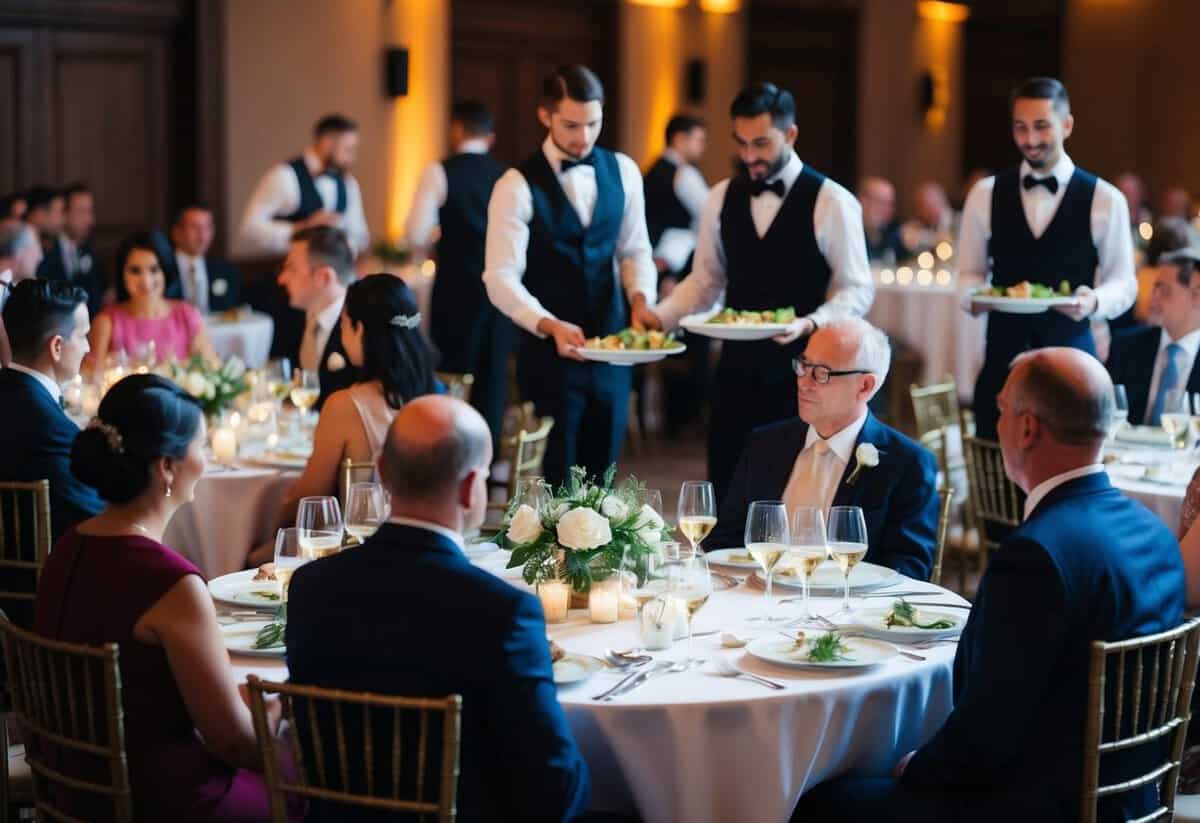
The wedding reception timeline is crucial for a smooth event. Understanding the flow of the evening helps you and your guests enjoy the celebration without feeling rushed. Here’s a breakdown of key moments that will shape your wedding dinner experience.
Cocktail Hour and Appetizers
The cocktail hour typically lasts about one hour, giving guests time to mingle while you finish any photos. You can offer a variety of appetizers during this time. Consider passing hors d’oeuvres or setting up a small buffet table.
This is the perfect moment for your signature cocktails or non-alcoholic options. It keeps everyone refreshed and sets the mood for the celebration. Timing is essential; aim for a seamless transition from the cocktail hour to dinner service. Guests appreciate a structured schedule that helps them anticipate upcoming events.
The Main Event – Dinner Service
Once everyone is seated, dinner service begins. For a three-course meal, plan for about 90 minutes to 2 hours for complete service. A plated dinner typically moves faster than a buffet since servers handle food distribution.
If you choose a buffet, allow approximately 1.5 to 2 hours for guests to serve themselves. Consistent timing helps maintain the schedule for the first dance and speeches. Remember to consider the 30-5 minute rule: aim for no more than 30 minutes between courses and allow 5 minutes for guests to eat.
Speeches and Toasts
After dinner, it’s common to have speeches and toasts. This segment usually lasts about 20-30 minutes. Asking the best man, maid of honor, and parents to prepare their speeches in advance can help keep everything on track.
Make sure to plan for these speeches after everyone has enjoyed their meal. It’s a good idea to remind speakers about the time so everyone can celebrate without feeling rushed. This portion adds a personal touch to your wedding reception and is often one of the highlights of the evening.
Transitions and Room Turnaround
Transitions between phases are also essential. After speeches, you might have a room turnaround time if the reception area is transforming for dancing. Prepare guests by informing them about any changes in the schedule.
If you plan to switch from dining to dancing, consider incorporating a cake cutting ceremony before the first dance. This allows you to keep guests engaged while the room is prepared. With careful timing, these transitions can lead to a fantastic evening filled with fun and celebration.
Entertainment and Activities
During the wedding reception, entertainment and activities are key to keeping guests engaged and having fun. These moments are often planned around specific activities like the first dance, cake cutting, and photo booth fun. Each of these adds a unique touch to your celebration.
First Dance and Party Time
Your first dance marks a special moment during the evening reception. It’s a chance for you to share a meaningful moment together while everyone watches. Choose a song that is significant to both of you.
After the first dance, it’s party time! The dance floor opens up for everyone. You can invite guests to join you and dance the night away. Good music is essential. Consider a DJ or live band to create a lively atmosphere.
Cutting the Cake
The cake cutting is another highlight that everyone looks forward to. It’s a symbolic moment that represents your unity. When you and your partner cut the cake, it’s often followed by cheers from your guest list.
Make sure your cake is visually appealing, as it will be showcased in many photographs. You can also opt for a fun twist, like a cake flavor that surprises guests. Enjoy this moment together, and don’t forget to share a bite with each other!
Photo Booth Fun
A photo booth can be a fantastic addition to your wedding reception. It allows guests to capture fun memories with props and backdrops.
Setting up a booth encourages guests to interact and take pictures together. You can customize the booth to fit your wedding theme.
Provide fun props like hats, glasses, and signs for added entertainment. This will not only get people laughing, but it also creates lasting keepsakes.
Plus, you will get a chance to see your guests in their silliest moments!