
How Long is Fashionably Late? Understanding Timing in Social Gatherings
Many people wonder about being fashionably late, especially when it comes to social gatherings. The general rule is that arriving about 15 to 30 minutes late is usually considered fashionably late without being rude. This small delay can show that you value style and social dynamics, particularly in casual settings.
In situations like weddings or formal events, punctuality is essential. Showing up late can be seen as disrespectful. Understanding the fine line between being fashionably late and simply rude can help you navigate different social situations with ease and grace.
Next time you get invited to a party or event, keep these timing tips in mind. By doing so, you can make a good impression and enjoy your time with friends while staying within the bounds of etiquette.
Defining ‘Fashionably Late’

When you think about being “fashionably late,” it’s more than just arriving late. It reflects cultural norms and social expectations. Understanding these elements can help you navigate social situations with confidence and style.
Cultural Significance
The idea of being fashionably late varies across different cultures. In some places, arriving a bit late shows that you are busy or important. It suggests a sense of confidence and even a certain stylish flair.
In high-society events or casual gatherings, cultural norms shape how you perceive timely arrivals. For example, in many Western cultures, arriving 15–30 minutes late is usually acceptable. In other cultures, punctuality may be more strictly valued. Recognizing these differences can enhance your unique style of social interaction.
Social Event Expectations
Different types of social events come with their own expectations about timing. At formal gatherings like weddings, it’s usually best to arrive on time. On the other hand, at less formal events, such as parties, being fashionably late can create a relaxed atmosphere.
You might find that some hosts even expect guests to arrive late to keep the energy flowing. Understanding these cues helps you decide when to arrive. Always consider the event and your relationship with the host to determine what is appropriate. This approach not only shows respect but also adds to your personal charm.
When Punctuality Matters Most

There are times when being on time is not just polite; it’s essential. Knowing when to prioritize punctuality can make a big difference in how others view you. Here are some key areas where being late might not be acceptable.
Professional Settings
In a business environment, being punctual shows respect for your colleagues’ time. For meetings, you should aim to arrive a few minutes early. This helps you settle down and gather your thoughts before discussions begin.
Keep in mind that arriving late can impact your professional image. Deadlines and meetings are two major areas where punctuality matters. If you miss a crucial presentation or report, it could affect the team’s performance.
Wedding Etiquette
Weddings are significant events where punctuality is crucial. Arriving late could mean missing important moments like the vow exchange or the ring ceremony. For guests, it’s best to be seated at least 10-15 minutes before the ceremony starts.
If you’re part of the wedding party, make sure to arrive even earlier. Your presence is needed for photos and preparations. Remember, this day is special for the couple, and being on time is a way to show your support.
Serious Commitments
Serious commitments like funerals require your utmost respect. Arriving late can disrupt the proceedings and show a lack of consideration for those grieving. It’s best to arrive at least 10 minutes beforehand to find a seat and settle down.
Additionally, these events often have a strict schedule. Being late can lead to missing important tributes or announcements. This is a time for family and friends to come together, and your timely arrival helps honor the occasion.
The Impact of Timeliness
Timeliness plays a significant role in how you are perceived in both social and professional situations. Being punctual can affect your relationships and create a lasting impression on others. When you arrive on time, it shows respect for the host and the event.
Social and Professional Perceptions
In social settings, arriving on time demonstrates your appreciation for the host and the occasion. If you’re the guest of honor, your punctuality sets the tone for the event. Tardiness can give the impression that you’re not interested or lack respect for others’ time.
In professional environments, being punctual is crucial. It marks you as trustworthy and responsible. Employers and coworkers notice when you consistently show up on time. This reliability helps foster strong working relationships and may lead to more opportunities for advancement.
Building Trust and Responsibility
Timeliness builds trust. When you respect others’ time, they are more likely to view you as dependable. Arriving late can lead to misunderstandings and resentment. People expect punctuality, especially in professional settings.
To be seen as a responsible individual, strive to be on time. Even a few minutes of tardiness can impact how others perceive your reliability. If you’re running late, communicate your delay. This shows respect and consideration for the other person’s time.
Embracing punctuality not only nurtures good relationships but also enhances your own reputation. When you prioritize being on time, you are better equipped to thrive both socially and professionally.
Navigating Various Social Events
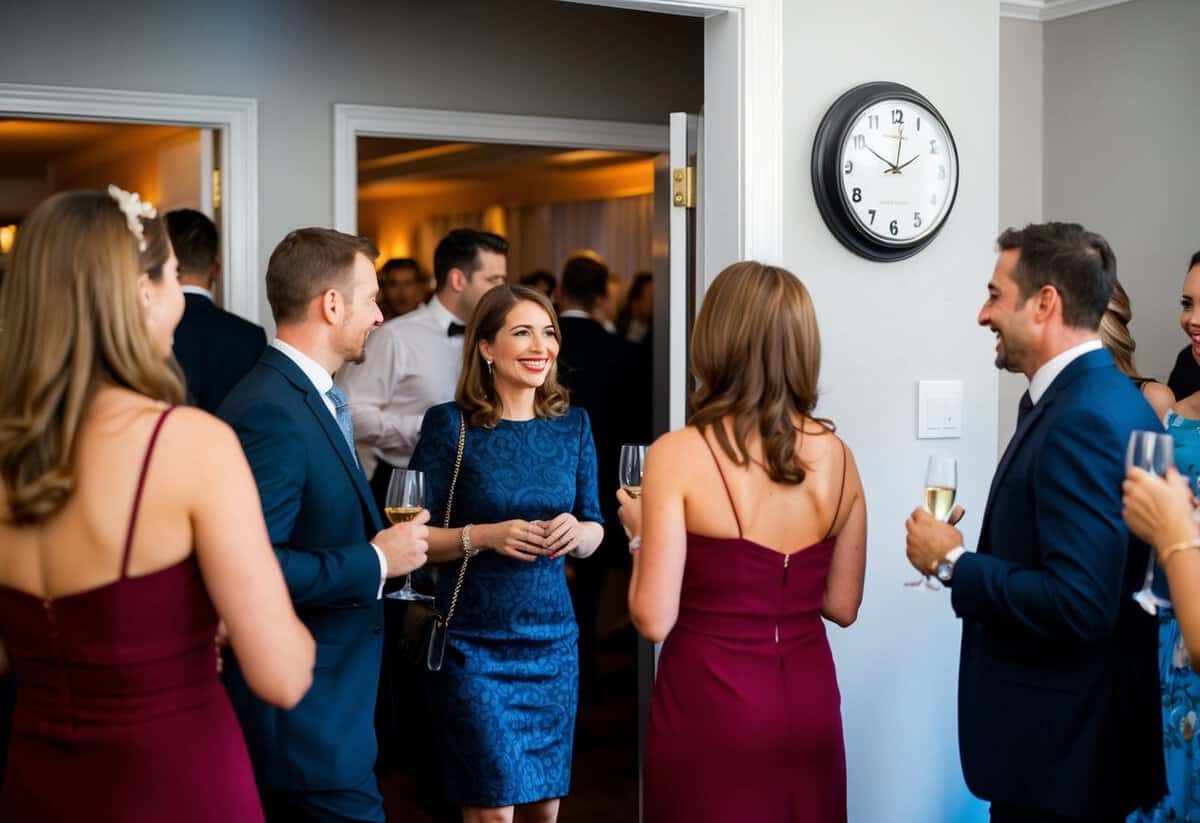
Attending different social events often requires you to adjust your arrival time. Knowing the right moment to show up can make a difference in how you’re perceived. Here’s what to consider for various gatherings.
Casual vs. Formal Gatherings
When attending a casual gathering, like a dinner party or a baby shower, arriving 10 to 15 minutes late can be seen as fashionably late. Friends might not expect everyone to be on time, so a relaxed approach works well.
For formal events, such as a gala or a networking event, punctuality is key. Arriving right on time shows respect for the host and other guests. A late arrival at these events can make you feel rushed and out of place, while a timely entrance creates a positive first impression.
Diverse Expectations
Every event carries its own expectations. At a cocktail party, a window of 5 to 15 minutes is typical. Guests often mingle, so arriving just a bit late won’t raise eyebrows.
In contrast, an open house usually has a more structured flow. It’s wise to arrive as guests are getting settled. This approach sets a friendly tone.
Some gatherings, like a formal dinner, hold even stricter rules. Arriving right when dinner is served might miss the sit-down moment unless it’s pre-arranged with the host.
Managing Unforeseen Delays
Life can be unpredictable. If you encounter unexpected delays, like traffic or last-minute issues, it’s best to communicate with the host.
A quick text or call shows consideration, even if you’re running late.
If you do arrive later than planned, make a grand entrance. Smile, greet the host, and show gratitude for their patience. This helps ease any awkwardness about your tardiness.
Balancing late arrivals with friendly gestures keeps the mood enjoyable and allows you to blend in more seamlessly.