
How Many Cameras Do You Need for a Wedding Video? A Guide to Capturing Every Moment
Capturing your wedding day on video is a special way to hold onto those precious memories. You might be wondering how many cameras you should use to get the best results.
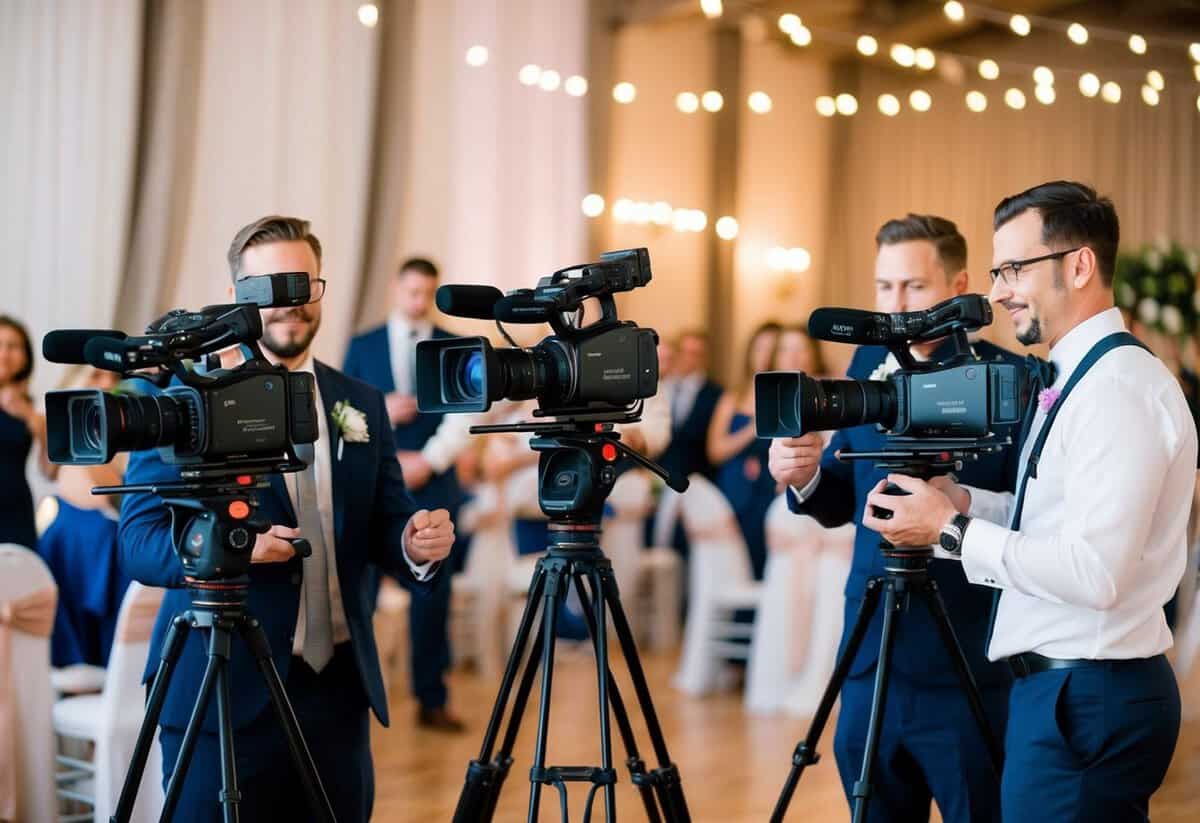
For a high-quality wedding video, you should have at least two cameras. Three cameras provide an even more dynamic experience.
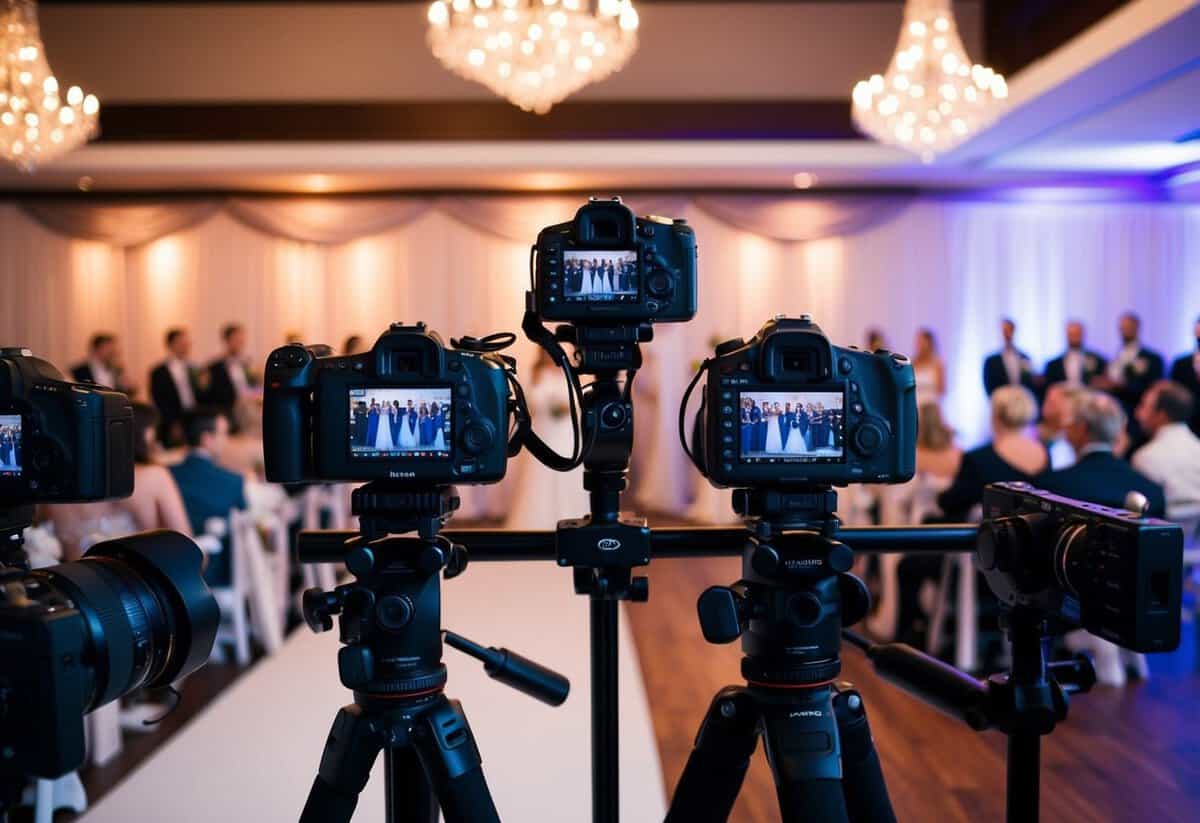
Having two or three cameras allows you to capture different angles and important moments as they happen. This approach not only enhances the storytelling of your day but also ensures that you don’t miss any key highlights. With multiple cameras, you can mix close-up shots of special moments with wider views of the entire ceremony, creating a more engaging video.
Determining Your Wedding Video Needs
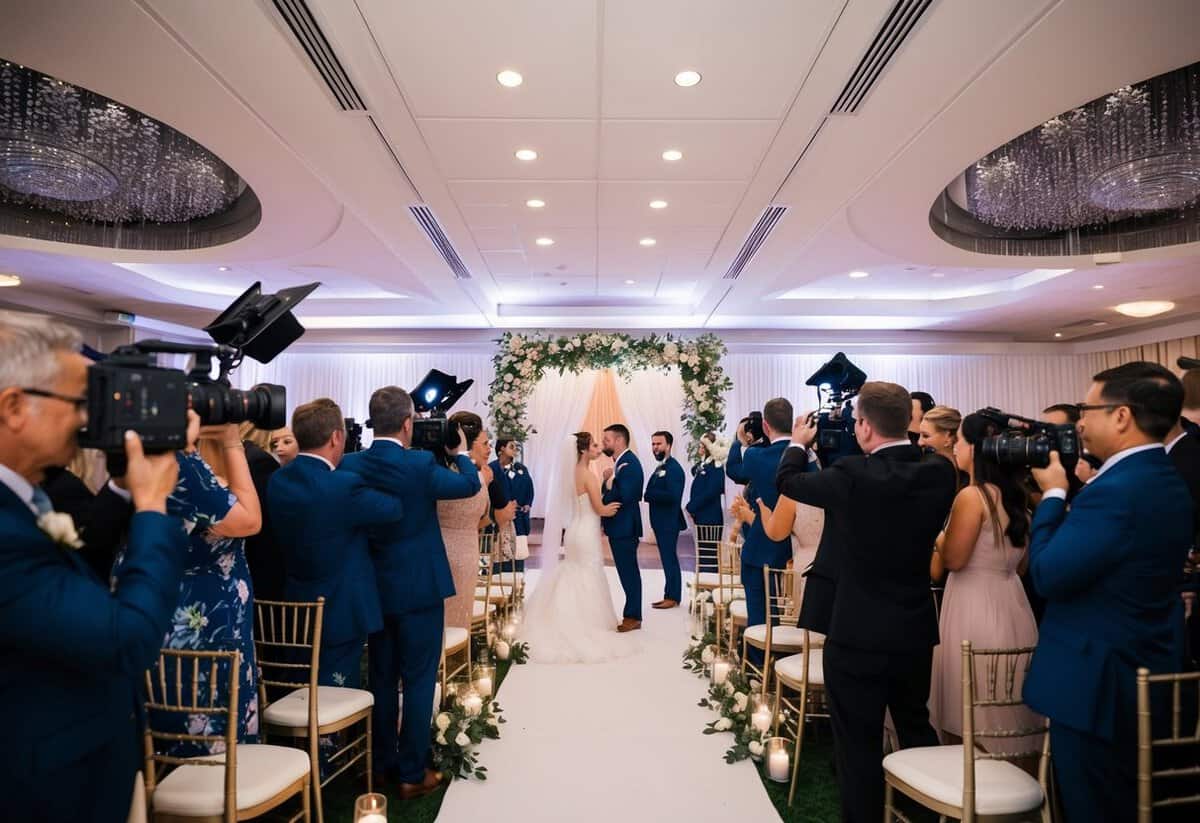
When planning your wedding video, think about how many cameras you need. The number of cameras can affect the quality and angles of your final video.
Here are a few key points to consider:
- Single Camera: It is possible to film with just one camera, but you may miss important moments or angles.
- Two Cameras: Most professionals recommend having at least two cameras. This allows you to capture different angles and important details.
- Three Cameras or More: For larger weddings, having three or more cameras is ideal. Each camera can focus on different parts of the event, like the ceremony, guests, and reactions.
Don’t forget about your videographer. A skilled wedding videographer will know how to use multiple cameras effectively. They can capture various scenes and edit them into a beautiful final product.
Tips for Choosing Your Camera Setup:
- Budget: More cameras require more budget for equipment and staffing.
- Style: Think about the style of video you want. Do you prefer a cinematic approach or a more documentary style?
- Wedding Size: Larger weddings with more guests and activities benefit from multiple cameras.
Camera Setup Essentials
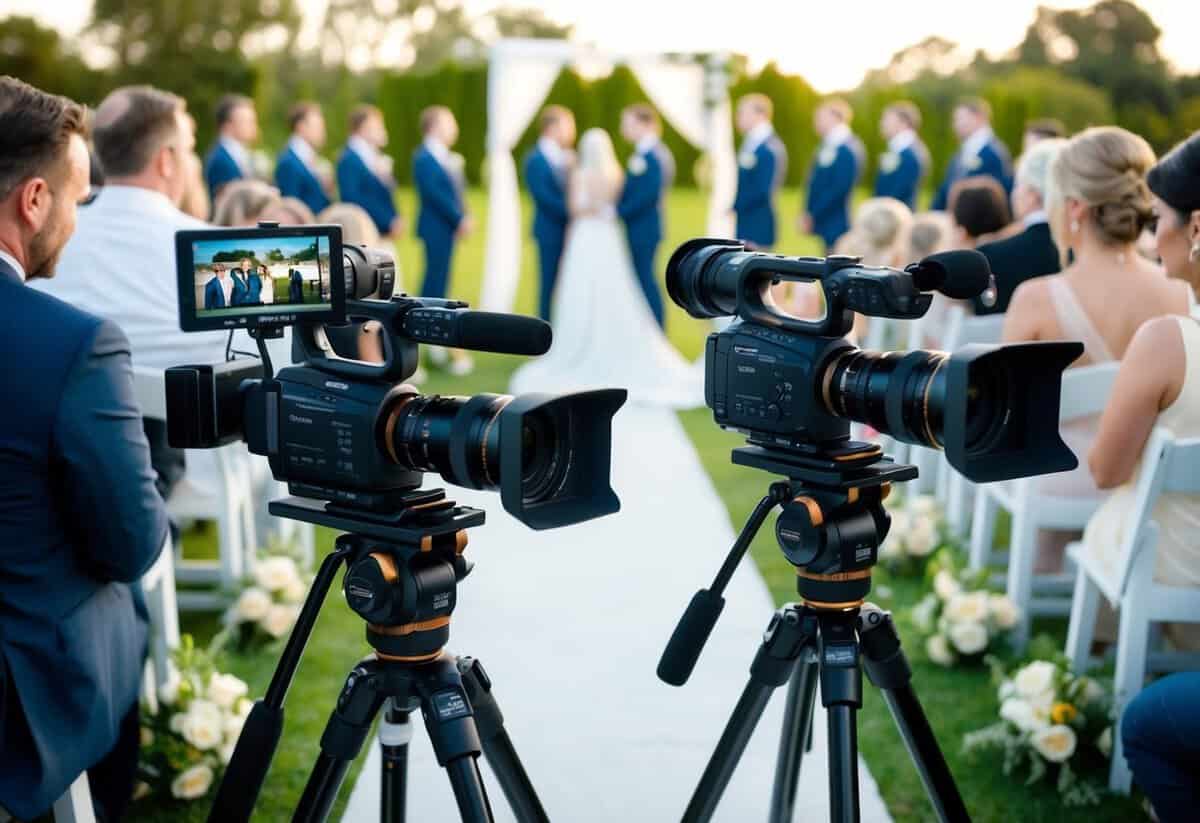
When planning your wedding video, the right camera setup is crucial. Understanding how to choose your video cameras, the importance of different angles, and the impact of lighting will help you capture the day beautifully.
Choosing the Right Video Cameras
For a wedding video, having the right cameras is key. You might consider using two cameras to ensure you don’t miss any important moments. A second camera allows you to capture different angles and perspectives at the same time.
Popular choices include mirrorless and DSLR cameras, such as the Canon 5D Mark IV. This camera offers high-quality images and excellent low-light performance, which is useful for indoor ceremonies. Be sure to check if your cameras can shoot in high definition for the best quality video.
The Importance of Camera Angles and Multiple Perspectives
Using multiple perspectives makes your wedding video more dynamic and engaging. With two cameras, you can position one for wide shots and the other for close-ups.
This setup is especially beneficial during crucial moments, like the exchange of vows or the first kiss. By capturing both the reactions of the couple and the guests, you create a fuller story of the day. Good angles can highlight emotions, showing the joy and love shared during the ceremony.
Understanding Lighting and Its Impact on Videography
Lighting plays a significant role in how your video turns out. Natural light is often the best choice, especially during outdoor ceremonies. However, be prepared for low-light situations, such as receptions.
Investing in cameras with good low-light capabilities can make a big difference. It’s also helpful to bring additional lighting equipment, such as softbox lights or reflectors, to enhance your shots.
Roles and Responsibilities
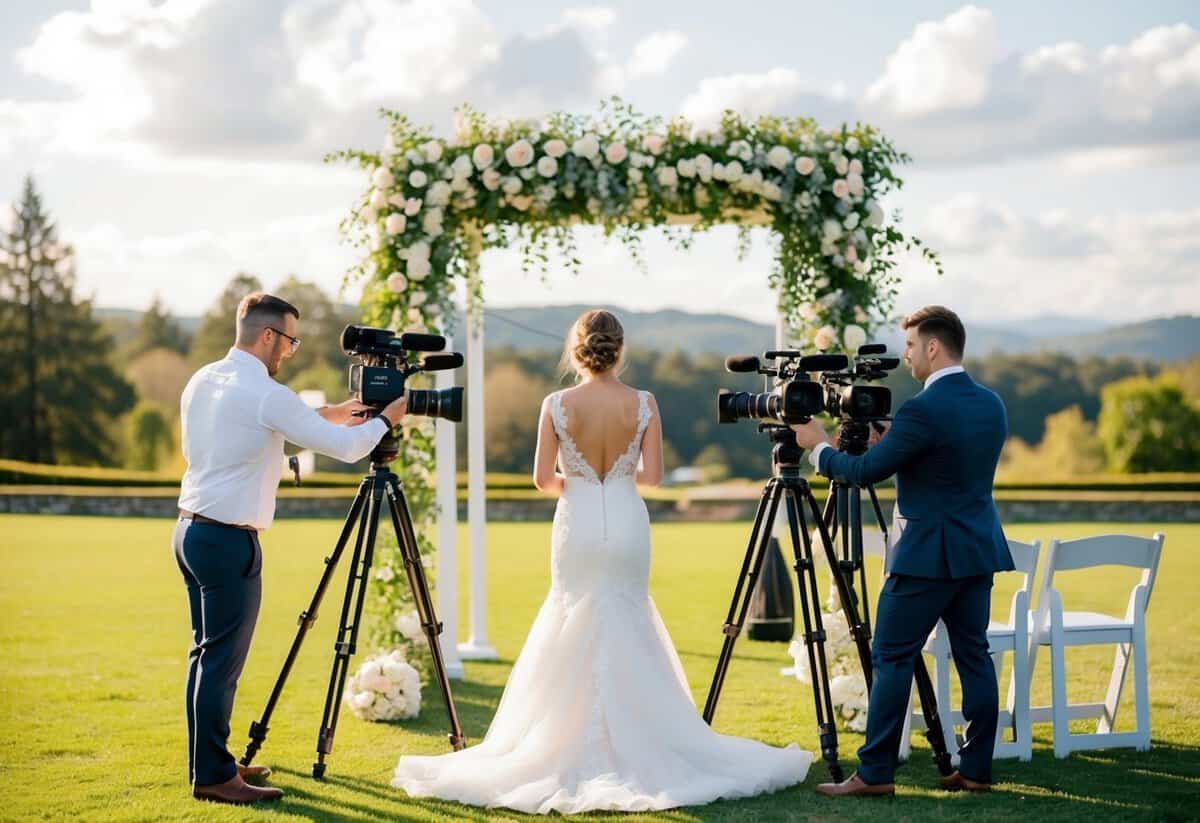
When planning a wedding video, it’s important to know the roles of the people involved. This can significantly affect the quality of your final video. Make sure you understand the main responsibilities of your videographer and the benefits of having an additional camera operator.
The Videographer: Your Visual Storyteller
Your videographer plays a crucial role on your wedding day. As your visual storyteller, they capture all the important moments. This includes your vows, the first kiss, and heartfelt reactions from family and friends.
The videographer uses their skills to frame shots, adjust settings, and select angles that bring your story to life. They know how to find great lighting conditions and anticipate special moments. Their creativity will help showcase the unique aspects of your day.
Effective communication is key. Discuss your vision and share any specific moments you want captured. Having this conversation will ensure your videographer understands your expectations. This collaboration leads to a more personal and meaningful video.
Why You Might Consider a Second Camera Operator
Having a second camera operator can greatly enhance your wedding video. With two camera operators, you gain different perspectives of the same moment. This setup captures both your emotions and the reactions of your guests.
A second camera allows for more dynamic coverage. While one operator focuses on you and your partner, the other can capture candid moments in the crowd. This leads to a richer, more engaging video.
Also, having a second camera can provide a backup if something goes wrong. If one camera has technical issues, the other can continue to capture important moments. This added layer of security can give you peace of mind on your special day.
Post-Production: Bringing Your Wedding Story to Life
Post-production is where your wedding video truly comes together. This stage transforms the raw footage captured by your video cameras into a beautiful story.
Selecting the Right Moments
During editing, you’ll choose the best clips that highlight key moments. This includes vows, first dances, and candid laughs. Each shot plays a part in telling your unique story.
Audio Matters
Don’t forget about sound. Good audio can enhance your video significantly. Capture the personal vows and toasts, adding depth to the visual story.
Editing Techniques
You can make a big difference by using simple transitions. Smooth cuts between clips help keep the flow natural. Music also sets the tone and brings emotions to life.
Length of the Video
Typically, wedding videos are between 4 to 6 minutes long. This allows you to celebrate your big day without dragging it out. Short and sweet keeps everyone’s attention.
Getting Professional Help
If video editing feels overwhelming, consider hiring a professional. They can bring expertise that elevates your wedding video. Plus, they know the best editing styles that match your vision.