
How Many Guests for a Wedding Cake? A Simple Guide to Serving Sizes
Deciding how many guests to serve with your wedding cake can feel overwhelming, but it doesn’t have to be. A standard three-tiered wedding cake typically serves around 120 guests, making it a popular choice for many couples.
Knowing your guest count helps you choose the right cake size and ensures that everyone gets a delicious slice.
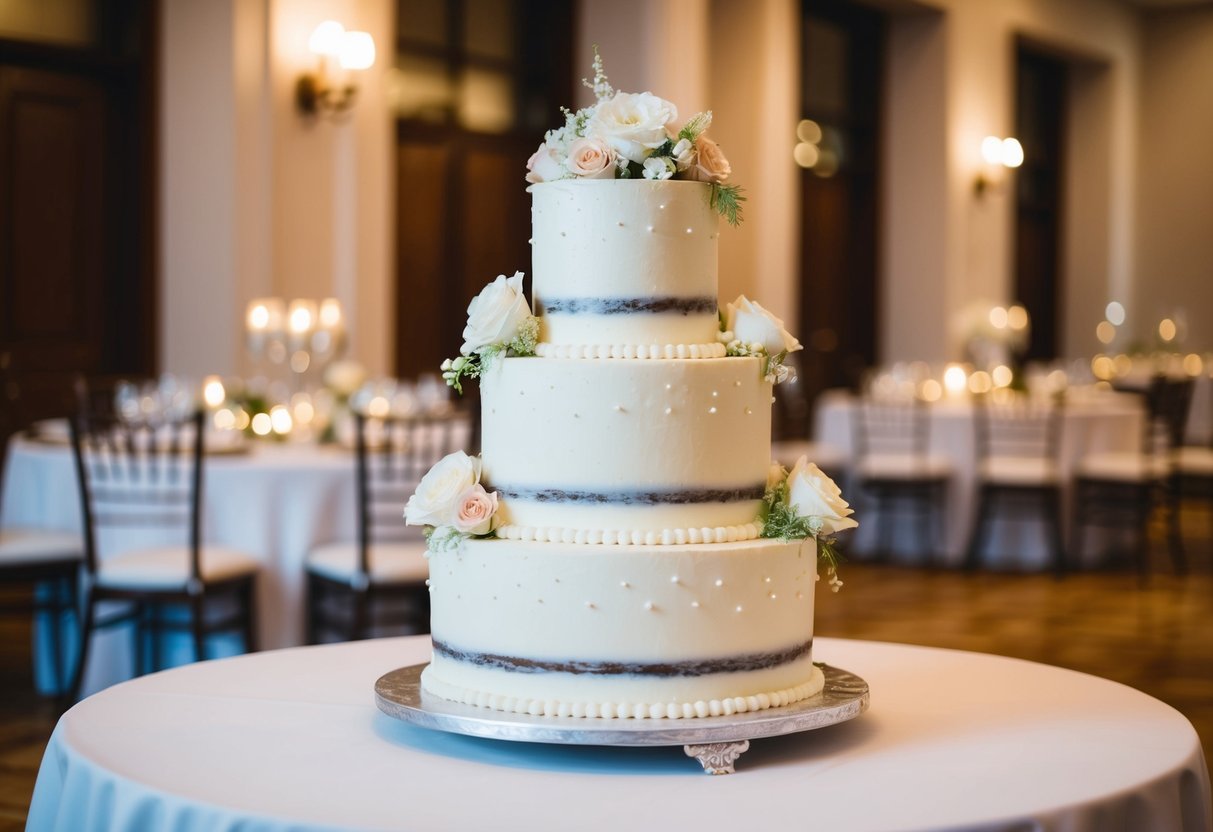
When planning, remember that different cake shapes and sizes can affect the total servings. For instance, square cakes often yield more pieces than round cakes.
Understanding these factors will help you create a stunning centerpiece that caters to your guests without the stress of running out.
Determining Cake Size
When planning your wedding cake, it’s essential to ensure you have the right size to accommodate your guests.
You need to evaluate your guest list, understand portion sizes, and consult serving charts to make the best decision.
Evaluating Guest List
Start by counting how many guests you will invite. Be clear about the number of expected attendees.
For example, if you invite 100 guests, you’ll need to plan accordingly.
Keep in mind that some guests may decline the invitation, so consider a small buffer. If you’re expecting a mix of adults and children, factor that in as well. Children usually eat smaller portions, which could affect how much cake you need overall.
Understanding Servings
The typical serving size for a wedding cake is about 1 inch by 2 inches for standard slices. For larger party slices, aim for 1.5 inches by 2 inches.
Different cake styles can impact how many people you can serve. A round cake usually offers more servings than a square cake of the same size.
Tiered cakes can also vary widely in serving sizes; a two-tiered cake might serve around 30-50 guests, while a five-tiered cake can serve significantly more, depending on its dimensions.
Consulting Serving Charts
Using a cake serving chart can greatly simplify your planning. These charts offer specific guidance on the number of servings based on cake sizes and shapes.
For example, a standard 12-inch round cake can typically serve about 40-50 guests, while a 9-inch round cake serves around 20-24 guests.
If you desire to serve 150 guests, consider additional options like sheet cakes. A full sheet cake can serve about 96 people, so having a combination of tiered and sheet cakes might be ideal. Always check with your baker for accurate calculations based on the cakes you choose.
Choosing the Right Design
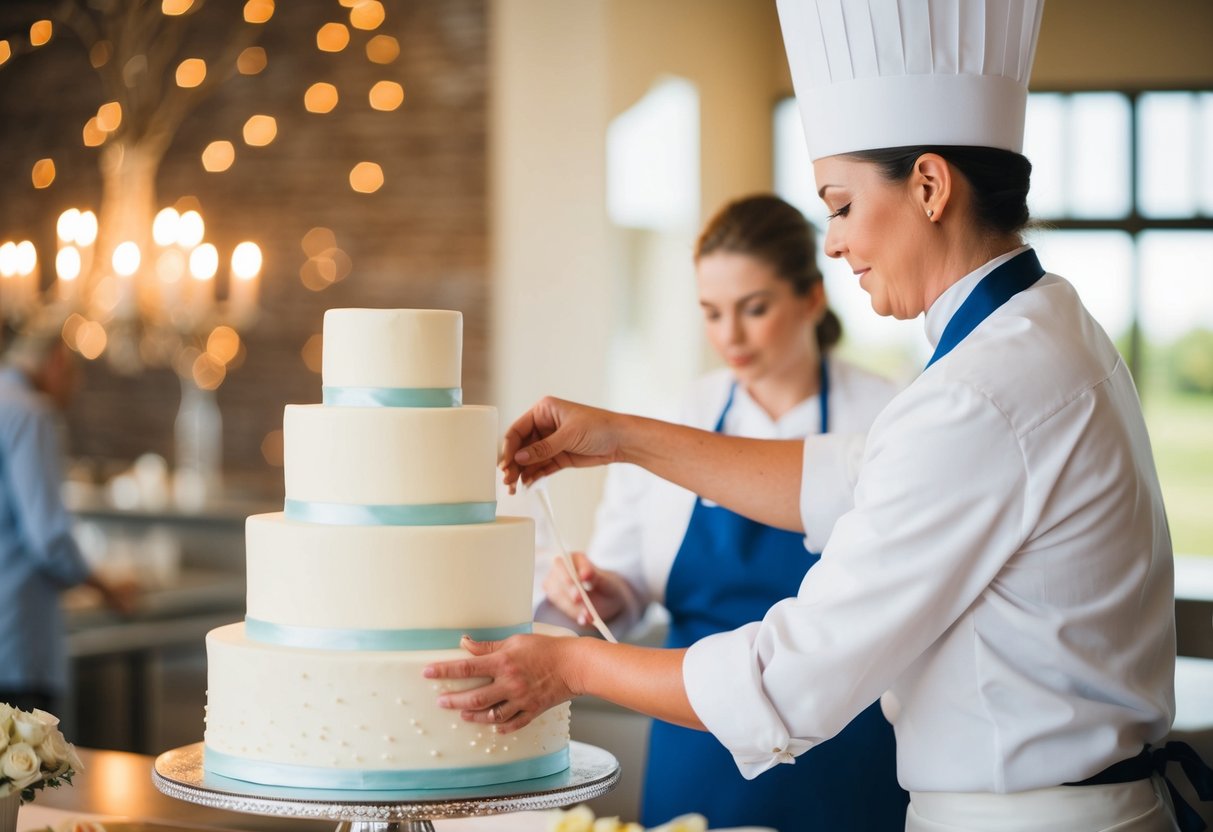
When planning your wedding cake, the design plays a vital role in both appearance and taste. You want it to reflect your style while serving enough guests. Let’s explore how to choose the best design for your cake.
Selecting Cake Shapes and Tiers
Start by thinking about the shape of your cake. Traditional round cakes are classic choices for weddings, but you might also consider squares or hexagons for a modern touch.
Next, decide on the number of tiers. A two-tier cake is perfect for smaller gatherings, while three to five tiers suit larger weddings. Each tier can hold different flavors, allowing your guests to enjoy various tastes.
For example, you might choose chocolate for the bottom tier and vanilla for the top. This way, everyone can find something they like.
Finding Inspiration for Decorations
Get creative with your cake decorations. One popular choice is sugar flowers, which can be beautifully crafted and customized to match your wedding colors.
Fondant designs are another option. Fondant can create a smooth surface and intricate details, making your cake truly stunning.
Don’t forget to include personal elements. Maybe you could add a cake topper that represents a shared interest or a memory.
Make a mood board with images that inspire you. This can help in visualizing what you want your cake to look like.
Incorporating Personal Style
Your wedding cake should reflect your personality and tastes. Think about elements that define you as a couple.
Consider unique cake flavors that you love. Perhaps a red velvet tier or a lemon-flavored layer will make your cake stand out.
Texture is key, too. You might want a tall tiered cake with ruffles or a smoother design.
Keep in mind the colors of your wedding. Coordinating your cake with your color scheme can add elegance and unity to the celebration.
Working with Cake Bakers
Finding the right cake baker is an essential step in your wedding planning. It’s important to effectively communicate your vision and any dietary needs to ensure your wedding cake is perfect for you and your guests.
Choosing a Baker
Start by researching local wedding cake bakers. Look for reviews and recommendations from friends or wedding websites. It’s best to choose a professional baker who specializes in wedding cakes.
Ask to see their portfolio to get an idea of their style. This can help you decide if they can create your desired cake vision.
Schedule tastings with a few bakers. Keep in mind the cost per slice, which can vary widely depending on design and ingredients.
Communicating Your Vision
Once you’ve selected a baker, clearly discuss your cake vision with them. Share inspiration photos, colors, and themes that reflect your wedding style. Discuss cake flavors, fillings, and any specific designs you have in mind.
Be open to their suggestions. They have experience and can offer valuable advice on what works best.
Ensure that the cake’s size aligns with your guest count—consider the number of servings you will need.
Discussing Dietary Needs
If you or your guests have dietary restrictions, be upfront about them. Many wedding cake bakers now offer gluten-free, dairy-free, or vegan options.
Make sure to ask about the ingredients used, as transparency is vital. This will help you avoid any surprises on your big day. Your baker should be willing to accommodate or suggest alternatives to meet dietary needs.
Presentation and Serving
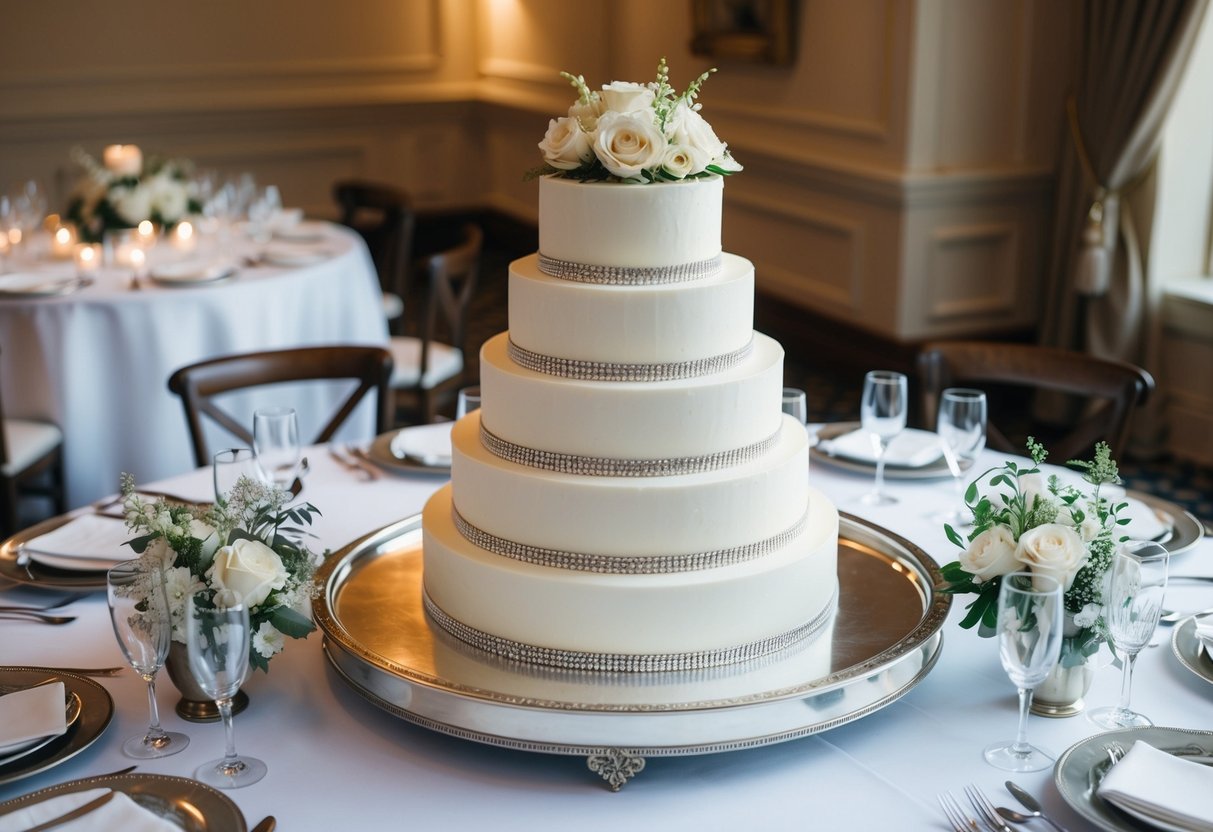
When planning your wedding cake presentation, think about how to make it visually appealing and accessible for your guests. Setting up an attractive dessert table enhances the experience, while a self-serve station allows for easy access. Considering fake tiers can also help with aesthetics and ease of serving.
Setting Up a Dessert Table
Creating a dessert table is a fantastic way to showcase your wedding cake, along with other treats. Choose a table that fits your theme and decorate it with flowers or fabrics that match your color scheme.
Key elements to include:
- Your wedding cake as the centerpiece.
- Additional desserts like cupcakes, cookies, or mini pastries.
- Decorations such as candles and floral arrangements.
Make sure each item is labeled, especially if you have unique flavors. This helps your guests know what to expect and allows those with dietary restrictions to choose their treats wisely.
Arranging a Self-Serve Station
A self-serve cake station lets guests enjoy the cake at their own pace. Set up a designated area that’s easy to access, ideally near the reception space.
Things to consider:
- Portion sizes: Provide plates and forks to help guests serve themselves properly. Consider using pre-sliced portions for easier serving.
- Instructions: A small sign can guide guests on how to cut the cake if you’re offering a whole cake.
- Choice of cake: Having a square wedding cake can maximize servings and add a striking visual element.
Remember to keep the station inviting and organized, so guests feel welcome to indulge.
Considering Fake Tiers and Cake Preservation
Using fake tiers can be a smart choice for your wedding cake. These faux layers can enhance the cake’s visual appeal without adding to the actual servings. This method often makes it easier to present a larger cake while only serving a fraction of it.
Consider saving the top tier for your first anniversary as part of a delightful tradition. Fake tiers also allow you to customize your cake’s height and design without worrying about food waste.
This creative approach lets you focus on aesthetic beauty, all while ensuring your guests enjoy the real cake you’ve chosen for them.