
How Many Photos Should You Expect From a Wedding Photographer 101
If you’re asking, “How many photos should you expect from a wedding photographer?” use about 400 to 600 edited images as a practical estimate for eight hours of coverage. That works out to roughly 50 to 75 finished photos per hour, though your final gallery will reflect the length and events of your day.
Your photographer’s editing style, guest count, and package all shape the final number. Before you book, ask for the coverage hours, expected image range, and delivery timeline in writing.
How Many Edited Photos Are Typical for Each Coverage Length?
For many weddings, a useful estimate is 50 to 75 edited photos per hour of coverage. Your photographer’s stated range gives you a more reliable expectation than applying that estimate as a guarantee.
What Is a Useful Photos-Per-Hour Estimate?
Photos per hour gives you a rough way to compare packages, while the number of wedding photos you receive depends on what happens during those hours. An eight-hour day might result in about 400 to 600 edited images.
A photographer who shoots more selectively may deliver fewer, while a busy schedule with many distinct events may produce more. The estimate counts finished images in your gallery, not every frame captured.
Your photographer reviews and selects images before editing, so a package promising “all photos” needs clarification. Ask whether the stated amount is a minimum, an estimate, or a fixed number.
What Might You Receive for a Short Wedding or Full Day?
Shorter coverage gives your photographer fewer parts of the day to document. As a starting point, a two- to three-hour booking might yield around 100 to 200 edited photos; four to six hours might yield about 250 to 450. For eight to ten hours, you might expect roughly 400 to 700.
Your timeline affects those figures. If you’re deciding whether five hours is enough for your wedding, consider which moments you want covered and how much travel or portrait time your schedule needs.
Why Do Wedding Galleries Vary in Size?
Your wedding photographer’s shooting style, the events in your schedule, and the number of photographers all influence gallery size. These details shape how many distinct moments get captured and how tightly the final selection is edited.
How Do Photography and Editing Styles Affect the Count?
Some wedding photography styles rely on frequent bursts of images to document movement and expression. Other photographers take a more deliberate approach, choosing fewer frames during each moment. Both approaches can result in a complete gallery.
After the wedding, your photographer culls the images by removing missed focus, closed eyes, and near-duplicates. The final edit reflects the photographer’s standards and the look you saw in their portfolio.
If you’re unsure whether unedited files are included, ask directly; many photographers deliver a curated selection rather than every frame they captured.
How Do Events, Guest Count, and a Second Shooter Change It?
A longer timeline creates more opportunities for photos, such as getting-ready coverage, a ceremony, speeches, and dancing. A larger guest list can also mean more group combinations and candid interactions.
If your plan includes several locations or cultural traditions, share that with your photographer as you discuss coverage. A second shooter can photograph moments happening at the same time, such as one partner getting ready while the other prepares elsewhere.
That added perspective may increase the gallery size, especially at a large wedding. You can also discuss who you want included in your wedding photos before the day so the photographer can plan for family and group portraits.
Why Does a Strong Gallery Matter More Than a Big One?
A strong gallery gives you a clear, varied record of your wedding day, with images selected for focus, expression, and storytelling. A high photo count alone doesn’t tell you whether the gallery captures the moments and people you value.
What Does the Culling and Editing Process Remove?
Culling is the review process your photographer uses to choose which frames make the final gallery. It removes technical problems and repeated images, such as a series of nearly identical shots from one part of the reception.
Editing then gives the selected images a consistent finish. That review helps keep your gallery easier to browse and gives each image a reason to be there.
Ask to see a full wedding gallery when you’re choosing a photographer, so you can judge the consistency of the work across an entire day.
Which Moments Should a Well-Rounded Gallery Include?
Your gallery should reflect the parts of the day you want to remember. Depending on your schedule, that could include getting ready, the ceremony, portraits with loved ones, reception traditions, and candid moments between events.
Share your priorities with the photographer before the wedding. If you plan to make an album, ask how the gallery will support that project.
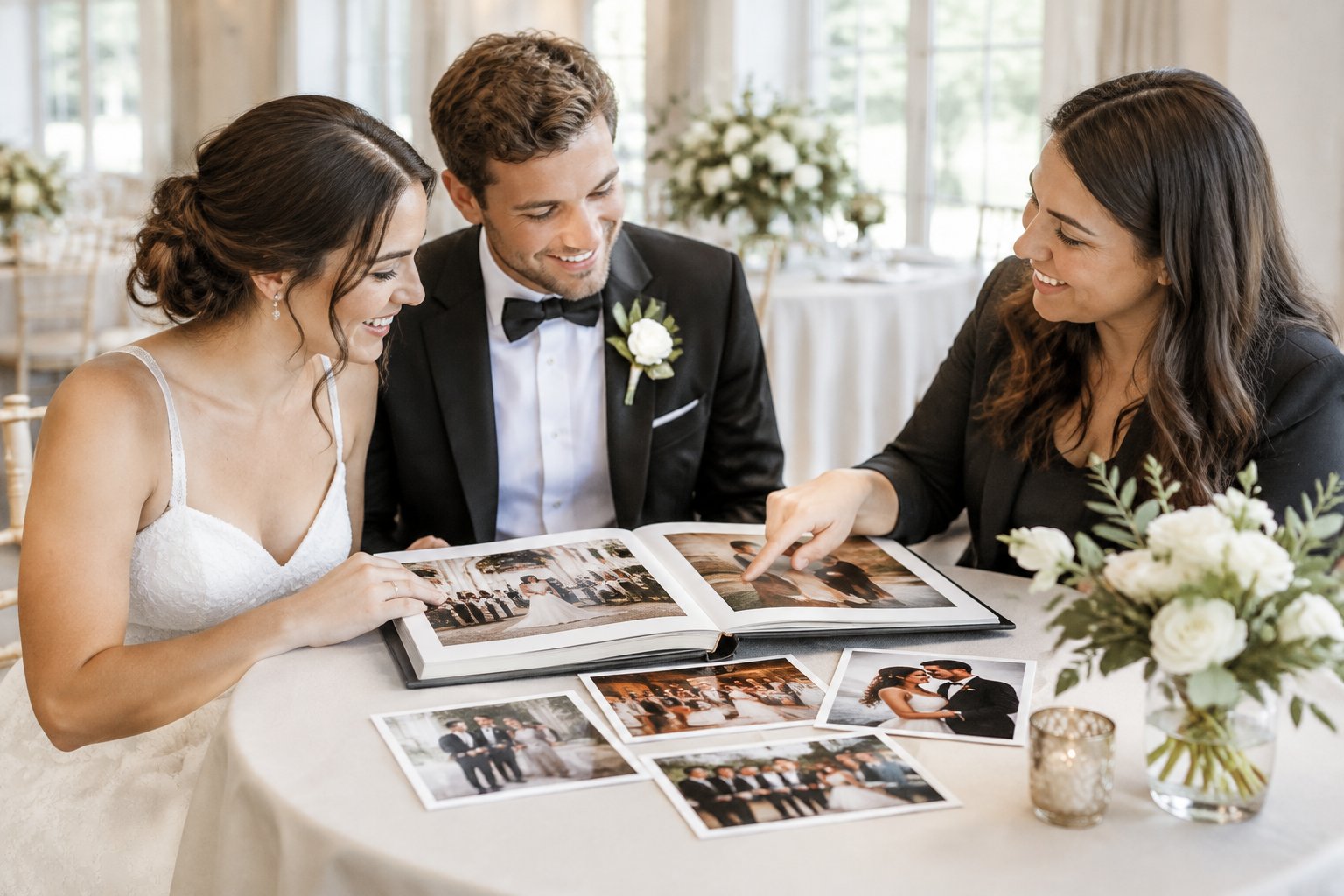
A wedding photobook calls for a thoughtful selection that carries the story from the start of the day through the celebration.
What Should You Confirm in Your Photography Package?
Your wedding photography package should spell out the coverage you’re purchasing, the expected deliverables, and how you’ll receive your images. Clear terms help you compare offers and plan around your wedding-day timeline.
Does the Package Specify Coverage and an Image Range?
Check how many hours are included and when coverage begins and ends. Confirm whether a second shooter is part of the package, available as an add-on, or not included.
Ask for the expected image range and whether the contract states a minimum or an estimate. Your coverage hours determine which parts of the day your photographer can document.
If you’re unsure when coverage should start or finish, ask how the proposed timeline fits your plans; this can help you decide whether your photographer stays for the whole wedding.
When and How Will You Receive and Share Your Photos?
Ask when your edited gallery will be ready, how you’ll access it, and how long it will remain available. Confirm whether you can download high-resolution files and share the gallery with family. If prints or an album are included, check what those deliverables cover.
Gallery delivery times vary by photographer, so make sure the expected turnaround appears in your agreement. You’ll also want to know whether the online gallery supports sharing and whether you need to save your own copies before access ends.